Ashy-headed Laughingthrush
Garrulax cinereifrons
Order: Passeriformes / Family: Leiothrichidae

Wikimedia Commons
About the Ashy-headed Laughingthrush
The Ashy-headed Laughingthrush (Garrulax cinereifrons) is an intriguing bird species endemic to the dense forests of Sri Lanka. This bird belongs to the family Leiothrichidae and is highly regarded for its strikingly colored head and melodious vocalizations. Endemic to the humid montane forests of southwest Sri Lanka, this species plays a vital role in the ecosystem by aiding in seed dispersal and contributing to the forest's acoustic environment. The Ashy-headed Laughingthrush is typically found in the wet zone forests, thriving in the rich biodiversity of these lush areas. Its presence in the Sinharaja Forest Reserve, a UNESCO World Heritage Site, highlights its significance within these unique habitats. Recognized for its social behavior, the Ashy-headed Laughingthrush often moves in small flocks, engaging in constant communication through its varied calls. This bird is a non-migratory resident, although it may exhibit some local movement influenced by seasonal changes in food availability. During the breeding season, which peaks between January and May, it becomes more territorial, defending its nesting area vigorously. The species contributes to the forest ecosystem by participating in insect population control and assisting in the propagation of various plant species through frugivory. Ecologically, the Ashy-headed Laughingthrush serves as both a predator and prey within its environment, maintaining a balance in the food web. It is also an indicator of forest health, as its presence often correlates with well-preserved habitats. Conservation of this species is crucial, not only for maintaining biodiversity but also for preserving the intricate ecological networks of Sri Lanka's forests.
The Ashy-headed Laughingthrush belongs to the family Leiothrichidae, within the order Passeriformes. These birds typically live average 6 years with max recorded up to 10 years.
How to Identify a Ashy-headed Laughingthrush
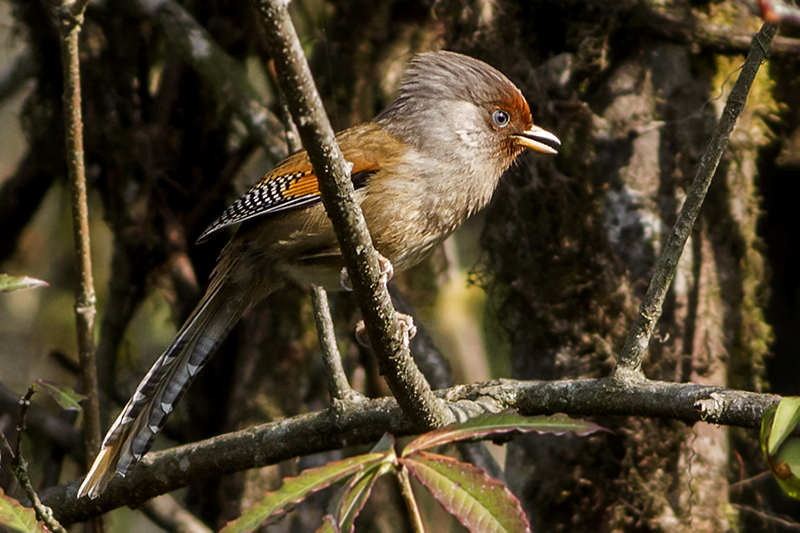
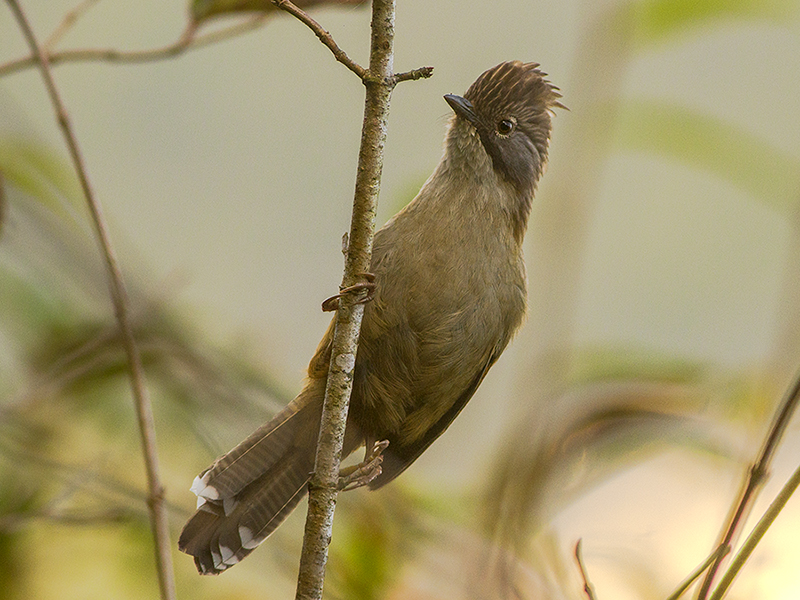
The Ashy-headed Laughingthrush is a medium-sized bird, measuring approximately 22-25 cm in length. It features an ashy-gray head, contrasting sharply with its olive-brown upperparts and warm rufous underparts. Its dark eyes stand out against its lighter plumage, while its strong, slightly curved bill is adapted for foraging in dense foliage. Juvenile birds bear a resemblance to adults but display slightly duller plumage. Males and females appear similar, making gender identification challenging in the field. However, subtle differences in size or vocal behavior during the breeding season might aid in distinguishing them. When perched, this bird exhibits a characteristic upright posture, often seen flitting through the lower to mid-canopy layers of the forest. In flight, the Ashy-headed Laughingthrush demonstrates a quick, direct flight pattern, with rapid wingbeats that help it navigate the dense forest environment. While visually distinctive, it could be confused with the Orange-billed Babbler, another Sri Lankan endemic, but can be easily distinguished by its unique vocalizations and ashy head color.
Having trouble telling birds apart? Upload a photo to our bird identification tool for an instant species match.
Ashy-headed Laughingthrush Habitat and Range
Preferred Habitat
The Ashy-headed Laughingthrush predominantly inhabits the dense, humid montane and lowland forests of southwest Sri Lanka. These forests, rich in biodiversity, provide the perfect backdrop for this bird's life cycle. It favors areas with dense undergrowth and a high canopy, which offer ample foraging opportunities and protection from predators. This bird is typically found at elevations ranging from 500 to 1500 meters, thriving in the cool, moist conditions of these forested regions. There are no significant seasonal habitat shifts observed in this species, as it is a year-round resident. While it primarily occupies forest interiors, it occasionally ventures into forest edges and secondary growth areas, especially when foraging. Unlike some species, the Ashy-headed Laughingthrush is not commonly found in urban or heavily cultivated areas, preferring the seclusion and resources offered by untouched natural habitats.
Geographic Range
The range of the Ashy-headed Laughingthrush is highly restricted, confined entirely to the island of Sri Lanka. Within this limited geographic area, it is found mainly in the southwestern region, where the humid montane forests provide an ideal habitat. Key locations include the Sinharaja Forest Reserve, the Knuckles Mountain Range, and other protected areas that support its ecological needs. This bird does not engage in long-distance migrations, maintaining a stable range within its preferred habitats. Population densities are notably higher in well-preserved forest areas, where the availability of food and nesting sites supports larger flocks. In contrast, its presence diminishes in regions where deforestation and habitat fragmentation occur, emphasizing the importance of conservation efforts in maintaining its habitat.
Want to know which birds visit your area? Browse our backyard birds by location guides for region-specific species lists.
What Does the Ashy-headed Laughingthrush Eat?
The Ashy-headed Laughingthrush has an omnivorous diet, adapting its feeding habits to the seasonal availability of various food sources. Predominantly, it feeds on insects, such as beetles and caterpillars, which it diligently searches for among the leaf litter and foliage. During the fruiting season, it supplements its diet with a variety of fruits and berries, playing a crucial role in seed dispersal. This bird's foraging technique involves hopping and flitting through the underbrush, using its keen eyesight to locate prey. It may also engage in mixed-species foraging flocks, which increases foraging efficiency and predator vigilance. The diet of the Ashy-headed Laughingthrush varies with the seasons, as it adjusts its feeding strategy to match the availability of its preferred food items.
Ashy-headed Laughingthrush Behavior and Social Structure
The Ashy-headed Laughingthrush displays a highly social nature, often forming small, cohesive flocks that move through the forest in search of food. These groups frequently perform synchronized movements and vocalizations, maintaining contact through a series of calls and songs. Territorial behavior becomes more pronounced during the breeding season, as pairs establish and defend their nesting sites. Courtship displays include mutual preening and the exchange of soft calls, strengthening pair bonds. When faced with predators, the Ashy-headed Laughingthrush exhibits a range of defensive behaviors, including alarm calls that alert other members of its flock. Daily activity patterns are influenced by the availability of food, with foraging occurring primarily in the early morning and late afternoon. This bird also engages in communal roosting, which enhances protection against nocturnal predators and the elements.
Ashy-headed Laughingthrush Nesting and Reproduction
The Ashy-headed Laughingthrush constructs its nests in dense foliage, typically at a height of 1 to 4 meters above the ground. The nest is a cup-shaped structure, intricately woven from twigs, leaves, and grasses, providing a secure environment for the eggs. The female lays a clutch of 2 to 4 eggs, which she incubates for approximately 14 to 16 days. Both parents participate in feeding the chicks after hatching, with the young fledging about 18 to 21 days post-hatching. Parental roles are well-defined, with both adults sharing responsibilities in feeding and protecting their offspring. Generally, this species raises one or two broods per breeding season, taking advantage of the abundant resources available during peak breeding times.
Ashy-headed Laughingthrush Sounds and Vocalizations
The vocal repertoire of the Ashy-headed Laughingthrush is both varied and distinctive, with its primary song consisting of a series of melodious, fluty notes delivered in rapid succession. These songs, often described as a 'laughing' call, serve both territorial and social functions. The bird also emits a range of call notes, including harsh, chattering sounds used to communicate with flock members. Alarm calls are sharp and more abrupt, serving as a warning to other birds of potential danger. During the dawn chorus, the Ashy-headed Laughingthrush is particularly vocal, contributing to the rich soundscape of the forest.
Interesting Facts About the Ashy-headed Laughingthrush
- 1The Ashy-headed Laughingthrush is one of only two laughingthrushes endemic to Sri Lanka, making it a special species for the island.
- 2This bird's scientific name, Garrulax cinereifrons, reflects its ashy-gray head, with 'cinereifrons' meaning 'ashy-fronted' in Latin.
- 3In a mixed-species flock, the Ashy-headed Laughingthrush often takes the lead, using its vocalizations to coordinate group movements.
- 4The Sinharaja Forest, home to the Ashy-headed Laughingthrush, is a biodiversity hotspot with over 60% of its trees being endemic.
- 5Despite its small range, the Ashy-headed Laughingthrush plays a significant role in seed dispersal, aiding forest regeneration.
- 6Unlike many birds, the Ashy-headed Laughingthrush remains in pairs or small flocks throughout the year, emphasizing its social nature.
- 7The bird's melodious calls are a key feature of its communication, often described as a 'laughing' sound that echoes through the forest.
Ashy-headed Laughingthrush Conservation Status
The Ashy-headed Laughingthrush is currently listed as Near Threatened on the IUCN Red List, with its population trend showing signs of decline. The primary threats to this species include habitat loss due to deforestation, agricultural expansion, and fragmentation of its forest habitat. Conservation efforts focus on protecting and preserving the remaining forest areas, particularly within protected reserves like Sinharaja. Historical population changes suggest that this bird was once more widespread, but human activity has significantly impacted its distribution. Continued conservation measures are essential to prevent further declines and to ensure the survival of this unique bird species.