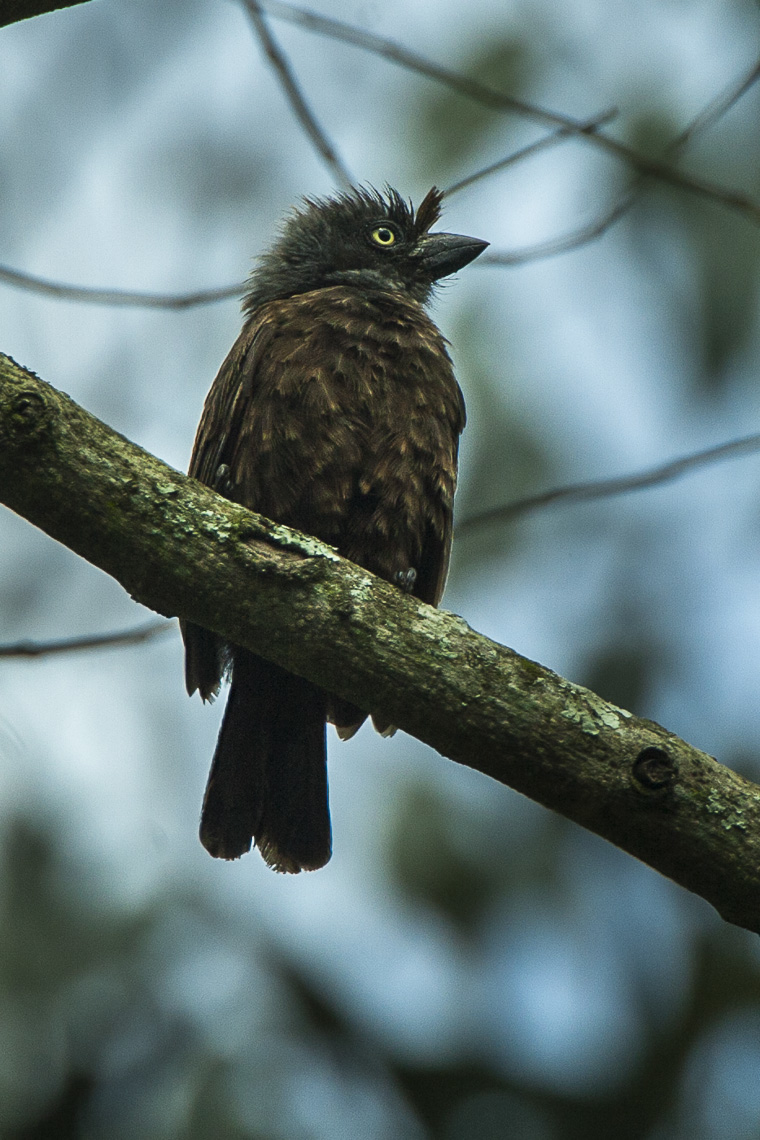
Banded Barbet
Lybius undatus
Order: Piciformes / Family: Lybiidae

Wikimedia Commons
About the Banded Barbet
The Banded Barbet, scientifically designated as Lybius undatus, is a captivating presence within the avian world, primarily inhabiting the lush highland forests of Ethiopia. This medium-sized bird is a member of the Piciformes order, celebrated for its vivid plumage and distinctive vocalizations. The Banded Barbet’s natural habitat spans a relatively limited geographic range, primarily confined to the Ethiopian Highlands, where it thrives in montane forests and forest edges. These environments provide the barbet with ample food resources and nesting sites, crucial for its survival and reproductive success. As a species, the Banded Barbet plays an important ecological role as a seed disperser, contributing to the health and regeneration of its forest habitat. This role is particularly vital given the increasing pressures on these ecosystems from human activities, such as deforestation and habitat fragmentation. During the breeding season, which coincides with the rainy months from April to June, Banded Barbets engage in courtship displays that involve vocal duets and intricate flight patterns. These behaviors facilitate mate selection and strengthen pair bonds. Outside of the breeding season, the Banded Barbet remains an active participant in its ecosystem, continuing to forage and interact with other species within its environment. Observations of the Banded Barbet reveal its adaptability to seasonal changes in food availability, as it shifts its diet in response to the abundance of fruits and insects, which are staples of its diet. In this way, the Banded Barbet exemplifies the dynamic relationship between avian species and their habitats, highlighting the complexity and interdependence of ecosystems in the Ethiopian Highlands.
The Banded Barbet belongs to the family Lybiidae, within the order Piciformes. These birds typically live average 5-7 years, with a maximum recorded of 10 years..
How to Identify a Banded Barbet
Identifying the Banded Barbet involves noting several key characteristics. Adult Banded Barbets exhibit a striking plumage, with a predominantly black head and a white throat and upper breast. The bird's most distinguishing feature is the series of horizontal white and black bands that adorn its chest and upperparts, giving it its name. This banding is particularly pronounced in adult males, which may appear slightly more vibrant than females. Juvenile Banded Barbets, in contrast, are less vividly colored, with duller and less distinct banding. In terms of differentiation between males and females, the differences are subtle, primarily involving slight variations in size and brightness of plumage. When observing a Banded Barbet in flight, its short, rounded wings and relatively long tail are apparent, contributing to its unique silhouette. Perched, the Banded Barbet maintains an upright posture, often seen clinging to tree bark or branches as it searches for food. Among similar species, the Banded Barbet could be confused with other members of the Lybiidae family, such as the Black-billed Barbet, but its distinctive banding pattern sets it apart. Careful observation of these features will assist birdwatchers in accurately identifying this unique species.
Having trouble telling birds apart? Upload a photo to our bird identification tool for an instant species match.
Banded Barbet Habitat and Range
Preferred Habitat
The Banded Barbet predominantly inhabits montane forests, favoring elevations ranging from 1,500 to 3,200 meters. These environments provide the dense canopy cover and abundant food resources necessary for its survival. Within these forests, the Banded Barbet exhibits a preference for forest edges and clearings, where it can more easily forage for fruits and insects. Seasonal shifts in habitat use are minimal, as the species remains relatively stationary, relying on the consistent availability of resources within its home range. While primarily associated with natural forests, the Banded Barbet can occasionally be spotted in more disturbed habitats, such as secondary growth forests and plantations, where it adapts to the changing landscape. Its presence in urban areas is limited, as it generally avoids highly developed regions, preferring the relative seclusion and richness of forested environments.
Geographic Range
The Banded Barbet's range is primarily restricted to Ethiopia, where it is a resident species throughout the year. Its distribution is closely associated with the Ethiopian Highlands, a region known for its diverse and unique avifauna. The Banded Barbet does not undertake long-distance migrations, but rather remains within its established territory, adapting to local seasonal variations in food availability. The species is not evenly distributed across its range, with population densities being particularly high in areas of suitable habitat within the highlands. These population hotspots are often correlated with regions that maintain extensive forest cover, underscoring the importance of habitat conservation for the Banded Barbet's continued survival.
Want to know which birds visit your area? Browse our backyard birds by location guides for region-specific species lists.
What Does the Banded Barbet Eat?
The diet of the Banded Barbet is predominantly frugivorous, with a marked preference for a variety of fruits available within its forest habitat. Seasonal changes influence the barbet's dietary intake, with insects and other invertebrates becoming more prominent in its diet during certain times of the year, particularly when fruit availability declines. The Banded Barbet employs a versatile foraging technique, adeptly navigating tree canopies to pluck fruits and snatch insects from bark surfaces. Its robust bill allows it to handle a range of prey sizes, from small insects to larger fruit pods. Feeding often occurs during the cooler morning and late afternoon hours, aligning with periods of peak activity in the forest. This feeding schedule not only optimizes resource acquisition but also minimizes energy expenditure during the hotter midday period.
Banded Barbet Behavior and Social Structure
Socially, the Banded Barbet exhibits a somewhat solitary nature, although it can occasionally be seen in pairs or small family groups. Territorial behavior is prominent, particularly during the breeding season, when males engage in vocal displays to assert dominance and secure prime nesting sites. Courtship involves elaborate song duets and aerial displays, strengthening pair bonds and facilitating mate selection. Outside the breeding season, the Banded Barbet remains active, foraging for food and maintaining its territory. Its response to potential predators includes vocal alarm calls and evasive flight maneuvers, highlighting its awareness and adaptability. The species is diurnal, with peak activity occurring during the morning and late afternoon hours. Its daily activities are closely tied to environmental conditions, with weather and resource availability influencing behavior patterns.
Banded Barbet Nesting and Reproduction
The Banded Barbet nests in tree cavities, a behavior that reflects its adaptation to forested habitats. It typically selects natural hollows or those excavated by woodpeckers, occasionally modifying them to suit its needs. Nesting materials are minimal, often consisting of wood chips and other debris. The barbet's clutch size ranges from two to four eggs, with both parents participating in incubation duties over a period of approximately 14 days. Once hatched, the young remain in the nest for about three weeks before fledging. Parental roles are shared, with both males and females actively involved in feeding and protecting the chicks. The Banded Barbet generally raises one brood per year, although in areas with longer favorable conditions, a second brood is possible.
Banded Barbet Sounds and Vocalizations
The Banded Barbet's primary song is a series of melodious, repetitive notes that rise and fall in pitch, creating a rhythmic and musical quality. These vocalizations are often heard at dawn, as the bird establishes its territory and communicates with its mate. In addition to its song, the Banded Barbet produces a variety of call notes, including soft chuckles and sharper alarm calls used to signal danger. The bird's vocal repertoire is an essential aspect of its behavior, facilitating social interactions and territorial defense. Its song, reminiscent of a flute-like melody, is a characteristic sound of the Ethiopian montane forests, adding to the rich tapestry of avian sounds in the region.
Interesting Facts About the Banded Barbet
- 1The Banded Barbet's call is so distinctive it is often used by researchers to identify territories without visual confirmation.
- 2This species is named for the striking black and white bands that adorn its chest, making it one of the most recognizable barbets.
- 3Despite its limited range, the Banded Barbet has adapted to various forest types, including both primary and secondary growth.
- 4Banded Barbets play a crucial role in seed dispersal, aiding in the proliferation of fruiting plants within their habitat.
- 5The Banded Barbet's robust bill is adapted not only for fruit consumption but also for excavating insects from tree bark.
- 6During the breeding season, pairs are known to perform complex duets that help strengthen their bond and coordinate nesting duties.
- 7The Banded Barbet's presence in a forest is often an indicator of ecological health and biodiversity due to its reliance on intact habitats.
Banded Barbet Conservation Status
The IUCN currently classifies the Banded Barbet as a species of Least Concern, reflecting its relatively stable population within its limited range. However, the species faces ongoing threats from habitat loss due to deforestation and agricultural expansion. Conservation efforts focus on preserving forest habitats in the Ethiopian Highlands, vital for the Banded Barbet's survival. Historical population changes have been influenced by habitat alterations, but the species' adaptability has allowed it to persist in modified landscapes. Continued habitat protection and sustainable land-use practices are essential to ensure the long-term viability of the Banded Barbet and the ecological integrity of its forest home.