
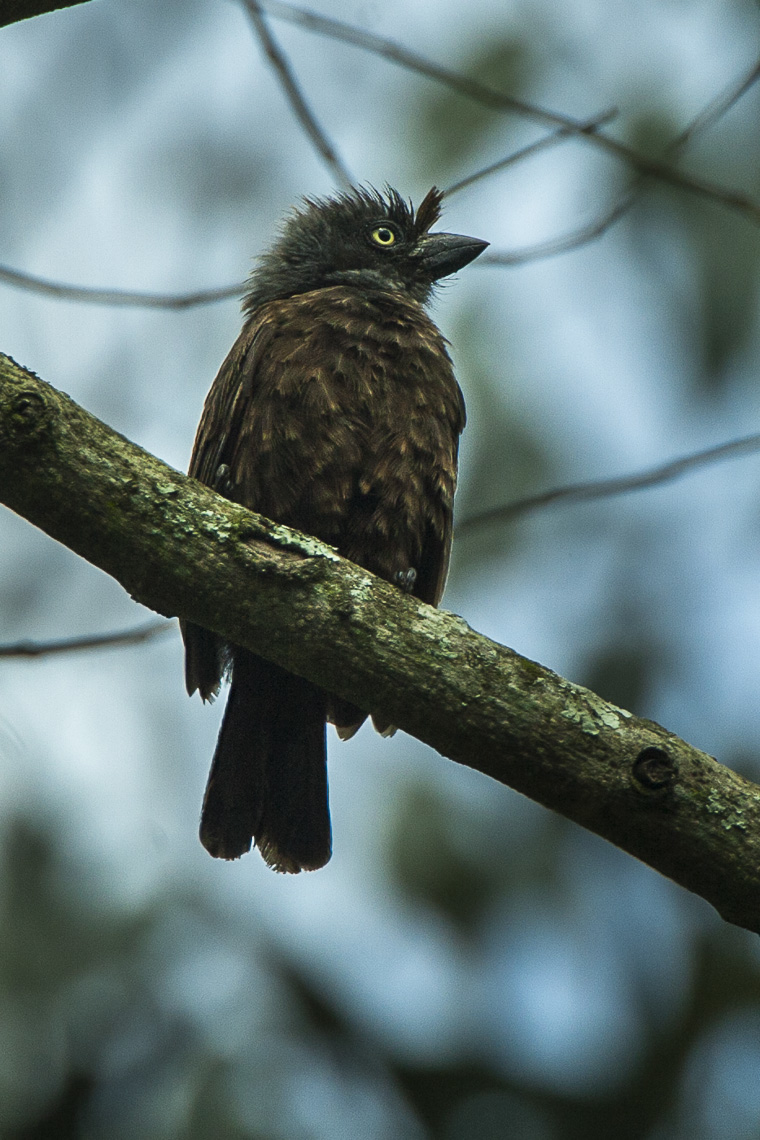
Western Yellow-spotted Barbet
Buccanodon dowsetti
Order: Piciformes / Family: Lybiidae

Wikimedia Commons
About the Western Yellow-spotted Barbet
The Western Yellow-spotted Barbet, scientifically known as Buccanodon dowsetti, is a captivating bird species found predominantly in Africa's tropical regions. This medium-sized bird is a member of the Lybiidae family, a group known for their robust bills and colorful appearances. The bird's plumage is primarily green, but it is punctuated by distinctive yellow spots on its wings and back, a feature that makes it relatively easy to identify in its natural habitat. This barbet plays an essential role in the ecosystem as both a seed disperser and a predator of insects, thus aiding in maintaining ecological balance within its habitat.
This species is primarily found in the western and central parts of Africa, inhabiting countries such as Nigeria, Cameroon, and the Democratic Republic of the Congo. It thrives in lowland forests and prefers areas with dense vegetation where it can find ample food and nesting sites. The presence of the Western Yellow-spotted Barbet is significant as it contributes to the biodiversity of these regions, supporting the health of tropical forest ecosystems.
The ecological role of the Western Yellow-spotted Barbet extends beyond mere seed dispersal. During the breeding season, which typically occurs between April and June, these birds engage in elaborate courtship displays. They are known for their distinctive calls, which resonate through the forest canopy, adding to the rich soundscape of the African wilderness. These calls also serve to establish and defend territories, ensuring that each breeding pair has access to sufficient resources for raising their young. As such, the Western Yellow-spotted Barbet is a crucial component of its ecosystem, influencing both plant and insect populations through its feeding and nesting behaviors.
The Western Yellow-spotted Barbet belongs to the family Lybiidae, within the order Piciformes. These birds typically live around 5-8 years, with some individuals living over 10 years..
How to Identify a Western Yellow-spotted Barbet
The Western Yellow-spotted Barbet is a striking bird with a vivid green plumage that serves as a perfect camouflage among the lush foliage of its forest habitat. Its most distinctive feature is the series of bright yellow spots adorning its wings and back. These spots, along with its robust, slightly curved bill, are key identifiers for birdwatchers and ornithologists. Adult birds have a uniform green color across their heads, backs, and tails, with the yellow spots providing a striking contrast.
Juvenile Western Yellow-spotted Barbets can be distinguished from adults by their slightly duller plumage and less pronounced yellow spots. As they mature, the intensity of their coloration increases, helping them to blend seamlessly into the canopy. There is little sexual dimorphism in this species, meaning that males and females are visually similar, although males may be slightly larger in size.
In flight, the Western Yellow-spotted Barbet displays a rapid, undulating flight pattern typical of barbets, with short bursts of flapping interspersed with gliding. When perched, they adopt an upright posture, often clinging to branches with their strong feet. This posture, combined with their characteristic plumage, makes them relatively easy to spot when they are not hidden by dense foliage.
Having trouble telling birds apart? Upload a photo to our bird identification tool for an instant species match.
Western Yellow-spotted Barbet Habitat and Range
Preferred Habitat
The Western Yellow-spotted Barbet inhabits the lush, tropical forests of western and central Africa. It prefers lowland forests with dense vegetation, which provide ample food resources and nesting sites. These forests are primarily found in countries like Nigeria, Cameroon, and the Democratic Republic of the Congo, where the barbet occupies a niche within the forest canopy.
This species shows a preference for primary and secondary forests, thriving in areas where the tree cover is thick and continuous. Elevation does not seem to significantly affect its distribution, as it can be found from sea level up to 1,500 meters, depending on local forest conditions. Though primarily a bird of the forest interior, it is occasionally spotted in forest edges and clearings, especially during foraging.
The Western Yellow-spotted Barbet is not typically found in urban environments or highly disturbed areas, as it relies heavily on the dense forest canopy for shelter and food. Seasonal habitat shifts are minimal, as the species is generally sedentary, remaining in its preferred habitat year-round.
Geographic Range
The Western Yellow-spotted Barbet is native to the tropical regions of western and central Africa. Its range extends across several countries, including Nigeria, Cameroon, the Central African Republic, Gabon, and the Democratic Republic of the Congo. It is predominantly a resident bird, meaning it does not engage in long-distance migration.
Within this range, the barbet is most frequently found in the lowland tropical forests, where it occupies a stable ecological niche. There are no significant seasonal migrations or long-distance movements associated with this species, although local movements within forests may occur in response to food availability or breeding requirements.
Population density hotspots for the Western Yellow-spotted Barbet are often located in regions with extensive forest cover, particularly in the Congo Basin, which provides an ideal environment with abundant resources. While the species is not considered migratory, slight altitudinal movements might occur, but these are generally limited to short distances within local forested areas.
Want to know which birds visit your area? Browse our backyard birds by location guides for region-specific species lists.
What Does the Western Yellow-spotted Barbet Eat?
The diet of the Western Yellow-spotted Barbet predominantly consists of fruits and insects, reflecting its role as both a seed disperser and a predator of small invertebrates. This diet is typical of many barbet species, which are known for their fruit-eating habits. The barbet forages in the forest canopy, often hanging upside down to pluck berries and small fruits.
Fruits from fig trees and other tropical forest plants make up the primary component of its diet. These fruits provide the necessary sugars and nutrients for the bird's energy needs. In addition to fruits, the Western Yellow-spotted Barbet consumes a variety of insects, such as beetles and caterpillars. This insectivorous behavior is particularly pronounced during the breeding season when the demand for protein-rich food increases to support the growth of chicks.
Foraging occurs throughout the day, with peak activity in the early morning and late afternoon when temperatures are cooler. The barbet employs a sit-and-wait strategy, often perching quietly before darting out to catch insects in flight or snatch fruit from branches. This opportunistic feeding behavior allows the barbet to adapt to the seasonal availability of food resources within its forest habitat.
Western Yellow-spotted Barbet Behavior and Social Structure
The Western Yellow-spotted Barbet exhibits a variety of intriguing behaviors that make it a subject of interest for ornithologists and bird enthusiasts alike. Socially, these birds are generally seen alone or in pairs, particularly during the breeding season when they become highly territorial. Pairs establish and defend territories through vocalizations and displays, ensuring they have exclusive access to resources.
Courtship displays are a highlight of their behavioral repertoire, involving a combination of calls, wing flicking, and mutual preening. These behaviors strengthen the bond between mating pairs and facilitate successful breeding. Once territories are established, the barbet becomes more vocal, using its distinctive calls to ward off intruders and communicate with its mate.
In terms of daily activity, the Western Yellow-spotted Barbet is diurnal, with peak activity occurring during the cooler parts of the day. The bird is adept at maneuvering through the dense forest canopy, using its strong feet and beak to navigate branches and foliage efficiently. While generally solitary or found in pairs, the barbet may join mixed-species flocks during non-breeding periods, which can offer increased protection from predators.
Western Yellow-spotted Barbet Nesting and Reproduction
The Western Yellow-spotted Barbet constructs its nests in tree cavities, often in dead or decaying wood. These nests are usually situated several meters above the ground, providing protection from ground-dwelling predators. The birds use their strong bills to excavate these cavities, a labor-intensive process that involves the removal of wood chips and debris.
Clutch size for this species typically ranges from two to four eggs. Both male and female barbets participate in incubation, which lasts about 14 to 16 days. During this period, the parents take turns sitting on the eggs to ensure they are kept at the optimal temperature for hatching. Once the eggs hatch, the chicks are altricial, meaning they are born naked and helpless, requiring significant parental care.
The fledging period lasts approximately 20 to 25 days, during which both parents are actively involved in feeding and protecting the young. After fledging, the juveniles may remain with the parents for several weeks, learning essential survival skills. The Western Yellow-spotted Barbet generally produces one brood per year, although in areas with abundant resources, a second brood may be attempted.
Western Yellow-spotted Barbet Sounds and Vocalizations
The Western Yellow-spotted Barbet is renowned for its vocal abilities, producing a variety of calls that enhance its presence in the forest. The primary song is a series of repetitive, melodious notes that carry well through the dense canopy. These notes are often described as a rhythmic 'toop-toop-toop,' delivered with increasing tempo and volume.
In addition to its primary song, the barbet emits a range of call notes, including sharp 'pik' sounds used in communication between mates or as contact calls. Alarm calls are harsher and more abrupt, serving as a warning to nearby birds of potential threats.
At dawn, the Western Yellow-spotted Barbet participates in the chorus of forest sounds, contributing to the rich auditory tapestry of its environment. This behavior not only establishes its territory but also plays a role in mate attraction and reinforcing pair bonds.
Interesting Facts About the Western Yellow-spotted Barbet
- 1The Western Yellow-spotted Barbet uses its strong bill to excavate nesting cavities in trees, a task that can take several weeks to complete.
- 2Despite being primarily solitary, the barbet may join mixed-species flocks during non-breeding periods, benefiting from collective vigilance against predators.
- 3The bird's distinctive yellow spots are not just for show; they can serve as a form of camouflage, breaking up its outline among dappled sunlight.
- 4The barbet's call, often described as 'toop-toop-toop,' can be heard from over a kilometer away in dense forest environments.
- 5Western Yellow-spotted Barbets play a crucial role in seed dispersal, helping to maintain the diversity of tropical forest plant species.
- 6They are known to engage in mutual preening during courtship, which helps strengthen the bond between mating pairs.
- 7Their diet shift towards more protein-rich insects during the breeding season supports the nutritional needs of growing chicks.
Western Yellow-spotted Barbet Conservation Status
The Western Yellow-spotted Barbet is currently classified as Least Concern by the IUCN, reflecting a relatively stable population trend across its range. However, like many forest-dependent species, it faces threats from habitat destruction due to logging and agricultural expansion. Conservation efforts aimed at preserving tropical forests are crucial for the continued survival of this species. Protected areas and national parks within its range, such as those in the Congo Basin, play a vital role in safeguarding its habitat. Encouraging sustainable forestry practices and reducing deforestation are essential for maintaining population stability. Historically, the Western Yellow-spotted Barbet has maintained stable populations due to its adaptability to varying forest conditions. However, ongoing habitat loss could lead to future declines if not properly addressed. Continued monitoring and research are necessary to ensure that conservation measures are effective and that this vibrant species continues to thrive in its natural environment.
Other Lybiidae Species


Birds Similar to the Western Yellow-spotted Barbet
These species are often confused with the Western Yellow-spotted Barbet due to similar appearance or overlapping range.
