
Bare-cheeked Babbler
Turdoides gymnogenys
Order: Passeriformes / Family: Leiothrichidae

Wikimedia Commons
About the Bare-cheeked Babbler
The Bare-cheeked Babbler (Turdoides gymnogenys) is a fascinating bird species belonging to the family Leiothrichidae, noted for the distinctive bare patches of skin around its eyes. This feature makes it easily recognizable among the dense, dry thickets of southern Africa where it predominantly resides. Primarily found in Namibia and southern Angola, this species is an integral part of the region's avian community. It typically inhabits semi-arid savannas and dry woodlands, where it plays a crucial role in the ecosystem as an insect control agent and seed disperser. The Bare-cheeked Babbler is a social bird, often seen in groups of six to ten individuals, which aids in its survival and foraging efficiency. In addition to its ecological role, the Bare-cheeked Babbler is significant for birdwatchers and ecotourists visiting the region, drawn to its unique calls and social behavior. The bird's presence within these ecosystems highlights the rich biodiversity and complex ecological interactions present in these arid regions. This babbler is also known for its adaptability, able to exploit a variety of food sources depending on seasonal availability, which ensures its survival even in challenging environments. The Bare-cheeked Babbler exemplifies the dynamic and interconnected nature of savanna ecosystems, where each species plays a part in maintaining ecological balance. During the breeding season, which coincides with the rainy season, their activity levels increase, and they become more vocal, engaging in complex social interactions that strengthen group cohesion and enhance reproductive success.
The Bare-cheeked Babbler belongs to the family Leiothrichidae, within the order Passeriformes. These birds typically live average 4-6 years, with some living up to 8 years..
How to Identify a Bare-cheeked Babbler
Adult Bare-cheeked Babblers can be identified by their medium size, approximately 23 cm in length, and their distinctive bare skin around the eyes, which appears bluish-gray. Their plumage is primarily a warm brown, with a lighter underbelly, providing excellent camouflage in their natural habitat. The wings and tail have a slightly darker hue compared to the rest of their body. Juveniles resemble adults but lack the stark contrast of bare skin around the eyes, which develops as they mature. There is no significant sexual dimorphism in this species, so males and females look alike. The Bare-cheeked Babbler's tail is long and rounded, often carried upwards, and their flight is typically low and direct with rapid wingbeats. When perched, these birds frequently engage in social preening, a behavior that strengthens group bonds. They can be confused with the Pied Babbler, but the latter lacks the bare facial skin and has a striking black and white coloration.
Having trouble telling birds apart? Upload a photo to our bird identification tool for an instant species match.
Bare-cheeked Babbler Habitat and Range
Preferred Habitat
The Bare-cheeked Babbler inhabits arid and semi-arid savannas and dry woodlands, particularly favoring areas with dense undergrowth and thorny bushes. These habitats provide essential cover and abundant food sources. In Namibia, they are commonly found in regions such as Etosha National Park, where the landscape consists of mixed woodland and open savanna. The babbler's preference for lower elevations means they are typically found below 1,500 meters. Unlike many other bird species, the Bare-cheeked Babbler does not exhibit significant seasonal shifts in habitat use, although they may move locally in response to food availability or water scarcity. They are primarily rural dwellers and are rarely found in urban environments, preferring the undisturbed expanses of natural habitat.
Geographic Range
The Bare-cheeked Babbler has a relatively restricted range within southern Africa, primarily found in Namibia and southern Angola. Their range extends from the Kunene River in the north to the central regions of Namibia, where they inhabit various national parks and conservation areas. They do not migrate, as their range provides sufficient resources year-round. Within this range, the population density can be higher in areas with optimal habitat conditions, such as Etosha National Park, where the combination of grassland and woodland offers diverse feeding and nesting opportunities. Despite their limited range, they are relatively common within their preferred habitat.
Want to know which birds visit your area? Browse our backyard birds by location guides for region-specific species lists.
What Does the Bare-cheeked Babbler Eat?
The Bare-cheeked Babbler has an omnivorous diet, with a strong preference for insects, which they glean from the ground and vegetation. They primarily consume beetles, ants, and termites but also eat seeds, fruits, and small reptiles when available. During the dry season, when insect activity is reduced, they rely more heavily on plant material. Their foraging technique involves probing into leaf litter and crevices with their strong bills, often in coordinated groups that increase their foraging success. They are most active in the morning and late afternoon, avoiding the harsh midday sun typical of their arid environment.
Bare-cheeked Babbler Behavior and Social Structure
The Bare-cheeked Babbler exhibits complex social behavior, forming stable groups that engage in cooperative activities such as foraging and territory defense. Each group maintains a defined territory, which they defend vigorously against intruders through vocalizations and displays. During the breeding season, they perform elaborate courtship displays involving mutual preening and offering food items. These displays strengthen pair bonds and facilitate successful breeding. The babblers are diurnal, with peak activity during the cooler hours of the day. They communicate through a variety of calls, including alarm calls when predators are nearby. Flocking behavior is common, and groups often move through their territory in a coordinated manner, indicating strong social cohesion.
Bare-cheeked Babbler Nesting and Reproduction
Bare-cheeked Babblers build their nests in dense shrubs or low trees, using grasses and twigs to construct a cup-shaped structure. Nests are typically placed at a height of 1 to 3 meters above the ground, offering protection from ground predators. The breeding season coincides with the rainy season, enhancing the availability of food for the young. A typical clutch consists of two to four eggs, which are incubated primarily by the female for about 14 to 16 days. Both parents, and sometimes other group members, participate in feeding the chicks. Fledging occurs approximately 18 to 21 days after hatching, but juveniles remain with the group for extended periods, learning essential survival skills. The species often raises two broods per year, depending on environmental conditions.
Bare-cheeked Babbler Sounds and Vocalizations
The Bare-cheeked Babbler's primary song is a series of melodious whistles and chatters, often delivered in a rapid sequence. These vocalizations are used to maintain group cohesion and are most frequently heard in the early morning and late afternoon. Their calls include a sharp 'chek-chek' sound, used as an alarm signal when predators are detected. During the dawn chorus, their vocal activity increases, with multiple group members calling simultaneously, creating a complex and harmonious soundscape that is characteristic of their social nature.
Interesting Facts About the Bare-cheeked Babbler
- 1The Bare-cheeked Babbler's bare facial skin helps reduce overheating in its hot, arid environment.
- 2These babblers are known to engage in allopreening, a behavior where they groom each other to strengthen social bonds.
- 3Unlike many birds, Bare-cheeked Babblers maintain stable group structures, with little change in group membership over time.
- 4Their coordinated group foraging techniques enhance their ability to find food efficiently in sparse environments.
- 5Bare-cheeked Babblers are non-migratory, having adapted to the constant conditions of their arid range.
- 6The species is monogamous, with pairs often remaining together for life, contributing to stable group dynamics.
- 7In addition to vocal communication, these babblers use body language, such as tail flicking and wing movements, to convey information.
Bare-cheeked Babbler Conservation Status
The Bare-cheeked Babbler is currently listed as Least Concern by the IUCN, with stable population trends across its range. The primary threats to this species include habitat loss due to agricultural expansion and human encroachment. However, the bird's adaptability to various habitats and its presence in several protected areas help mitigate these risks. Conservation efforts focus on preserving natural habitats and maintaining the ecological integrity of areas like Etosha National Park. Historical data suggests the population has remained relatively stable over the past decades, benefiting from conservation measures implemented in key regions.
Other Leiothrichidae Species

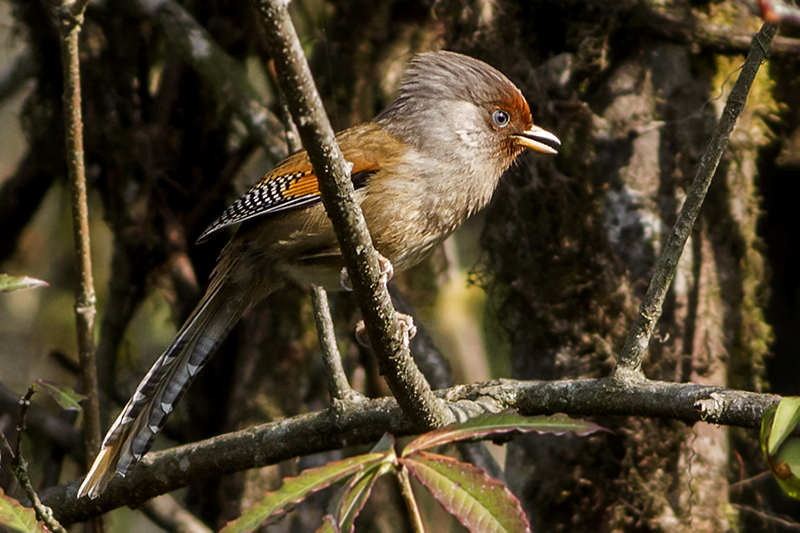

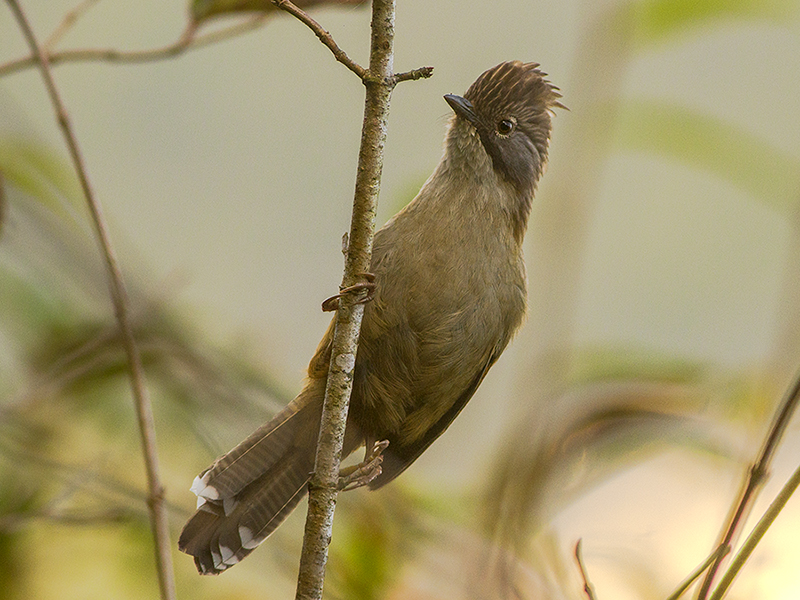
Birds Similar to the Bare-cheeked Babbler
These species are often confused with the Bare-cheeked Babbler due to similar appearance or overlapping range.

