
Bearded Wood-Partridge
Dendrortyx barbatus
Order: Galliformes / Family: Odontophoridae

Wikimedia Commons
About the Bearded Wood-Partridge
The Bearded Wood-Partridge (Dendrortyx barbatus) is a captivating species endemic to the montane cloud forests of eastern Mexico, particularly in the states of Veracruz, Puebla, and Hidalgo. This medium-sized bird is a member of the family Odontophoridae, which includes the New World quails. Its ecological significance lies in its role as both a seed disperser and a prey species for larger predators, contributing to the intricate balance of its forest ecosystem. As ground-dwellers, Bearded Wood-Partridges forage through the forest undergrowth, playing a crucial part in seed distribution and germination, thus maintaining the health of their habitat. The unique microclimate of the cloud forests, characterized by high humidity and rich biodiversity, supports a variety of flora and fauna, making it an ideal home for this species. These forests, often shrouded in mist, provide the moisture and shelter necessary for the partridges' survival. The Bearded Wood-Partridge's presence in these regions underscores the importance of preserving these habitats, which are increasingly threatened by deforestation and land conversion for agriculture. Seasonally, the Bearded Wood-Partridge does not exhibit significant migratory behavior, though it may display slight altitudinal movements in response to climatic changes. During the breeding season, which aligns with the early rainy months, these birds become more vocal and territorial as they establish nesting sites and rear their young. The Bearded Wood-Partridge's unique adaptations and specialized habitat requirements make it a species of interest for ornithologists and conservationists alike.
The Bearded Wood-Partridge belongs to the family Odontophoridae, within the order Galliformes. These birds typically live average 5-7 years with a maximum recorded of 10 years..
How to Identify a Bearded Wood-Partridge
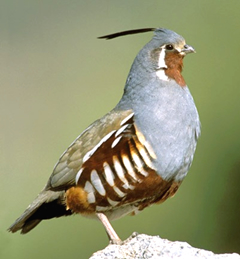
The Bearded Wood-Partridge displays distinctive field marks that facilitate identification in its natural habitat. Adult plumage is predominantly brown, with a mottled pattern that provides excellent camouflage among the forest floor's leaf litter. One of the most striking features is the 'beard,' a collection of elongated, blackish feathers extending from the face down the throat, giving the bird its common name. Males and females exhibit similar plumage, although males are generally slightly larger. Juveniles resemble adults but tend to have duller, less defined markings. When compared to similar species, such as the Long-tailed Wood-Partridge, the Bearded Wood-Partridge can be distinguished by its shorter tail and lack of pronounced tail barring. In flight, which is infrequent and typically short, the Bearded Wood-Partridge exhibits a silhouette with rounded wings and a short tail, indicative of its ground-dwelling habits. Its perching posture is seldom observed due to its preference for the forest understory, where it remains well-camouflaged and elusive.
Having trouble telling birds apart? Upload a photo to our bird identification tool for an instant species match.
Bearded Wood-Partridge Habitat and Range
Preferred Habitat
The Bearded Wood-Partridge's preferred habitat comprises the montane cloud forests of eastern Mexico, thriving at elevations ranging from 1,200 to 3,000 meters. These forests, found in the Sierra Madre Oriental, are characterized by high humidity, frequent fog, and a rich understory of ferns and shrubs, providing ample cover and foraging opportunities. Seasonal habitat shifts are minimal, although slight altitudinal movements may occur during periods of extreme weather. Unlike some other quail species, the Bearded Wood-Partridge is not commonly found in urban or heavily disturbed areas, relying on the dense, undisturbed forest for protection and sustenance.
Geographic Range
The Bearded Wood-Partridge's range is restricted to the eastern slopes of Mexico's Sierra Madre Oriental, primarily within the states of Veracruz, Puebla, and Hidalgo. It does not undertake significant migratory journeys, maintaining a relatively stable presence within its montane forest habitat year-round. This range is characterized by a series of isolated forest patches, leading to some population fragmentation. Despite its limited range, the Bearded Wood-Partridge can be locally abundant in suitable habitats, although human activities such as logging and agriculture pose ongoing threats to its continued survival.
Want to know which birds visit your area? Browse our backyard birds by location guides for region-specific species lists.
What Does the Bearded Wood-Partridge Eat?
The diet of the Bearded Wood-Partridge is primarily composed of seeds, fruits, and insects, reflecting its omnivorous feeding habits. During the wet season, when food is more abundant, the partridge's diet includes a higher proportion of fruits and fresh vegetation. Foraging primarily occurs on the forest floor, where the bird uses its strong legs and beak to scratch and peck through leaf litter in search of sustenance. Insects and small invertebrates are a crucial protein source, especially during the breeding season when dietary needs increase. Feeding typically occurs during the cooler hours of the day, with peak activity in the early morning and late afternoon.
Bearded Wood-Partridge Behavior and Social Structure
Bearded Wood-Partridges exhibit a complex social structure, often forming small family groups or coveys outside the breeding season. Territorial behavior becomes pronounced during the breeding season, with males defending their chosen areas through vocalizations and occasional physical displays. Courtship involves a series of calls and posturing, with males attempting to attract females through visual displays and auditory signals. When faced with predators, the Bearded Wood-Partridge relies on its cryptic plumage and the dense forest understory for concealment, often remaining motionless or opting for a short, rapid flight to escape danger. Daily activities include foraging in the forest understory, dust bathing, and social interactions within their group.
Bearded Wood-Partridge Nesting and Reproduction
Nesting for the Bearded Wood-Partridge occurs primarily during the rainy season, when food resources are abundant. The species prefers to nest on the ground, often hidden beneath dense vegetation or among fallen leaves, providing camouflage and protection from potential predators. Nests are typically shallow depressions lined with leaves and grasses. Clutch size varies, generally consisting of 4 to 6 eggs. Both parents partake in incubation duties, which last approximately 23 to 25 days. After hatching, chicks are precocial, leaving the nest shortly after and being cared for by both parents. Fledging occurs around two weeks, although young birds remain with the family group for some time. The Bearded Wood-Partridge typically raises one brood per year, though favorable conditions might lead to a second.
Bearded Wood-Partridge Sounds and Vocalizations
The vocal repertoire of the Bearded Wood-Partridge includes a series of clear, whistled calls often used during territorial and courtship displays. The primary song consists of a rhythmic series of rising and falling notes, resonating through the forest and serving as an auditory marker of territory. Call notes, often given in a series, facilitate communication within groups, maintaining contact among family members. In response to threats, the bird emits an alarm call, a sharp, harsh note alerting others to potential danger. Dawn chorus activities involve heightened vocalizations, as males assert their presence and defend their territories.
Interesting Facts About the Bearded Wood-Partridge
- 1The Bearded Wood-Partridge's 'beard' is not hair but rather modified feathers that serve as a distinctive identification trait.
- 2Unlike many quail species, the Bearded Wood-Partridge prefers dense forest habitats over open grasslands or fields.
- 3This species is largely sedentary, staying within its limited range year-round instead of undertaking long migrations.
- 4Bearded Wood-Partridges are known for their secretive nature, often heard rather than seen within their dense forest habitats.
- 5The Bearded Wood-Partridge plays a crucial role in its ecosystem by dispersing seeds through its foraging activities.
Bearded Wood-Partridge Conservation Status
The Bearded Wood-Partridge is currently listed as Near Threatened by the IUCN, with population trends showing a decline primarily due to habitat loss and fragmentation. The conversion of cloud forests for agriculture and logging poses significant threats, reducing available habitat and isolating populations. Conservation efforts focus on habitat preservation and the establishment of protected areas to safeguard remaining forest patches. Historically, the species has experienced population fluctuations in response to environmental changes, underscoring the need for continued conservation attention.
Other Odontophoridae Species


Birds Similar to the Bearded Wood-Partridge
These species are often confused with the Bearded Wood-Partridge due to similar appearance or overlapping range.

