
Singing Quail
Dactylortyx thoracicus
Order: Galliformes / Family: Odontophoridae

Wikimedia Commons
About the Singing Quail
The Singing Quail, scientifically known as Dactylortyx thoracicus, is a captivating bird species native to the mountainous regions of Central America. Known for its melodious vocalizations, this quail is an integral part of the forest ecosystems it inhabits, providing both ecological balance and aesthetic beauty.
Primarily found in Mexico's Sierra Madre ranges and extending through Guatemala and Honduras, the Singing Quail favors oak and pine forests at elevations ranging from 800 to 2,500 meters. These elevations provide the dense undergrowth and canopy cover that the quail requires for foraging and protection. Its presence in these areas serves as an indicator of habitat health, as it prefers environments with a rich diversity of flora and fauna.
The Singing Quail plays a vital role in seed dispersal and insect population control. By foraging for seeds and small invertebrates on the forest floor, it helps maintain the delicate balance of its ecosystem. Additionally, its seasonal behaviors, such as flocking in loose groups outside the breeding season, contribute to the dynamic social structures seen within its habitat. During the breeding season, its distinctive calls can be heard echoing through the forest, a sound that marks the onset of new life and the continuation of its species.
Understanding the ecological role of the Singing Quail provides insight into the health and changes within its habitat. Conservation efforts focused on preserving the oak and pine forests it inhabits are crucial to maintaining not only the quail population but also the myriad of species that share its environment. By studying the Singing Quail, researchers gain valuable data on the impacts of climate change, deforestation, and human encroachment in these biodiverse regions.
The Singing Quail belongs to the family Odontophoridae, within the order Galliformes. These birds typically live average 4-6 years with a maximum recorded of 8 years..
How to Identify a Singing Quail
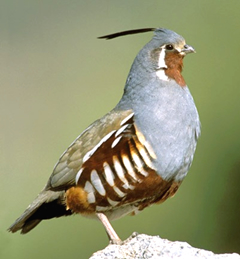
Adult Singing Quails are medium-sized birds with a striking mix of brown, black, and white plumage, making them easily distinguishable from other quail species. The males exhibit a more vibrant coloration than females, with a distinctive black throat patch bordered by white, which serves as a key identifying feature.
Juveniles, while similar in body shape, display a more muted coloration, and their plumage lacks the distinctive throat markings. This difference is important for birdwatchers and researchers when identifying young birds in the field.
While they might be confused with other quail species such as the Montezuma Quail, the Singing Quail's unique plumage patterns and vocalizations set them apart. In flight, their silhouette shows a robust body with short, rounded wings, typical of quails, which aids in quick, agile movements through dense underbrush. Their perching posture is more elusive, often nestled in thick vegetation where their plumage provides excellent camouflage.
Having trouble telling birds apart? Upload a photo to our bird identification tool for an instant species match.
Singing Quail Habitat and Range
Preferred Habitat
The Singing Quail thrives in montane forests, particularly those dominated by oak and pine, across elevations of 800 to 2,500 meters. These forests, found in the Sierra Madre ranges of Mexico and parts of Guatemala and Honduras, provide the dense canopy and understory vital for their survival.
Seasonal habitat shifts are minimal, as the Singing Quail remains a resident bird throughout the year, relying heavily on the stable microclimates provided by these forests. This preference for dense forest environments limits their presence in urban or heavily disturbed areas, underlining the importance of forest conservation for their continued survival.
Geographic Range
The Singing Quail's range is primarily confined to Central America, with its stronghold in the mountainous regions of Mexico, extending into Guatemala and Honduras. It does not undertake significant migrations, instead remaining within its established range year-round.
Population densities tend to be higher in undisturbed forest areas where suitable habitat conditions prevail. This range has remained relatively stable over the years, though threats such as deforestation pose potential risks to its continued stability.
Want to know which birds visit your area? Browse our backyard birds by location guides for region-specific species lists.
What Does the Singing Quail Eat?
The diet of the Singing Quail consists predominantly of seeds, berries, and small invertebrates. During the wet season, when vegetation is lush and insects are plentiful, their diet shifts slightly to take advantage of the increased availability of protein-rich food sources.
Foraging occurs primarily on the forest floor, where the quail uses its strong legs to scratch through leaf litter, uncovering hidden food. This foraging technique not only aids in their dietary needs but also contributes to the aeration and turnover of forest floor materials, benefiting the ecosystem as a whole.
Singing Quail Behavior and Social Structure
The Singing Quail displays a fascinating array of behaviors, especially noted for its social structure. Outside of the breeding season, these birds often form loose, mixed-sex flocks, which provide increased protection against predators and facilitate foraging.
During the breeding season, pairs become more territorial, with the male often performing elaborate vocal displays to both attract a mate and establish dominance within a territory. These vocalizations are not only a method of courtship but also serve as a deterrent to rival males.
The quail's daily activity patterns are crepuscular, with most foraging and social activities occurring during the cooler hours of early morning and late afternoon. This schedule helps them avoid the midday heat and predators that are more active during the day.
Singing Quail Nesting and Reproduction
The nesting habits of the Singing Quail are closely tied to the dense underbrush of their forest habitats. They construct simple ground nests, often hidden beneath shrubs or grass tufts, using materials such as leaves, grasses, and twigs to form a shallow depression.
Clutch size typically ranges from 6 to 10 eggs, with both parents sharing incubation duties over a period of 21 to 24 days. Once hatched, the chicks are precocial, leaving the nest shortly after birth to follow their parents and learn essential survival skills. The number of broods per year can vary, often depending on environmental conditions and food availability.
Singing Quail Sounds and Vocalizations
The primary song of the Singing Quail is a series of clear, melodious whistles, often repeated in a rhythmic pattern that resonates through the forest. These calls play a dual role in mate attraction and territory establishment.
In addition to their primary song, these birds produce a variety of call notes used to communicate with each other. Alarm calls are sharp and urgent, signaling potential danger to other quails in the vicinity. During the dawn chorus, their songs are most prominent, adding a musical backdrop to the awakening forest.
Interesting Facts About the Singing Quail
- 1The Singing Quail's melodious song serves as a key identifier, often heard before the bird is seen.
- 2This species exhibits strong site fidelity, often returning to the same territory year after year.
- 3Singing Quails can often be heard vocalizing in chorus, creating an audible tapestry in their forests.
- 4Their strong legs are adapted for scratching through leaf litter, an essential foraging adaptation.
- 5Unlike many birds, Singing Quails prefer to walk or run rather than fly when disturbed.
- 6The quail's striking plumage provides excellent camouflage against the forest floor.
- 7Both male and female Singing Quails participate actively in raising their young.
Singing Quail Conservation Status
The IUCN currently lists the Singing Quail as a species of Least Concern, though habitat loss due to deforestation remains a significant threat. Population trends appear stable in protected areas, but ongoing conservation efforts focus on preserving and restoring its montane forest habitats. Historical changes in population density have been closely linked to the health of its forest environments, highlighting the importance of sustainable land use practices. Conservation programs often include reforestation and legal protection of critical habitats.
Other Odontophoridae Species


Birds Similar to the Singing Quail
These species are often confused with the Singing Quail due to similar appearance or overlapping range.

