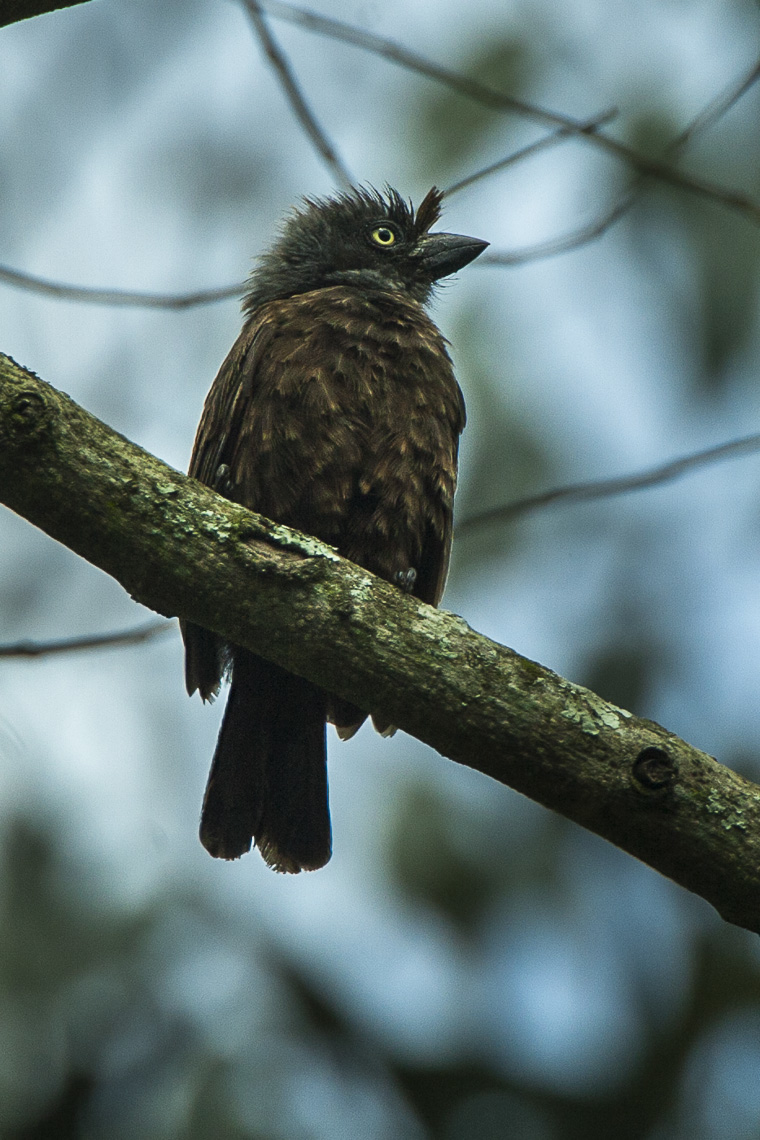
Black-backed Barbet
Lybius minor
Order: Piciformes / Family: Lybiidae

Wikimedia Commons
About the Black-backed Barbet
The Black-backed Barbet, known scientifically as Lybius minor, is a captivating bird species that is part of the family Lybiidae in the order Piciformes. This bird is renowned for its striking coloration, compact size, and distinctive vocalizations. It is primarily found in the tropical regions of Africa, where it inhabits forests, wooded savannas, and bushlands. Countries like Angola, Zambia, and the Democratic Republic of the Congo host significant populations, making it a staple of Central and Southern African avifauna. The ecological role of the Black-backed Barbet is significant. It contributes to the health of its habitat by controlling insect populations and dispersing seeds. As an insectivorous bird, it plays a crucial role in pest control, feeding on beetles, ants, and other small arthropods. This diet supports the barbet’s energy needs, especially during breeding seasons when the demand for food intensifies. Additionally, the species partakes in frugivory, aiding in seed dispersal for various fruiting plants, thus maintaining the ecological balance of its environment. Seasonal behaviors of the Black-backed Barbet include variations in foraging strategies and vocal activity. During the breeding season, typically aligned with the rainy months, these birds become more vocal and territorial. Their calls serve both as mating signals and as a means to establish and defend their territory. Outside the breeding season, they are less conspicuous, often foraging quietly in small family groups. Despite this, their presence remains vital to the ecosystem, as they continue to fulfill their ecological roles year-round.
The Black-backed Barbet belongs to the family Lybiidae, within the order Piciformes. These birds typically live typically 5-7 years, with the oldest known individual living up to 9 years..
How to Identify a Black-backed Barbet
The Black-backed Barbet is a small, robust bird, measuring approximately 16 to 18 cm in length. Its most prominent feature is the stark black coloring on its back, which provides a sharp contrast to the bright red face. The underparts are white with a subtle streaking pattern, and the wings and tail exhibit a mix of black and white. Adult barbets have a characteristic thick bill, suited for their varied diet of fruits and insects. Males and females appear similar, although females might display slightly duller plumage. Juveniles can be distinguished by their overall duller appearance and less defined color boundaries, particularly in the red facial area. In terms of flight, the Black-backed Barbet exhibits a direct and purposeful flight pattern, with rapid wing beats and a tendency to glide between bouts of flapping. When perched, they stand upright and maintain a puffed-up appearance, often visible in the upper canopy. The bird’s silhouette in flight or while perching is compact, which is typical for members of the barbet family. Compared to similar species, such as the Red-and-yellow Barbet, the Black-backed Barbet's defining feature remains its entirely black back, aiding easy identification during field observations.
Having trouble telling birds apart? Upload a photo to our bird identification tool for an instant species match.
Black-backed Barbet Habitat and Range
Preferred Habitat
The Black-backed Barbet inhabits a range of tropical habitats, predominantly favoring forested areas and wooded savannas. It can be found at varying elevations, from lowland forests to montane regions up to 2,000 meters. These birds show a preference for areas with abundant fruit-bearing trees and dense foliage. In regions like the miombo woodlands of Zambia and Angola, they thrive in the mosaic of forest and open land. They do not typically venture into urban environments, preferring the tranquility and resources of rural settings. Seasonal habitat shifts are minor and mostly relate to resource availability rather than migratory changes. During the dry season, they may frequent areas with permanent water sources, while the wet season sees them spreading more uniformly across their range, drawn by the abundance of insects and fruits.
Geographic Range
The breeding and resident range of the Black-backed Barbet covers a substantial portion of Central and Southern Africa. It is common in countries such as Angola, Zambia, the Democratic Republic of the Congo, and Tanzania. This species does not undertake long-distance migrations, but it may engage in localized movements in response to seasonal food availability and environmental conditions. Within its range, population densities can vary, with higher concentrations typically found in regions where suitable habitat and food resources coexist. Despite not being migratory, certain populations might show altitudinal movements, especially in hilly or montane regions during different seasons. The bird is often noted in biodiversity surveys across its range, indicating a stable presence within its preferred habitats.
Want to know which birds visit your area? Browse our backyard birds by location guides for region-specific species lists.
What Does the Black-backed Barbet Eat?
The diet of the Black-backed Barbet primarily consists of insects and fruits, making it both an insectivore and frugivore. During the breeding season, insects such as beetles, ants, and caterpillars form the core of their diet, providing the necessary protein for chick development. These birds forage by gleaning insects from foliage and bark, often seen darting quickly to snatch their prey. In the non-breeding season, their diet shifts more towards fruit, with figs and berries being particularly favored. The barbet uses its robust bill to pluck and consume fruits, often aiding in seed dispersal. Their feeding schedule is diurnal, with peak activity in the early morning and late afternoon, aligning with periods of cooler temperatures and increased prey activity.
Black-backed Barbet Behavior and Social Structure
The social structure of the Black-backed Barbet is primarily monogamous, with pairs often seen foraging together. They are territorial during the breeding season, vigorously defending their nesting area with vocalizations and displays. Courtship involves mutual feeding and synchronized singing, which strengthens pair bonds. While generally solitary or found in pairs, these barbets can occasionally be seen in small family groups, particularly during the non-breeding season. Their response to predators includes a combination of alarm calls and evasive flight, often retreating to dense foliage for cover. Daily activity patterns are characterized by morning and afternoon foraging sessions, with midday periods spent resting or preening in shaded areas.
Black-backed Barbet Nesting and Reproduction
The nesting habits of the Black-backed Barbet involve excavating cavities in trees, a behavior typical of the Lybiidae family. They prefer dead or decaying wood, which is easier to carve out with their strong bills. Nests are usually located at a height of 3 to 10 meters above ground, providing protection from ground predators. The clutch size typically ranges from 2 to 4 eggs, which both parents incubate over a period of approximately 14 to 16 days. After hatching, the chicks remain in the nest for about 30 days before fledging. Both parents share duties in feeding and caring for the young, ensuring high survival rates. The species generally raises one brood per year, although favorable conditions may lead to a second.
Black-backed Barbet Sounds and Vocalizations
The primary song of the Black-backed Barbet is a series of rhythmic, rapid notes with a clear, ringing quality. It often repeats in a 'tuk-tuk-tuk' pattern, which carries well through the forest. This vocalization serves as both a territorial call and a mating signal. The bird also produces a variety of call notes, including shorter, harsher sounds used as alarm calls when predators are near. During the dawn chorus, the Black-backed Barbet's vocalizations blend into the cacophony of the forest, but its distinctive pattern makes it identifiable. Compared to other barbets, its call is more melodious and less harsh, adding a unique auditory element to its habitat.
Interesting Facts About the Black-backed Barbet
- 1The Black-backed Barbet's powerful bill allows it to excavate nests in hard, dead wood, a skill uncommon among similar-sized birds.
- 2This species' diet shifts seasonally; it consumes more insects during the breeding season and more fruits when raising young.
- 3Black-backed Barbets can sometimes be spotted in mixed-species flocks, where they benefit from cooperative foraging.
- 4Their vocalizations are not only a means of communication but also play a role in mate attraction and territory defense.
- 5Despite being primarily a forest bird, the Black-backed Barbet can adapt to savanna habitats, showing remarkable ecological flexibility.
- 6The species' striking plumage makes it a favorite among birdwatchers, contributing to eco-tourism in its range.
- 7The Black-backed Barbet is known for its persistent calling throughout the day, a behavior that makes it easier to locate in dense forests.
Black-backed Barbet Conservation Status
The Black-backed Barbet is currently listed as Least Concern by the IUCN, with a stable population trend. Despite habitat loss due to deforestation and agricultural expansion, the species has shown resilience by adapting to secondary forests and altered landscapes. Conservation efforts focus on preserving critical habitats, particularly in regions where deforestation rates are high. Historically, the population has remained stable, benefiting from its wide range and adaptability. Ongoing monitoring and habitat protection are essential to ensure this species continues to thrive, especially in face of increasing anthropogenic pressures.