Black-hooded Laughingthrush
Garrulax milleti
Order: Passeriformes / Family: Leiothrichidae

Wikimedia Commons
About the Black-hooded Laughingthrush
The Black-hooded Laughingthrush (Garrulax milleti) is a notable member of the Leiothrichidae family, inhabiting the subtropical and tropical moist lowland forests of Southeast Asia. Its presence is primarily noted in Vietnam, Laos, and Cambodia, where it thrives in the dense undergrowth of these rich ecosystems. This bird plays a critical role in seed dispersal and insect population control, contributing to the ecological balance of its habitat. The Black-hooded Laughingthrush is significant not only for its ecological contributions but also for its cultural importance in the regions where it is found. Many local communities view it as a symbol of the vibrant biodiversity that characterizes Southeast Asia’s landscapes. The bird's melodious calls and social nature make it a favorite among birdwatchers and researchers alike. Seasonal behaviors of the Black-hooded Laughingthrush include forming small flocks outside of the breeding season, which enhances their ability to forage and avoid predators. These flocks often move through the forest in a seemingly choreographed fashion, a spectacle that is both a delight and a valuable insight into the species' social structure. The bird's adaptability to different forest types, from lowland areas to montane regions up to 1,500 meters, demonstrates its resilience. During the breeding season, which typically spans from March to June, the Black-hooded Laughingthrush becomes more territorial, with pairs breaking off from larger groups to establish nesting sites. Despite pressures from habitat destruction and fragmentation, the species has shown some resilience due to its adaptability. However, continued conservation efforts are crucial to ensure its long-term survival. Understanding the ecological role and behavior of Garrulax milleti provides insight into the health of its forest environments, making it an important indicator species for conservationists. By studying its habits, researchers can gain valuable information about the broader ecosystem, including the health of insect populations and the diversity of plant life. This level of understanding is vital for developing effective conservation strategies in the face of ongoing environmental challenges. With its vibrant presence and role in the ecosystem, the Black-hooded Laughingthrush stands as a testament to the intricate web of life in Southeast Asia's forests.
The Black-hooded Laughingthrush belongs to the family Leiothrichidae, within the order Passeriformes. These birds typically live average 9 years, with a maximum of 14 years recorded..
How to Identify a Black-hooded Laughingthrush
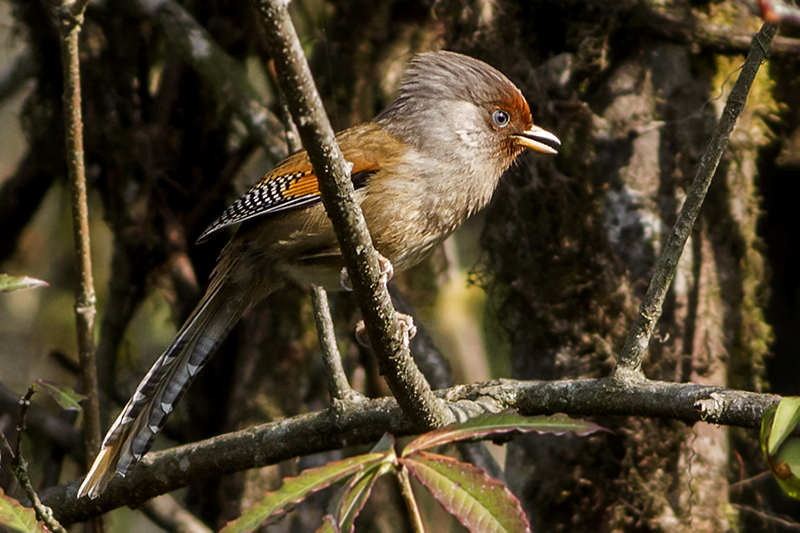
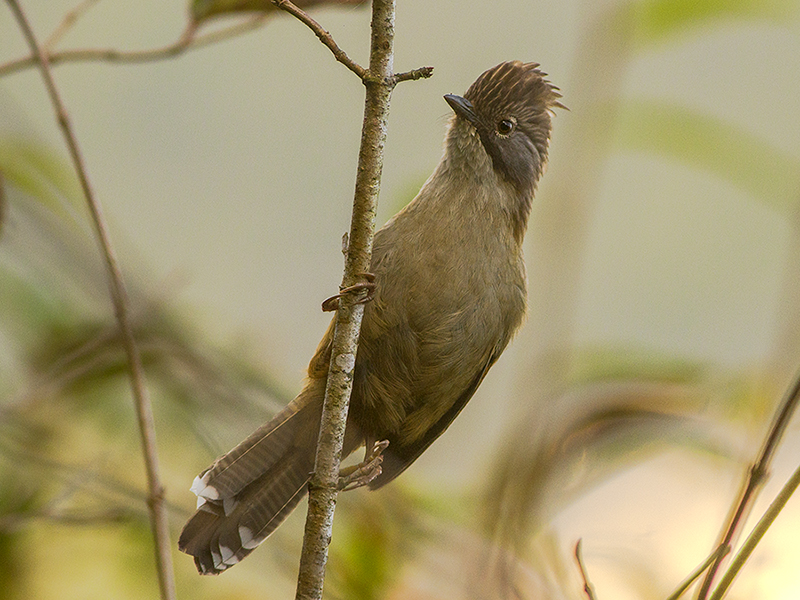
The Black-hooded Laughingthrush is immediately recognizable by its striking black hood that covers the head, extending down to the nape and throat. This distinctive feature contrasts sharply with its otherwise bright plumage, which includes a mix of olive-green body feathers and a russet-brown back and wings. The underparts are lighter, often appearing yellowish, which can be a helpful identification marker in the field. Juveniles resemble adults but with a slightly duller tone overall and a less pronounced black hood, making them distinguishable from older birds. Males and females exhibit similar plumage, which can make sexing in the field challenging. However, their behavior during the breeding season, such as nest building and courtship feeding, can offer clues to their gender. Compared to similar species like the White-crested Laughingthrush, which has a white head, the Black-hooded Laughingthrush is unique in its coloration, helping to avoid confusion. In flight, the species presents a compact silhouette with broad wings and a relatively short tail, which helps it maneuver through dense foliage. When perched, it often assumes an upright posture, frequently seen in pairs or small groups, chattering and foraging.
Having trouble telling birds apart? Upload a photo to our bird identification tool for an instant species match.
Black-hooded Laughingthrush Habitat and Range
Preferred Habitat
The Black-hooded Laughingthrush inhabits tropical and subtropical moist lowland forests, demonstrating a preference for areas with dense undergrowth. It can be found at elevations ranging from sea level to about 1,500 meters, although it is more commonly observed in the mid-elevation zones where forest density offers ample cover and food resources. These birds are notably absent from urban areas, preferring the seclusion and resources of more remote forested regions. During certain times of the year, particularly outside the breeding season, they may venture into secondary forests and edge habitats, where food availability is higher. The species shows some flexibility in habitat choice, as evidenced by its presence in both primary and logged forests, though it thrives best in undisturbed settings. As a year-round resident, the Black-hooded Laughingthrush does not exhibit significant seasonal habitat shifts, maintaining a relatively stable presence within its preferred range. Its reliance on forested environments highlights the importance of preserving these habitats from deforestation and human encroachment.
Geographic Range
The Black-hooded Laughingthrush is primarily found in Southeast Asia, with its range encompassing parts of Vietnam, Laos, and Cambodia. It is a non-migratory bird, residing within these regions throughout the year. Within Vietnam, it is more commonly found in the Annamite Range, a biodiversity hotspot known for its rich avian life. In Laos, its presence is noted in both the northern and central parts of the country, while in Cambodia, it inhabits several of the country’s remaining forest tracts. The species tends to be more abundant in areas where dense, moist forests are prevalent, often forming small, localized populations. Despite its relatively restricted range, the Black-hooded Laughingthrush is considered a stable species in terms of population density, although certain areas may experience fluctuations due to habitat changes. The bird's range does not extend to neighboring countries like Thailand or China, likely due to differences in habitat availability and environmental conditions. Its limited distribution underscores the importance of regional conservation efforts to ensure the species’ continued survival.
Want to know which birds visit your area? Browse our backyard birds by location guides for region-specific species lists.
What Does the Black-hooded Laughingthrush Eat?
The diet of the Black-hooded Laughingthrush primarily consists of insects and other small invertebrates, which it gleans from the forest floor and lower vegetation. During the breeding season, the bird’s diet may shift to include a higher proportion of protein-rich insects, supporting the nutritional needs of growing chicks. In addition to insects, these laughingthrushes also consume a variety of fruits and berries, particularly during the non-breeding season when insect availability may decrease. This frugivorous component of their diet highlights their role in seed dispersal, which aids in the propagation of various plant species within their habitat. The Black-hooded Laughingthrush employs a foraging technique that involves moving quietly through dense underbrush, often using its bill to flick aside leaf litter in search of prey. It may also be observed feeding in small flocks, an activity that allows them to cover larger areas more efficiently and reduce predation risk. Feeding typically occurs during the early morning and late afternoon when temperatures are cooler, and insect activity is higher.
Black-hooded Laughingthrush Behavior and Social Structure
Black-hooded Laughingthrushes are social birds, often seen in small flocks of up to 15 individuals outside the breeding season. This flocking behavior facilitates more efficient foraging and provides safety in numbers against predators. Territorial behavior becomes more pronounced during the breeding season, with pairs establishing and defending nesting areas. Courtship displays involve mutual preening and food offerings, reinforcing pair bonds. The species exhibits a curious and active demeanor, frequently engaging in vocalizations that serve both social and territorial purposes. Its response to predators involves a mix of alarm calls and evasive flight into dense cover, highlighting its reliance on forest density for protection. Daily activity patterns include periods of intense foraging during cooler parts of the day, punctuated by rest and preening. The social structure within flocks can be complex, with a hierarchy that dictates access to resources and mating opportunities. This bird’s inquisitive nature and adaptability to various forest conditions underscore its resilience.
Black-hooded Laughingthrush Nesting and Reproduction
The Black-hooded Laughingthrush builds its nest in the thick foliage of trees and shrubs, typically at heights ranging from 1 to 3 meters above the ground. The nest is cup-shaped, constructed from twigs, leaves, and grasses, with a soft lining of finer materials for comfort and insulation. Preferred nesting sites are often in dense thickets, which provide concealment from predators. Clutch sizes range from 2 to 4 eggs, with the incubation period lasting approximately 14 to 16 days. Both parents share incubation duties and are actively involved in feeding and caring for the young. Fledging occurs about 16 to 18 days after hatching, although fledglings may continue to depend on parental support for several weeks post-fledging. The Black-hooded Laughingthrush typically raises one to two broods per year, depending on environmental conditions and food availability. The species’ nesting habits reflect a high degree of parental investment, which is crucial for the survival of their offspring in the competitive forest environment.
Black-hooded Laughingthrush Sounds and Vocalizations
The Black-hooded Laughingthrush is known for its melodious and complex song, which includes a series of liquid notes delivered at a moderate tempo. The primary song features a mix of whistles and chatters, often interspersed with softer, flute-like notes. These vocalizations serve to establish territory and attract mates, particularly during the breeding season. In addition to its song, the species produces distinct call notes used for communication within flocks, often resembling a high-pitched 'tsee-tsee' or a sharp 'cheek-cheek.' Alarm calls are harsher and more rapid, signaling the presence of potential threats. During the dawn chorus, Black-hooded Laughingthrushes are particularly vocal, contributing to the vibrant soundscape of their forest habitats. The complexity and variety of their calls make them one of the more vocally intriguing members of their family.
Interesting Facts About the Black-hooded Laughingthrush
- 1The Black-hooded Laughingthrush is often heard before it is seen, thanks to its distinctive calls that can travel long distances through the forest.
- 2Despite its vibrant appearance, the Black-hooded Laughingthrush is adept at avoiding detection by predators, blending into the dense forest foliage.
- 3The species plays a vital role in its ecosystem as a seed disperser, contributing to the regeneration and diversity of forest flora.
- 4Black-hooded Laughingthrushes have been observed using their bills to manipulate tools, such as sticks, to help find food.
- 5These birds are particularly active during dawn and dusk, times when insect activity peaks and foraging is most productive.
- 6Their social nature means that they often engage in communal activities, such as bathing and sunning, which strengthen social bonds.
- 7The Black-hooded Laughingthrush has a penchant for mimicry, occasionally incorporating sounds from other species into its own vocal repertoire.
Black-hooded Laughingthrush Conservation Status
Currently classified as Least Concern by the IUCN, the Black-hooded Laughingthrush maintains a stable population across its range. However, habitat destruction due to logging and agricultural expansion poses ongoing threats to its habitat. Local conservation efforts focus on protecting forest habitats and promoting sustainable land-use practices. Historical population changes have shown resilience, albeit with localized declines in heavily deforested areas. Conservationists advocate for increased awareness and protection of critical habitats, particularly in biodiversity-rich regions like the Annamite Range. Continued monitoring of population trends and habitat conditions is essential to mitigate potential future declines. Collaborative efforts involving local communities are key to successful conservation initiatives that ensure the species' long-term survival.