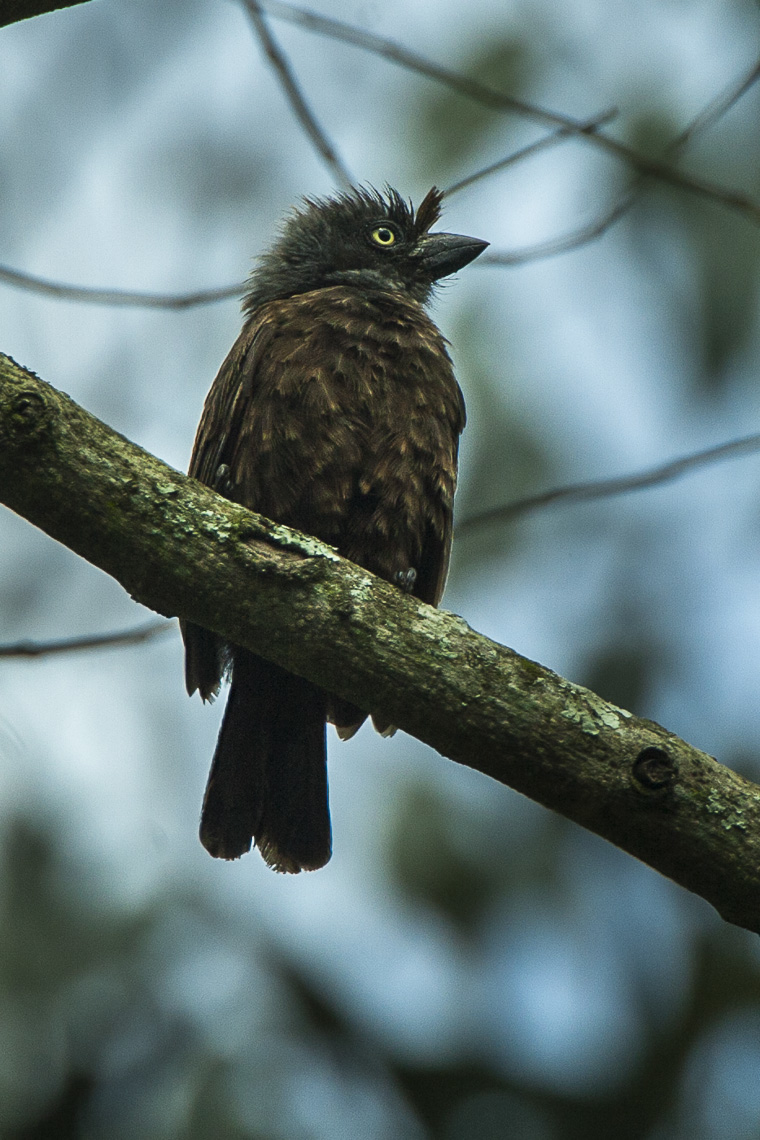
Black-throated Barbet
Tricholaema melanocephala
Order: Piciformes / Family: Lybiidae

Wikimedia Commons
About the Black-throated Barbet
The Black-throated Barbet (Tricholaema melanocephala) is a striking bird known for its vibrant plumage and distinctive black throat, setting it apart from other members of the barbet family. Endemic to East Africa, this species thrives in arid and semi-arid environments, particularly favoring scrublands and open woodlands. Its range extends through countries such as Ethiopia, Somalia, Kenya, and Tanzania, where it occupies a significant ecological niche as both a seed disperser and a predator of insects. These birds contribute greatly to the ecosystems they inhabit by aiding in plant reproduction and controlling insect populations. Seasonal behaviors of the Black-throated Barbet include variations in foraging patterns and habitat use, often driven by climatic changes and food availability. During the breeding season, these barbets become more territorial, defending their chosen nesting sites with vigor. In non-breeding months, they exhibit more social behaviors, occasionally forming loose flocks, especially around plentiful food sources. The Black-throated Barbet's role in its ecosystem cannot be overstated. As a primary consumer of fruits, its feeding habits greatly influence the distribution and germination of seeds in its habitat. The barbet's presence signals a healthy, balanced ecosystem, as it requires a diverse array of plant and insect life to thrive. Its adaptability to various environmental conditions, including both rural and increasingly urban areas, highlights the species' resilience and ecological importance. Despite facing habitat loss in some regions, the Black-throated Barbet remains a common sight across much of its range, though continued monitoring is necessary to ensure its populations remain stable. Its resilience and adaptability make the Black-throated Barbet a fascinating subject for study, providing insights into the complex interactions within African ecosystems.
The Black-throated Barbet belongs to the family Lybiidae, within the order Piciformes. These birds typically live average 7 years, with a maximum recorded lifespan of 13 years..
How to Identify a Black-throated Barbet
The adult Black-throated Barbet is unmistakable with its bright green body, black throat, and vibrant red forehead. Its crown is black, extending down to the throat, giving it the name. The underparts are primarily whitish, contrasting with the vivid colors on the head and back. Males and females are similar in appearance, though females might display slightly duller hues. Juveniles resemble adults but have more subdued coloring, particularly on the head. In flight, the Black-throated Barbet has a distinctive silhouette with a robust body and short tail, wingbeats are rapid, and the flight is direct. The posture while perching is upright, often seen on exposed branches or tree trunks. Although the Black-throated Barbet can be confused with other barbet species, its black throat provides a reliable distinguishing feature. Other species may share the green and red coloration but lack the unique black throat patch.
Having trouble telling birds apart? Upload a photo to our bird identification tool for an instant species match.
Black-throated Barbet Habitat and Range
Preferred Habitat
The Black-throated Barbet primarily inhabits arid and semi-arid regions, thriving in open woodlands, scrublands, and savanna habitats. These birds are often found at elevations ranging from sea level to about 2000 meters, depending on the local geography. In Ethiopia, they are commonly observed in acacia-dominated landscapes, while in Kenya, they prefer areas with scattered trees and bushes. Seasonal shifts in habitat use can occur, with barbets moving to higher elevations during wetter months when food availability increases. In urban areas, the Black-throated Barbet has adapted well, often seen in gardens and parks where fruiting trees provide ample foraging opportunities.
Geographic Range
The Black-throated Barbet's range extends across several East African nations. It is primarily found in Ethiopia, Somalia, Kenya, and Tanzania. Within these countries, the species occupies a wide range of habitats, although it is most densely populated in regions with abundant fruiting plants. In Ethiopia, the barbet is common in the Rift Valley and surrounding areas, while in Kenya, it is frequently observed in the central and northern parts. The species does not undertake long migrations but may exhibit some local movements in response to food availability and climatic conditions. Population densities vary, with hotspots in areas where ideal habitat conditions are met.
Want to know which birds visit your area? Browse our backyard birds by location guides for region-specific species lists.
What Does the Black-throated Barbet Eat?
The Black-throated Barbet's diet is mainly composed of fruits and insects. It shows a marked preference for berries and small fruits, which it ingests whole. During the breeding season, when energy demands are higher, the barbet increases its intake of protein-rich insects. Typical prey includes beetles, caterpillars, and grasshoppers. The bird employs a sit-and-wait foraging strategy, perching on branches before swooping down to capture prey or snatch fruit. Seasonal variations in food sources do occur, with a greater emphasis on insects during wetter months when these are more abundant. The barbet feeds primarily in the morning and late afternoon when temperatures are cooler.
Black-throated Barbet Behavior and Social Structure
The Black-throated Barbet exhibits a range of intriguing behaviors. Socially, it is generally solitary or seen in pairs, though small groups may form during non-breeding seasons. These birds are territorial, especially during breeding, vigorously defending their territories from rivals. Courtship involves elaborate displays, including vocal duets and synchronized movements. The barbet's response to predators involves loud alarm calls and evasive flight patterns. Daily activities include periods of intense foraging interspersed with rest during the hottest parts of the day. The barbet often perches conspicuously while scanning for food or observing its surroundings.
Black-throated Barbet Nesting and Reproduction
Black-throated Barbets nest in tree cavities, often utilizing old woodpecker holes or natural hollows. The birds may also excavate their own nests in softer wood. Nesting sites are typically located 2-10 meters above ground, offering protection from ground predators. The female lays 2-4 eggs per clutch, with both parents sharing incubation duties over a period of approximately 14 days. After hatching, the chicks remain in the nest for about 30 days, during which both parents feed them. The barbet typically raises one brood per year, although favorable conditions can lead to a second brood.
Black-throated Barbet Sounds and Vocalizations
The primary song of the Black-throated Barbet consists of a series of melodious, repetitive notes, often described as 'too-too-too.' These calls vary slightly between individuals, adding a unique signature to each bird's song. The barbet also produces a variety of call notes, including sharp 'chak' sounds used in communication between mates. During the dawn chorus, the Black-throated Barbet's song stands out for its rhythmic regularity and clear, bell-like quality. Alarm calls are harsher and more rapid, signaling potential threats to nearby conspecifics.
Interesting Facts About the Black-throated Barbet
- 1The Black-throated Barbet can consume fruits nearly half its body size, demonstrating its adaptability in foraging.
- 2These birds are key seed dispersers, helping to maintain the biodiversity of their habitats through their fruit-eating habits.
- 3Although primarily fruit-eaters, Black-throated Barbets can spend up to 40% of their foraging time on insects during the breeding season.
- 4The species' distinctive calls can carry over 300 meters, aiding in territory establishment and mate attraction.
- 5Black-throated Barbets have been observed using their strong bills to excavate nests in surprisingly hard wood.
- 6Despite their bright colors, these barbets blend remarkably well into the foliage of their habitat, making them challenging to spot.
- 7The Black-throated Barbet's territorial displays often include remarkable aerial maneuvers and vocal duets.
Black-throated Barbet Conservation Status
The Black-throated Barbet is currently classified as Least Concern by the IUCN, with its population considered stable. Despite facing habitat loss in some areas due to agricultural expansion and deforestation, the bird's adaptability has allowed it to maintain healthy numbers. Conservation efforts focus on habitat preservation and monitoring population trends. Historically, the barbet has shown resilience to environmental changes, but ongoing efforts are necessary to mitigate future threats and ensure its continued survival.