Blackcap Babbler
Turdoides reinwardtii
Order: Passeriformes / Family: Leiothrichidae

Wikimedia Commons
About the Blackcap Babbler
The Blackcap Babbler, Turdoides reinwardtii, is a captivating member of the family Leiothrichidae. This species is native to the dense forests and lush woodlands of West Africa, particularly thriving in countries like Senegal, Gambia, and Nigeria. An integral part of the avian community, the Blackcap Babbler plays a crucial ecological role by aiding in seed dispersal and insect control. Known for its adaptability, this bird often inhabits secondary forests and overgrown plantations, areas impacted by human activity. Despite habitat changes, the Blackcap Babbler demonstrates remarkable resilience, often observed in both rural and semi-urban environments. Throughout the year, this bird remains active, with little to no significant migratory behavior. Instead, it adapts to seasonal fluctuations in food availability and environmental conditions by shifting its foraging methods and dietary preferences. During the breeding season, typically from March to June, the Blackcap Babbler becomes more territorially active, engaging in vocal displays and cooperative breeding strategies. The communal nature of these birds, combined with their intricate social structures, underscores their importance in maintaining the ecological balance within their native habitats. Understanding the Blackcap Babbler's role in these ecosystems provides insight into the broader dynamics of West African avifauna.
The Blackcap Babbler belongs to the family Leiothrichidae, within the order Passeriformes. These birds typically live typically 6-8 years in the wild..
How to Identify a Blackcap Babbler
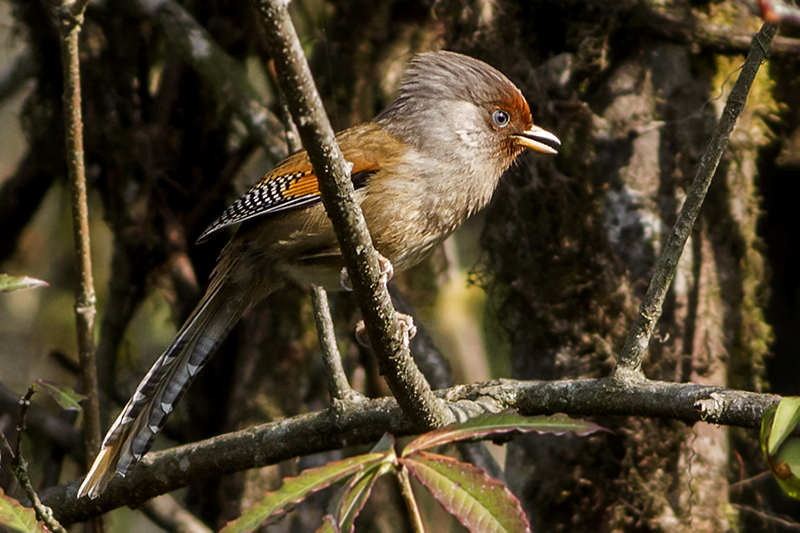
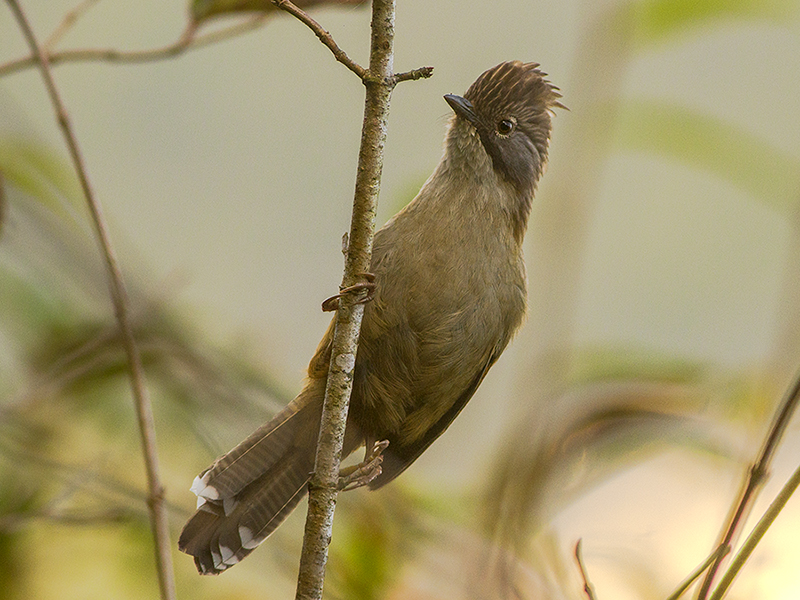
The Blackcap Babbler is easily identifiable by its striking black cap, which contrasts sharply with its predominantly brown body. Adult birds exhibit a rich, warm brown plumage that covers the back, wings, and tail. Their underparts are a lighter, buffy brown, offering a subtle contrast to the darker upperparts. In terms of size, the Blackcap Babbler measures approximately 20 to 23 centimeters in length, with no significant size difference between males and females. Juveniles appear similar to adults but possess a slightly duller plumage, lacking the full intensity of the adult's coloration. Unlike many bird species, the Blackcap Babbler shows minimal sexual dimorphism, making it difficult to distinguish males from females purely based on physical appearance. When observing this species, birders should note the bird's distinctive head pattern, with its black cap extending from the crown to the nape, setting it apart from similar species such as the Brown Babbler. In flight, the Blackcap Babbler displays an undulating pattern, characterized by short glides interspersed with rapid wingbeats. On the perch, it maintains an upright posture, often engaging in social interactions with its group members.
Having trouble telling birds apart? Upload a photo to our bird identification tool for an instant species match.
Blackcap Babbler Habitat and Range
Preferred Habitat
The Blackcap Babbler predominantly inhabits dense, tropical shrublands and secondary forests. It shows a preference for areas with thick undergrowth and abundant foliage, which provide ample cover and foraging opportunities. The bird is commonly found at elevations ranging from sea level to about 1,200 meters. While primarily associated with natural habitats, the Blackcap Babbler also adapts to agricultural areas and plantations, particularly where native vegetation remains intact. This adaptability allows it to persist in semi-urban locales, often near human habitations, provided that sufficient natural cover is available. Unlike some birds, the Blackcap Babbler does not exhibit significant seasonal habitat shifts, maintaining its presence in these environments year-round.
Geographic Range
The Blackcap Babbler has a stable and extensive range across West Africa. It is commonly found in countries such as Senegal, Gambia, Guinea, Sierra Leone, Liberia, Ivory Coast, Ghana, and Nigeria. This bird prefers regions with lush, tropical environments, where dense vegetation offers the ideal conditions for feeding and nesting. While not a migratory species, the Blackcap Babbler exhibits local movements based on food availability and environmental conditions. Within its range, population densities vary, with higher concentrations typically found in areas that offer a mix of forest and scrubland habitats. The species is absent from arid regions and tends to avoid high-altitude areas where suitable habitat is lacking.
Want to know which birds visit your area? Browse our backyard birds by location guides for region-specific species lists.
What Does the Blackcap Babbler Eat?
The diet of the Blackcap Babbler consists primarily of insects, which it actively forages in the undergrowth. This bird employs a variety of foraging techniques, often seen gleaning insects from leaves and branches or catching prey mid-air. During certain seasons, when insect abundance declines, the Blackcap Babbler diversifies its diet to include fruits and seeds. The bird exhibits a flexible feeding schedule, primarily foraging during the cooler morning and late afternoon hours. Despite its preference for small insects, the Blackcap Babbler has been observed tackling larger prey items when available, showcasing its adaptability in food selection.
Blackcap Babbler Behavior and Social Structure
The Blackcap Babbler is a highly social bird, often observed in cohesive groups of five to ten individuals. These groups engage in cooperative behaviors, including collective foraging and group defense against predators. Territorial by nature, these groups often establish and maintain specific territories, using vocal displays to communicate boundaries and deter intruders. During the breeding season, pairs within the group become more vocal, engaging in complex courtship displays that involve synchronized movements and calls. The Blackcap Babbler's daily activities include periods of intense foraging interspersed with social interactions. Despite their social nature, these birds exhibit a strong response to perceived threats, quickly retreating to dense cover when alarmed.
Blackcap Babbler Nesting and Reproduction
The Blackcap Babbler constructs its nest using an assortment of organic materials, often selecting sites within dense shrubbery or low tree branches. The nest typically consists of twigs, leaves, and grasses, woven into a compact structure. Females lay clutches of 2 to 4 eggs, which incubate over a period of approximately 14 to 16 days. Both parents share incubation duties and participate in feeding the hatchlings. The fledging period lasts about 16 to 20 days post-hatching, during which time the young remain under the close supervision of adult birds. The Blackcap Babbler usually raises one to two broods per year, depending on environmental conditions and food availability.
Blackcap Babbler Sounds and Vocalizations
The Blackcap Babbler's vocalizations are a key aspect of its social behavior. Its primary song comprises a series of melodious, fluty notes, delivered in a rhythmic sequence. These songs serve both to establish territory and to strengthen group cohesion. In addition to its song, the Blackcap Babbler produces a variety of call notes, including sharp, alarm calls used to alert group members to potential dangers. During the early morning hours, the bird participates in a dawn chorus, a communal vocal display that reinforces social bonds within the group.
Interesting Facts About the Blackcap Babbler
- 1The Blackcap Babbler can form groups of up to 15 individuals, showcasing its highly social demeanor.
- 2Despite their size, Blackcap Babblers are ferocious defenders of their territory, often engaging in vocal confrontations.
- 3Historical records indicate that the Blackcap Babbler has remained stable in population for over a century.
- 4The bird's black cap is a key feature, helping researchers quickly identify it from related babbler species.
- 5Blackcap Babblers are known to adapt well to altered habitats, thriving even in areas with human activity.
Blackcap Babbler Conservation Status
The Blackcap Babbler is currently classified as Least Concern by the IUCN due to its wide distribution and stable population trend. However, habitat loss from deforestation and agricultural expansion poses a potential threat to certain populations. Conservation efforts focus on preserving critical habitats and promoting sustainable land-use practices. Historically, the Blackcap Babbler has shown resilience to habitat changes, but continued monitoring is essential to ensure long-term population stability.