Blue-winged Laughingthrush
Trochalopteron squamatum
Order: Passeriformes / Family: Leiothrichidae

Wikimedia Commons
About the Blue-winged Laughingthrush
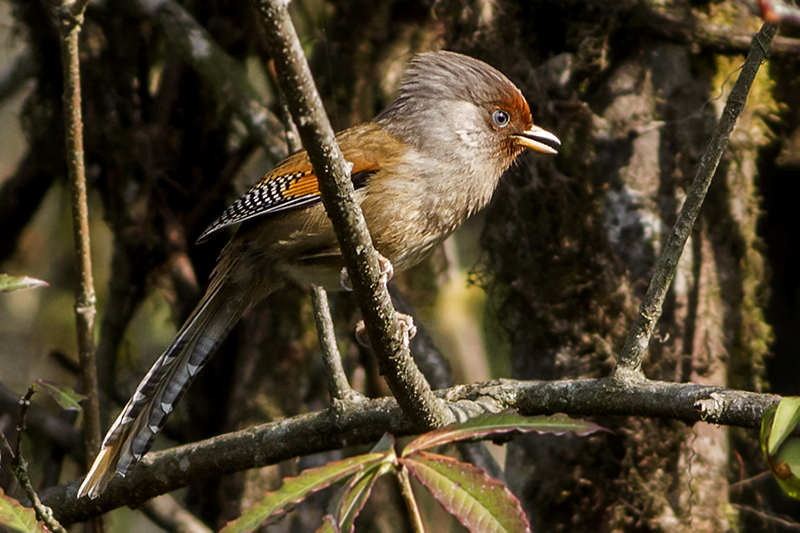
The Blue-winged Laughingthrush (Trochalopteron squamatum) is a captivating member of the Leiothrichidae family, renowned for its melodious calls and vibrant plumage. This bird, predominantly found in South and Southeast Asia, exhibits an intricate blend of colors, with deep blue wings that sharply contrast its otherwise earthy tones. Native to countries such as India, Bhutan, and China, it inhabits subtropical and temperate forests, often thriving in the undergrowth where it can forage and nest with relative safety. The species plays a vital role in its ecosystem by aiding seed dispersal and controlling insect populations, contributing to the ecological balance of its habitat. Seasonal behaviors include altitudinal migrations in some regions, where populations may move to lower elevations during the colder months, showcasing adaptability to changing environmental conditions. The Blue-winged Laughingthrush's presence is of significant importance, not only as a component of biodiversity but also as a species of interest for birdwatchers and ecotourists, who flock to its habitats hoping to catch a glimpse of its vivid colors and hear its enchanting calls.
The Blue-winged Laughingthrush belongs to the family Leiothrichidae, within the order Passeriformes. These birds typically live average 6-8 years with a maximum recorded of 12 years..
How to Identify a Blue-winged Laughingthrush
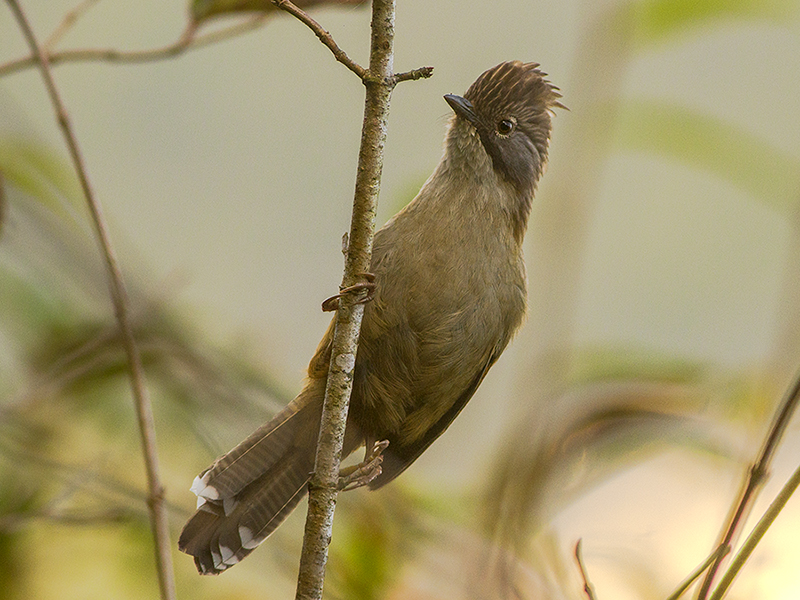
The adult Blue-winged Laughingthrush is a medium-sized bird, typically measuring about 23 to 26 centimeters in length. Its most striking feature is the vivid blue coloration of its wings, which contrasts with its predominantly gray-brown body. The head and upperparts are adorned with intricate patterns of scales, giving it a textured appearance. Males and females are similar in appearance, though females may exhibit slightly duller plumage. Juveniles resemble adults but often show less definition in their wing colors and scaling. When in flight, the Blue-winged Laughingthrush exhibits a distinctive silhouette with broad wings and a long tail, aiding identification even at a distance. Its perching posture is often upright, allowing it to maintain an alert stance while scanning for food. Among similar species, the Blue-winged Laughingthrush can be confused with the Black-faced Laughingthrush, but the latter lacks the prominent blue wing coloration.
Having trouble telling birds apart? Upload a photo to our bird identification tool for an instant species match.
Blue-winged Laughingthrush Habitat and Range
Preferred Habitat
The Blue-winged Laughingthrush inhabits dense forest undergrowth, favoring subtropical and temperate zones. It thrives in areas with thick shrubbery and bamboo thickets, which provide ample cover and food resources. This species is typically found at elevations ranging from 600 to 3,000 meters, often preferring mid-elevation forests in the Himalayan foothills. During winter, some populations may shift to lower elevations, capitalizing on milder climates and increased food availability. Though predominantly a forest dweller, it can occasionally be spotted near forest edges and clearings, especially when foraging. The Blue-winged Laughingthrush is rarely found in urban environments, as its habitat preferences lean towards more secluded and densely vegetated areas.
Geographic Range
The breeding range of the Blue-winged Laughingthrush extends across parts of the eastern Himalayas, including northeastern India, Bhutan, and northern Myanmar. In China, it is found in the provinces of Yunnan, Sichuan, and Tibet. This bird is largely sedentary, although some populations exhibit limited altitudinal migration in response to seasonal changes. Its range does not typically extend beyond these regions, making it a species primarily associated with the Asian continent. Population density tends to be higher in forested areas with abundant undergrowth, where the birds can find ample food and nesting sites.
Want to know which birds visit your area? Browse our backyard birds by location guides for region-specific species lists.
What Does the Blue-winged Laughingthrush Eat?
The diet of the Blue-winged Laughingthrush is diverse, comprising primarily insects, berries, and seeds. During the breeding season, insects form a significant portion of its diet, providing the necessary protein for growing chicks. The bird employs a foraging technique that involves rummaging through leaf litter and low vegetation, using its bill to uncover hidden prey. Insects such as beetles, caterpillars, and ants are commonly consumed. Outside the breeding season, the Blue-winged Laughingthrush shifts its focus to fruits and seeds, often feeding on berries from shrubs and small trees. Its feeding schedule is generally diurnal, with peak activity observed during the early morning and late afternoon when temperatures are cooler.
Blue-winged Laughingthrush Behavior and Social Structure
The Blue-winged Laughingthrush exhibits complex social behaviors, often forming small flocks outside the breeding season. These groups, typically consisting of family units, engage in cooperative foraging and display a strong sense of territoriality. Males are known to perform elaborate courtship displays, involving vocalizations and wing-flapping to attract mates. This species is generally non-aggressive, but it will defend its territory vigorously against intruders. During the day, the Blue-winged Laughingthrush is active, with periods of rest and preening interspersed with foraging. Its alertness and agility make it well-adapted to evading predators. When threatened, it emits alarm calls to alert fellow flock members, demonstrating a sophisticated communication system.
Blue-winged Laughingthrush Nesting and Reproduction
The Blue-winged Laughingthrush constructs cup-shaped nests, typically situated in dense shrubbery or low branches. The nests are crafted from twigs, moss, and leaves, providing a sturdy yet camouflaged structure. During the breeding season, which generally spans from April to June, the female lays a clutch of three to four eggs. Incubation duties are primarily undertaken by the female, lasting approximately 14 to 16 days. Both parents participate in feeding the chicks, which fledge about two weeks after hatching. This species usually raises one brood per year, although in optimal conditions, a second brood may be attempted. The parental roles are clearly defined, with both sexes contributing to chick rearing and nest defense.
Blue-winged Laughingthrush Sounds and Vocalizations
The primary song of the Blue-winged Laughingthrush is a series of melodious, flute-like notes delivered in rapid succession. These calls are characterized by their clear, high-pitched quality and rhythmic pattern, often described as similar to a gentle laughter. In addition to its song, the bird produces a variety of call notes used for communication within flocks, including softer, chattering sounds. Alarm calls are harsher and more abrupt, serving to alert others of potential threats. During the dawn chorus, the Blue-winged Laughingthrush is particularly vocal, filling the forest with its distinctive melodies, which can carry over long distances.
Interesting Facts About the Blue-winged Laughingthrush
- 1The Blue-winged Laughingthrush can live up to 10 years in the wild, showcasing its adaptability.
- 2This species is known for its role in folklore, often featured in local stories due to its distinctive calls.
- 3Despite its colorful plumage, the Blue-winged Laughingthrush is adept at remaining inconspicuous in dense vegetation.
- 4The bird's melodious song is not only for mating but also helps maintain group cohesion within flocks.
- 5During courtship, males may present females with food items as part of their mating ritual.
- 6The Blue-winged Laughingthrush uses its strong, curved bill to break open snail shells, showcasing its versatility in feeding.
- 7This laughingthrush is often observed participating in mixed-species flocks, benefiting from shared vigilance against predators.
Blue-winged Laughingthrush Conservation Status
The IUCN currently lists the Blue-winged Laughingthrush as a species of Least Concern, with stable population trends. Despite facing habitat loss due to deforestation, this bird remains relatively widespread within its range. Conservation efforts focus on preserving its natural habitats, particularly in protected areas and national parks. Historically, population numbers have fluctuated with changes in land use practices, but current protections and awareness efforts aim to ensure the species' continued survival. Continued monitoring and habitat conservation are essential to mitigate potential future threats.