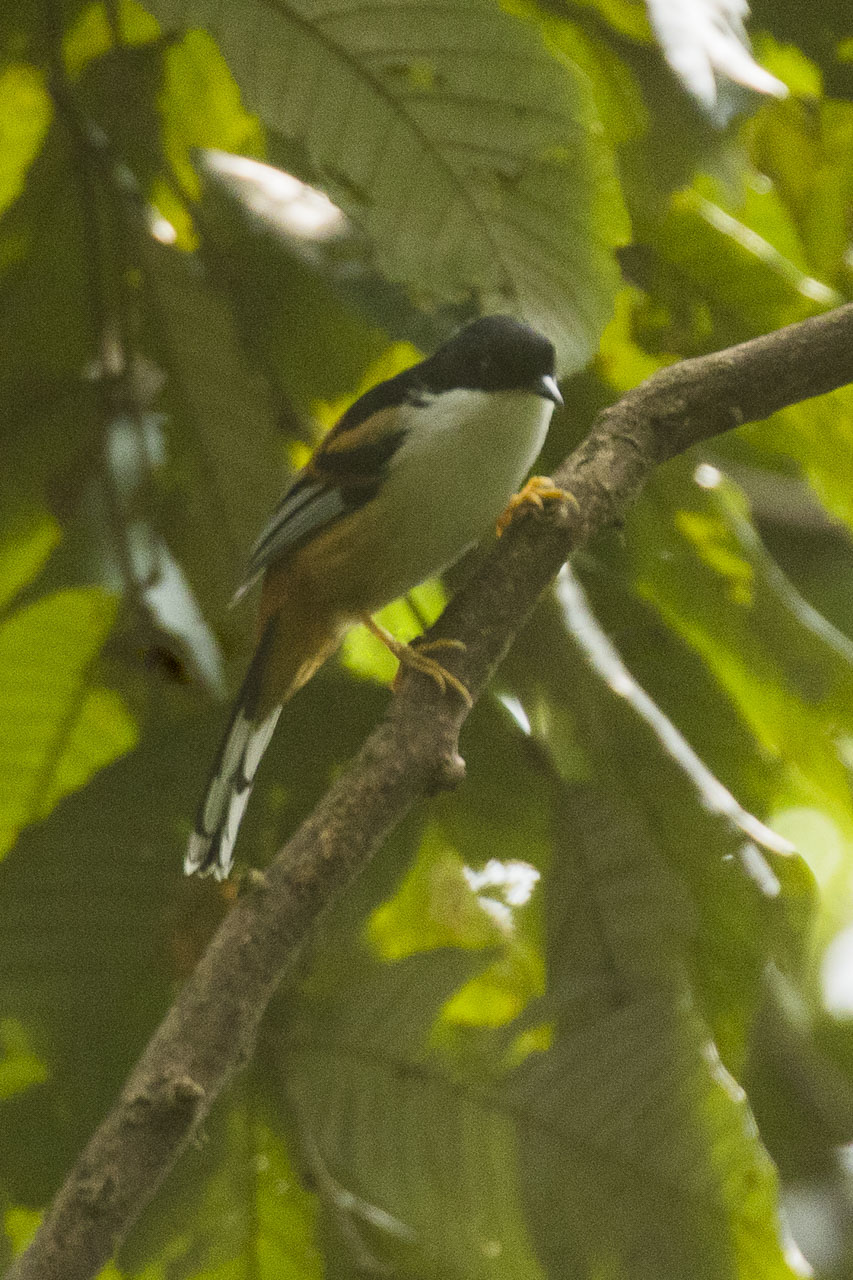
Blue-winged Minla
Minla cyanouroptera
Order: Passeriformes / Family: Leiothrichidae

Wikimedia Commons
About the Blue-winged Minla
The Blue-winged Minla (Minla cyanouroptera) is a captivating songbird found predominantly in the montane forests of Southeast Asia. Occupying a significant ecological niche, it thrives in the thick undergrowth of subtropical and tropical forests, where its presence indicates a healthy ecosystem. This bird plays a vital role in controlling insect populations, thereby maintaining the ecological balance. In regions such as Bhutan, Nepal, and northern India, the Blue-winged Minla is often observed flitting through the foliage in search of insects. These areas provide ideal conditions due to their elevation and dense, mixed forests.
The Blue-winged Minla exhibits seasonal behaviors that align with its ecological role. During the breeding season, pairs become territorial, often seen chasing intruders from their chosen nesting sites. Outside this period, they join mixed-species foraging flocks, which enhances their ability to locate food and provides increased vigilance against predators. These flocks can include other members of the Leiothrichidae family, such as the Red-tailed Minla, illustrating the bird's adaptability and social nature.
This species is significant not just for its ecological contributions but also for its cultural impact. In areas where the Blue-winged Minla is common, it is a familiar sight to local birdwatchers and a subject of study for ornithologists. Its presence is a testament to the rich biodiversity of Southeast Asia's mountain forests, and its behaviors offer insights into the complex web of interactions that sustain these environments.
The Blue-winged Minla belongs to the family Leiothrichidae, within the order Passeriformes. These birds typically live typically 4-6 years, with occasional records of up to 8 years..
How to Identify a Blue-winged Minla
The Blue-winged Minla is easily identifiable by its vibrant blue wings and tail, contrasted against its olive-brown body and white underparts. Adult birds exhibit a distinctive blue crown and a black eye-stripe, giving them a masked appearance that is both striking and unique. Juveniles, on the other hand, show duller plumage with less pronounced blue coloration, making them slightly harder to distinguish at a glance.
Both males and females of the species appear similar in plumage, though slight variations in size can sometimes be noted, with males being marginally larger. When observing these birds in the field, it is important to note their perching posture. The Blue-winged Minla often adopts a horizontal posture, which, combined with its bold colors, makes it relatively easy to spot among the foliage.
In flight, the Minla's silhouette is characterized by its short, rounded wings and long tail, which provides agility in the dense forest canopy. It is sometimes confused with the similar-looking Red-tailed Minla; however, the Blue-winged Minla can be distinguished by its brighter blue wings and lack of red tail feathers.
Having trouble telling birds apart? Upload a photo to our bird identification tool for an instant species match.
Blue-winged Minla Habitat and Range
Preferred Habitat
The Blue-winged Minla inhabits subtropical and tropical montane forests, particularly thriving at elevations ranging from 1,500 to 3,000 meters. These birds are most commonly found in the dense undergrowth of mixed broadleaf and coniferous forests, where they forage for insects and other small invertebrates. In the eastern Himalayas, they frequent rhododendron and oak forests, benefiting from the thick canopy cover and abundant food sources.
During seasonal shifts, the Blue-winged Minla may descend to lower elevations for foraging, especially in winter when food becomes scarcer in higher altitudes. While predominantly a forest dweller, it occasionally ventures into nearby agricultural areas and gardens, indicating a certain level of adaptability. However, the species is rarely found in urban environments, preferring the tranquility and resources of more natural settings.
Geographic Range
The Blue-winged Minla's range spans across the montane regions of Southeast Asia, including countries such as Nepal, Bhutan, northern India, Myanmar, Thailand, and parts of southern China. These areas provide the dense forest habitats necessary for the bird's survival and reproduction. Within its range, the species is typically a resident bird, showing little to no significant long-distance migration.
During the breeding season, the Blue-winged Minla is most concentrated in the eastern Himalayas, where the altitude and climate are ideal for nesting. In winter, some populations may move short distances to lower elevations to access more abundant food resources, especially in the foothills of the Himalayas. Population densities tend to be higher in areas with extensive forest cover, such as the forests of Sikkim and Arunachal Pradesh in India.
Want to know which birds visit your area? Browse our backyard birds by location guides for region-specific species lists.
What Does the Blue-winged Minla Eat?
The Blue-winged Minla primarily feeds on insects, which it gleans from the foliage of trees and shrubs in its forest habitat. Its diet consists of a variety of invertebrates, including caterpillars, beetles, and spiders, making it an important predator of these species. During the breeding season, the bird's diet becomes even more insect-focused, as it requires additional protein to support the energetic demands of raising young.
In addition to insects, the Blue-winged Minla occasionally consumes berries and seeds, especially when insect prey is less abundant. This dietary flexibility allows it to thrive in varied environmental conditions. The bird typically forages in the morning and late afternoon, when insect activity is highest, using a methodical approach to search through the leaves and branches.
Blue-winged Minla Behavior and Social Structure
Social by nature, the Blue-winged Minla often forms small flocks outside of the breeding season, frequently joining mixed-species flocks. This behavior increases foraging efficiency and provides protection against predators, as multiple pairs of eyes can detect threats more effectively. During the breeding season, pairs establish and defend territories, often seen chasing away intruders with vigor.
Courtship displays involve ritualized feeding and mutual preening, strengthening pair bonds. The Blue-winged Minla exhibits a high degree of social coordination within flocks, utilizing vocalizations to maintain group cohesion. In response to predators, these birds rely on their agility and dense foliage to escape, often retreating deeper into the forest.
Daily activity patterns for the Blue-winged Minla include peak foraging times in the early morning and late afternoon. During midday, they often rest or preen, conserving energy for the active foraging periods.
Blue-winged Minla Nesting and Reproduction
The Blue-winged Minla constructs a cup-shaped nest, typically located in the fork of a tree branch or within dense shrubbery. Nests are composed of twigs, moss, and leaves, sometimes lined with softer materials such as feathers or fur. This strategic placement and construction help camouflage the nest from predators.
A typical clutch consists of 3-5 eggs, which both parents incubate over a period of approximately 14-16 days. After hatching, both parents participate in feeding and caring for the chicks, which fledge about 12-15 days post-hatching. The Blue-winged Minla often raises two broods per year, capitalizing on the abundance of food during the breeding season.
Parental roles are shared equally, with both males and females actively defending the nest and foraging for food to sustain the growing chicks.
Blue-winged Minla Sounds and Vocalizations
The Blue-winged Minla's primary song consists of a series of high-pitched, melodious notes delivered in a quick succession. The rhythm is lively and somewhat resembles the tinkling of small bells, making it a distinctive and pleasant sound within its forest habitat. In addition to its song, the bird emits a variety of call notes, including sharp 'chips' and 'churs', often used during social interactions or when alarmed.
Alarm calls are more abrupt and harsh, serving as warnings to other birds about potential threats. The dawn chorus sees the Blue-winged Minla contributing its voice prominently, engaging in vocal exchanges with both conspecifics and other species within the mixed flocks.
Interesting Facts About the Blue-winged Minla
- 1The Blue-winged Minla can often be seen participating in mixed-species flocks, a behavior that enhances its foraging success.
- 2Unlike many bird species, both male and female Blue-winged Minlas share in nest building and chick rearing duties.
- 3The Blue-winged Minla's song is unique and can be identified by its rapid, bell-like notes.
- 4Found primarily in the Himalayas, the Blue-winged Minla is an indicator species for healthy montane forest ecosystems.
- 5Despite its vibrant blue coloring, the Blue-winged Minla is adept at camouflage within the dappled light of its forest habitat.
- 6Blue-winged Minlas can raise up to two broods in a single breeding season, thanks to the rich insect life in their habitat.
- 7The Blue-winged Minla's name derives from its bright blue wings, which stand out against its otherwise muted plumage.
Blue-winged Minla Conservation Status
Currently listed as Least Concern by the IUCN, the Blue-winged Minla benefits from a stable population trend. Despite habitat loss due to deforestation, this species remains fairly common within its range, thanks in part to its adaptability to varied forest types. Conservation efforts focus on preserving its montane forest habitats, particularly in regions experiencing rapid land-use changes. Historically, the Blue-winged Minla has maintained a stable population, but ongoing habitat fragmentation poses a long-term threat. Continued conservation action is necessary to ensure that the bird's natural habitats are protected from unsustainable logging and agricultural expansion.
Other Leiothrichidae Species

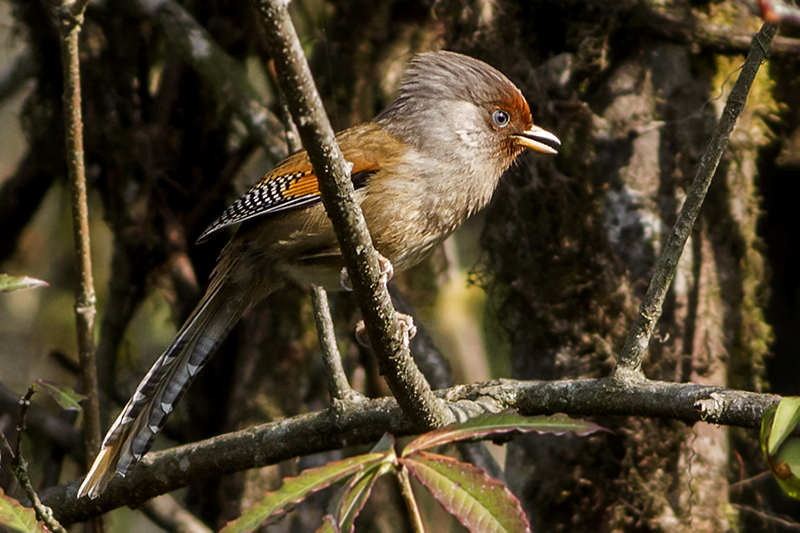

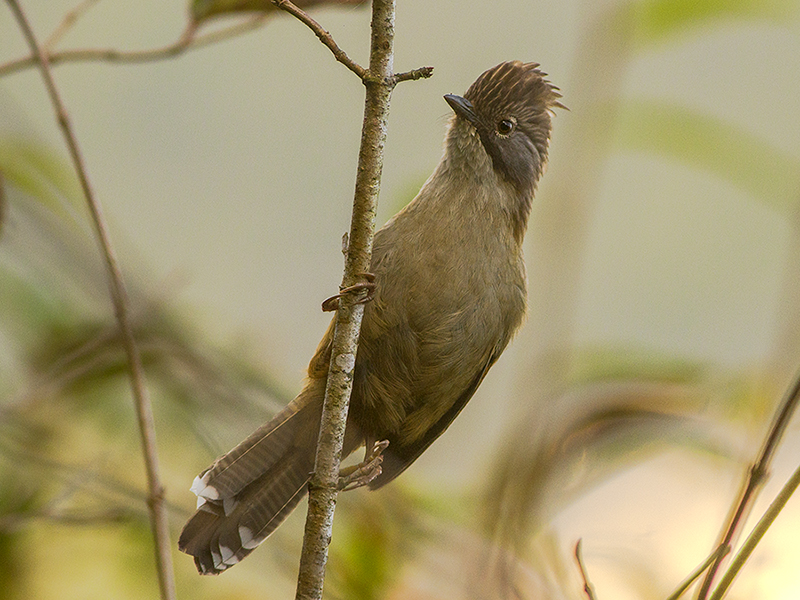
Birds Similar to the Blue-winged Minla
These species are often confused with the Blue-winged Minla due to similar appearance or overlapping range.