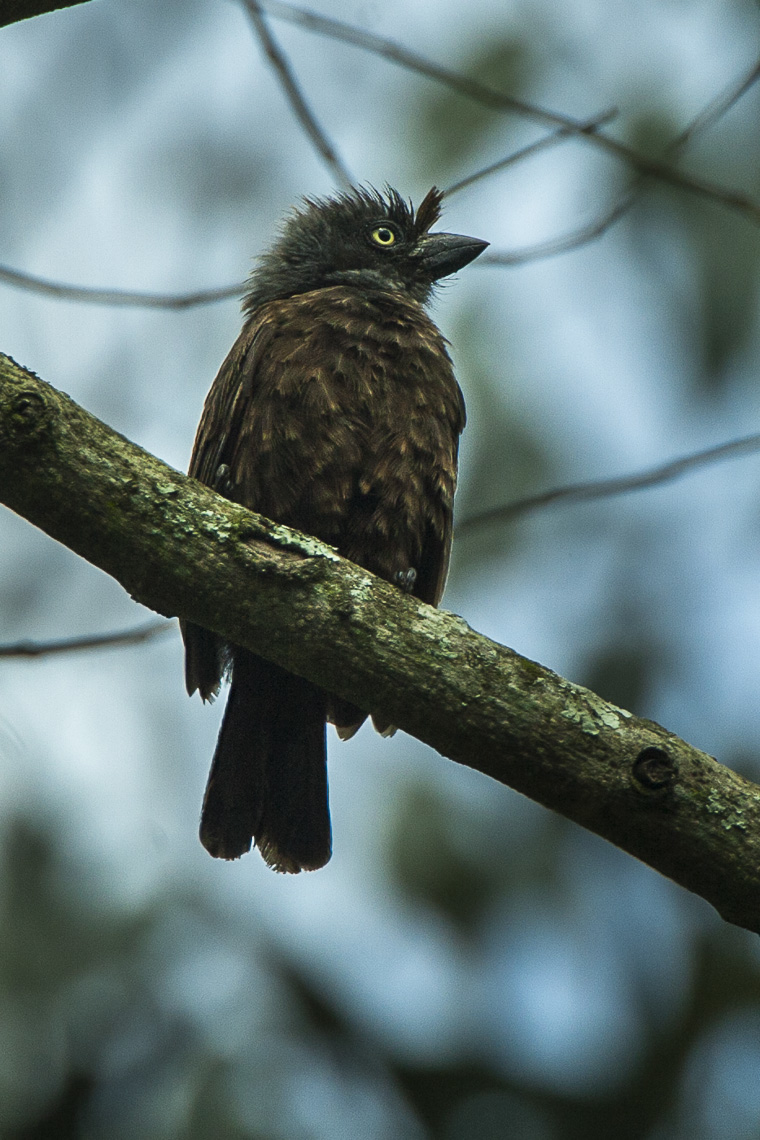
Bristle-nosed Barbet
Gymnobucco peli
Order: Piciformes / Family: Lybiidae

Wikimedia Commons
About the Bristle-nosed Barbet
The Bristle-nosed Barbet (Gymnobucco peli) is a fascinating bird species native to the dense, tropical forests of Central Africa. These birds are primarily located in countries such as Ghana, Cameroon, and the Democratic Republic of the Congo. They are a part of the Lybiidae family and are closely related to other barbets that inhabit African woodlands. The Bristle-nosed Barbet plays a significant role in its ecosystem by participating in seed dispersal and contributing to the maintenance of healthy forest environments. During the breeding season, which typically occurs during the rainy months, these birds become more vocal and active as they establish territories and begin nesting. The ecological role of the Bristle-nosed Barbet extends beyond its immediate environment as it also interacts with various plant species. By consuming fruits and subsequently dispersing seeds across different areas, these birds help maintain the genetic diversity of plant life in the forests. This mutualistic relationship ensures that the Bristle-nosed Barbet and the flora of its habitat thrive together. In addition to their ecological contributions, Bristle-nosed Barbets are also a subject of interest for ornithologists and bird watchers due to their unique appearance and behaviors. Their bristle-like feathers around the beak distinguish them from other barbet species, making them a unique subject for study. These birds are not migratory, and they tend to inhabit the same areas year-round. During the dry season, when food availability might be reduced, the Bristle-nosed Barbet adapts by varying its diet to include more insects and small invertebrates. This flexibility in feeding strategy is critical for its survival in the diverse and sometimes challenging environments of the African tropics.
The Bristle-nosed Barbet belongs to the family Lybiidae, within the order Piciformes. These birds typically live average 7 years with a maximum recorded of 11 years..
How to Identify a Bristle-nosed Barbet
The Bristle-nosed Barbet is medium-sized, measuring about 20 centimeters in length. Its most distinctive feature is the bristly feathers around its beak, giving it a somewhat comical yet distinctive appearance. The plumage is primarily gray-brown, with lighter underparts and a subtle greenish tinge on the wings. Juveniles resemble adults but exhibit duller plumage and less pronounced bristles. Males and females appear similar, making gender identification challenging without close observation. The Bristle-nosed Barbet can be confused with other barbet species, but its unique bristles help set it apart. In flight, the bird shows a steady, direct path with rapid wing beats. When perched, it often sits upright, displaying its full profile. Its posture, combined with the bristle-like feathers, makes it easily recognizable to those familiar with its habits.
Having trouble telling birds apart? Upload a photo to our bird identification tool for an instant species match.
Bristle-nosed Barbet Habitat and Range
Preferred Habitat
The Bristle-nosed Barbet primarily inhabits tropical forests, particularly those with dense canopy cover. It thrives in lowland and mid-elevation forests, usually up to 1500 meters above sea level. These birds can occasionally be found on the edges of forests and in secondary growth areas, especially where fruiting trees are abundant. While they prefer primary forests, they have shown some adaptability to degraded habitats. The Bristle-nosed Barbet is not typically found in urban areas, as it requires the dense foliage and specific plant species found in forest environments.
Geographic Range
The range of the Bristle-nosed Barbet spans across Central Africa, with its presence confirmed in countries like Ivory Coast, Nigeria, and Uganda. While largely sedentary, they may undertake local movements in response to food availability. They do not migrate over long distances, making their presence relatively predictable in identified regions. Population density is highest in regions with abundant fruiting trees, supporting their primary dietary needs.
Want to know which birds visit your area? Browse our backyard birds by location guides for region-specific species lists.
What Does the Bristle-nosed Barbet Eat?
The Bristle-nosed Barbet primarily feeds on fruits, with a preference for figs and other soft berries. During the fruiting season, these birds can be seen foraging actively in the canopy. They also consume insects and small invertebrates, especially when fruits are scarce. Their foraging technique involves hopping among branches and using their robust beak to pluck fruits or capture insects. Typically, they feed during the early morning and late afternoon, when temperatures are cooler.
Bristle-nosed Barbet Behavior and Social Structure
Bristle-nosed Barbets are social birds, often found in small groups. They exhibit strong territorial behavior, particularly during the breeding season, when pairs defend nesting sites vigorously. Courtship involves vocal exchanges and mutual preening. Outside the breeding season, these birds may form loose flocks, which provide safety in numbers against predators. The Bristle-nosed Barbet's daily routine includes periods of foraging interspersed with rest during the hottest parts of the day.
Bristle-nosed Barbet Nesting and Reproduction
The Bristle-nosed Barbet nests in tree cavities, often using natural hollows or those excavated by other birds. They prefer cavities in large trees, usually at heights of 5 to 15 meters. The typical clutch size is 3 to 4 eggs, which both parents incubate for about 14 to 16 days. After hatching, the chicks remain in the nest for approximately 4 weeks before fledging. Both parents share feeding duties, ensuring the young are well-nourished.
Bristle-nosed Barbet Sounds and Vocalizations
The primary song of the Bristle-nosed Barbet consists of a series of rhythmic, low-pitched notes that resemble a repetitive 'ka-ka-ka' sound. Their calls are less melodic than some other barbets, but they are distinctive and carry well through the forest. Alarm calls are sharper and more urgent, designed to alert nearby birds to potential danger. During the dawn chorus, their voices contribute a steady, rhythmic backdrop to the morning symphony of the forest.
Interesting Facts About the Bristle-nosed Barbet
- 1The Bristle-nosed Barbet's distinctive facial bristles may help protect its eyes while foraging among dense foliage.
- 2Despite its comical appearance, the Bristle-nosed Barbet is an efficient seed disperser, aiding forest regeneration.
- 3This bird's robust beak allows it to feed on a variety of fruits, complementing its insect diet during lean times.
- 4The Bristle-nosed Barbet can often be heard before it is seen, thanks to its loud and distinctive calls.
- 5They are known to use abandoned nests of other bird species, displaying a resourceful approach to nesting.
- 6Bristle-nosed Barbets are year-round residents, showing little migratory behavior except for local movements.
- 7Their preference for dense forests makes them a challenge to spot, adding intrigue for bird watchers.
Bristle-nosed Barbet Conservation Status
The Bristle-nosed Barbet is currently listed as Least Concern by the IUCN, with a stable population trend. However, habitat destruction due to logging and agricultural expansion poses significant threats. Conservation efforts focus on protecting large tracts of forest and promoting sustainable land use practices. While not endangered, continued monitoring is essential to ensure this species remains abundant.