Brown Babbler
Turdoides plebejus
Order: Passeriformes / Family: Leiothrichidae

Wikimedia Commons
About the Brown Babbler
The Brown Babbler (Turdoides plebejus) is a sociable and highly vocal bird found throughout the savannas and woodlands of sub-Saharan Africa. This species belongs to the Leiothrichidae family and is noteworthy for its gregarious behavior, often seen in small groups or family flocks ranging from 3 to 15 individuals. The Brown Babbler plays a significant ecological role as it participates in the control of insect populations. Its cooperative breeding system, where several adults contribute to raising young, is an intriguing aspect of its life history.
This bird is primarily found in countries such as Nigeria, Senegal, Ghana, and Chad, thriving particularly in areas that offer a mix of open ground and scattered trees or shrubs. Habitats with dense undergrowth are preferred, providing cover and forage opportunities. Seasonal behaviors of the Brown Babbler include changes in group dynamics during breeding seasons, with increased territorial displays and vocalization to ward off intruders. Despite their preference for natural woodlands, these birds have shown adaptability to modified environments like gardens and plantations.
In terms of ecological contributions, the Brown Babbler aids in seed dispersal and contributes to the pollination of certain plant species through its foraging activities. Its presence in an area is often regarded as an indicator of a healthy ecosystem, and the bird is considered a resident species, showing minimal migratory behavior. Given its widespread presence and adaptability, the Brown Babbler's interactions within its environment offer insights into the dynamics of savanna ecosystems.
The Brown Babbler belongs to the family Leiothrichidae, within the order Passeriformes. These birds typically live around 5 years on average, but can live longer in protected environments..
How to Identify a Brown Babbler
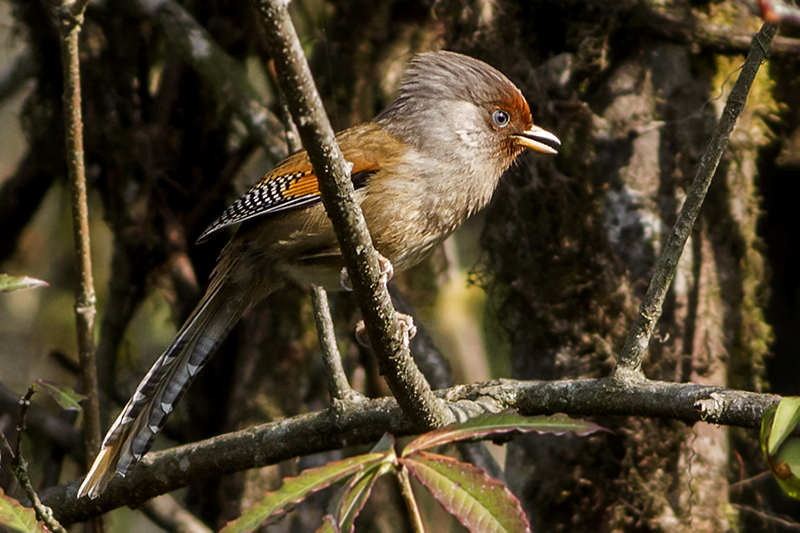
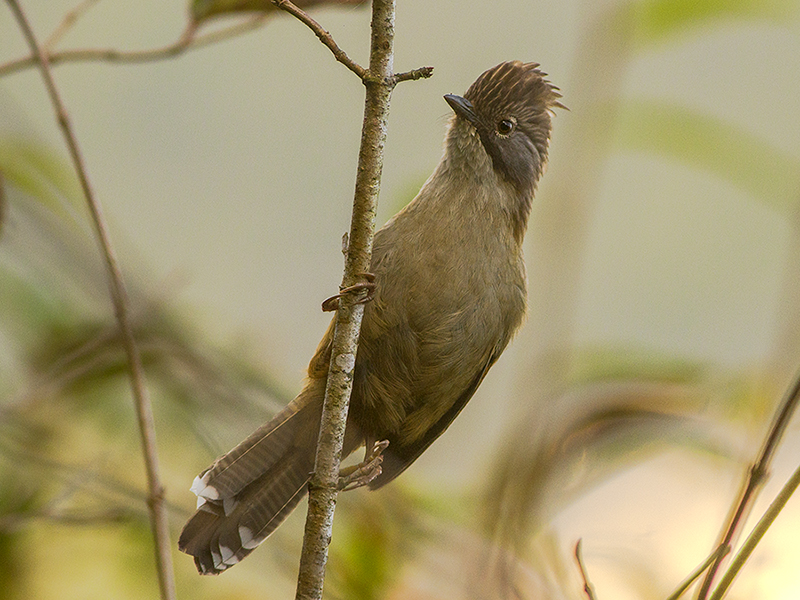
The Brown Babbler is medium-sized, measuring about 23 to 25 cm in length, with a robust body and a long, graduated tail. Adults exhibit a rich brown coloration across their body, with a slightly paler throat and belly. The wings are rounded, aiding in short flights and maneuvering through dense vegetation. Their bills are strong and slightly curved, suited for probing into crevices and foliage.
Juveniles resemble adults but are generally duller, with a more uniform brown appearance lacking the slight gloss seen in mature birds. Males and females are similar in plumage, making sexual dimorphism negligible in field identification. This characteristic brown plumage can lead to confusion with other babbler species; however, the Brown Babbler's social behavior and vocalizations often aid in distinguishing it from similar species.
In flight, the Brown Babbler showcases a brief glide typical of babblers, with rapid wingbeats followed by a short gliding descent. When perched, its posture is upright, often with the tail held at a slight angle. Observers may note its constant movement and active foraging behavior, making it a dynamic presence in its preferred habitats.
Having trouble telling birds apart? Upload a photo to our bird identification tool for an instant species match.
Brown Babbler Habitat and Range
Preferred Habitat
The Brown Babbler thrives in a variety of habitats within sub-Saharan Africa, predominantly favoring open woodlands and savannas. It is commonly found in areas with a mixture of scrub and scattered trees, which provide both cover and an abundant supply of food sources. The bird is adaptable to elevations ranging from sea level up to around 2000 meters, frequently observed in regions where acacia woodlands and thorn scrub dominate.
During different seasons, the Brown Babbler may shift its habitat slightly, moving closer to water sources during the dry season to ensure access to food and hydration. While primarily a rural species, it has adapted to urban environments, often seen in gardens and agricultural lands where it finds suitable foraging opportunities.
The bird avoids dense forests and arid deserts, preferring habitats where it can forage both on the ground and within low to mid-level foliage. Its presence in a range of environments highlights its adaptability and resilience in the face of habitat change.
Geographic Range
The Brown Babbler inhabits a wide range across sub-Saharan Africa, with key populations in West African countries such as Senegal, Gambia, Guinea, Nigeria, and Ghana. It also extends into parts of Central Africa, including Cameroon, Chad, and the Central African Republic. The bird is non-migratory, maintaining a year-round presence in its established territories.
While it does not engage in long-distance migration, local movements do occur, often in response to seasonal climatic changes that affect food and water availability. During the wet season, when resources are abundant, groups may expand their home range slightly. Conversely, in the dry season, they might consolidate their territories around more permanent water bodies or areas with reliable food sources.
Hotspots for observing the Brown Babbler include the savanna regions of Nigeria and the woodlands of Cameroon, where their presence is a common component of the avian community. Its wide distribution and adaptability to various environments contribute to its classification as a species of least concern in terms of conservation status.
Want to know which birds visit your area? Browse our backyard birds by location guides for region-specific species lists.
What Does the Brown Babbler Eat?
The diet of the Brown Babbler is primarily insectivorous, with a strong preference for ants, beetles, grasshoppers, and various larvae. These birds are opportunistic feeders, also consuming spiders and small invertebrates found within their habitats. During certain seasons, particularly when insects are less abundant, they supplement their diet with fruits and seeds.
Foraging occurs both on the ground and in low vegetation, with the birds probing leaf litter, soil, and undergrowth to locate prey. Their strong, slightly curved bills are well-suited for extracting insects from crevices and handling a variety of food types. The Brown Babbler's feeding technique often involves cooperative group foraging, where members of a flock work together to flush out insects.
Feeding primarily occurs during the cooler parts of the day, such as early morning and late afternoon, when insects are most active and temperatures are more favorable. This adaptable diet and foraging strategy enable the Brown Babbler to thrive in diverse environments, ensuring its survival across different seasonal conditions.
Brown Babbler Behavior and Social Structure
Brown Babblers are known for their gregarious and highly social behavior, often seen in groups known as flocks or family parties. These flocks maintain a cooperative social structure, which includes communal nesting and rearing of young. Within their territory, Brown Babblers exhibit strong territoriality, engaging in vocal displays and physical confrontations to defend their home range from intruders.
Courtship displays among Brown Babblers are marked by a combination of vocalizations and physical posturing, with males showcasing their prowess through song and display flights. These interactions strengthen pair bonds and play a crucial role during the breeding season.
The species exhibits a distinct daily activity pattern, being most active during the cooler hours of dawn and dusk. Throughout the day, they engage in grooming, social interactions, and foraging activities, often taking midday rest periods during the hottest hours. In response to predators, Brown Babblers rely on group vigilance and alarm calls to warn each other of danger, showcasing their reliance on social bonds for survival.
Brown Babbler Nesting and Reproduction
The Brown Babbler constructs its nests as a cooperative effort, with multiple adults contributing to the building process. Nests are typically cup-shaped and composed of twigs, grass, leaves, and other vegetative materials, often lined with softer substances like feathers or plant fibers. These nests are usually placed in dense shrubs or low trees, offering concealment from predators.
Clutch size for the Brown Babbler ranges from 2 to 4 eggs, which are pale blue or greenish in color. The incubation period lasts approximately 13 to 15 days, with both males and females sharing incubation duties. After hatching, the fledging period extends for about 17 to 20 days, during which the young are fed and cared for by the entire group.
The species typically raises one to two broods per year, with breeding activities closely aligned with the rainy season, ensuring that ample food resources are available for raising young. Parental roles are well-distributed among flock members, with non-breeding adults often assisting in feeding and protecting the chicks.
Brown Babbler Sounds and Vocalizations
The Brown Babbler's vocal repertoire is diverse, featuring a primary song that is a series of melodious and repetitive notes. The rhythm is steady, with each note delivered in a slightly descending sequence. These vocalizations serve both in territory defense and in maintaining cohesion within the flock.
Call notes are sharp and distinct, often used for communication between flock members during foraging or alerting others to potential threats. Alarm calls are more urgent, characterized by rapid, high-pitched sequences that signal the presence of predators.
During the dawn chorus, Brown Babblers engage in a communal song session, where multiple individuals contribute to a chorus of sounds that fill the early morning air. This behavior not only reinforces group bonds but also establishes territorial presence.
Interesting Facts About the Brown Babbler
- 1Brown Babblers live in cooperative groups where non-breeding adults help raise the chicks, a behavior known as cooperative breeding.
- 2These birds are known for their 'babbler' name due to their continuous and varied vocalizations used for communication.
- 3The Brown Babbler's nest-building is a communal activity, often involving up to 15 birds working together.
- 4Despite their social nature, Brown Babblers are fiercely territorial, and will vigorously defend their area from other flocks.
- 5They are known to engage in 'anting,' a behavior where they allow ants to crawl over their bodies, possibly to help remove parasites.
- 6Brown Babblers have a diverse diet that changes with seasons, adapting from primarily insectivorous to include more fruits and seeds.
- 7The species is non-migratory, showing a strong fidelity to its home range throughout the year.
Brown Babbler Conservation Status
The Brown Babbler is currently listed as a species of least concern by the IUCN, reflecting its stable population numbers across its broad range. Despite this status, localized threats do exist, primarily stemming from habitat destruction and land use changes that reduce available breeding and foraging grounds. Conservation efforts for the Brown Babbler are typically integrated into broader ecosystem conservation initiatives, focusing on preserving the natural habitats of savannas and woodlands in sub-Saharan Africa. Maintaining these ecosystems not only benefits the Brown Babbler but also supports a wide range of other wildlife species that share its habitat. Historically, the population of the Brown Babbler has remained relatively stable, with no significant declines noted in recent decades. However, ongoing monitoring is essential to ensure that potential threats, such as agricultural expansion and climate change, do not adversely impact this resilient species.