
Buff-throated Warbler
Phylloscopus subaffinis
Order: Passeriformes / Family: Phylloscopidae

Wikimedia Commons
About the Buff-throated Warbler
The Buff-throated Warbler (Phylloscopus subaffinis) is a small passerine bird belonging to the family Phylloscopidae. This warbler is primarily found in the subtropical and temperate forests of Southeast Asia, particularly in regions such as Yunnan in China and parts of northern Vietnam. It is highly specialized in its habitat preferences, often residing in dense, mixed broadleaf forests. These forests provide ample cover and feeding opportunities, allowing the Buff-throated Warbler to thrive.
Adapted to a life amidst foliage, this bird plays a significant ecological role as an insectivorous species, helping to control insect populations within its habitat. During the breeding season, which occurs primarily in the months of April to July, the Buff-throated Warbler becomes more vocal and visible as it establishes territories and searches for mates. The species is known to be monogamous, with pairs often staying together for multiple breeding seasons.
Outside of the breeding season, the Buff-throated Warbler remains largely secretive and difficult to spot. Its coloration provides excellent camouflage against the dappled light of the forest canopy. As the seasons change, these birds may engage in altitudinal migrations, moving to lower elevations during the cooler months in search of food. This seasonal movement ensures that the warbler can access resources throughout the year, maintaining its ecological niche as a key insect predator.
The conservation importance of the Buff-throated Warbler lies in its role as a bioindicator species, reflecting the health of its forest habitats. In regions where these birds are abundant, it indicates a rich and diverse ecosystem. Conversely, declining populations may signal habitat degradation or other environmental issues. Thus, the presence and abundance of the Buff-throated Warbler can inform conservation efforts focused on preserving forest ecosystems in Southeast Asia.
The Buff-throated Warbler belongs to the family Phylloscopidae, within the order Passeriformes. These birds typically live typically 3-5 years, with some individuals living longer..
How to Identify a Buff-throated Warbler
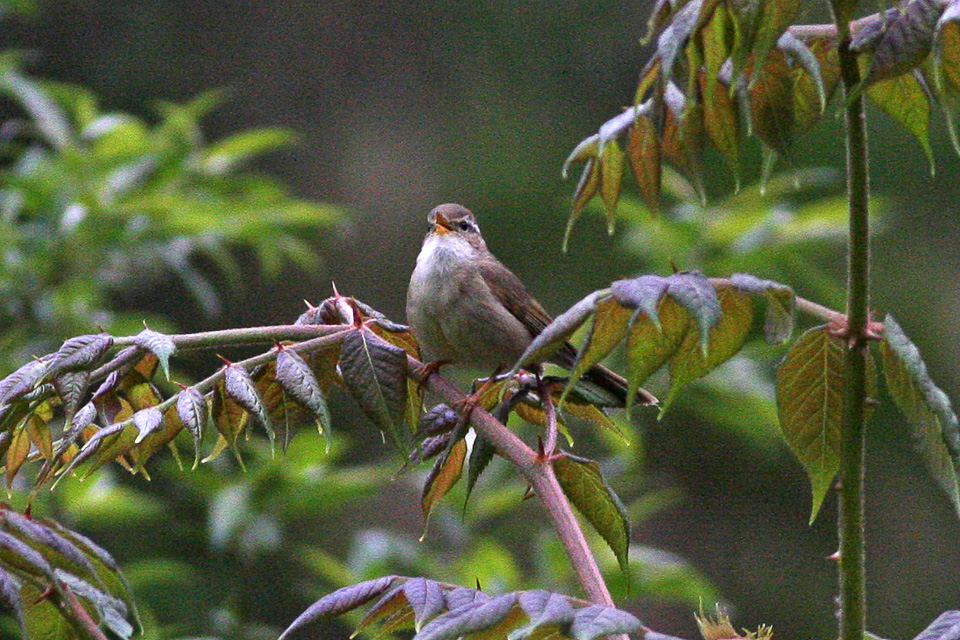
The Buff-throated Warbler can be identified by its olive-green upperparts and buff-colored throat, which gives the bird its name. Adult warblers have a distinctive yellowish-green plumage, with the buff-colored throat and chest transitioning into a lighter belly. Their heads feature a well-defined, pale supercilium that contrasts with a darker eye line. Juvenile birds resemble adults but often have duller plumage with a less pronounced buff throat.
Male and female Buff-throated Warblers appear similar, making it challenging to distinguish between the sexes in the field. However, slight differences in plumage brightness and throat coloration may be observed upon close inspection. When compared to similar species, such as the Yellow-browed Warbler, the Buff-throated Warbler's buff throat and more vibrant green upperparts are distinguishing features.
In flight, this warbler presents a compact silhouette with rapid wingbeats and a slightly undulating flight pattern. When perched, it often adopts an upright posture, scanning the surroundings for insects. This combination of field marks, flight behavior, and perching habits aids in the identification of the Buff-throated Warbler within its forest habitat.
Having trouble telling birds apart? Upload a photo to our bird identification tool for an instant species match.
Buff-throated Warbler Habitat and Range
Preferred Habitat
The Buff-throated Warbler primarily inhabits subtropical and temperate forests, favoring dense, mixed broadleaf environments. These forests, found predominantly in regions like Yunnan, China, and northern Vietnam, offer the ideal combination of cover, food, and breeding sites. The warbler typically resides at elevations ranging from 1,000 to 3,000 meters, although it may descend to lower altitudes during the winter months when food becomes scarcer.
Seasonal habitat shifts are a common behavior for the Buff-throated Warbler, with many individuals moving downwards in elevation in response to colder temperatures. This altitudinal migration allows them to exploit different forest layers and maintain access to insect prey throughout the year. While primarily forest-dwelling, these warblers may occasionally venture into forest edges or secondary growth areas, especially during non-breeding periods.
In terms of urban presence, the Buff-throated Warbler is rarely found in heavily populated areas, as it prefers the seclusion and complexity of natural forest habitats. However, in regions where forests intersect with rural landscapes, they may be observed foraging along the peripheries. Their habitats are critical not only for their survival but also for the broader forest ecosystem, as these areas support diverse plant and animal life.
Geographic Range
The Buff-throated Warbler's range is primarily concentrated in Southeast Asia, with its breeding grounds located in the subtropical forests of Yunnan, China, and extending into northern Vietnam. Within these regions, the warbler occupies suitable forest habitats, with population densities being higher in areas of undisturbed, mature forest.
During the non-breeding season, the Buff-throated Warbler may undertake altitudinal migrations, moving to lower elevations to escape the colder temperatures and find food. This seasonal movement is typical of many forest-dwelling bird species in mountainous regions, allowing them to exploit different ecological niches throughout the year.
While the warbler's range is relatively restricted compared to some other Phylloscopus species, its presence is a reliable indicator of healthy forest environments. Conservation efforts in these regions focus on preserving forest habitats to maintain the species' population and ensure the continued health of the ecosystem. Although not a long-distance migrant, the Buff-throated Warbler's seasonal movements underline the importance of connected forest habitats across its range.
Want to know which birds visit your area? Browse our backyard birds by location guides for region-specific species lists.
What Does the Buff-throated Warbler Eat?
The Buff-throated Warbler is primarily insectivorous, feeding on a diet that includes a wide variety of insects and arthropods. Its primary food sources consist of small insects such as caterpillars, beetles, and flies, which it gleans from the foliage of trees and shrubs. The warbler employs a methodical foraging technique, often flitting through the canopy and inspecting leaves and branches for hidden prey.
During the breeding season, the demand for food increases, and the warbler may expand its diet to include other invertebrates such as spiders and occasionally small fruits or seeds. This dietary flexibility helps ensure adequate nutrition for both adults and their growing chicks.
The warbler's foraging activity is typically most intense during the early morning and late afternoon when insect activity peaks. Prey size generally ranges from small to medium-sized insects, which are easily handled by the warbler's agile beak.
Seasonal changes in food availability, driven by weather patterns and insect life cycles, can influence the warbler's diet. As such, the Buff-throated Warbler's ability to adapt its feeding strategy is crucial for survival, particularly during the non-breeding season when resources may be less predictable.
Buff-throated Warbler Behavior and Social Structure
The Buff-throated Warbler exhibits a variety of behaviors that are characteristic of the Phylloscopidae family. This warbler is known for its territorial nature, especially during the breeding season, when it becomes more vocal and conspicuous. Males sing to establish territory boundaries and attract mates, often engaging in vocal duels with neighboring males.
Socially, the Buff-throated Warbler tends to be solitary or found in pairs, particularly during the breeding season. However, outside the breeding period, it may join mixed-species foraging flocks, which provide safety in numbers and increased foraging efficiency. This flocking behavior also helps reduce the risk of predation by confusing potential predators and allowing for more eyes to spot danger.
Courtship displays in this species are subtle, consisting of song exchanges and gentle chasing between potential mates. Once paired, the warbler exhibits strong pair bonds, with both partners participating in nest building and chick rearing. Daily activity patterns show the warbler as most active during dawn and dusk, aligning with peak insect activity.
In response to predators, the Buff-throated Warbler relies on its cryptic plumage and quick, agile movements to evade capture. When threatened, it may emit alarm calls to alert other birds in the vicinity. This species' behavior reflects its adaptation to a life in dense forest environments, where survival depends on a blend of vigilance, agility, and social interaction.
Buff-throated Warbler Nesting and Reproduction
The Buff-throated Warbler constructs its nest with great care, typically choosing a well-hidden location within dense vegetation. The nest is cup-shaped, crafted from grass, leaves, and moss, and lined with softer materials such as feathers and plant down. This strategic use of materials ensures insulation and camouflage, protecting the eggs and chicks from predators and harsh weather.
Preferred nest sites are usually found within bushes or low trees, at heights ranging from 1 to 3 meters above the ground. This positioning offers protection while allowing the parents easy access to and from the nest. Clutch size generally consists of 3 to 5 eggs, with both parents sharing incubation duties, which last about 11 to 13 days.
After hatching, the chicks remain in the nest for approximately 10 to 12 days before fledging. During this period, both parents participate actively in feeding and caring for the young, bringing a steady supply of insects to the nest. The Buff-throated Warbler typically raises one to two broods per year, depending on environmental conditions and food availability.
Parental roles are well-defined, with both male and female contributing to nest building, incubation, and feeding. This cooperative breeding strategy enhances the survival rate of the offspring, ensuring that the next generation of Buff-throated Warblers can thrive within their forest habitat.
Buff-throated Warbler Sounds and Vocalizations
The Buff-throated Warbler's song is a series of high-pitched, melodious notes delivered in a rapid sequence. The rhythm is lively, with a consistent tempo that can be compared to the ringing of a small bell. This song serves as both a territorial declaration and a courtship display during the breeding season.
In addition to its primary song, the Buff-throated Warbler produces various call notes, including sharp 'tsip' sounds used for communication between mates and within foraging flocks. Alarm calls are harsher and more abrupt, designed to alert others to potential danger.
During the dawn chorus, the Buff-throated Warbler's voice is prominent, as males sing vigorously to establish and defend their territories. The quality of their song can carry over considerable distances, penetrating the dense foliage of their forest habitat.
The warbler's vocalizations are comparable to those of other Phylloscopus species, though the Buff-throated Warbler's song is generally more complex and musical, setting it apart from its relatives and aiding in its identification by experienced birders.
Interesting Facts About the Buff-throated Warbler
- 1The Buff-throated Warbler is most vocal during the breeding season, with males singing tirelessly to establish territories.
- 2Despite being primarily insectivorous, the Buff-throated Warbler occasionally consumes small fruits, especially when insects are scarce.
- 3This warbler's altitudinal migration can cover several hundred meters as it moves to lower elevations in the winter.
- 4The Buff-throated Warbler's song is unique in its complexity among Phylloscopus warblers, making it a favorite among birders.
- 5Both male and female Buff-throated Warblers participate in nest building, showcasing remarkable teamwork in raising their young.
- 6The warbler's presence in a forest is a sign of ecological health, as it requires intact habitats to thrive.
- 7Buff-throated Warblers can join mixed-species flocks outside the breeding season, benefiting from shared vigilance against predators.
Buff-throated Warbler Conservation Status
The Buff-throated Warbler is currently classified as Least Concern by the IUCN, with a stable population trend. However, its dependence on forest habitats means that it is susceptible to threats such as habitat loss and degradation due to logging, agriculture, and urban expansion. Conservation efforts focus on habitat preservation and sustainable forest management practices. Protected areas in regions like Yunnan and Vietnam are crucial for maintaining viable populations of this species and other forest-dependent wildlife. Historically, the Buff-throated Warbler has maintained a relatively stable population, though localized declines have been noted in areas where forest cover has been significantly reduced. Continued monitoring and habitat conservation are essential to ensure the long-term survival of this species. Efforts to educate local communities about the ecological importance of forest ecosystems and the role of species like the Buff-throated Warbler in maintaining ecological balance are also key components of conservation strategies. By fostering a greater understanding of the interconnectedness of forest ecosystems, conservationists hope to secure a future for this and other forest-dependent species.
Other Phylloscopidae Species



Birds Similar to the Buff-throated Warbler
These species are often confused with the Buff-throated Warbler due to similar appearance or overlapping range.

