Buffy Laughingthrush
Ianthocincla berthemyi
Order: Passeriformes / Family: Leiothrichidae

Wikimedia Commons
About the Buffy Laughingthrush
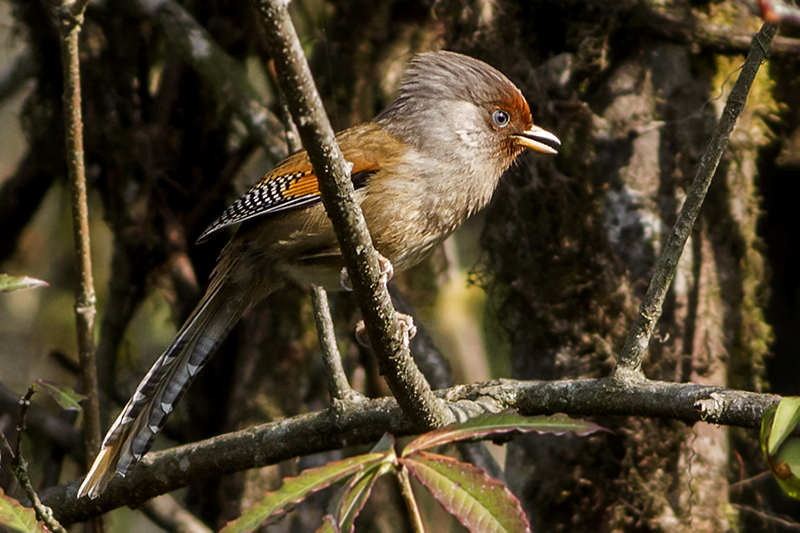
The Buffy Laughingthrush, scientifically known as Ianthocincla berthemyi, is a fascinating member of the Leiothrichidae family. This bird inhabits the subtropical and temperate regions of the Eastern Himalayas, particularly thriving in the dense, broadleaf forests of China, Bhutan, and Myanmar. The species is notable for its vibrant social behavior and complex vocalizations. Buffy Laughingthrushes are a vital part of their ecosystem, contributing to seed dispersal and insect population control. These birds favor altitudes ranging from 1,500 to 3,000 meters, where the dense canopy provides both protection and a rich foraging ground. As seasonal changes occur, they adjust their activity patterns but remain largely resident within their preferred habitats. The ecological role of the Buffy Laughingthrush extends beyond its immediate environment. Their presence indicates healthy forest ecosystems. During the breeding season, they form monogamous pairs, often participating in cooperative breeding, which involves other family members assisting in rearing the young. This behavior underscores their complex social structure and contributes to the species' resilience. In the non-breeding season, these birds may form small flocks, enhancing their foraging efficiency and predator avoidance. Ecologically, the Buffy Laughingthrush plays a dual role as both a predator and a prey species. By consuming insects and small invertebrates, they help regulate these populations, maintaining a balanced ecosystem. Conversely, they serve as prey for larger birds of prey and mammals, illustrating their integral position within the food web. Despite facing habitat fragmentation and degradation, Buffy Laughingthrushes exhibit adaptability by thriving in secondary forests and forest edges. Efforts to conserve their habitats not only benefit this species but also contribute to the preservation of biodiversity in the region.
The Buffy Laughingthrush belongs to the family Leiothrichidae, within the order Passeriformes. These birds typically live typically around 6-9 years, with some individuals living longer in optimal conditions..
How to Identify a Buffy Laughingthrush
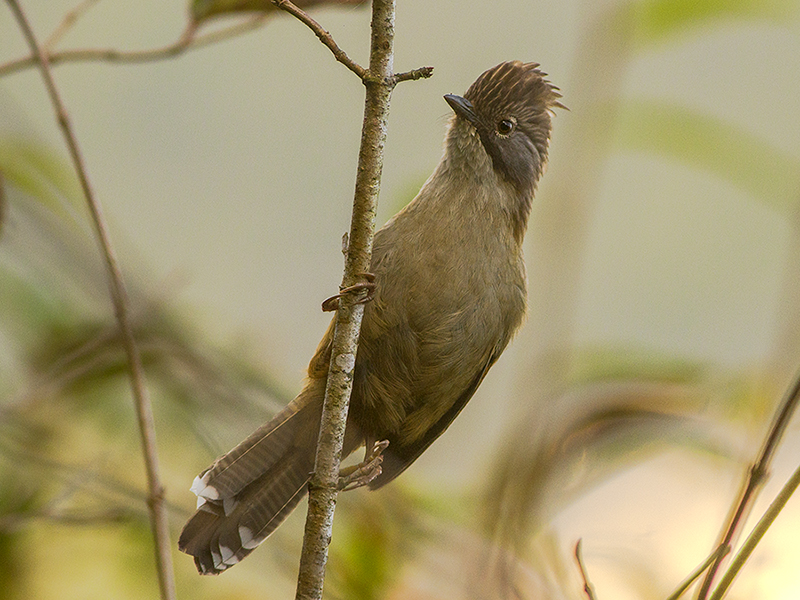
The Buffy Laughingthrush is a medium-sized bird, approximately 26-28 cm in length. Its most distinguishing feature is the buff-colored plumage that covers most of its body, giving it its common name. The crown and nape are a slightly darker buff, transitioning to a paler belly. The wings and tail feature subtle brownish tones, providing a gentle contrast. Adults of both sexes appear similar, though females may be slightly smaller. Juveniles resemble adults but have a more muted coloration, lacking the full brightness of mature birds. In the field, the Buffy Laughingthrush can be confused with the similar-looking Black-throated Laughingthrush. However, the absence of a black throat in Ianthocincla berthemyi is a key differentiator. When in flight, this species displays a rounded wing silhouette, with strong, steady wingbeats. Perched, their upright posture and distinctive plumage are easily identifiable. Observers should look for the bird's characteristic tail flicking and head bobbing, behaviors that are helpful identification markers.
Having trouble telling birds apart? Upload a photo to our bird identification tool for an instant species match.
Buffy Laughingthrush Habitat and Range
Preferred Habitat
Buffy Laughingthrushes predominantly inhabit subtropical and temperate broadleaf forests. They are often found in dense undergrowth, where they forage and nest. The species thrives at elevations between 1,500 and 3,000 meters, where the humid and cool climate suits their ecological needs. While primarily forest dwellers, they can adapt to secondary growth and forest edges, making them somewhat resilient to habitat change. Seasonal shifts may see them venture to slightly lower elevations, but they remain largely non-migratory. Unlike some forest birds, Buffy Laughingthrushes are rarely found in urban areas, preferring the secluded serenity of their natural habitats.
Geographic Range
The breeding range of the Buffy Laughingthrush spans across the Eastern Himalayas, with significant populations in China, Bhutan, and northeastern India. Their distribution is largely confined to these regions, where they occupy suitable forest habitats. The species does not partake in long-distance migrations, remaining within its established range throughout the year. Within their range, population densities are highest in well-preserved forest areas, where human disturbance is minimal. The species' presence in protected areas like Bhutan's Jigme Dorji National Park underscores the importance of conservation efforts in maintaining viable populations.
Want to know which birds visit your area? Browse our backyard birds by location guides for region-specific species lists.
What Does the Buffy Laughingthrush Eat?
Buffy Laughingthrushes have a varied diet that changes with the seasons. In the warmer months, they primarily consume insects and other invertebrates, which they forage by probing and flipping through leaf litter. Their foraging technique involves careful movement through dense underbrush, using their bill to uncover hidden prey. In addition to insects, they also feed on berries, seeds, and small fruits, which become more important in their diet during cooler periods when insect availability decreases. This dietary flexibility helps them survive in diverse forest environments. The size of prey typically ranges from small caterpillars to larger beetles, allowing them to exploit a wide range of food sources. Their feeding schedule is diurnal, with peak activity occurring in the early morning and late afternoon when prey is most active.
Buffy Laughingthrush Behavior and Social Structure
Buffy Laughingthrushes are highly social birds, often seen in pairs or small family groups. Their social structure is complex, with a hierarchy that influences foraging and breeding behaviors. During the breeding season, they exhibit strong territoriality, with pairs defending their nesting areas vigorously against intruders. Courtship displays involve mutual preening and synchronized movements, reinforcing pair bonds. Outside the breeding season, these birds may form small flocks, which enhances their ability to locate food and provides safety in numbers. In response to predators, Buffy Laughingthrushes employ a range of tactics including alarm calls and mobbing behavior to deter threats. Their daily activity pattern follows a typical diurnal rhythm, with increased activity during dawn and dusk.
Buffy Laughingthrush Nesting and Reproduction
The Buffy Laughingthrush constructs cup-shaped nests from twigs, leaves, and grasses. They typically place these nests in dense shrubs or low tree branches, ensuring concealment from predators. A typical clutch consists of 2-4 eggs, which are pale blue with brown speckling. The incubation period lasts around 14 days, with both parents sharing responsibilities. After hatching, chicks remain in the nest for approximately 12-15 days before fledging. Parental care continues post-fledging, as adults teach the young vital survival skills. This species often raises one brood per year, though in optimal conditions, they may attempt a second.
Buffy Laughingthrush Sounds and Vocalizations
The Buffy Laughingthrush is renowned for its melodious and complex vocalizations. Its primary song is a series of clear, flute-like notes that rise and fall in pitch, often described as a cheerful and varied melody. In addition to their song, these birds produce a range of call notes that include both short, sharp chips and longer, more melodic whistles. Alarm calls are harsher and more urgent, serving to alert other birds to potential dangers. During the dawn chorus, their calls become more frequent and elaborate, contributing to the rich acoustic landscape of their forest habitats.
Interesting Facts About the Buffy Laughingthrush
- 1Buffy Laughingthrushes are known to form cooperative breeding groups, a behavior observed in only about 9% of bird species globally.
- 2Their complex songs have been documented to contain over 20 different note types, making them one of the more vocally versatile birds in their range.
- 3Despite their limited range, Buffy Laughingthrushes are adaptable and can thrive in secondary growth forests, showcasing resilience to habitat changes.
- 4The Buffy Laughingthrush's diet shifts seasonally, with a notable increase in fruit consumption during the winter months when insects are scarce.
- 5These birds spend up to 60% of their daylight hours foraging, illustrating their high energy requirements and active lifestyle.
Buffy Laughingthrush Conservation Status
Currently, the IUCN lists the Buffy Laughingthrush as a species of Least Concern. However, their population trend shows a decline due to habitat loss and fragmentation. The primary threats include deforestation for agriculture and urban development. Conservation efforts focus on habitat preservation and the establishment of protected areas. Historically, the bird's population has been stable, but recent pressures highlight the need for ongoing conservation measures. Collaborative efforts between governments and conservation organizations aim to ensure the species' long-term survival.