
Bush Blackcap
Lioptilus nigricapillus
Order: Passeriformes / Family: Sylviidae

Wikimedia Commons
About the Bush Blackcap
The Bush Blackcap, or Lioptilus nigricapillus, is a remarkable member of the Sylviidae family, thriving primarily in the highland regions of southern Africa. This songbird is particularly notable for its melodious vocalizations, often heard echoing through montane forests and dense shrublands. Its presence is most prevalent in the highlands of South Africa and Lesotho, where it plays a critical ecological role by aiding in seed dispersal and insect control.
As a resident species, the Bush Blackcap does not migrate but rather shifts altitudinally in response to seasonal changes, often descending to lower elevations during colder months. This adaptability is crucial for its survival in the variable climates of its habitat.
The species contributes to the biodiversity of its ecosystem, acting as both a prey and a predator within its ecological niche. It preys on various insects, thus controlling insect populations, while also serving as a food source for higher predators. The Bush Blackcap's role in its environment underscores the intricate web of interactions that sustain these highland ecosystems.
Beyond its ecological importance, the Bush Blackcap captivates birdwatchers and ornithologists alike. Its unique combination of subtle plumage and vibrant song make it a sought-after sighting for those exploring the Afromontane regions. As such, the Bush Blackcap is not merely a bird of interest for its ecological functions but also a symbol of the rich avian diversity found in southern Africa.
The Bush Blackcap belongs to the family Sylviidae, within the order Passeriformes. These birds typically live average 5 years, max recorded 8 years.
How to Identify a Bush Blackcap
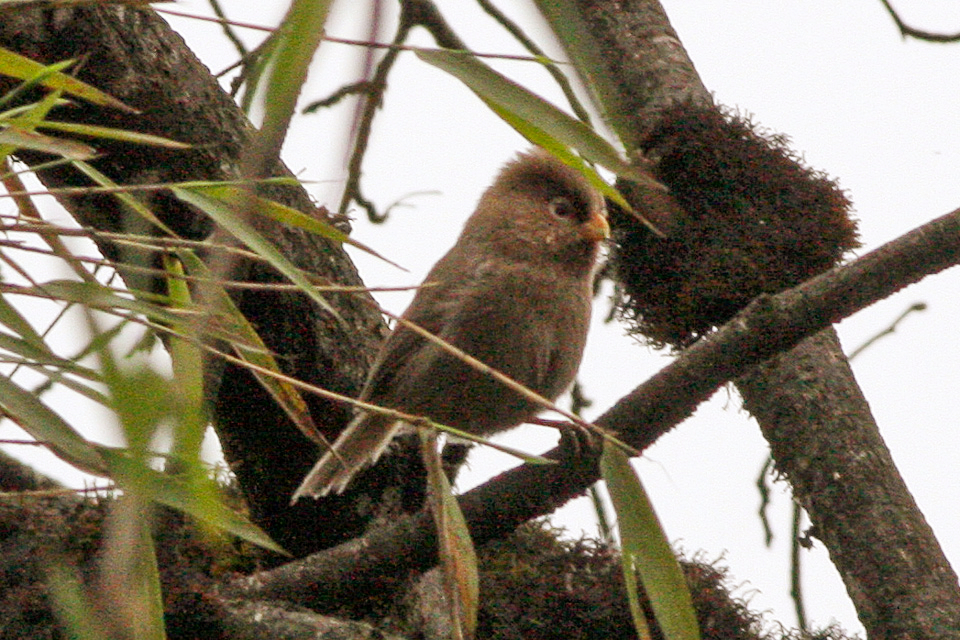
Identifying the Bush Blackcap in the field is facilitated by its distinctive plumage and habits. Adults stand out with their striking black cap, which contrasts sharply with their grayish-brown body and lighter underparts. This bold marking is a key feature for distinguishing this bird from other sylviid warblers.
In addition to the black cap, the Bush Blackcap exhibits a uniform brownish tone over its back and wings, with a slight olive wash on the flanks. Juveniles, while similar in structure, display a more muted coloration with less pronounced caps, making them slightly challenging to identify without close observation.
There is little sexual dimorphism in this species, meaning males and females look alike, which is somewhat unusual among songbirds. In flight, the Bush Blackcap maintains a steady, direct path, with a flight silhouette characterized by rounded wings and a slightly rounded tail.
Perched, this species often adopts an upright posture, frequently flicking its tail. While it might be confused with the African Dusky Flycatcher or other sylviid warblers, the distinctive cap and song of the Bush Blackcap provide reliable identification cues.
Having trouble telling birds apart? Upload a photo to our bird identification tool for an instant species match.
Bush Blackcap Habitat and Range
Preferred Habitat
The Bush Blackcap primarily inhabits Afromontane forests and dense shrublands in the highland regions of southern Africa. These birds favor elevations ranging from 1,500 to 3,000 meters, thriving in environments where moisture and dense vegetation provide ample cover and food resources.
During the winter, they often descend to lower elevations where temperatures are milder, demonstrating an altitudinal migration rather than long-distance travel. This shift allows them to maintain access to their specific dietary needs throughout the year.
While predominantly found in rural and forested areas, the Bush Blackcap occasionally ventures into suburban gardens, particularly if they mimic the dense, shrubby conditions of their natural habitat. However, they are rarely observed in urban settings, as these environments lack the necessary cover and food supply.
Geographic Range
The Bush Blackcap's range is largely confined to the highland regions of southern Africa. They are primarily found in the Drakensberg Mountains and the adjacent Lesotho highlands, with populations extending into the Eastern Cape and KwaZulu-Natal provinces of South Africa.
As a non-migratory species, the Bush Blackcap does not undertake long-distance movements but instead engages in altitudinal shifts. During colder months, they move to lower elevations, which are less affected by the harsh winter conditions found higher up in the mountains.
These birds are considered relatively common within their range, although local population densities can vary significantly depending on habitat quality and availability. They are most abundant in areas where montane forests and shrublands are well-preserved, supporting both their dietary and nesting needs.
Want to know which birds visit your area? Browse our backyard birds by location guides for region-specific species lists.
What Does the Bush Blackcap Eat?
Bush Blackcaps primarily feed on insects, which they skillfully glean from foliage and branches. Their diet includes caterpillars, beetles, and various arthropods, making them important controllers of insect populations in their habitats.
During the breeding season, they may supplement their insectivorous diet with berries and small fruits, providing a needed boost of energy. This seasonal dietary shift is facilitated by the availability of different food resources throughout the year.
Foraging behavior involves active movement through dense shrubs and forest understory, where they use their agile flight and keen eyesight to locate prey. They are most active in the early morning and late afternoon, when insects are more plentiful and easier to catch.
The size of their prey generally ranges from small insects to medium-sized caterpillars, which they deftly extract from leaves and branches. This diverse diet ensures their survival in the varied climates of their mountainous habitats.
Bush Blackcap Behavior and Social Structure
The Bush Blackcap exhibits a range of behaviors that are fascinating for ornithologists and bird enthusiasts alike. Primarily, these birds are solitary or found in pairs, especially during the breeding season when they become highly territorial.
Courtship displays involve the male showcasing its vocal prowess, often singing from exposed perches to attract a mate. These vocalizations serve both as a mating call and a territorial warning to other males.
Bush Blackcaps display territorial aggression, often engaging in vocal duels with neighboring birds to establish dominance and boundaries. However, outside the breeding season, they may join mixed-species foraging flocks, benefiting from the increased vigilance and feeding opportunities these groups provide.
Their response to predators involves a combination of alarm calls and evasive flight maneuvers, emphasizing their reliance on both vocal and physical abilities to avoid danger. Daily activity peaks during dawn and dusk, aligning with the availability of their insect prey.
Bush Blackcap Nesting and Reproduction
The nesting habits of the Bush Blackcap involve constructing cup-shaped nests using grass, twigs, and leaves. These nests are typically well-hidden within dense shrubs, providing protection from predators and harsh weather conditions.
Preferred nesting locations are often low to the ground, though some can be found at heights of up to two meters, depending on the surrounding vegetation. The female lays a clutch of three to four eggs, which she incubates for approximately 12 to 14 days.
Both parents participate in feeding the chicks, which fledge about two weeks after hatching. The number of broods per year can vary, though typically only one is raised annually, aligning with the availability of food resources.
Parental roles are shared, with both adults contributing to feeding and protecting the young. This cooperative breeding strategy increases the chances of offspring survival in the resource-limited montane environment.
Bush Blackcap Sounds and Vocalizations
The Bush Blackcap is renowned for its rich and melodious song, characterized by a series of clear, whistling notes that rise and fall in pitch. The song often includes mimicry of other bird species, adding complexity to its vocal repertoire.
Call notes are short and sharp, serving as contact calls between mates or alarm signals in response to potential threats. These vocalizations are an integral part of their daily communication.
Alarm calls are more abrupt, often consisting of a series of sharp notes designed to alert nearby birds to danger. During the dawn chorus, the Bush Blackcap's song is particularly prominent, contributing to the vibrant acoustic landscape of their montane habitats.
The quality and rhythm of their song have been compared to those of the Nightingale, offering a similarly captivating auditory experience for those fortunate enough to hear it.
Interesting Facts About the Bush Blackcap
- 1The Bush Blackcap's song is so diverse that it can mimic other bird species, adding to its complex vocal repertoire.
- 2Despite its small size, the Bush Blackcap plays a significant role in controlling insect populations within its habitat.
- 3The species exhibits altitudinal migration, moving to lower elevations during colder months rather than long-distance migration.
- 4Bush Blackcaps are primarily monogamous, with pairs often returning to the same nesting sites year after year.
- 5Their nests are intricately woven and well-hidden, providing excellent camouflage against predators.
- 6The Bush Blackcap's vocalizations contribute significantly to the dawn chorus in montane environments.
- 7They are known to join mixed-species foraging flocks, especially outside the breeding season, for increased feeding efficiency.
Bush Blackcap Conservation Status
Currently, the Bush Blackcap is classified as Least Concern by the IUCN, with stable population trends. However, habitat loss due to deforestation and agricultural expansion poses ongoing threats to their habitats. Conservation efforts focus on preserving montane forests and encouraging sustainable land management practices. Protecting these habitats ensures the continued survival of the species and the ecosystems they support. Historically, population changes have correlated with habitat quality, highlighting the importance of maintaining healthy forest ecosystems. Monitoring programs aim to track population dynamics and inform conservation strategies. Although not currently endangered, the Bush Blackcap's reliance on specific highland habitats makes them vulnerable to environmental changes, necessitating proactive conservation measures to mitigate potential threats.
Other Sylviidae Species



Birds Similar to the Bush Blackcap
These species are often confused with the Bush Blackcap due to similar appearance or overlapping range.
