Cambodian Laughingthrush
Garrulax ferrarius
Order: Passeriformes / Family: Leiothrichidae
About the Cambodian Laughingthrush
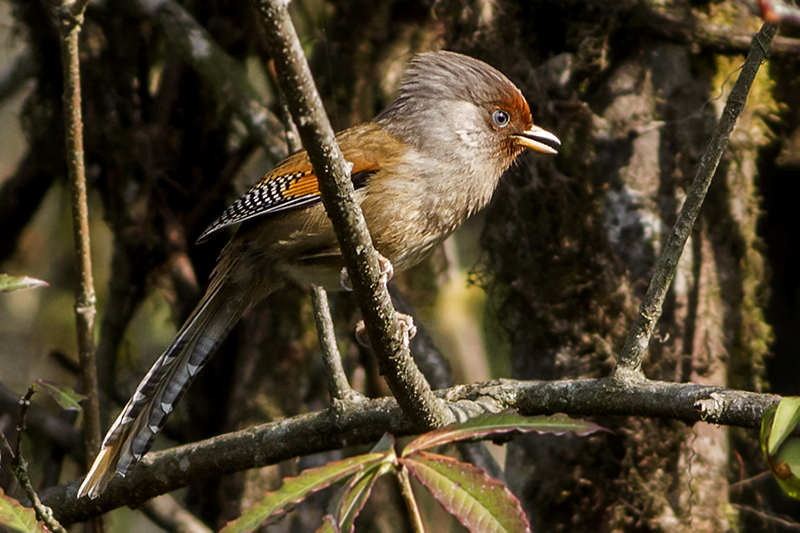
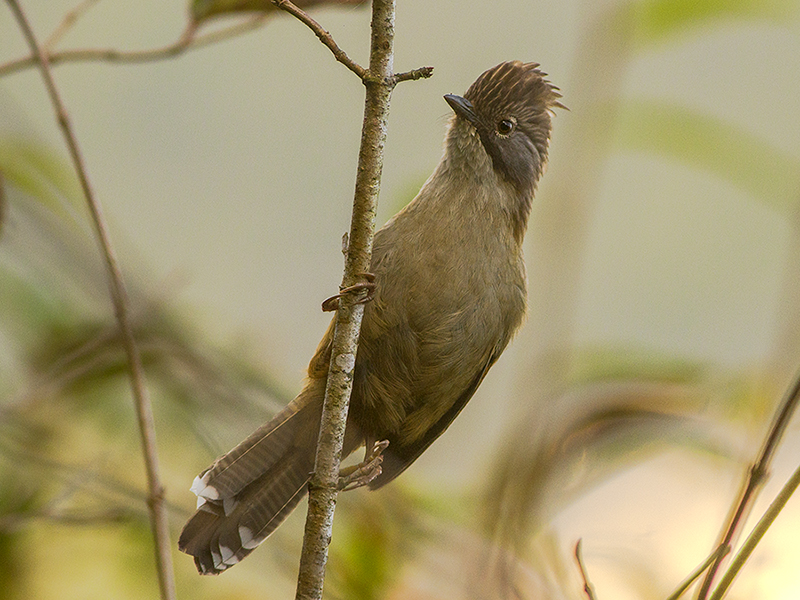
The Cambodian Laughingthrush (Garrulax ferrarius) is a captivating bird, endemic to the lush montane forests of Cambodia. This species exhibits a striking plumage that features a rich combination of gray, brown, and white, making it a visually distinctive member of the family Leiothrichidae. While its beauty is undeniable, the bird's ecological role in the forest ecosystem is equally significant. As a resident of the evergreen and semi-evergreen forests, it plays a vital part in seed dispersal and insect population control, thus maintaining the health of its habitat. Inhabiting primarily the Cardamom Mountains, the Cambodian Laughingthrush thrives at elevations ranging from 800 to 1,800 meters. This region's dense underbrush and varied tree canopy offer the perfect environment for nesting and foraging. The bird is a non-migratory species, which means it remains within its preferred habitat year-round. However, seasonal behaviors are evident as these birds become more vocal during the breeding season, engaging in elaborate vocal displays to attract mates and establish territories. The Cambodian Laughingthrush's significance extends beyond its ecological contributions. It holds cultural importance within local communities and attracts birdwatchers and ornithologists from around the world. Conservation efforts are crucial for its survival, as habitat loss due to logging and land conversion poses a threat to its population. The species' presence in protected areas like the Phnom Samkos Wildlife Sanctuary provides some hope for its continued existence, highlighting the need for ongoing conservation measures.
The Cambodian Laughingthrush belongs to the family Leiothrichidae, within the order Passeriformes. These birds typically live average 4-6 years with a maximum recorded of 9 years.
How to Identify a Cambodian Laughingthrush
The Cambodian Laughingthrush is recognized by its distinct coloration and size. Adult birds exhibit a predominantly gray body with a rich brown cap and nape, contrasted by a striking white throat and cheeks. This vivid combination of colors sets it apart from similar species within its range. Juveniles share a similar pattern but with a more muted color palette, lacking the adults' full vibrancy. Both sexes appear similar, making it challenging to distinguish males from females based solely on plumage. In terms of silhouette, the Cambodian Laughingthrush displays a stout and robust build with a slightly rounded tail. When perched, it often adopts an alert and upright posture, which is characteristic of its family, Leiothrichidae. The bird's strong and slightly curved beak is adapted for its varied diet, aiding in foraging. While flying, it showcases broad wings and a slightly undulating flight pattern, although it is more commonly observed moving through dense foliage. Confusion with other laughingthrushes can occur, particularly with those sharing similar habitats. However, the unique combination of its gray, brown, and white plumage, alongside its specific vocal characteristics, provides reliable identification markers.
Having trouble telling birds apart? Upload a photo to our bird identification tool for an instant species match.
Cambodian Laughingthrush Habitat and Range
Preferred Habitat
The Cambodian Laughingthrush thrives in the montane forests of Cambodia, particularly within the Cardamom Mountains. These forests, characterized by dense underbrush and a varied canopy, provide an ideal environment for the bird's foraging and nesting activities. The species prefers elevations between 800 and 1,800 meters, where the cooler temperatures and higher humidity levels create a suitable microclimate. While primarily located in evergreen and semi-evergreen forests, the laughingthrush can also be found in areas transitioning to deciduous forests. Its adaptation to these habitats showcases its ecological flexibility. Unlike some other bird species, the Cambodian Laughingthrush shows little inclination towards urban environments, preferring the undisturbed tranquility of its forested habitat. Seasonal habitat shifts are minimal, as the species is non-migratory and remains in its chosen range throughout the year. Protection of these forested areas is crucial for the species' survival, as habitat loss poses a significant threat.
Geographic Range
Endemic to Cambodia, the Cambodian Laughingthrush's range is limited to the montane forests of the Cardamom Mountains. This region, located in the southwestern part of the country, provides the necessary climatic and ecological conditions for the species' survival. The bird's range does not extend beyond Cambodia, making it a species of particular interest to conservationists and researchers focused on the biodiversity of Southeast Asia. Within its range, the Cambodian Laughingthrush is most commonly observed in protected areas such as the Phnom Samkos Wildlife Sanctuary, which offers some degree of security against habitat destruction. The species' population density is highest in these undisturbed habitats, although exact population numbers remain difficult to ascertain due to the bird's secretive nature and the challenging terrain of its habitat. As a non-migratory bird, the Cambodian Laughingthrush does not engage in long-distance travel, instead remaining within its established range throughout the year.
Want to know which birds visit your area? Browse our backyard birds by location guides for region-specific species lists.
What Does the Cambodian Laughingthrush Eat?
The diet of the Cambodian Laughingthrush primarily consists of insects, fruits, and seeds, reflecting its role as both a predator and a seed disperser. Insects such as beetles, caterpillars, and ants form a significant portion of its diet, particularly during the breeding season when protein demands increase. The bird employs a foraging technique that involves moving through the underbrush and leaf litter in search of prey, often using its strong beak to probe and turn over leaves. During periods of fruit abundance, the laughingthrush supplements its diet with various forest fruits and berries, aiding in seed dispersal. This dietary flexibility allows the bird to adapt to seasonal changes in food availability, ensuring its survival throughout the year. The species typically feeds during the early morning and late afternoon, taking advantage of the cooler temperatures and reduced competition. Its foraging behavior is often characterized by short, energetic bursts of activity interspersed with periods of rest and observation.
Cambodian Laughingthrush Behavior and Social Structure
The Cambodian Laughingthrush exhibits a range of social behaviors that reflect its complex ecological interactions. It often forms small, loose flocks, particularly outside the breeding season, facilitating cooperative foraging and offering protection against predators. Within these groups, a hierarchy may develop, with dominant individuals leading foraging efforts. The species is known for its territorial behavior during the breeding season, with males establishing and defending territories through vocal displays and physical presence. Courtship displays involve a combination of song and visual signals, with males performing elaborate calls and postures to attract females. The bird's response to predators includes a variety of alarm calls and evasive maneuvers, often retreating to dense cover to avoid detection. Daily activity patterns are influenced by environmental conditions, with peak activity occurring during cooler parts of the day. The laughingthrush is a diurnal bird, typically returning to roost in the evening within the safety of dense foliage.
Cambodian Laughingthrush Nesting and Reproduction
The Cambodian Laughingthrush constructs its nest within the dense foliage of its montane forest habitat, often selecting sites that offer concealment and protection from predators. The nest, typically placed at a height of 1 to 3 meters above the ground, is a cup-shaped structure made from twigs, leaves, and moss, lined with softer materials such as grass and feathers. The nest-building process is a collaborative effort between both members of a mated pair. The clutch size generally ranges from two to four eggs, with incubation primarily undertaken by the female. The incubation period lasts approximately 14 to 16 days, during which the male provides food and protection. Once hatched, the chicks are altricial and require significant parental care, fledging after about 12 to 14 days. Both parents participate in feeding and caring for the young, ensuring a higher survival rate. The Cambodian Laughingthrush typically raises one brood per year, although favorable conditions may occasionally allow for a second.
Cambodian Laughingthrush Sounds and Vocalizations
The Cambodian Laughingthrush is renowned for its rich vocal repertoire, which includes a variety of melodious songs and calls. The primary song consists of a series of clear, flute-like notes delivered in a rhythmic pattern, often described as a laughing sequence that gives the bird its common name. These songs serve multiple functions, including territory establishment and mate attraction. In addition to its song, the laughingthrush produces a range of call notes, including contact calls used to maintain group cohesion and alarm calls to warn of potential threats. The alarm calls are typically harsher and more abrupt, designed to elicit a rapid response from other birds. During the dawn chorus, the Cambodian Laughingthrush is one of the first species to vocalize, its song carrying far through the forest and contributing to the vibrant soundscape of its habitat.
Interesting Facts About the Cambodian Laughingthrush
- 1The Cambodian Laughingthrush is one of only a few bird species endemic to Cambodia, highlighting its unique ecological niche.
- 2Despite its name, the Cambodian Laughingthrush's vocalizations are more melodic than humorous, described as flute-like in tone.
- 3The species is particularly active during the dawn chorus, contributing to the vibrant soundscape of its montane forest habitat.
- 4The Cambodian Laughingthrush's reliance on dense forest habitats makes it a key indicator species for forest health.
- 5Its diet includes a wide variety of insects and fruits, demonstrating a high degree of dietary adaptability.
- 6The bird's plumage features a striking combination of gray, brown, and white, aiding in its identification.
- 7Conservation efforts focus on protecting habitats within the Cardamom Mountains, a biodiversity hotspot in Southeast Asia.
Cambodian Laughingthrush Conservation Status
The Cambodian Laughingthrush is currently listed as Near Threatened on the IUCN Red List, with population trends indicating a potential decline due to habitat loss and degradation. The primary threat to the species is deforestation for agriculture and logging, which reduces the availability of suitable habitats. Conservation efforts focus on habitat protection, with several key areas such as the Phnom Samkos Wildlife Sanctuary providing a refuge for the bird. These protected areas play a critical role in maintaining population stability, although enforcement of conservation measures remains a challenge. Historical population changes are difficult to assess due to limited data, but there is concern that ongoing habitat loss could lead to further declines. Engaging local communities in conservation initiatives is seen as a vital step in securing the future of the Cambodian Laughingthrush.