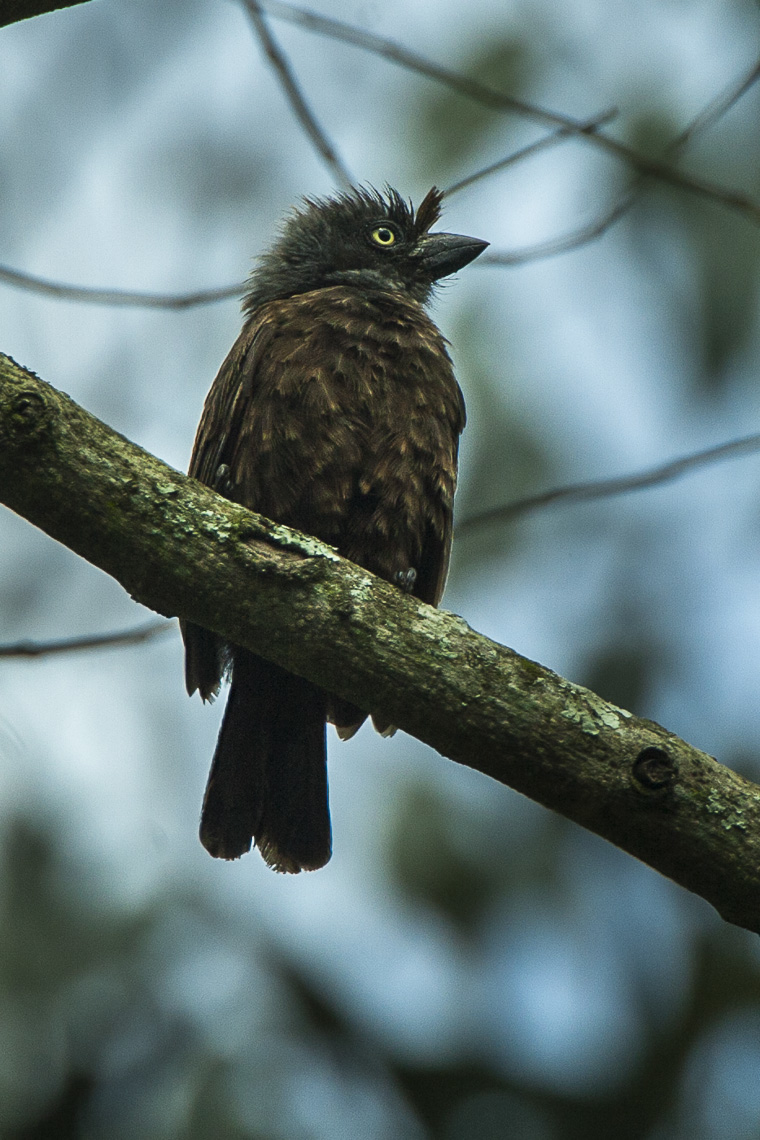
Capitonides protractus
Capitonides protractus
Order: Piciformes / Family: Lybiidae
About the Capitonides protractus
The Capitonides protractus, a notable species within the Lybiidae family, captivates birdwatchers with its vibrant plumage and distinctive behaviors. While there is limited information on its precise appearance due to its extinct status, it is believed to have shared several characteristics with modern barbet species, which are known for their robust bills and vivid coloration. Fossil evidence suggests that this bird inhabited the lush subtropical forests of Europe during the Miocene epoch, approximately 23 to 5 million years ago. Its presence in these ancient environments highlights its significance in understanding the evolutionary history of Piciformes, a diverse order that includes woodpeckers, toucans, and barbets. The Capitonides protractus played a crucial role in the ecological dynamics of its time, likely contributing to seed dispersal and insect population control, much like its modern relatives do today.
Significantly, the Capitonides protractus offers insight into the geographical and ecological shifts that occurred during the Miocene. The epoch was marked by significant climatic transformations, which influenced the distribution and diversity of avian species. The Capitonides protractus likely thrived in warm, forested regions that provided ample food resources and nesting sites. As such, studying this extinct species helps scientists piece together the broader narrative of how climatic changes shaped the evolution and adaptation of birds across time. By examining its fossilized remains and comparing them to existing barbet species, researchers can infer the potential adaptations and ecological roles that the Capitonides protractus might have fulfilled.
In addition to its ecological significance, the Capitonides protractus serves as a crucial point of reference for taxonomists studying the evolutionary relationships within the Piciformes order. The bird's anatomical features, though primarily known through fossil records, suggest evolutionary links with both modern barbets and woodpeckers. Understanding these connections enriches our comprehension of avian evolutionary pathways and the diversification of species across various habitats. Moreover, the Capitonides protractus underscores the importance of paleo-ornithological research in uncovering the secrets of ancient bird communities and their interactions with evolving ecosystems.
The Capitonides protractus, through its existence and extinction, underscores the dynamic nature of Earth's biodiversity. Its role in prehistoric ecosystems serves as a testament to the resilience and adaptability of avian species in the face of environmental changes. As researchers continue to explore the fossil record, the legacy of the Capitonides protractus remains a vital piece of the puzzle in understanding the complexities of avian evolution and the intricate web of life that once thrived in Europe's ancient forests.
The Capitonides protractus belongs to the family Lybiidae, within the order Piciformes. These birds typically live Unknown, as the species is extinct..
How to Identify a Capitonides protractus
While the Capitonides protractus is extinct and cannot be observed directly, it is believed to have shared characteristics with the barbets of today. Barbets are known for their stout bodies, strong necks, and large heads, with short tails and robust, heavy bills. These features aid in identifying them among other birds. The Capitonides protractus likely shared this morphology.
In terms of color, modern barbets often display a range of bright colors, including reds, yellows, and greens. Although the exact coloration of Capitonides protractus remains speculative, it likely exhibited a similarly vibrant plumage that would have made it conspicuous in its subtropical forest habitat. Its plumage would have been an important factor in identification, much like its modern counterparts, which use their bright colors for communication and courtship.
Little is known about sexual dimorphism or age-related plumage differences in Capitonides protractus. However, in many barbet species, males and females are similar in appearance, with juveniles possessing duller plumage until they reach maturity. The flight pattern of barbets, characterized by short, undulating movements, may also have been a trait of Capitonides protractus, aiding in its identification by observing its movement through the forest canopy.
Having trouble telling birds apart? Upload a photo to our bird identification tool for an instant species match.
Capitonides protractus Habitat and Range
Preferred Habitat
The Capitonides protractus, a species from the Miocene epoch, thrived in subtropical forests that once covered parts of Europe. These forests provided a rich tapestry of flora and fauna, creating a complex ecosystem in which the Capitonides protractus played an integral role. The dense canopy and diverse plant life offered ample feeding opportunities and nesting sites.
While specific elevation ranges for Capitonides protractus are unknown, its modern relatives, the barbets, often inhabit lowland to mid-elevation forests. Seasonal habitat shifts were likely minimal due to the stable climate of the Miocene, unlike many contemporary birds that migrate between distinct habitats.
In current contexts, modern barbets can adapt to urban environments, though they primarily favor forested areas. If Capitonides protractus had survived to the present, it might have shown similar adaptability, utilizing both natural forests and peri-urban areas for foraging and nesting.
Geographic Range
The Capitonides protractus lived during the Miocene epoch, a time when the climate facilitated the spread of subtropical forests across Europe. Fossil records primarily place this species in regions that are now part of central and western Europe. These areas would have offered a temperate climate with abundant resources.
Unlike many modern birds, the Capitonides protractus likely did not engage in long-distance migrations. The stable climate of the Miocene would have provided consistent foraging and nesting conditions, reducing the need for extensive seasonal movements.
While precise population densities are difficult to ascertain from fossil records, the presence of Capitonides protractus fossils across various sites suggests it was relatively widespread during its time. Its ecological niche within these ancient forests would have been comparable to that of modern barbets, focusing on exploiting the rich insect and fruit resources available.
Want to know which birds visit your area? Browse our backyard birds by location guides for region-specific species lists.
What Does the Capitonides protractus Eat?
The diet of Capitonides protractus, inferred from its place within the Lybiidae family, likely consisted of a blend of fruits and insects. Modern barbets, which are similar, consume a variety of fruits, such as figs and berries, and supplement their diet with insects, which provide necessary proteins.
Seasonal changes in diet would depend on the availability of food resources. During fruiting seasons, Capitonides protractus would have primarily foraged for ripe fruits, using its strong bill to access seeds and pulp. Insects would have provided a crucial food source when fruit was scarce.
Foraging techniques likely included perching on branches to pluck fruit and using its robust bill to probe into crevices for insects. This behavior mirrors that of contemporary barbets, which are known for their versatile and opportunistic feeding strategies.
Capitonides protractus Behavior and Social Structure
The social behavior of Capitonides protractus likely mirrored that of its modern barbet relatives, which tend to be solitary or found in pairs rather than large flocks. Territoriality would have been a key aspect, with individuals maintaining and defending feeding territories within their forested habitats.
Courtship displays of Capitonides protractus might have involved vocalizations and visual displays, as seen in many barbet species today. These displays serve to attract mates and establish breeding pairs, often involving the showing off of colorful plumage or performing acrobatic flights.
In terms of predator response, Capitonides protractus, like its relatives, would have relied on its plumage for camouflage in the dense foliage. Its daily activity patterns likely featured active foraging periods during the cooler parts of the day, with rest and preening taking place during the heat.
Capitonides protractus Nesting and Reproduction
The nesting habits of Capitonides protractus, while speculative, can be inferred from those of current barbets. These birds typically nest in cavities, which they excavate in trees using their strong bills. It's probable that Capitonides protractus followed a similar approach, selecting mature trees with soft wood to create nesting chambers.
Clutch sizes for modern barbets range from 2 to 4 eggs, suggesting that Capitonides protractus might have produced similar numbers. Both parents likely participated in incubation and feeding the young, a common strategy among cavity-nesting birds to ensure high survival rates.
Fledging periods in modern barbets can last several weeks, during which time the young remain dependent on their parents for food and protection. Capitonides protractus might have had a comparable fledging timeline, with the potential for one or two broods per year, depending on the availability of resources.
Capitonides protractus Sounds and Vocalizations
Although the specific sounds of Capitonides protractus are lost to history, insights can be drawn from its living relatives, the barbets. These birds produce a variety of calls, often rhythmic and repetitive, used for communication and territory defense.
Modern barbets are known for their distinctive, loud calls that can be heard over long distances. It's likely that Capitonides protractus had a similarly powerful vocalization to assert its presence and engage in social interactions.
These calls might have varied in pitch and tempo, serving different functions such as alerting others to predators or coordinating with a mate. The dawn chorus, a common behavior in many bird species, could have featured prominently in the life of Capitonides protractus, marking territory and establishing daily routines.
Interesting Facts About the Capitonides protractus
- 1Capitonides protractus lived during the Miocene epoch, a period of significant evolutionary change for birds.
- 2Despite its extinction, Capitonides protractus helps scientists understand the evolutionary history of the Piciformes order.
- 3Fossil findings suggest that Capitonides protractus inhabited lush subtropical forests, rich in biodiversity.
- 4Modern barbets, relatives of Capitonides protractus, are known for their vivid plumage and strong bills.
- 5The Miocene climate, which Capitonides protractus thrived in, was warmer than today's climate.
- 6Capitonides protractus likely played a role in seed dispersal, similar to modern frugivorous birds.
- 7Studying extinct species like Capitonides protractus helps predict how current species might adapt to climate change.
Capitonides protractus Conservation Status
The Capitonides protractus, now extinct, serves as a poignant reminder of the vulnerability of avian species to environmental changes. While it existed during the Miocene epoch, its extinction highlights the impact of climatic shifts and habitat transformation on biodiversity. Climate changes during this period likely disrupted the stable environments that the Capitonides protractus depended on, leading to its eventual disappearance. Such extinctions emphasize the importance of conserving modern ecosystems to prevent similar fates for contemporary species. Present-day conservation efforts focus on protecting habitats and understanding the factors that contribute to species resilience. Although the Capitonides protractus is no longer with us, its legacy informs current strategies to safeguard avian diversity against ongoing environmental challenges.