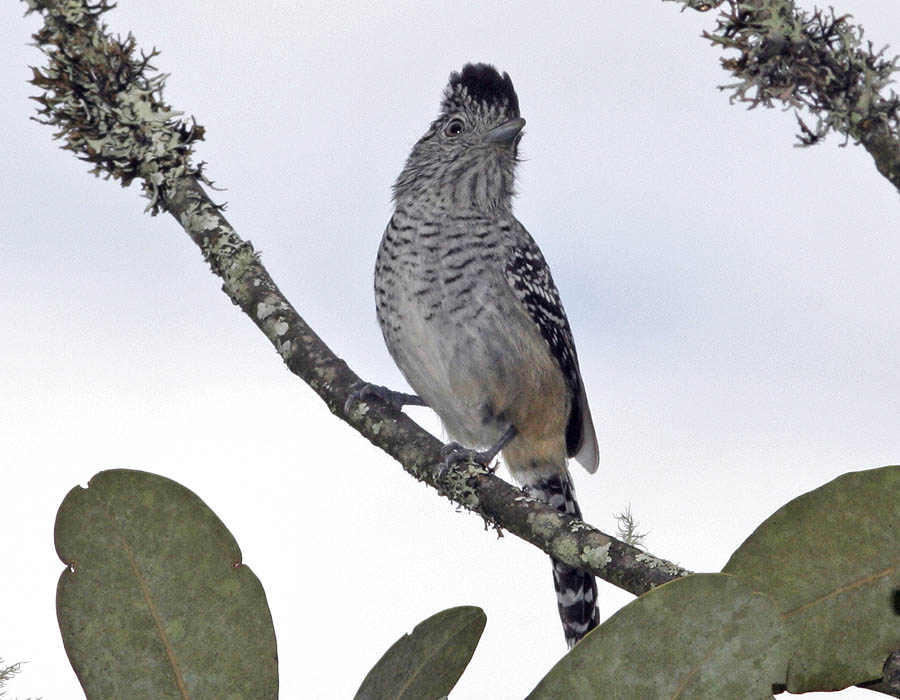
Uniform Antshrike
Thamnophilus unicolor
Order: Passeriformes / Family: Thamnophilidae
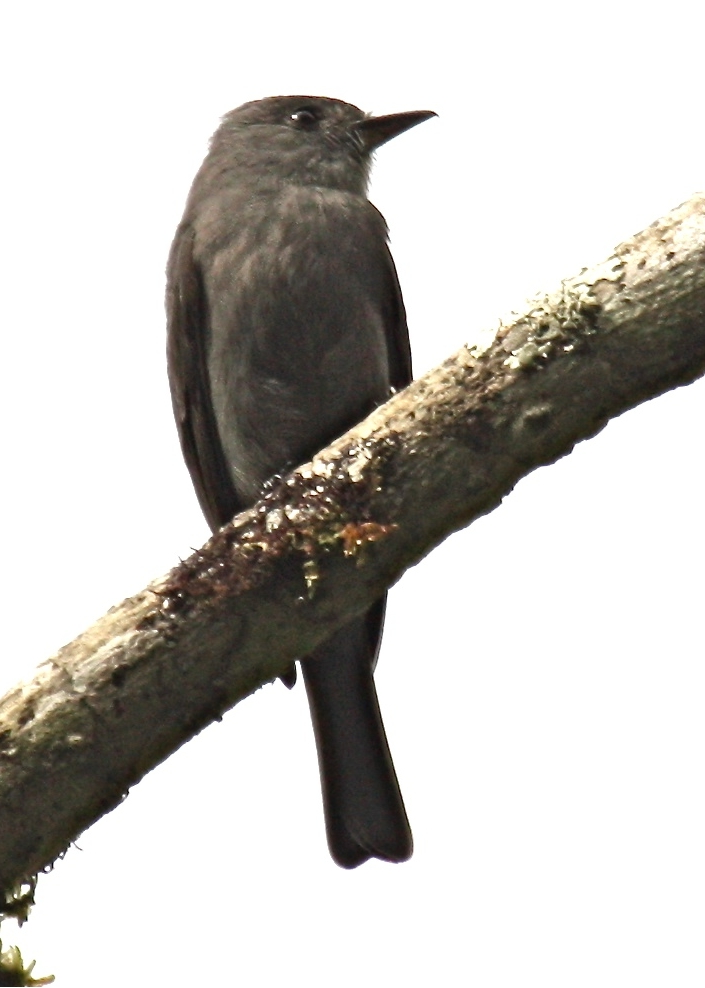
Wikimedia Commons
About the Uniform Antshrike
The Uniform Antshrike, scientifically named Thamnophilus unicolor, is a captivating bird species that occupies the dense understory of tropical forests in Central and South America. Renowned for its plain, unmarked plumage, the Uniform Antshrike serves as a subtle but vital component of its ecosystem. With a range extending from Costa Rica and Panama down through Colombia and into the northwestern regions of Ecuador and Venezuela, this bird thrives in humid environments where it plays a significant role in the control of insect populations. During the breeding season, which typically runs from March to August, the Uniform Antshrike exhibits increased vocal activity. Its presence in the forest is often betrayed more by its sound than by sight, as it prefers to stay hidden among thick foliage. The ecological role of the Uniform Antshrike includes insect predation, aiding in the balance of arthropod populations, which in turn affects plant health and diversity. This antbird is primarily insectivorous, feeding on beetles, ants, and small arthropods, often employing a gleaning technique as it moves methodically through foliage. The Uniform Antshrike's understated plumage aids in its camouflage, allowing it to avoid predators and catch prey with efficiency. Moreover, this species is an excellent indicator of forest health, as it requires intact and undisturbed habitats to thrive. The conservation of such habitats is crucial not only for the Uniform Antshrike but for the myriad other species that share its environment.
The Uniform Antshrike belongs to the family Thamnophilidae, within the order Passeriformes. These birds typically live 5-7 years, with some individuals living up to 9 years..
How to Identify a Uniform Antshrike
The Uniform Antshrike is aptly named for its consistent gray coloration, lacking the bold patterns or markings seen in many other antbird species. Adult males and females are similar in appearance, both featuring a uniform slate-gray plumage. Males, however, tend to display slightly darker hues, which can be a subtle distinguishing factor. Juveniles resemble adults but may exhibit a more muted gray, sometimes with a brownish tinge that fades as they mature. The bird's compact body, coupled with its relatively short wings and tail, gives it a stocky appearance. In flight, the Uniform Antshrike maintains a low, deliberate trajectory, often moving from one patch of dense foliage to another. This species can occasionally be confused with other members of the Thamnophilus genus, such as the Barred Antshrike, but the latter has distinctive barring that the Uniform Antshrike lacks. Perched, the bird assumes a characteristic posture with a slight forward lean and a tendency to flick its tail subtly as it maintains a vigilant watch for prey.
Having trouble telling birds apart? Upload a photo to our bird identification tool for an instant species match.
Uniform Antshrike Habitat and Range
Preferred Habitat
The Uniform Antshrike inhabits tropical and subtropical forests, favoring dense understory regions where it can forage effectively. It is primarily found at elevations ranging from sea level to 1500 meters, although it tends to be more abundant in lower montane and foothill forests. This species prefers humid environments, often residing in forests that experience high rainfall and lush vegetation. While it can sometimes be found in secondary growth forests, the Uniform Antshrike is more commonly associated with primary forests, where the complex structure provides ample opportunities for foraging and nesting. Seasonal habitat shifts are minimal, as this species is largely sedentary and remains within its preferred forested environments year-round.
Geographic Range
The Uniform Antshrike's range spans parts of Central and South America, with a strong presence in Costa Rica, Panama, Colombia, and extending into northwestern Ecuador and Venezuela. This bird does not exhibit migratory behavior, residing year-round within its established range. Its population is most dense in regions where humid, tropical forests are extensive and intact. While it may occupy a relatively wide geographical area, the Uniform Antshrike's reliance on specific forest habitats means that it is not evenly distributed across its range. Local populations can be affected by deforestation and habitat fragmentation, which can lead to declines in areas where forest cover is reduced.
Want to know which birds visit your area? Browse our backyard birds by location guides for region-specific species lists.
What Does the Uniform Antshrike Eat?
The diet of the Uniform Antshrike centers around insects, primarily beetles, ants, and other small arthropods. This bird engages in a foraging technique known as 'gleaning', where it carefully picks insects from leaves and branches in the dense understory. During the breeding season, dietary demands increase, and the bird may also consume a higher proportion of soft-bodied insects to meet nutritional needs. The Uniform Antshrike forages alone or in pairs, rarely participating in mixed-species flocks, which allows it to avoid competition and focus on its preferred prey. Its feeding activity peaks during early morning and late afternoon, coinciding with periods of high insect activity.
Uniform Antshrike Behavior and Social Structure
The Uniform Antshrike exhibits a solitary and territorial demeanor, particularly evident during the breeding season. Pairs establish and defend territories vigorously, with males often engaging in vocal displays to deter intruders. Courtship involves subtle displays, as the male presents food items to the female, reinforcing pair bonds. Unlike some antbirds, the Uniform Antshrike rarely joins mixed-species flocks, instead preferring to forage independently. Its response to predators involves remaining motionless under cover, capitalizing on its camouflaged plumage. Daily activity patterns include periods of intense foraging interspersed with rest and vigilant watching for predators or rivals.
Uniform Antshrike Nesting and Reproduction
Uniform Antshrikes construct cup-shaped nests, usually positioned low in dense vegetation. The nests are crafted from rootlets, leaves, and twigs, intricately woven to provide stability and concealment. A typical clutch consists of two eggs, camouflaged with speckles and blotches that blend with the forest floor. Both male and female share incubation duties, which last approximately 14 days. After hatching, the chicks remain in the nest for another 12-15 days, during which both parents contribute to feeding and protection. The species typically raises one brood per year, although favorable conditions can occasionally lead to two.
Uniform Antshrike Sounds and Vocalizations
The primary song of the Uniform Antshrike is a series of soft, melodious whistles, each note descending in pitch. This song, often delivered from a concealed perch, serves to establish territory and communicate with a mate. Call notes include sharp 'chik' sounds, used in close contact situations or when alerting to potential threats. Alarm calls are more urgent and staccato, effectively conveying a sense of urgency. During dawn, the antshrike participates in the forest chorus, its song blending with those of other avian residents to create a vibrant soundscape.
Interesting Facts About the Uniform Antshrike
- 1The Uniform Antshrike is one of the few antbirds with a completely uniform plumage, lacking the barring or streaking common in the family.
- 2Its song is often mistaken for that of other species due to its simplicity, yet it serves as a key identifier in dense forests.
- 3Uniform Antshrikes are monogamous, forming pair bonds that can last for several breeding seasons.
- 4These birds are more often heard than seen, as they prefer to stay hidden within dense foliage.
- 5Despite their elusive nature, Uniform Antshrikes play a vital role in controlling insect populations in tropical forests.
- 6The species' preference for dense, humid forests makes it an excellent indicator of forest health and integrity.
- 7The Uniform Antshrike's territory size can vary, but it typically encompasses several hectares of forest understory.
Uniform Antshrike Conservation Status
The Uniform Antshrike is currently listed as 'Least Concern' by the IUCN, with a stable population trend. However, deforestation and habitat fragmentation pose significant threats, particularly in regions where logging and agricultural expansion continue to reduce forest cover. Conservation efforts focus on preserving intact forest habitats and implementing sustainable land management practices. Historical population changes remain relatively undocumented, but ongoing habitat loss could lead to declines if not addressed.
Other Thamnophilidae Species

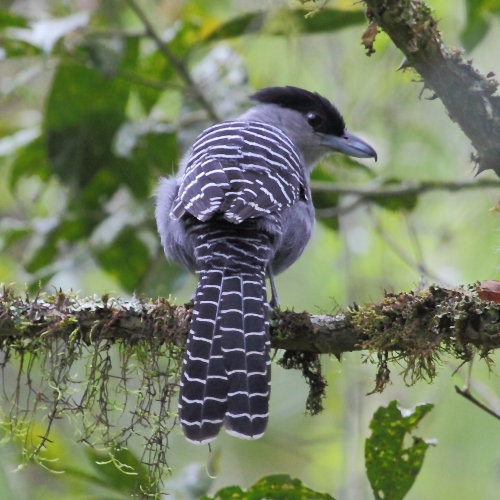


Birds Similar to the Uniform Antshrike
These species are often confused with the Uniform Antshrike due to similar appearance or overlapping range.