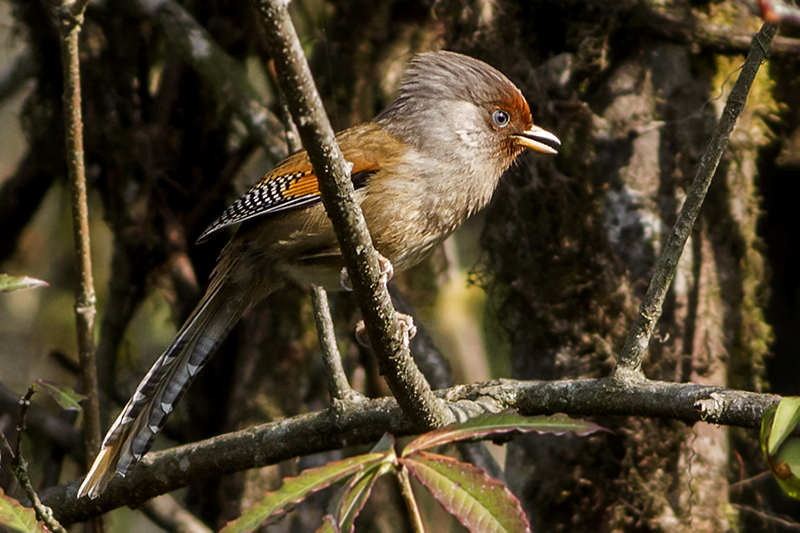
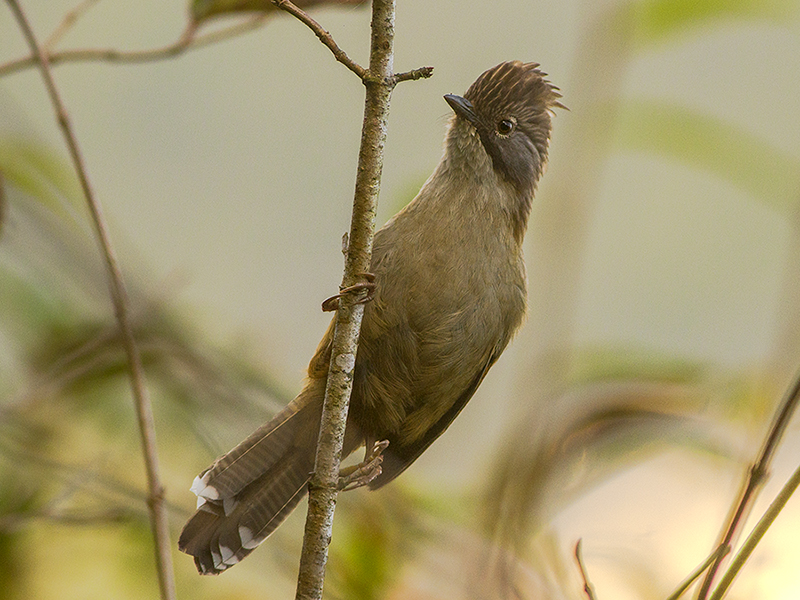
Chestnut-backed Laughingthrush
Ianthocincla nuchalis
Order: Passeriformes / Family: Leiothrichidae

Wikimedia Commons
About the Chestnut-backed Laughingthrush
The Chestnut-backed Laughingthrush (Ianthocincla nuchalis) is a captivating species that enchants both birdwatchers and ornithologists with its harmonious vocalizations and striking appearance. As a member of the Leiothrichidae family, this bird exhibits a unique blend of charisma and ecological importance in its native habitats across Asia. Predominantly found in the subtropical and tropical regions of Taiwan, the Chestnut-backed Laughingthrush thrives in dense montane forests and shrublands, where its rich, chestnut-colored plumage acts as both a dazzling display and effective camouflage against the backdrop of its leafy environment. Its ecological role is multifaceted. As an omnivore, the Ianthocincla nuchalis contributes significantly to seed dispersal and insect population control. By consuming a varied diet of fruits, seeds, and insects, it maintains a balance within its ecosystem, propagating plant species while curbing potential pest populations. Seasonally, the Chestnut-backed Laughingthrush engages in altitudinal migration, moving from higher elevations during warmer months to lower altitudes as temperatures drop. This movement not only aids in its survival but also influences the dispersal patterns of the flora and fauna within its range. The species' tendency to travel in small, social flocks further underscores its role in the forest community, enhancing genetic diversity through interactions with other bird species and facilitating cross-pollination of plant species. The Chestnut-backed Laughingthrush also plays a crucial part in the cultural and ecological tapestry of its region. As a common sight and sound in the forests of Taiwan, it serves as an indicator of forest health, reflecting the impacts of environmental changes and human activities. Despite its current stability, ongoing habitat destruction and climate change pose potential threats, making conservation efforts vital to ensure the continued presence of this melodious species in its natural habitat.
The Chestnut-backed Laughingthrush belongs to the family Leiothrichidae, within the order Passeriformes. These birds typically live average 5-8 years with max recorded at 11 years.
How to Identify a Chestnut-backed Laughingthrush
The Chestnut-backed Laughingthrush is a medium-sized bird, easily recognized by its vibrant chestnut back and flanks, contrasted with a paler, grayish-white underbelly. Its head is marked by a distinctive black mask that extends over the eyes, adding to its striking appearance. The bill is stout and black, complementing its overall plumage. Adults typically measure around 25 to 28 centimeters in length, with a wingspan that adds grace to its agile movements. Juvenile Chestnut-backed Laughingthrushes exhibit similar patterns to adults but with slightly duller plumage, lacking the vivid contrast seen in mature birds. Both sexes appear similar, although males might exhibit marginally brighter coloration during the breeding season. While observing this species, birders should note its perching posture, which is often upright and alert. In flight, the bird displays a rounded silhouette, with short, rounded wings that enable quick, agile maneuvers through dense foliage. The Chestnut-backed Laughingthrush can be confused with other laughingthrushes, such as the Black-throated Laughingthrush, but its distinctive chestnut coloration and call can help differentiate it.
Having trouble telling birds apart? Upload a photo to our bird identification tool for an instant species match.
Chestnut-backed Laughingthrush Habitat and Range
Preferred Habitat
The Chestnut-backed Laughingthrush primarily inhabits subtropical and tropical montane forests, thriving at elevations ranging from 300 to 2500 meters. Its preferred habitats include dense undergrowth in forested areas, where it can forage and nest with relative safety. The species is most commonly associated with the lush, evergreen forests of Taiwan, which offer ample food resources and protection from predators. Seasonal shifts in habitat are notable, as these birds descend to lower altitudes during winter months to escape harsher weather conditions at higher elevations. While predominantly a forest dweller, the Chestnut-backed Laughingthrush can occasionally be found in secondary growth areas and forest edges, adapting to slight habitat modifications. Unlike some other bird species, it does not typically venture into urban areas, maintaining its preference for natural, undisturbed environments.
Geographic Range
The Chestnut-backed Laughingthrush is endemic to Taiwan, where it occupies a relatively stable range across the island's mountainous regions. Its distribution is primarily concentrated in central and northern Taiwan, where montane forests provide suitable habitats. The bird's range does not extend beyond the island, making conservation efforts within Taiwan critical for its continued survival. While the species does not engage in long-distance migrations, it does exhibit altitudinal movements as part of its seasonal behavior, descending to lower elevations during colder months. Population density tends to be higher in well-preserved forested areas, where human disturbances are minimal, allowing the species to thrive.
Want to know which birds visit your area? Browse our backyard birds by location guides for region-specific species lists.
What Does the Chestnut-backed Laughingthrush Eat?
The diet of the Chestnut-backed Laughingthrush is a varied mix of fruits, seeds, and insects, reflecting its omnivorous nature. During the warmer months, when fruits are abundant, the bird predominantly feeds on berries and other fleshy fruits, playing a crucial role in seed dispersal. As autumn approaches and insect populations peak, the Chestnut-backed Laughingthrush shifts its focus to arthropods, consuming beetles, caterpillars, and other insects. This seasonal dietary adjustment helps maintain ecological balance by controlling potential pest outbreaks. Foraging behavior is opportunistic, with the bird often seen hopping along branches or gleaning from foliage in search of food. It uses its stout bill to crack open seeds and dislodge insects from the bark. Feeding typically occurs during the cooler hours of the morning and late afternoon, aligning with periods of increased insect activity. The bird’s diet flexibility is a key factor in its adaptability to changing environmental conditions.
Chestnut-backed Laughingthrush Behavior and Social Structure
The Chestnut-backed Laughingthrush is highly social, often seen in pairs or small flocks that exhibit complex social dynamics. Within these groups, birds communicate through a series of melodious calls, which serve to maintain group cohesion and coordinate activities such as foraging. Territorial behavior is evident during the breeding season, with pairs establishing and defending their chosen nesting sites from intruders. Courtship displays involve elaborate vocalizations and mutual preening, reinforcing pair bonds. The species' response to predators is marked by a combination of vocal alarms and evasive flight patterns, quickly retreating into dense foliage for safety. Daily activity patterns revolve around foraging and social interactions, with peaks in activity during morning and late afternoon. The Chestnut-backed Laughingthrush's affinity for social structures extends beyond flocking, as these birds participate in mixed-species foraging flocks during non-breeding months, enhancing their foraging efficiency and predator vigilance.
Chestnut-backed Laughingthrush Nesting and Reproduction
The Chestnut-backed Laughingthrush constructs cup-shaped nests using a variety of natural materials, including twigs, grasses, and leaves, often lined with softer fibers to provide comfort for the eggs and hatchlings. Nests are typically situated in dense shrubs or the lower branches of trees, providing concealment from predators. The species generally lays clutches of 3 to 4 pale blue eggs, with both parents sharing responsibilities in incubation and chick-rearing. The incubation period lasts approximately 14 to 16 days, during which time the parents remain vigilant against potential threats. After hatching, the chicks are altricial, requiring significant parental investment for survival. Both parents engage in feeding and protecting the young, with fledging occurring around 12 to 14 days post-hatching. The Chestnut-backed Laughingthrush typically raises one to two broods per year, depending on environmental conditions and food availability.
Chestnut-backed Laughingthrush Sounds and Vocalizations
The primary song of the Chestnut-backed Laughingthrush is a series of rich, melodious whistles and trills, often described as a laughing sequence that echoes through its forest habitat. These vocalizations, which vary in pitch and rhythm, serve both to attract mates and to establish territory. Call notes are shorter and sharper, used for communication within flocks. Alarm calls are distinct, featuring rapid, high-pitched notes that alert fellow birds to the presence of predators. During the dawn chorus, the Chestnut-backed Laughingthrush joins other forest birds in a symphony of sound, contributing to the vibrant acoustic landscape of its montane environment.
Interesting Facts About the Chestnut-backed Laughingthrush
- 1The Chestnut-backed Laughingthrush has a unique call that often resembles human laughter, leading to its common name.
- 2This species exhibits altitudinal migration, moving to lower elevations in winter, a behavior uncommon among tropical birds.
- 3Despite its vibrant plumage, the Chestnut-backed Laughingthrush is adept at remaining concealed within dense foliage.
- 4The bird's social nature extends to mixed-species flocks, where it benefits from increased foraging success and predator awareness.
- 5In Taiwan, the Chestnut-backed Laughingthrush is considered a symbol of healthy forest ecosystems, reflecting environmental changes.
- 6The species' diet flexibility, including a mix of fruits and insects, allows it to adapt to seasonal food availability.
- 7Chestnut-backed Laughingthrushes engage in mutual preening during courtship, strengthening pair bonds before the breeding season.
Chestnut-backed Laughingthrush Conservation Status
The Chestnut-backed Laughingthrush is currently listed as Least Concern by the IUCN, with stable population trends across its range in Taiwan. However, factors such as habitat loss due to deforestation and the impacts of climate change pose potential threats to its long-term survival. Conservation efforts focus on preserving the montane forest habitats essential for this species, including legal protections for critical areas and reforestation projects. Historical population data indicate relative stability, but ongoing monitoring is crucial to detect and mitigate any emerging threats. Community engagement and education about the species' ecological role further support conservation initiatives.