Chestnut-capped Laughingthrush
Garrulax mitratus
Order: Passeriformes / Family: Leiothrichidae

Wikimedia Commons
About the Chestnut-capped Laughingthrush
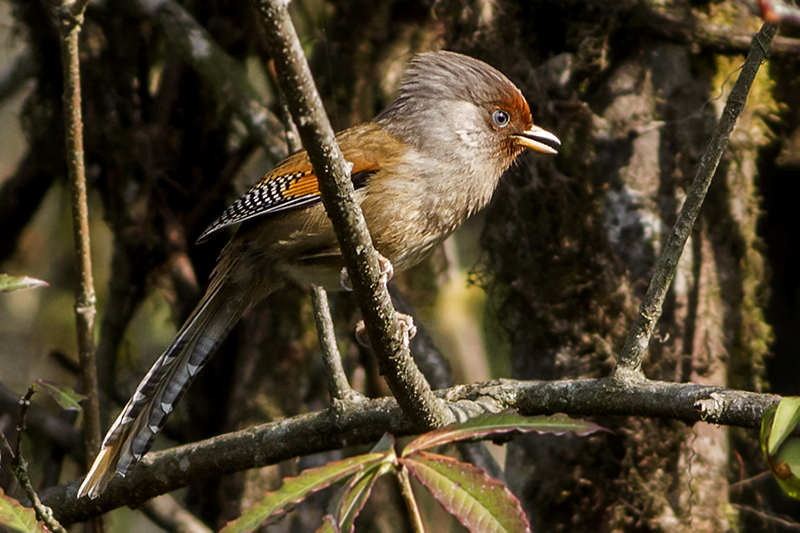
The Chestnut-capped Laughingthrush (Garrulax mitratus) is a captivating bird native to the montane forests of Southeast Asia. This species, a member of the family Leiothrichidae, thrives in the dense undergrowth and subtropical forests of regions such as Peninsular Malaysia, Sumatra, and Borneo. Adorned with a distinctive chestnut crown, it stands as a symbol of the rich biodiversity found within its habitat. The bird plays a crucial ecological role as both a seed disperser and an insect predator. Its presence indicates a healthy ecosystem, as it thrives in areas where the forest structure remains intact. Typically, the Chestnut-capped Laughingthrush exhibits a preference for elevations ranging from 900 to 2,000 meters, where it navigates the dense forest understory in search of food and shelter. Seasonal behaviors of the Chestnut-capped Laughingthrush include increased vocalization during the breeding season, which spans from March to July. During this time, the bird's complex and melodious calls become more frequent, serving both to attract mates and deter rivals. Outside the breeding season, these laughingthrushes often form small, social flocks, demonstrating their cohesive social structure. While primarily a resident species, some local movements occur in response to food availability and habitat changes. The Chestnut-capped Laughingthrush's role in its ecosystem extends beyond its ecological contributions. As an insectivore and frugivore, it aids in controlling insect populations and promoting forest regeneration through seed dispersal. Furthermore, its behavior and vocalizations offer valuable insights into the dynamics of montane forest ecosystems. The bird's tendency to remain within dense foliage emphasizes the importance of preserving these unique habitats. Conservation efforts aimed at protecting the Chestnut-capped Laughingthrush also benefit a wide array of other species sharing the same environment. The bird's reliance on high-altitude forests underscores the need for proactive measures to combat deforestation and habitat fragmentation. As forest areas continue to diminish, the Chestnut-capped Laughingthrush serves as a reminder of the delicate balance within these ecosystems. The continued survival of Garrulax mitratus depends on the preservation of its natural habitat, highlighting the interconnectedness of species and the ecosystems they inhabit.
The Chestnut-capped Laughingthrush belongs to the family Leiothrichidae, within the order Passeriformes. These birds typically live average 7 years, with a maximum of 11 years recorded..
How to Identify a Chestnut-capped Laughingthrush
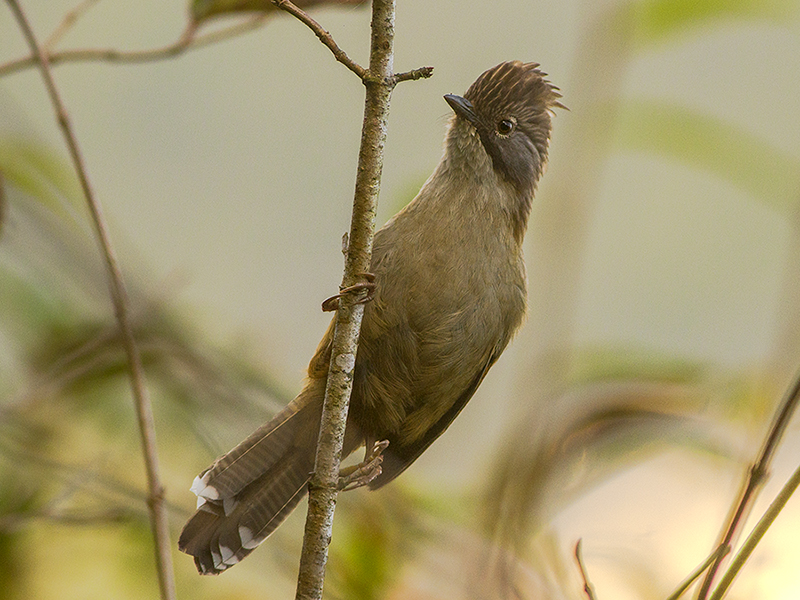
The Chestnut-capped Laughingthrush is easily recognized by its vibrant chestnut crown, which contrasts sharply with its slate-gray body. Adults possess a white throat and a striking black mask that extends from the beak through the eye, adding to its charismatic appearance. Its wings and tail exhibit a soft blend of gray and brown, providing subtle camouflage against the forest backdrop. Juveniles resemble adults but have a duller crown and less defined facial markings, making them slightly less conspicuous. Males and females share similar plumage, with no significant sexual dimorphism, which can make gender identification in the field challenging. The bird's flight silhouette is compact, with rounded wings and a medium-length tail, which it utilizes effectively for navigating through dense foliage. Perching posture typically features an upright stance, often accompanied by slight tail flicking, a characteristic behavior observed while foraging or during social interactions. Though the Chestnut-capped Laughingthrush may be confused with other laughingthrush species, its unique combination of chestnut and gray plumage allows for reliable identification when observed closely. Similar species include the Black-throated Laughingthrush, but the latter lacks the distinctive chestnut crown.
Having trouble telling birds apart? Upload a photo to our bird identification tool for an instant species match.
Chestnut-capped Laughingthrush Habitat and Range
Preferred Habitat
The Chestnut-capped Laughingthrush primarily inhabits montane and submontane forests, thriving in elevations from 900 to 2,000 meters. These birds favor areas with dense undergrowth, where they navigate with ease through tangled vegetation. Such habitats include primary and secondary forests, as well as forest edges that offer abundant cover and food resources. Seasonal habitat shifts are minimal, as the species tends to remain within its preferred elevation range year-round. However, local movements may occur in response to changes in food availability or environmental conditions. While the Chestnut-capped Laughingthrush is not typically associated with urban environments, it occasionally ventures into rural areas and gardens near forested regions. Its presence in these areas is usually transient, linked to foraging excursions rather than permanent settlement. The bird's reliance on well-preserved forest habitats underscores the importance of conserving these environments to ensure its continued survival.
Geographic Range
The Chestnut-capped Laughingthrush is native to Southeast Asia, with its range primarily encompassing Peninsular Malaysia, Sumatra, and Borneo. It is a resident species, largely non-migratory, and tends to stay within the montane regions throughout the year. In Malaysia, the bird is commonly found in the central and southern parts of the peninsula, where montane forests are prevalent. Sumatra and Borneo also host significant populations, particularly in areas with undisturbed forest cover. While the species does not undertake long-distance migrations, some altitudinal movements may occur, particularly in response to seasonal food availability. Population density hotspots often coincide with regions of high biodiversity within protected areas, such as national parks and wildlife reserves. These locations offer the critical habitat features necessary for the Chestnut-capped Laughingthrush's survival and reproduction. Despite its relatively restricted range, the species is considered widespread within its preferred habitats, provided that these areas remain intact and free from significant anthropogenic disturbances.
Want to know which birds visit your area? Browse our backyard birds by location guides for region-specific species lists.
What Does the Chestnut-capped Laughingthrush Eat?
The Chestnut-capped Laughingthrush has a varied diet that includes both animal and plant matter. Primarily insectivorous, it consumes a wide array of insects and their larvae, which it gleans from leaves and branches within the forest understory. This diet provides the bird with essential protein, especially during the breeding season when nutritional demands are heightened. In addition to insects, the laughingthrush also feeds on fruits, seeds, and berries, making it an important seed disperser within its ecosystem. The bird's foraging technique is methodical, involving careful inspection of foliage and occasional ground foraging. It often forages in small groups, which can enhance feeding efficiency and reduce the risk of predation. Seasonal diet shifts are influenced by the availability of food resources, with a greater reliance on fruit during periods when insects are less abundant. The bird's feeding schedule is diurnal, with peak activity occurring during the early morning and late afternoon when temperatures are cooler and insect activity is heightened.
Chestnut-capped Laughingthrush Behavior and Social Structure
The Chestnut-capped Laughingthrush exhibits a highly social structure, often forming small flocks that facilitate cooperative foraging and vigilance against predators. These groups typically consist of family units or loosely associated individuals that communicate through a complex repertoire of calls and songs. The bird's territorial behavior becomes more pronounced during the breeding season, when pairs may defend nesting sites against intruders. Courtship displays are subtle yet significant, involving a series of vocalizations and physical gestures that reinforce pair bonds. During non-breeding periods, the species demonstrates a more gregarious nature, with flocks sometimes joining mixed-species feeding parties. In response to predators, the Chestnut-capped Laughingthrush relies on its agility and the dense forest cover to evade capture. Alarm calls are employed to alert conspecifics to potential threats, promoting group cohesion and safety. Daily activity patterns are primarily diurnal, with birds active from dawn until dusk. The early morning hours often witness a peak in vocalizations, as the birds establish territory and engage in social interactions. Rest periods are interspersed throughout the day, typically during the hottest midday hours.
Chestnut-capped Laughingthrush Nesting and Reproduction
Nest construction for the Chestnut-capped Laughingthrush typically takes place in dense shrubbery or low trees, where the birds build a cup-shaped nest using twigs, leaves, and other plant materials. The preferred nest sites are well-concealed within the forest understory, providing protection from predators and environmental extremes. A typical clutch consists of 2 to 4 eggs, which the female incubates for approximately 14 to 16 days. During this period, the male plays a crucial role in providing food and protection to the incubating female. Once hatched, the nestlings remain in the nest for about 12 to 14 days, during which both parents share feeding responsibilities. The fledging timeline is relatively short, with young birds gaining independence quickly after leaving the nest. Parental care continues for some time after fledging, as the young learn vital foraging and survival skills. The Chestnut-capped Laughingthrush typically raises one to two broods per year, depending on environmental conditions and food availability.
Chestnut-capped Laughingthrush Sounds and Vocalizations
The vocalizations of the Chestnut-capped Laughingthrush are a defining characteristic, featuring a rich, melodious song composed of whistles, chirps, and trills. The rhythm of its primary song is complex, with varying pitch and tempo that can carry over considerable distances within the forest. Call notes are shorter and more abrupt, often used for communication within flocks or as contact calls between mates. Alarm calls are sharp and piercing, designed to alert conspecifics to danger. During the dawn chorus, the Chestnut-capped Laughingthrush becomes particularly vocal, contributing to the symphony of sounds that characterize the forest at this time. The bird's calls and songs are often compared to the laughter of humans, a trait which has earned it its common name. These vocalizations play a crucial role in maintaining social bonds and establishing territory within the dense forest environment.
Interesting Facts About the Chestnut-capped Laughingthrush
- 1The Chestnut-capped Laughingthrush can traverse dense forest areas with remarkable agility, thanks to its compact body and strong legs.
- 2This bird's melodious song has earned it the nickname 'laughingthrush,' as its calls mimic the sound of human laughter.
- 3Despite its vibrant appearance, the Chestnut-capped Laughingthrush's plumage provides effective camouflage in the forest understory.
- 4The species is known to participate in mixed-species foraging flocks, benefiting from the collective vigilance of multiple bird species.
- 5During the breeding season, the Chestnut-capped Laughingthrush becomes highly territorial, often engaging in vocal duels with rivals.
- 6The bird's diet versatility allows it to adapt to seasonal changes in food availability, ensuring its survival in the fluctuating forest environment.
- 7A member of the Leiothrichidae family, the Chestnut-capped Laughingthrush shares this classification with other diverse and socially complex bird species.
Chestnut-capped Laughingthrush Conservation Status
The Chestnut-capped Laughingthrush currently holds a conservation status of Least Concern according to the IUCN Red List, though its populations face challenges from habitat loss and fragmentation. Deforestation for agriculture and logging represents the primary threat to its habitat, leading to a gradual decline in population numbers over time. Conservation efforts focus on preserving intact montane forest areas and promoting sustainable land-use practices. Protected areas and national parks within its range serve as important refuges for the species, safeguarding essential habitat features. Historical population changes have been influenced by regional deforestation rates, with more stable populations found in well-protected regions. Continued monitoring and habitat protection are vital to ensure the long-term survival of the Chestnut-capped Laughingthrush and the biodiversity of its montane forest ecosystem.