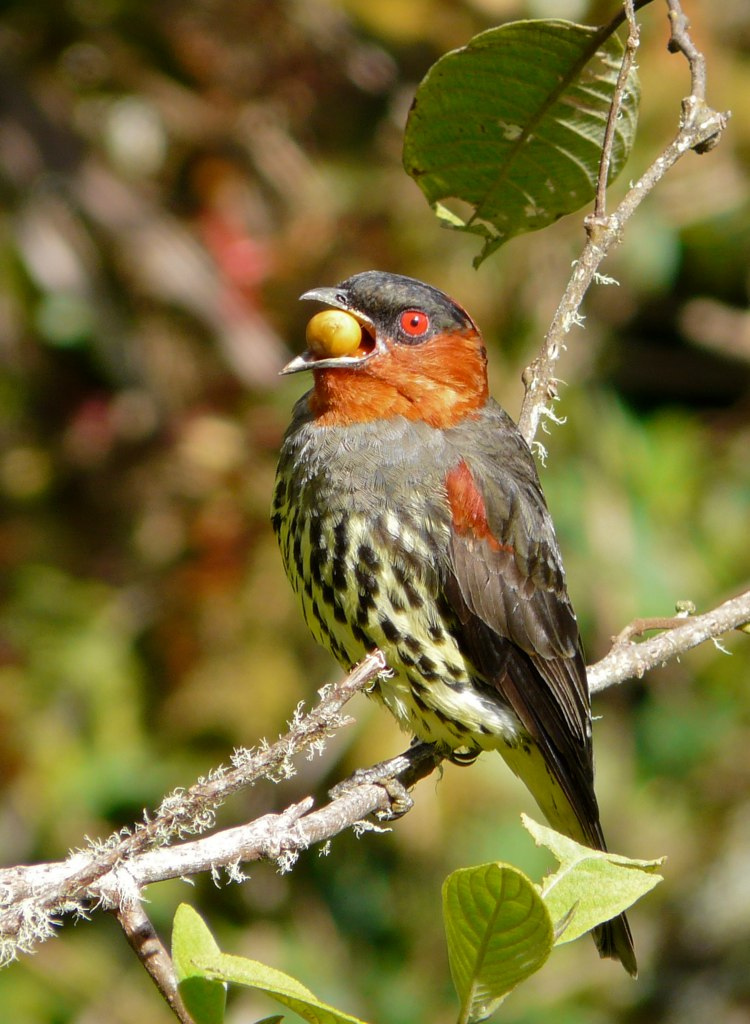
Cinnamon Becard
Pachyramphus cinnamomeus
Order: Passeriformes / Family: Cotingidae

Wikimedia Commons
About the Cinnamon Becard
The Cinnamon Becard (Pachyramphus cinnamomeus) is an intriguing bird species native to a broad range of environments across Central and South America. Belonging to the Cotingidae family, this bird is known for its distinctive cinnamon-colored plumage, which sets it apart in the lush tropical forests it inhabits. The bird is medium-sized, measuring about 15 to 17 cm in length, and displays a relatively robust build typical of becards. The Cinnamon Becard's habitat extends from southern Mexico through Central America, reaching Colombia, Venezuela, Ecuador, Peru, and northern Brazil. These regions encompass a mixture of tropical and subtropical forests, where the bird plays a vital ecological role as both a predator of insects and a disperser of seeds.
Ecologically, the Cinnamon Becard contributes significantly to the control of insect populations, feeding on a variety of arthropods, which helps maintain the balance within its ecosystem. Its role as a seed disperser is equally important, as it aids in the propagation of plant species within its habitat. During the breeding season, which varies across its range but generally occurs during the wet season, the Cinnamon Becard becomes highly active, showcasing its vocal abilities and engaging in elaborate courtship displays.
The significance of the Cinnamon Becard extends to its importance as an indicator species. Changes in its population or behavior can signal shifts in environmental conditions, such as deforestation or climate change. As a year-round resident in many parts of its range, the Cinnamon Becard exhibits fascinating adaptability, thriving in both primary and secondary forests as well as in edge habitats. Conservation efforts focused on preserving its forest habitats are crucial to ensuring the continued survival of this and other interdependent species. The Cinnamon Becard's presence in a region often indicates a healthy, functioning ecosystem.
The Cinnamon Becard belongs to the family Cotingidae, within the order Passeriformes. These birds typically live average 4-6 years, with a max recorded of 9 years..
How to Identify a Cinnamon Becard
The Cinnamon Becard is readily identifiable by its striking cinnamon-colored plumage, which covers most of its body. This warm hue is more pronounced in males, while females and juveniles may exhibit slightly duller tones with a hint of olive on the wings and tail. The head of the Cinnamon Becard is slightly darker than the body, with a broad bill that is characteristic of the Pachyramphus genus. In terms of size, the bird measures approximately 15 to 17 centimeters in length, with a wingspan that complements its medium stature.
Field identification can sometimes be complicated by the presence of similar species, such as the Rose-throated Becard, which shares a similar shape and size. However, the Cinnamon Becard's consistent cinnamon coloration helps differentiate it from these species, which often have more varied or contrasting plumage. In flight, the bird's wings appear broad and rounded, supporting its agile maneuvering through forest canopies.
When perched, the Cinnamon Becard maintains an upright posture, often seen perched on branches within the mid to upper canopy. Its broad bill and stout neck are noticeable features, providing an overall robust appearance. Observers should note the bird's relatively quiet and deliberate movements, as it forages methodically among trees, a behavior that aids in its identification.
Having trouble telling birds apart? Upload a photo to our bird identification tool for an instant species match.
Cinnamon Becard Habitat and Range
Preferred Habitat
The Cinnamon Becard thrives in a variety of forested environments, predominantly favoring tropical and subtropical forests. It is commonly found in lowland rainforests, but it also adapts to montane forests up to elevations of approximately 1,500 meters. These birds prefer habitats with dense foliage, which provides ample foraging opportunities and nesting sites. They are often seen in forest edges and secondary growth areas, where the mix of open space and tree cover supports their foraging habits.
While the Cinnamon Becard primarily inhabits rural and semi-urban areas, it occasionally ventures into more urbanized settings where suitable green spaces exist. Its adaptability to different forest types and its presence in both pristine and disturbed habitats indicate a level of ecological flexibility that benefits its survival amidst habitat changes. Seasonal habitat shifts are minimal, as the species is largely non-migratory, maintaining a consistent presence in its preferred environments throughout the year.
Geographic Range
The Cinnamon Becard boasts a wide geographic range, extending from southern Mexico through Central America, reaching into parts of South America. Its distribution includes countries such as Guatemala, Honduras, Nicaragua, Costa Rica, Panama, Colombia, Venezuela, Ecuador, Peru, and northern Brazil. In these regions, the bird occupies both continuous forest tracts and fragmented patches, demonstrating its adaptability.
While the Cinnamon Becard is a resident species in many parts of its range, some populations may exhibit local movements in response to food availability and environmental conditions. However, these movements are generally not considered true migration. Population densities can vary, with hotspots typically found in areas where forest habitats remain relatively intact.
In terms of breeding range, the Cinnamon Becard is known to nest throughout its distribution, taking advantage of seasonal increases in insect populations during the wet season. This wide-ranging presence highlights the importance of conserving forest habitats across multiple countries to support the species' diverse and interconnected populations.
Want to know which birds visit your area? Browse our backyard birds by location guides for region-specific species lists.
What Does the Cinnamon Becard Eat?
The diet of the Cinnamon Becard primarily consists of insects and other arthropods, which it gleans from foliage in the mid to upper canopy layers. Its foraging technique is characterized by deliberate, methodical movements as it inspects leaves and branches for prey. Common food items include caterpillars, beetles, and spiders, with occasional consumption of small fruits and berries, particularly during periods when insect abundance is low.
Seasonal variations in diet are observed, with the bird consuming a higher proportion of fruits during the dry season when insects are less plentiful. This dietary flexibility allows the Cinnamon Becard to sustain itself throughout the year in varying environmental conditions. The bird typically forages alone or in pairs, although it may occasionally join mixed-species foraging flocks.
The Cinnamon Becard's feeding schedule is largely diurnal, with peak activity occurring during the early morning and late afternoon hours. These periods coincide with the times when both insect prey and fruiting plants are most accessible, optimizing the bird's foraging success.
Cinnamon Becard Behavior and Social Structure
Cinnamon Becards exhibit a range of intriguing behaviors, particularly during the breeding season. These birds are primarily solitary or found in pairs, especially during nesting. They defend their territories vigorously, engaging in vocal displays and physical confrontations to deter intruders. Courtship displays include elaborate song patterns and visual exhibitions, where males showcase their plumage and engage in synchronized flights with potential mates.
Socially, the Cinnamon Becard is not known to form large flocks, but it occasionally associates with mixed-species foraging groups, particularly outside the breeding season. This behavior increases their foraging efficiency and provides additional protection from predators. When a threat is perceived, Cinnamon Becards emit sharp alarm calls to alert others.
Daily activity patterns for the Cinnamon Becard involve periods of intense foraging interspersed with rest and preening. They are generally more active during cooler parts of the day, reducing activity during the heat of midday. These behavioral traits reflect their adaptability and resourcefulness within a dynamic forest environment.
Cinnamon Becard Nesting and Reproduction
The nesting habits of the Cinnamon Becard are notably resourceful and adaptive. These birds construct cup-like nests using a combination of twigs, leaves, and fibers, often incorporating moss and spider silk for added strength and camouflage. Nests are typically built in the mid to upper canopy, strategically placed to avoid ground-based predators and to capitalize on available cover.
Clutch size generally ranges from two to three eggs, with both parents participating in incubation and feeding duties. The incubation period lasts approximately two weeks, after which the chicks hatch and are fed a diet rich in insects and fruits. Fledging occurs about two to three weeks post-hatching, with parents continuing to care for the young until they are fully independent.
The Cinnamon Becard may raise multiple broods per year, depending on food availability and environmental conditions. This reproductive strategy ensures the continuation of their population despite predation pressures and habitat changes.
Cinnamon Becard Sounds and Vocalizations
The vocalizations of the Cinnamon Becard are characterized by a series of sharp, clear notes that are both rhythmic and melodic. Their primary song consists of a repetitive series of rising and falling whistles, often described as 'peeet-peet-peet' or 'whip-whip-whip.' These calls are delivered with a consistent tempo and pitch, serving both territorial and mate attraction purposes.
In addition to their primary song, Cinnamon Becards produce a variety of call notes, including soft chattering and more pronounced alarm calls when threatened. During the dawn chorus, their vocal presence is particularly notable, as they join other forest dwellers in a symphony of morning sounds. These vocalizations play a crucial role in maintaining territory boundaries and facilitating social interactions within their habitat.
Interesting Facts About the Cinnamon Becard
- 1The Cinnamon Becard's plumage color is not only unique but also serves as excellent camouflage against the forest backdrop.
- 2Despite its name, the Cinnamon Becard's diet is heavily insect-based, with only occasional fruit consumption.
- 3Cinnamon Becards are known to build their nests near wasp nests, benefiting from the wasps' aggressive defense against predators.
- 4These birds exhibit remarkable adaptability, thriving in both primary forests and secondary growth areas.
- 5The Cinnamon Becard's vocalizations are a distinctive feature, with their rhythmic calls often likened to a musical instrument.
- 6During courtship, males perform synchronized flights with females, showcasing both agility and plumage.
- 7Cinnamon Becards are part of a larger genus known for their robust build and broad bills, suited for diverse feeding strategies.
Cinnamon Becard Conservation Status
The Cinnamon Becard is listed as Least Concern by the IUCN, with populations considered stable across much of its range. However, it faces threats from habitat loss due to deforestation and land conversion for agriculture. Conservation efforts are focused on preserving essential forest habitats and promoting sustainable land-use practices to mitigate these impacts. Historical population changes have been linked to fluctuations in forest cover, underscoring the importance of habitat protection. Local conservation initiatives, including reforestation projects and protected area designations, contribute to the ongoing stability of the Cinnamon Becard's populations. Continued monitoring of population trends and habitat conditions is crucial to ensure that this species remains resilient in the face of environmental challenges. Conservation strategies that integrate community involvement and biodiversity preservation are key to the long-term survival of the Cinnamon Becard and its ecosystem.