
Cinnamon-vented Piha
Lipaugus lanioides
Order: Passeriformes / Family: Cotingidae
Wikimedia Commons
About the Cinnamon-vented Piha
The Cinnamon-vented Piha, Lipaugus lanioides, is a captivating member of the Cotingidae family, predominantly found in the lush Atlantic Forest of southeastern Brazil. This bird, unlike its more vividly colored relatives, sports a more subdued yet striking plumage that helps it blend seamlessly into its montane forest habitat. Its primary range includes the states of Rio de Janeiro, São Paulo, and Minas Gerais, where it occupies elevations from 750 to 1,200 meters above sea level. The Cinnamon-vented Piha plays a crucial role in the ecosystem as both a seed disperser and an insect predator, maintaining the delicate balance of its environment.
This species thrives in the moist, dense upper canopies of the Atlantic Forest, a biodiversity hotspot that is crucial for many species. The forest's humid conditions and rich vegetation provide ample food sources and nesting sites for the piha. During the breeding season, which typically runs from October to March, the Cinnamon-vented Piha becomes more vocal and conspicuous as it seeks to attract mates and establish territories. Its call, though not as melodious as some other cotingas, resonates through the forest, marking its presence.
The Cinnamon-vented Piha's ecological significance extends beyond its immediate habitat. As a frugivore, it aids in seed dispersal for a variety of fruiting plants, including figs and other native species, facilitating forest regeneration. This makes the piha an integral component of the ecological web, supporting both plant and animal life. Although the piha is not currently classified as endangered, its survival is intrinsically linked to the preservation of its habitat, which faces ongoing threats from deforestation and habitat fragmentation.
The Cinnamon-vented Piha belongs to the family Cotingidae, within the order Passeriformes. These birds typically live typically 7-9 years, with some individuals reaching 12 years..
How to Identify a Cinnamon-vented Piha
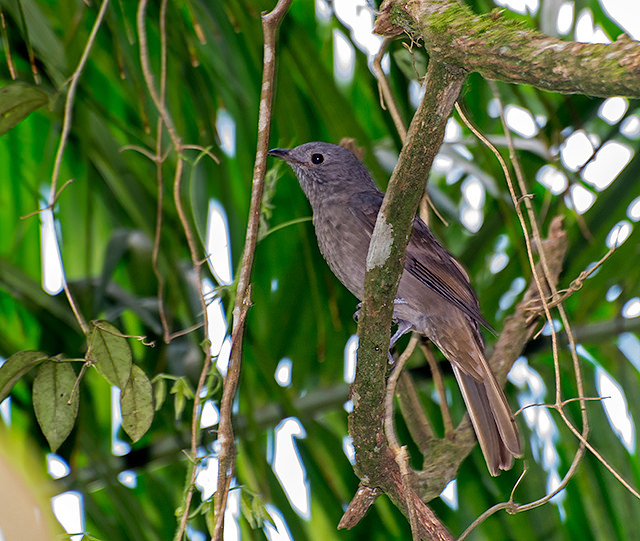
Identifying the Cinnamon-vented Piha involves noting its subtle yet distinct features. Adult pihas measure about 25 to 28 centimeters in length and weigh between 120 and 160 grams. The plumage is primarily gray with a notable cinnamon wash on the vent and lower belly, a key characteristic that aids in identification. The wings and tail are darker gray, providing a mild contrast to the lighter body. Both males and females share this plumage pattern, making sexual dimorphism minimal in this species. Juvenile pihas resemble adults but may exhibit a slightly duller hue and less pronounced cinnamon coloration.
The Cinnamon-vented Piha can sometimes be confused with other members of the genus Lipaugus, particularly in poor lighting conditions. However, its size and the distinctive cinnamon-colored vent help distinguish it from other gray cotingas. In flight, the piha displays a broad-winged silhouette with a steady, undulating flight pattern that contrasts with the more erratic movements of similar-sized birds in its habitat.
When perched, the piha maintains an upright posture, often remaining motionless for extended periods, which can make it challenging to spot. Its quiet demeanor and preference for the upper canopy further complicate detection, requiring patience and keen observation from birdwatchers.
Having trouble telling birds apart? Upload a photo to our bird identification tool for an instant species match.
Cinnamon-vented Piha Habitat and Range
Preferred Habitat
The Cinnamon-vented Piha inhabits the moist, subtropical Atlantic Forest along Brazil's southeastern coast. It favors primary and secondary growth forests with dense canopy cover, where it can find abundant fruiting trees and insects. The piha typically resides at elevations ranging from 750 to 1,200 meters, though it can occasionally be found at slightly lower altitudes. Seasonal habitat shifts are minimal, as this bird tends to remain within its established territory year-round.
While the piha is primarily associated with forested regions, it can sometimes be observed in adjacent wooded areas or forest edges, particularly when searching for food. However, it rarely ventures into urban environments, preferring the seclusion and resources of its natural habitat. Conservation of these forests is critical, as the piha's survival depends on the availability of large, contiguous habitat blocks.
Geographic Range
The Cinnamon-vented Piha's range is confined to the Atlantic Forest biome of southeastern Brazil, specifically within the states of Rio de Janeiro, São Paulo, and Minas Gerais. This region is recognized for its rich biodiversity and high endemism, making it a vital area for conservation efforts. The piha is non-migratory, maintaining a stable presence within its forest habitat throughout the year.
Breeding populations are concentrated in forested areas with adequate food supply and nesting sites. The piha's distribution aligns closely with the remnants of the Atlantic Forest, which has been severely reduced due to logging, agriculture, and urban development. Despite these threats, certain protected areas and reserves provide essential refuges for the piha and other endemic species.
Although the Cinnamon-vented Piha is not considered globally threatened, its localized range and habitat specialization underscore the importance of conservation efforts within the Atlantic Forest. Regular population assessments and habitat protection initiatives are crucial to ensuring the long-term survival of this and other species within the region.
Want to know which birds visit your area? Browse our backyard birds by location guides for region-specific species lists.
What Does the Cinnamon-vented Piha Eat?
The diet of the Cinnamon-vented Piha primarily consists of fruits, which it forages from the upper canopy of the forest. Its preference for figs and other fleshy fruits makes it an important seed disperser in its ecosystem. In addition to fruits, the piha consumes a variety of insects, particularly during the breeding season when protein demands increase.
Seasonal variations in fruit availability influence the piha's diet, with a greater emphasis on insects and other invertebrates during periods of fruit scarcity. The bird employs a methodical foraging technique, often perching quietly before making short flights to snatch insects or pluck fruits. This strategy minimizes energy expenditure while maximizing food intake.
The piha typically follows a diurnal feeding schedule, with peak activity occurring in the early morning and late afternoon. During these times, it may join mixed-species foraging flocks, benefiting from the cooperative search for food and increased vigilance against predators. The piha's diet not only sustains its own energy needs but also contributes to the health and regeneration of the forest through seed dispersal.
Cinnamon-vented Piha Behavior and Social Structure
The Cinnamon-vented Piha exhibits solitary or paired behavior outside the breeding season, though it may join mixed-species flocks while foraging. During the breeding season, males become more territorial, using vocalizations to establish and defend their territories. This territoriality is crucial for attracting mates and ensuring reproductive success.
Courtship displays are subtle, often involving vocal duets and synchronized movements between potential mates. Once paired, the piha exhibits a strong monogamous bond, with both partners participating in nesting and chick-rearing duties. Despite their generally solitary nature, pihas may form small loose groups when food resources are abundant.
The piha's response to predators involves remaining motionless and relying on its camouflaged plumage to avoid detection. Its quiet presence in the dense canopy further aids in evading predation. On a daily basis, the piha follows a typical diurnal activity pattern, with peaks in the early morning and late afternoon, coinciding with periods of optimal light and temperature conditions for foraging.
Cinnamon-vented Piha Nesting and Reproduction
The Cinnamon-vented Piha constructs a simple, cup-shaped nest using twigs, leaves, and moss. These nests are typically situated high in the tree canopy, offering protection from ground-based predators. Nesting sites are carefully selected in dense foliage to minimize visibility.
A typical clutch consists of two to three eggs, which the female incubates for approximately 18 to 20 days. Both parents share the responsibility of feeding the chicks once hatched. The fledging period lasts about 18 to 22 days, during which time the chicks grow rapidly and develop the necessary skills for independence.
The piha generally raises one brood per year, though favorable conditions may allow for a second. Parental care is highly cooperative, with both partners actively involved in provisioning and protecting their young. This strong pair bond and cooperative breeding strategy enhance the survival chances of their offspring.
Cinnamon-vented Piha Sounds and Vocalizations
The vocalizations of the Cinnamon-vented Piha are not as elaborate as those of some other cotingas, yet they play a crucial role in communication and territory establishment. The primary song is a series of short, repetitive whistles that carry through the forest canopy. These calls are delivered with a moderate pitch and lack the musicality found in more melodious species.
In addition to its song, the piha uses a variety of call notes for communication with its mate or to signal alarm. These calls are brief and sharp, serving as alerts to potential threats or as a means of maintaining contact with a mate during foraging. The piha's vocal activity is most pronounced during the early morning hours, coinciding with the dawn chorus when many forest birds are most vocally active.
Interesting Facts About the Cinnamon-vented Piha
- 1The Cinnamon-vented Piha is one of only a few bird species endemic to the Atlantic Forest of Brazil, highlighting its unique ecological niche.
- 2Unlike many cotingas, the Cinnamon-vented Piha relies on a camouflage strategy rather than bright plumage to avoid predators.
- 3The piha's song, though simple, plays a vital role in territory establishment and mate attraction during the breeding season.
- 4As a frugivore, the piha contributes significantly to forest regeneration by dispersing the seeds of the fruits it consumes.
- 5The piha's habitat, the Atlantic Forest, has been reduced to about 15% of its original size, making conservation efforts critical.
- 6Despite its non-migratory nature, the Cinnamon-vented Piha exhibits remarkable adaptability within its forested environment.
- 7The piha often remains motionless for long periods, relying on its plumage to blend seamlessly into the forest canopy.
Cinnamon-vented Piha Conservation Status
The Cinnamon-vented Piha is currently classified as Near Threatened on the IUCN Red List, with its population trend considered stable. However, the continued degradation of the Atlantic Forest poses a significant threat to its habitat. Deforestation, driven by agriculture and urban expansion, has reduced the forest to a fraction of its original size, impacting the piha and countless other species. Conservation efforts focus on habitat protection and restoration, with several reserves and national parks providing crucial refuges for the piha. Organizations working in the region emphasize sustainable land-use practices and the reforestation of degraded areas to enhance habitat connectivity. Monitoring of piha populations and habitat health is ongoing, with the goal of preventing further declines and ensuring the long-term survival of this and other species within the Atlantic Forest.
Other Cotingidae Species



Birds Similar to the Cinnamon-vented Piha
These species are often confused with the Cinnamon-vented Piha due to similar appearance or overlapping range.

