
Club-winged Manakin
Machaeropterus deliciosus
Order: Passeriformes / Family: Pipridae

Wikimedia Commons
About the Club-winged Manakin
The Club-winged Manakin, scientifically known as Machaeropterus deliciosus, is a remarkable bird found in the tropical forests of northwestern South America. This small bird is particularly fascinating due to its unique courtship behavior, where males produce musical sounds with their wings to attract females. These sounds, akin to a violin's notes, result from specialized wing feathers that produce harmonic tones when rubbed together. The Club-winged Manakin inhabits the humid lowland and montane forests of Colombia and Ecuador, where it contributes to the biodiversity of these ecosystems by participating in seed dispersal and pollination. Its role in the ecosystem is significant, as it helps in maintaining the health of the forest by assisting in the propagation of various plant species. During the breeding season, which generally aligns with the rainy months, these birds become even more active, displaying their wing-produced melodies to potential mates. The Club-winged Manakin's presence in these forests is an indicator of a healthy, undisturbed environment, as it thrives in regions with dense foliage and a rich diversity of flora and fauna. Its preference for primary forests makes it vulnerable to deforestation, highlighting its ecological significance as a species that relies on and supports the integrity of its habitat. The bird's intricate behaviors and its reliance on intact forest ecosystems make it a subject of interest and concern for conservationists and ornithologists alike.
The Club-winged Manakin belongs to the family Pipridae, within the order Passeriformes. These birds typically live up to 7 years in the wild..
How to Identify a Club-winged Manakin
The Club-winged Manakin is a small, vibrant bird with distinct sexual dimorphism. Adult males are particularly striking, featuring a combination of black and red plumage that makes them stand out in the dense forest canopy. Their wings, which are central to their courtship displays, have a unique structure, with the sixth and seventh primaries modified into club-like shapes. In contrast, females and juveniles exhibit more subdued olive-green plumage, allowing them to blend into their surroundings more effectively. This difference in coloration between males and females is typical of many manakin species, where the males often sport bright colors to attract mates. In flight, the Club-winged Manakin appears agile and quick, with a distinct silhouette due to its unique wing shape. When perched, it maintains a slightly upright posture, often remaining still for extended periods as it surveys its surroundings. While observing these birds, one might confuse them with other manakin species; however, their distinctive wing sounds and the males' striking plumage serve as reliable identifiers. The bird's small size, approximately 12 centimeters in length, further aids in its identification among the dense foliage of its habitat.
Having trouble telling birds apart? Upload a photo to our bird identification tool for an instant species match.
Club-winged Manakin Habitat and Range
Preferred Habitat
The Club-winged Manakin inhabits the lush, humid forests of northwestern South America, specifically in Colombia and Ecuador. These birds prefer primary and secondary forests, where dense foliage provides ample cover and food resources. They are typically found at elevations ranging from 300 to 1,600 meters, though they may venture slightly higher or lower depending on the availability of suitable habitat. During the breeding season, they remain in areas with abundant fruiting trees and a diverse understory, which supports their dietary needs and offers suitable sites for their elaborate courtship displays. Unlike some other bird species, the Club-winged Manakin shows a strong preference for forested environments and is rarely found in urban or heavily disturbed areas. Seasonal shifts in habitat are minimal, as these birds are non-migratory and tend to stay within their established territories year-round, provided that the environmental conditions remain stable and conducive to their survival.
Geographic Range
The range of the Club-winged Manakin is relatively restricted to the Pacific slopes of the Andes in northwestern South America. It is predominantly found in Colombia and Ecuador, where it occupies the humid tropical and subtropical forests. Within these countries, the bird is most commonly observed in protected areas such as national parks and reserves, which offer the undisturbed habitat that it requires. While it does not undertake long migrations, local movements may occur in response to changes in food availability or climatic conditions. The population density of the Club-winged Manakin is highest in regions with extensive forest cover and minimal human disturbance, making conservation areas critical for its continued survival. While the bird's range does not extend into other continents, its presence within this specific geographic area highlights the rich biodiversity of the Andean forests and underscores the importance of habitat preservation in these regions.
Want to know which birds visit your area? Browse our backyard birds by location guides for region-specific species lists.
What Does the Club-winged Manakin Eat?
The diet of the Club-winged Manakin primarily consists of a variety of fruits, which it forages in the forest canopy. These birds play an important role as frugivores, aiding in seed dispersal for numerous plant species. Their preference for small fruits means they often target trees and shrubs that produce berries and other fruiting bodies, consuming them while perched or during brief foraging flights. In addition to fruits, the Club-winged Manakin supplements its diet with small insects and arthropods, which provide essential proteins and nutrients. This opportunistic approach to feeding allows the bird to adapt to seasonal variations in fruit availability, ensuring a steady intake of necessary resources throughout the year. Foraging typically occurs during the early morning and late afternoon when the forest is cooler and insect activity is higher. The bird's agile movements and keen eyesight enable it to efficiently locate and capture prey items, particularly in the dense foliage of its habitat.
Club-winged Manakin Behavior and Social Structure
The Club-winged Manakin exhibits a fascinating array of behaviors, particularly during the breeding season, when males engage in intricate courtship displays. These displays are characterized by the production of unique harmonic sounds generated by the males' modified wing feathers. This behavior is not only a key element of mate attraction but also serves as a demonstration of the male's fitness and genetic quality. The species is generally solitary outside of the breeding season, with individuals maintaining small territories that they defend from rivals. Territorial behavior is marked by vocalizations and occasional physical confrontations, particularly among males vying for the attention of females. The Club-winged Manakin's daily activity patterns involve periods of foraging interspersed with resting and preening. While typically shy and elusive, the bird becomes more conspicuous during its courtship rituals, which often take place in communal display areas known as leks. These leks are critical sites where males compete for females, and successful mating often hinges on the quality of the male's display. In response to predators, the Club-winged Manakin relies on its small size and cryptic coloration to remain undetected, often freezing in place or retreating into dense vegetation.
Club-winged Manakin Nesting and Reproduction
Nesting in the Club-winged Manakin involves the construction of a simple, cup-shaped nest, typically located in a fork of a tree or shrub within its forest habitat. The female is responsible for nest building, using materials such as leaves, moss, and plant fibers to create a secure structure. The nest's location is often chosen for its concealment, ensuring protection from predators and environmental elements. A typical clutch consists of two eggs, which the female incubates alone, while the male's role is primarily limited to courtship and mating. The incubation period lasts around 18 to 21 days, after which the eggs hatch and the female continues to care for the young. Fledging occurs approximately two to three weeks after hatching, with the young birds leaving the nest to explore their surroundings and learn essential survival skills. The Club-winged Manakin generally raises one brood per year, though in favorable conditions, a second brood may be attempted. Parental care is primarily provided by the female, who continues to feed and protect the fledglings until they are independent.
Club-winged Manakin Sounds and Vocalizations
The sounds of the Club-winged Manakin are a defining feature of its courtship behavior. Males produce a unique series of harmonic notes resembling the sound of a violin, created by rapidly moving their modified wing feathers. This primary song is rhythmic and melodic, with a quality that sets it apart from other avian vocalizations. In addition to these musical sounds, the bird also emits various call notes used for communication between individuals. Alarm calls are sharper and more abrupt, serving as a warning to other manakins of potential threats. The dawn chorus, where multiple males perform their wing sounds simultaneously, is a remarkable auditory experience, echoing through the dense forest and attracting females to the lek. The complexity and distinctiveness of these sounds make the Club-winged Manakin a fascinating subject for bioacoustic studies, showcasing the diverse ways in which birds use sound for communication and reproduction.
Interesting Facts About the Club-winged Manakin
- 1The Club-winged Manakin is the only bird known to produce sound using its wings through a mechanism similar to a violin.
- 2Males of the species possess the most structurally modified wing feathers among all birds, crucial for their unique courtship displays.
- 3While most birds use their vocal cords to sing, the Club-winged Manakin relies entirely on wing-generated sounds.
- 4The modified wing feathers of the male can resonate at a frequency of around 1500 Hz, creating harmonics.
- 5Club-winged Manakins are part of the Pipridae family, which includes other small, colorful, and acrobatic birds known for their complex displays.
- 6The bird's unique sound production has attracted interest from scientists studying bioacoustics and evolutionary biology.
- 7The species' name, 'deliciosus,' reflects the early naturalists' perception of its remarkable and delightful courtship sounds.
Club-winged Manakin Conservation Status
The Club-winged Manakin currently holds a status of Least Concern on the IUCN Red List, though its population trend is considered stable. However, the primary threat to this species is habitat loss due to deforestation and land conversion for agriculture. Conservation efforts focus on preserving its forest habitat, with many populations residing in protected areas such as national parks and reserves in Colombia and Ecuador. Historical population changes have been minimal due to the bird's relatively restricted range and dependency on intact forest ecosystems. To ensure the long-term survival of the Club-winged Manakin, continued protection of its habitat, coupled with sustainable land management practices, is essential. Public awareness and local involvement in conservation initiatives are crucial in mitigating the impact of human activities and ensuring that this unique species thrives in its natural environment.
Other Pipridae Species


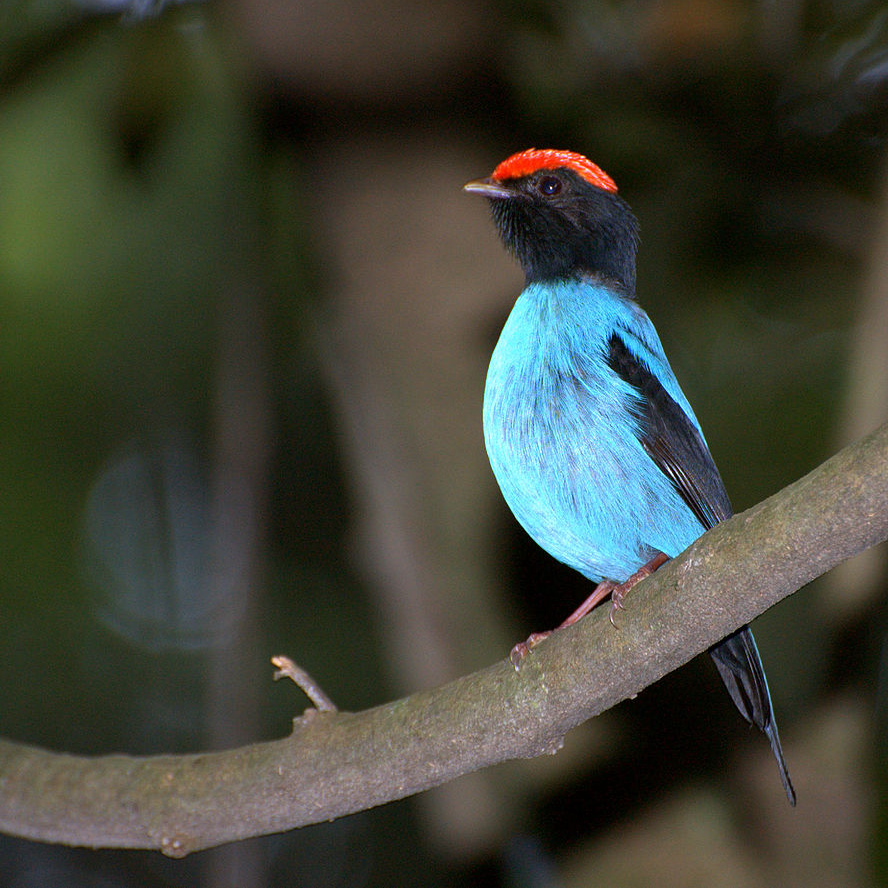
Birds Similar to the Club-winged Manakin
These species are often confused with the Club-winged Manakin due to similar appearance or overlapping range.

