Collared Laughingthrush
Trochalopteron yersini
Order: Passeriformes / Family: Leiothrichidae

Wikimedia Commons
About the Collared Laughingthrush
The Collared Laughingthrush, scientifically known as Trochalopteron yersini, is a captivating species within the Leiothrichidae family. Known for its striking appearance and vibrant vocalizations, this bird is an integral part of the montane forest ecosystems in Southeast Asia. Primarily found in the Central Highlands of Vietnam, it thrives in evergreen forests at elevations ranging between 1,200 to 2,000 meters. This bird has adapted remarkably well to its habitat, where it plays a critical role in seed dispersion and insect population control due to its varied diet.
The ecological significance of the Collared Laughingthrush extends beyond its immediate environment. As an indicator species, its presence signifies a healthy forest ecosystem. Its striking colors and distinctive calls make it a frequent subject of interest among birdwatchers and researchers alike. The Collared Laughingthrush's bright plumage provides camouflage among the dense undergrowth, while its melodious song adds to the rich tapestry of forest sounds.
Seasonal behaviors of this bird are closely tied to the region's climate. During the breeding season, typically from February to June, the Collared Laughingthrush becomes more vocal and conspicuous as males engage in complex songs to establish territories and attract mates. Outside the breeding season, it is relatively quieter but remains an active participant in the forest's daily routines. This bird's adaptability to its environment underscores its importance in maintaining ecological balance within its native habitat, making its conservation crucial for the health of the montane forest ecosystems.
The Collared Laughingthrush belongs to the family Leiothrichidae, within the order Passeriformes. These birds typically live average 5-7 years, with a maximum recorded of 10 years..
How to Identify a Collared Laughingthrush
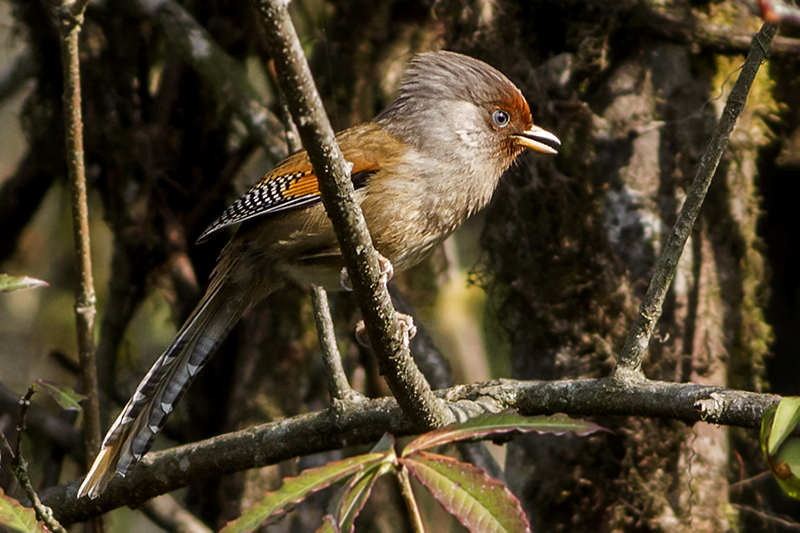
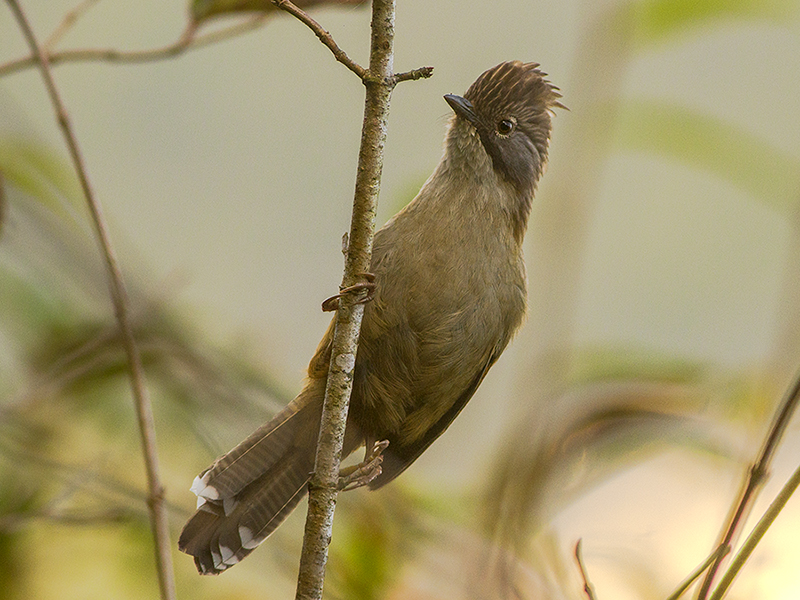
The Collared Laughingthrush is a medium-sized songbird, with adults displaying a distinctive combination of bright and muted colors. Adults have a striking orange collar around the neck, which contrasts with the predominantly olive-green body. The wings and tail show a subtle mix of green and gray, further accentuating the bird's vivid appearance. The head features a black mask that extends from the beak through the eyes, giving it a distinctive look.
Juveniles resemble adults but exhibit duller plumage, especially lacking the pronounced orange collar, which develops as they mature. Male and female Collared Laughingthrushes appear similar, making them difficult to distinguish in the field based solely on physical characteristics. However, during the breeding season, males may be observed singing more persistently.
In terms of field marks, the Collared Laughingthrush can be mistaken for similar species like the Bar-backed and Black-crowned Laughingthrushes. However, the orange collar and the specific pattern of their mask are key identifiers. In flight, the bird's silhouette is compact with rounded wings and a slightly elongated tail, often seen flitting through dense foliage. When perching, it maintains an alert posture, often found in pairs or small groups, hopping along branches in search of food.
Having trouble telling birds apart? Upload a photo to our bird identification tool for an instant species match.
Collared Laughingthrush Habitat and Range
Preferred Habitat
The Collared Laughingthrush inhabits montane evergreen forests, predominantly within the Central Highlands of Vietnam. It prefers dense undergrowth and forest edges where it can forage in relative safety. Typically, this bird is found at elevations from 1,200 to 2,000 meters, where the climate is cooler and the vegetation lush.
While primarily confined to intact forest areas, it may occasionally venture into secondary growth or degraded forest edges, particularly if primary habitats are disturbed. Unlike some bird species, the Collared Laughingthrush does not frequently appear in urban or suburban areas, maintaining its preference for natural, densely vegetated environments.
Seasonal habitat shifts are minimal, as the bird generally remains within the same ecological zone year-round. Its presence in these specific habitats highlights the importance of forest conservation efforts in the region, ensuring that the ecosystems remain viable for species like the Collared Laughingthrush.
Geographic Range
The Collared Laughingthrush is endemic to Vietnam, with its primary range restricted to the Central Highlands. This region, known for its mountainous topography and rich biodiversity, provides the ideal environment for the species. Notably, the bird is found in provinces such as Lam Dong, where the Da Lat Plateau offers extensive montane forest habitats.
As a resident bird, the Collared Laughingthrush does not engage in long-distance migrations. Its movements are largely limited to altitudinal shifts within its home range, often dictated by food availability or climatic conditions. While its range is relatively limited geographically, within its habitat, the bird is considered locally common.
Population density hotspots are typically associated with well-preserved forest areas, where the ecological integrity of the habitat supports a robust insect population and diverse plant life. These conditions foster a stable environment for the Collared Laughingthrush to thrive, despite its limited distribution.
Want to know which birds visit your area? Browse our backyard birds by location guides for region-specific species lists.
What Does the Collared Laughingthrush Eat?
The Collared Laughingthrush has an omnivorous diet, with a primary focus on insects and small invertebrates. Beetles, caterpillars, and spiders form a significant portion of its diet, especially during the breeding season when protein demands increase. The bird's foraging technique involves meticulous searching through leaf litter and undergrowth, often observed hopping and pecking at the forest floor.
In addition to insects, the Collared Laughingthrush consumes various fruits and berries, which provide essential nutrients and energy. The availability of these food resources varies seasonally, influencing dietary preferences and foraging behavior. During wetter months, when fruiting plants are more abundant, the bird's diet includes a higher proportion of plant matter.
The foraging habits of the Collared Laughingthrush highlight its role in seed dispersal, aiding in the propagation of numerous plant species throughout its habitat. This mutualistic relationship underscores the bird's ecological importance within montane forest ecosystems.
Collared Laughingthrush Behavior and Social Structure
The Collared Laughingthrush exhibits complex social behavior, often seen in pairs or small family groups rather than large flocks. These groups maintain a defined territory, which they defend vigorously against intruders, especially during the breeding season. Males perform elaborate songs and calls to establish dominance and attract mates, contributing to the species' rich acoustic presence in its habitat.
Courtship displays include visual signals such as wing-fluttering and tail-spreading, accompanied by vocalizations to reinforce pair bonds. Once a pair is established, both partners participate in nest building and rearing of the young, demonstrating a strong cooperative breeding behavior. Outside the breeding season, the bird remains active throughout the day, with peak activity during the early morning and late afternoon.
In response to predators, the Collared Laughingthrush employs a combination of vocal alarms and evasive flight. Its cryptic plumage offers effective camouflage in dense foliage, reducing detection by potential threats. This bird's behavior reflects a well-adapted strategy for survival in its specific ecological niche.
Collared Laughingthrush Nesting and Reproduction
The nesting habits of the Collared Laughingthrush reflect its adaptation to montane forest environments. It constructs a cup-shaped nest using twigs, leaves, and moss, often lined with softer materials such as feathers or grass for insulation. Nests are typically situated in dense shrubbery or low trees, providing concealment and protection from predators.
The clutch size ranges from two to four eggs, with both parents sharing incubation duties over a period of approximately 14 to 16 days. Once hatched, the nestlings remain in the nest for about another two weeks before fledging. During this period, both parents are heavily involved in feeding and caring for the young, ensuring their survival.
The Collared Laughingthrush generally produces one to two broods per year, depending on environmental conditions and food availability. This reproductive strategy supports the maintenance of stable population levels within its restricted range.
Collared Laughingthrush Sounds and Vocalizations
The Collared Laughingthrush is renowned for its complex vocal repertoire, which includes melodious songs and distinctive calls. Its primary song features a series of rich, flute-like notes delivered in a rhythmic sequence, often compared to the sound of a wind instrument. These songs serve both to establish territory and to communicate with mates.
In addition to its song, the Collared Laughingthrush produces various call notes that vary in pitch and intensity. Alarm calls are sharper and more urgent, alerting other birds to potential danger. During the dawn chorus, the bird's vocalizations contribute significantly to the acoustic landscape, adding to the vibrant natural symphony of the forest.
The bird's ability to mimic other species' calls has been observed, though it is not as pronounced as in some other members of the Leiothrichidae family. This vocal versatility underscores its adaptability and social complexity.
Interesting Facts About the Collared Laughingthrush
- 1The Collared Laughingthrush's bright plumage helps it blend into the colorful forest undergrowth, providing effective camouflage.
- 2This bird is a vital part of its ecosystem, aiding in seed dispersal through its varied diet that includes fruits and berries.
- 3Despite its vibrant appearance, the Collared Laughingthrush is often heard before it is seen, thanks to its melodious calls.
- 4The species was first described in the early 20th century and has remained a subject of interest for researchers and bird enthusiasts.
- 5Its song is characterized by a series of flute-like notes, making it one of the most melodious members of its genus.
- 6The Collared Laughingthrush's limited range makes it particularly vulnerable to habitat destruction in its native highland forests.
- 7Both male and female Collared Laughingthrushes participate equally in raising their young, showcasing strong parental cooperation.
Collared Laughingthrush Conservation Status
The Collared Laughingthrush is currently classified as Near Threatened on the IUCN Red List, with its population trend showing a gradual decline. Habitat destruction, primarily due to logging and agricultural expansion, poses the greatest threat to its survival. As forests are cleared or degraded, the bird's habitat becomes increasingly fragmented, reducing available resources and breeding sites. Conservation efforts focus on preserving the remaining forest habitats within its range, particularly in the Central Highlands of Vietnam. Protected areas and national parks play a crucial role in safeguarding these ecosystems. Awareness campaigns and sustainable land management practices aim to mitigate further habitat loss and ensure the species' long-term survival. Historically, the Collared Laughingthrush's population has fluctuated in response to environmental pressures. Continued conservation measures are essential to prevent further declines and to maintain biodiversity within its native ecosystem.