
Curved-billed Cisticola
Drymoica curvirostris
Order: Passeriformes / Family: Sylviidae
About the Curved-billed Cisticola
The Curved-billed Cisticola (Drymoica curvirostris) is a small passerine bird found predominantly in the grasslands and savannas of sub-Saharan Africa. It belongs to the family Sylviidae and is well-known for its distinctive, slightly curved bill, which aids in its insectivorous diet. This bird species plays a significant ecological role as both a predator of insects and as prey for larger avian species. Its presence in the ecosystem helps maintain a balance in the insect population and provides food for raptors and other predators. The Curved-billed Cisticola is commonly observed in countries such as Kenya, Tanzania, and Uganda, where it prefers open grasslands and areas with scattered shrubs. Its adaptability to various grassland habitats, including those altered by human activity, highlights its ecological significance. During the breeding season, which typically occurs in the rainy months when insect activity is high, the Curved-billed Cisticola becomes more conspicuous. Males engage in elaborate song displays, often perching prominently to broadcast their melodious and varied song. These vocalizations serve to establish territories and attract mates. Outside of the breeding season, the Curved-billed Cisticola tends to be more secretive, often skulking in thick vegetation. The bird's ability to adapt to seasonal changes in its environment, including shifts in food availability, underscores its resilience. In regions like the Serengeti, where seasonal migrations of large mammals occur, the Cisticola adjusts its foraging and nesting strategies to coincide with the availability of resources. The Curved-billed Cisticola's ecological adaptability is crucial for its survival, especially in habitats subject to human encroachment and climate change. Conservation of grassland habitats is essential to ensure the continued presence of this and other grassland-dependent species.
The Curved-billed Cisticola belongs to the family Sylviidae, within the order Passeriformes. These birds typically live average 3-5 years with a maximum recorded of 8 years..
How to Identify a Curved-billed Cisticola
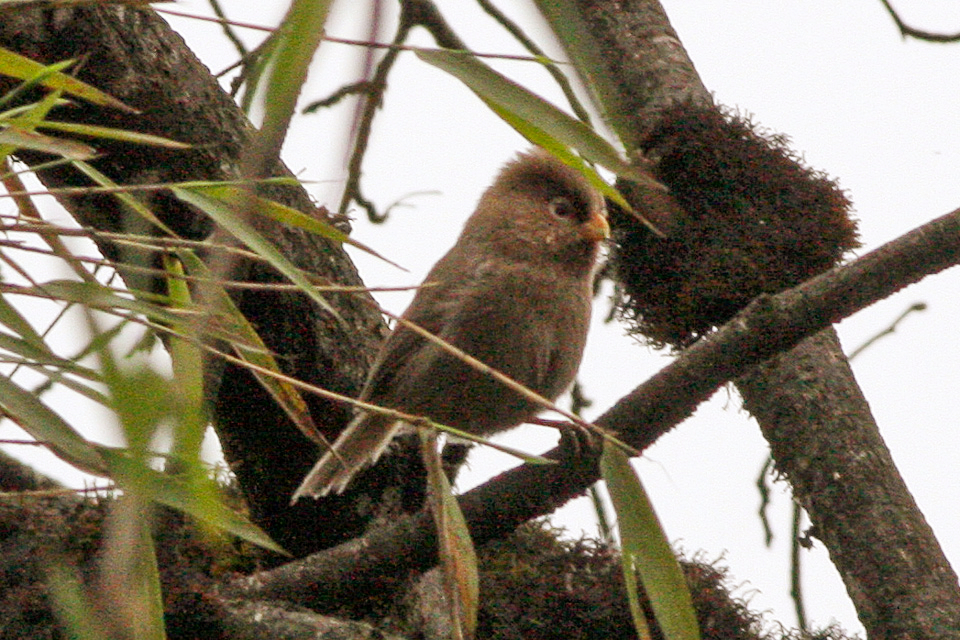
The Curved-billed Cisticola is a small, subtly colored bird, typically measuring around 12 cm in length. Adults display a brownish-gray plumage on the upperparts, with a slightly paler underbelly. The most distinctive feature is its gently curved bill, which sets it apart from other cisticolas. The bill is dark and contrasts with the bird's lighter throat and face. Juveniles resemble adults but often have a slightly duller and more mottled appearance, lacking the crispness of adult plumage. Distinguishing between males and females can be challenging as they exhibit similar plumage, although males might appear slightly brighter during the breeding season. In flight, the Curved-billed Cisticola reveals a short, rounded tail and wings, with a flight pattern characterized by quick, fluttery movements interspersed with short glides. When perched, the bird often adopts an upright posture on grass stalks or low shrubs, making it easier to spot. While it can be confused with other cisticola species, the curved bill serves as a reliable field mark for identification.
Having trouble telling birds apart? Upload a photo to our bird identification tool for an instant species match.
Curved-billed Cisticola Habitat and Range
Preferred Habitat
The Curved-billed Cisticola inhabits a range of grassland environments, from open savannas to areas with scattered shrubs and trees. It is most commonly found at elevations from sea level up to 2000 meters. While primarily a grassland species, it can also be observed in cultivated areas and along the edges of wetlands. Seasonal habitat shifts are noticeable as the bird moves to areas with denser vegetation during the breeding season. Although it is primarily a rural species, it occasionally ventures into urban fringes where suitable grassland patches exist. Its ability to adapt to both natural and altered landscapes allows it to persist in regions undergoing agricultural expansion.
Geographic Range
The Curved-billed Cisticola's range extends across much of sub-Saharan Africa, with notable populations in East Africa. It breeds in countries such as Kenya, Tanzania, Uganda, and Rwanda, where suitable grassland habitats abound. The bird is non-migratory, remaining in its home range year-round. However, it may undertake local movements in response to seasonal changes in food availability and habitat conditions. Population densities can vary, with hotspots in well-preserved grasslands such as those found in national parks and reserves. The species is less commonly found in dense forests or arid desert regions.
Want to know which birds visit your area? Browse our backyard birds by location guides for region-specific species lists.
What Does the Curved-billed Cisticola Eat?
The diet of the Curved-billed Cisticola primarily consists of insects and other small invertebrates. It forages by hopping through grass and low shrubs, using its curved bill to probe the ground and vegetation for prey. Common food items include beetles, grasshoppers, and caterpillars, which provide essential nutrients for breeding and raising young. During the rainy season, when insect populations peak, the Cisticola's diet diversifies to include a wider range of arthropods. The bird typically forages throughout the day, with peak activity occurring during the cooler morning and late afternoon hours.
Curved-billed Cisticola Behavior and Social Structure
The Curved-billed Cisticola exhibits a variety of behaviors that reflect its adaptability to grassland environments. It is generally solitary or found in pairs, especially during the breeding season when territorial behavior intensifies. Males perform elaborate song displays to defend territories and attract females, often choosing elevated perches for better sound projection. Courtship involves frequent vocalizations and tail flicking. In response to predators, the Cisticola relies on its cryptic plumage for camouflage and may freeze or drop into dense cover to avoid detection. Daily activities include periods of active foraging interspersed with rest and preening sessions.
Curved-billed Cisticola Nesting and Reproduction
The Curved-billed Cisticola constructs a well-camouflaged nest, often built close to the ground within dense grass tussocks or low shrubs. The nest is a neat, woven structure made from grass and plant fibers, sometimes lined with softer materials. Clutch size typically varies from 2 to 4 eggs, with both parents sharing incubation duties, which last about 14 days. After hatching, the chicks are altricial and require significant parental care, including frequent feeding. The fledging period lasts approximately two weeks, after which the young begin to explore their surroundings. The species may produce multiple broods in a favorable season.
Curved-billed Cisticola Sounds and Vocalizations
The primary song of the Curved-billed Cisticola is a series of melodious and varied notes, often delivered in rapid succession. The song can be described as a mix of trills and whistles, with a high-pitched, sweet quality that carries well across the grasslands. Call notes are simpler and include sharp 'chip' or 'tic' sounds, used for communication between mates. Alarm calls are harsher and more insistent, serving to alert other birds of potential threats. During the dawn chorus, males are particularly vocal, advertising their presence and defending their territories with vigor.
Interesting Facts About the Curved-billed Cisticola
- 1The Curved-billed Cisticola can adapt its song to mimic the calls of other grassland birds, showcasing its vocal versatility.
- 2Despite its small size, the Curved-billed Cisticola can be heard up to 200 meters away, thanks to its powerful song.
- 3The species often nests in areas with long grass, which provides excellent camouflage from predators.
- 4Curved-billed Cisticolas sometimes use spider silk to reinforce their nests, adding strength and flexibility.
- 5During courtship, males may perform a 'dance' that involves short flights and fluttering to impress potential mates.
- 6The bird's curved bill is specially adapted to probe into grass and soil, making it a skilled insect hunter.
- 7Curved-billed Cisticolas are known to participate in mixed-species flocks, benefiting from shared vigilance against predators.
Curved-billed Cisticola Conservation Status
The Curved-billed Cisticola is currently listed as Least Concern by the IUCN, with a stable population trend across its range. While not facing immediate threats, habitat loss due to agricultural expansion and urban development poses a potential risk. Conservation efforts focus on preserving grassland habitats and promoting sustainable land use practices. Historically, the population has remained stable, benefiting from the vast expanse of suitable habitats across its range. Ongoing monitoring and habitat protection are crucial to ensure its continued survival.
Other Sylviidae Species



Birds Similar to the Curved-billed Cisticola
These species are often confused with the Curved-billed Cisticola due to similar appearance or overlapping range.