Dusky Babbler
Turdoides tenebrosa
Order: Passeriformes / Family: Leiothrichidae

Wikimedia Commons
About the Dusky Babbler
The Dusky Babbler, Turdoides tenebrosa, is a captivating avian species within the family Leiothrichidae. Known for its dark, somber plumage, this bird exhibits a unique blend of social and ecological behaviors that make it a subject of interest for ornithologists and bird watchers alike. Found primarily in the southeastern regions of Asia, the Dusky Babbler thrives in the dense undergrowth of tropical and subtropical forests. Countries like India, Bhutan, and Nepal host significant populations of this species, where it plays a crucial role in the ecosystem by controlling insect populations and aiding in seed dispersal. The Dusky Babbler's ecological role extends into its interactions with the environment. It is a highly social bird, often seen in groups that work together to forage for food and protect territories. These groups, sometimes comprising up to 15 individuals, display a complex social structure where cooperative breeding and alloparental care are prominent. Such behaviors illustrate the bird's adaptability and resourcefulness, which are vital for its survival in the competitive forest environment. Seasonally, the Dusky Babbler exhibits predictable behaviors that align with its ecological needs. During the breeding season, which typically spans from April to July, the species becomes particularly vocal. This period is marked by increased territorial displays and vocalizations that establish dominance and attract mates. Outside of the breeding season, the babblers tend to focus on foraging and maintaining their social bonds, often engaging in mutual preening and other affiliative behaviors. The Dusky Babbler's presence in its native habitat underscores its importance as both a predator of insects and a prey species for larger birds and mammals. Its ability to adapt to various forest conditions highlights its resilience and the intricate balance of forest ecosystems.
The Dusky Babbler belongs to the family Leiothrichidae, within the order Passeriformes. These birds typically live typically around 5 years with a maximum recorded up to 10 years..
How to Identify a Dusky Babbler
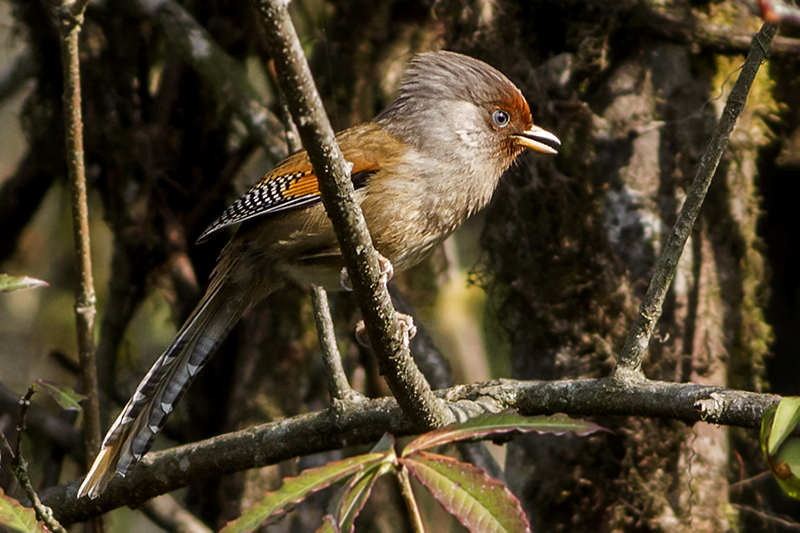
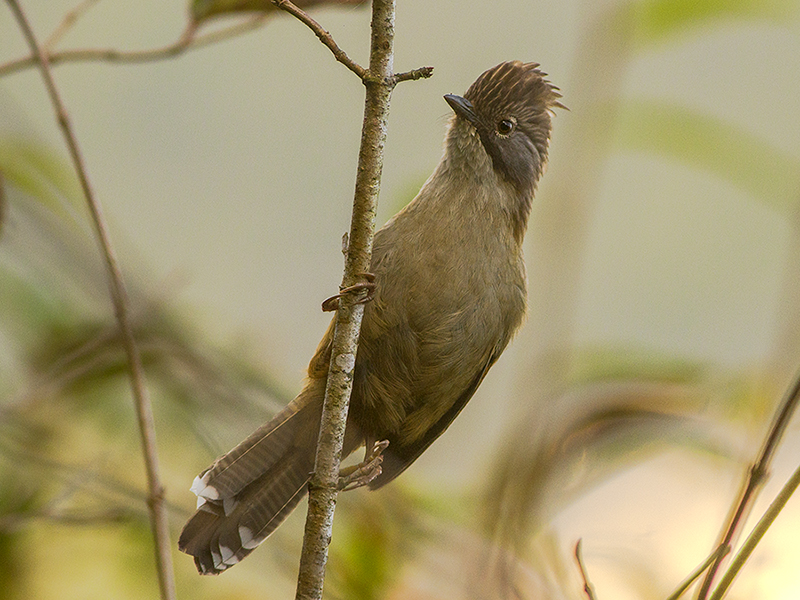
Identifying the Dusky Babbler involves noting its predominantly dark brown plumage, which can appear almost black in certain lighting conditions. Adults have a uniform color, with subtle differences in feather texture that create a slightly mottled appearance. The bird's eyes are strikingly pale, often appearing yellow or cream, which contrasts sharply with its darker feathers. Juveniles resemble adults but tend to have slightly duller plumage and less pronounced eye color. Male and female Dusky Babblers are similar in appearance, making visual sex differentiation challenging without behavioral cues. In flight, the Dusky Babbler presents a silhouette characterized by broad wings and a relatively long tail, allowing for agile maneuvering through dense foliage. Its perching posture is typically upright, with a slight forward lean that suggests alertness. When comparing to similar species, the Dusky Babbler might be confused with other Turdoides species. However, its darker coloration and social behavior are distinguishing features that set it apart. Careful observation of its calls and group dynamics can aid in accurate identification.
Having trouble telling birds apart? Upload a photo to our bird identification tool for an instant species match.
Dusky Babbler Habitat and Range
Preferred Habitat
The Dusky Babbler thrives in tropical and subtropical forest habitats, favoring areas with dense undergrowth and ample cover. It is most commonly found in lowland forests and foothills, typically at elevations ranging from 200 to 1500 meters. These birds show a preference for moist, evergreen forests but can also inhabit secondary growth forests where human activity has altered the landscape. In terms of habitat shifts, the Dusky Babbler remains relatively stable year-round, with no significant migratory patterns. However, they may move to slightly higher elevations during hotter months to escape the increased heat. In urban areas, the Dusky Babbler is less common but may occasionally venture into gardens and parks that offer dense shrubbery and minimal disturbance.
Geographic Range
The Dusky Babbler's range primarily encompasses the southeastern part of Asia, with notable populations in India, Nepal, and Bhutan. These regions provide the ideal mix of climate and habitat that support their ecological needs. Within India, they are more concentrated in the northeastern states, where dense forests are prevalent. The species does not exhibit long-distance migratory behavior, instead remaining within its breeding range throughout the year. However, local movements between different forest types or elevations occur in response to seasonal food availability. Population density hotspots include the Terai region and the lower Himalayan forests, where favorable habitat conditions exist.
Want to know which birds visit your area? Browse our backyard birds by location guides for region-specific species lists.
What Does the Dusky Babbler Eat?
The Dusky Babbler's diet consists mainly of insects and small invertebrates, making it an important insectivore within its ecosystem. It feeds on a variety of prey, including beetles, ants, and caterpillars, which it skillfully extracts from leaf litter and undergrowth. During the breeding season, the bird's dietary needs increase, prompting it to seek larger prey items to meet the demands of feeding young chicks. In addition to insects, the Dusky Babbler occasionally consumes berries and small fruits, especially during times when insect populations decline. This dietary flexibility allows the species to adapt to seasonal changes in food availability. Foraging typically occurs in groups, where individuals cooperate to disturb leaf litter and uncover hidden prey, an efficient technique that maximizes food intake.
Dusky Babbler Behavior and Social Structure
The Dusky Babbler is a highly social bird, exhibiting complex interactions within its group. These birds form cohesive flocks that often consist of extended family units, with cooperative breeding being a notable aspect of their social structure. Such cooperation involves non-breeding individuals assisting in raising the young, a behavior that enhances the survival rate of offspring. Territorial behavior is prominent among Dusky Babblers, with groups actively defending their area from intruders through vocal displays and physical posturing. Courtship involves a series of displays by the males, including vocal duets and synchronized movements, to attract females and strengthen pair bonds. Flocking patterns vary throughout the day, with peak activity during the early morning and late afternoon. In response to predators, Dusky Babblers rely on group cohesion and alarm calls to ward off threats. Their daily activity patterns include periods of foraging interspersed with social interactions such as preening and alloparental care, ensuring the well-being of the group.
Dusky Babbler Nesting and Reproduction
The Dusky Babbler constructs its nest using a combination of twigs, leaves, and grass, forming a cup-shaped structure that is typically placed within dense shrubbery or low trees. Nesting locations are chosen for their concealment, often in places difficult for predators to access. The typical clutch size ranges from three to five eggs, which are pale and speckled. Incubation is primarily the responsibility of the female, lasting approximately 14 days. During this period, the male and other group members assist by providing food and protection. After hatching, the chicks remain in the nest for about two weeks before fledging. Parental roles continue beyond fledging, with young birds receiving care and feeding from both parents and helpers. The species may raise multiple broods per year, depending on environmental conditions and resource availability.
Dusky Babbler Sounds and Vocalizations
The primary song of the Dusky Babbler is a melodious series of whistles and trills, often delivered in a repetitive and rhythmic pattern. This song functions in mate attraction and territorial defense, with variations in pitch and tempo reflecting individual identity. Call notes are short and sharp, serving as communication signals within the flock. Alarm calls are distinct, characterized by rapid, high-pitched notes that alert group members to potential dangers. During the dawn chorus, Dusky Babblers contribute to the symphony of forest sounds, their clear and consistent song standing out against the cacophony.
Interesting Facts About the Dusky Babbler
- 1The Dusky Babbler can form flocks of up to 15 individuals, showcasing their highly social nature.
- 2These birds are known for their cooperative breeding, where non-breeding individuals help raise chicks.
- 3Despite their dark plumage, Dusky Babblers are adept at blending into their forest environments, avoiding predators.
- 4The Dusky Babbler's vocalizations are complex, with variations used for different social interactions.
- 5The species plays a crucial ecological role by controlling insect populations in their habitat.
- 6Their nests, often built in dense shrubs, use materials like twigs and leaves for camouflage.
- 7Dusky Babblers can forage efficiently in groups, enhancing their food-finding success rate.
Dusky Babbler Conservation Status
The IUCN currently lists the Dusky Babbler as a species of Least Concern, reflecting a stable population trend. However, habitat destruction due to deforestation remains a primary threat, potentially impacting future population stability. Conservation efforts focus on habitat preservation and the establishment of protected areas to safeguard key populations. Historically, the Dusky Babbler has shown resilience to moderate habitat changes, but continued environmental pressures could pose significant challenges. Monitoring and research are essential to ensure the species' long-term survival, with emphasis on understanding its ecological needs and the impact of human activity.