
Eastern Bonelli's Warbler
Phylloscopus orientalis
Order: Passeriformes / Family: Phylloscopidae

Wikimedia Commons
About the Eastern Bonelli's Warbler
The Eastern Bonelli's Warbler, scientifically known as Phylloscopus orientalis, is a small, insectivorous bird that belongs to the family Phylloscopidae. This species is primarily found in southeastern Europe and western Asia, where it inhabits open woodlands, scrublands, and mountainous regions. It plays a crucial ecological role as both a predator of insects and a prey species for larger birds. The warbler's presence indicates a healthy, biodiverse environment. During the breeding season, which occurs from late spring to early summer, the Eastern Bonelli's Warbler displays remarkable territorial behavior, often engaging in vocal duels with rivals to establish dominance. Its song, a series of high-pitched, rapid notes, can be heard echoing through its preferred habitats. This species undertakes a long migratory journey, spending winters in sub-Saharan Africa, where it occupies savannas and semi-arid regions. Here, it continues its role as an insect predator, helping to control pest populations. The warbler's adaptability to various habitats across its migratory range showcases its resilience and ecological importance. Despite its wide range, the Eastern Bonelli's Warbler faces threats from habitat destruction and climate change, necessitating conservation efforts to ensure its continued survival. Its ecological significance extends beyond its immediate environment, contributing to the complex web of life in both its breeding and wintering grounds.
The Eastern Bonelli's Warbler belongs to the family Phylloscopidae, within the order Passeriformes. These birds typically live average 2-5 years, with some recorded up to 7 years..
How to Identify a Eastern Bonelli's Warbler
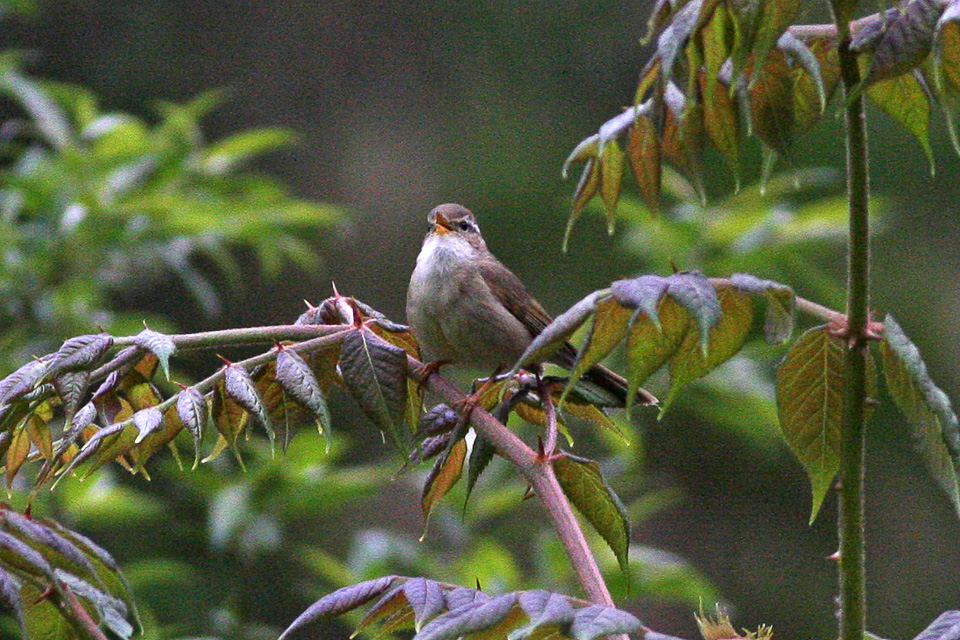
The Eastern Bonelli's Warbler is a small bird, measuring about 11-12 cm in length, with an average wingspan of 18-20 cm. Adults exhibit pale grayish-green upperparts and white underparts, with a subtle yellow wash on the flanks. Their eyes are marked by a faint whitish supercilium, which helps distinguish them from similar species. Juveniles may appear slightly duller, lacking the full vibrancy of adult plumage. Males and females are similar in appearance, making visual sex differentiation challenging. In flight, the Eastern Bonelli's Warbler reveals a distinctive wing structure with pointed tips, aiding in its identification. When perched, it often adopts an upright posture, flicking its tail and wings intermittently. This behavior, combined with its soft, sweet song, aids birdwatchers in locating it amidst dense foliage. Confusion with the Western Bonelli's Warbler (Phylloscopus bonelli) may occur, but the Eastern species generally lacks the greenish tinge on the rump seen in the Western counterpart.
Having trouble telling birds apart? Upload a photo to our bird identification tool for an instant species match.
Eastern Bonelli's Warbler Habitat and Range
Preferred Habitat
The Eastern Bonelli's Warbler thrives in diverse habitats, predominantly favoring open deciduous woodlands and scrub-covered hillsides. It can be found from sea level to elevations of 1,500 meters, with a preference for areas offering a mix of trees and open spaces. During the breeding season, it frequents oak and beech forests in southeastern Europe, including countries like Greece, Turkey, and Bulgaria. In winter, it migrates to sub-Saharan Africa, where it occupies savannas and semi-arid landscapes. The warbler shows a degree of adaptability to urban fringes, particularly in rural areas where natural habitats intersect with human-altered environments. Seasonal habitat shifts are driven by its migratory patterns, requiring diverse ecosystems to support its lifecycle.
Geographic Range
The Eastern Bonelli's Warbler breeds across southeastern Europe and western Asia, with established populations in countries such as Greece, Turkey, Bulgaria, and parts of the Middle East. During migration, it traverses regions such as the eastern Mediterranean and the Arabian Peninsula. In winter, it migrates to sub-Saharan Africa, occupying countries like Nigeria, Cameroon, and Sudan. The warbler's migratory corridors highlight key stopover sites in Egypt and Libya, where it rests and refuels. Though widespread, its population density is highest in well-vegetated areas of its breeding range, where suitable nesting sites and abundant food sources are available. Its presence in these regions adds to the avian diversity, with periodic fluctuations in numbers due to environmental conditions.
Want to know which birds visit your area? Browse our backyard birds by location guides for region-specific species lists.
What Does the Eastern Bonelli's Warbler Eat?
The Eastern Bonelli's Warbler primarily feeds on insects, which constitute the bulk of its diet throughout the year. During the breeding season, it actively forages for caterpillars, beetles, and spiders among leaves and branches, employing a gleaning technique. This method involves picking off prey directly from foliage, showcasing its agility and precision. In winter, the warbler's diet diversifies slightly to include small fruits and seeds, supplementing its nutritional needs when insects are less abundant. It follows a diurnal feeding schedule, synchronizing its activity with peak insect activity. Prey size generally ranges from 5 to 15 millimeters, allowing the warbler to consume a wide variety of arthropods.
Eastern Bonelli's Warbler Behavior and Social Structure
The Eastern Bonelli's Warbler exhibits a solitary or paired social structure during the breeding season, establishing territories through vocalizations and displays. Males often engage in song battles, each trying to out-sing the other to attract mates and deter rivals. This territoriality is less pronounced during migration and wintering, where the warbler may join mixed-species flocks. Its flight is characterized by rapid, undulating movements, enabling quick escapes from predators. When threatened, the warbler emits a sharp, alarm call to warn conspecifics. Daily activity peaks in the early morning and late afternoon, coinciding with cooler temperatures and optimal foraging conditions. Courtship displays involve fluttering flights and wing quivers, demonstrating vigor and fitness to potential mates.
Eastern Bonelli's Warbler Nesting and Reproduction
The Eastern Bonelli's Warbler builds a cup-shaped nest, crafted from grasses, moss, and leaves, usually positioned low in dense shrubbery or on the ground. Preferred nesting sites include well-concealed locations within its woodland habitat, offering protection from predators. A typical clutch consists of 4-6 eggs, which are incubated by the female for about 12-14 days. Both parents share in feeding the hatchlings, which fledge approximately 12-15 days after hatching. The warbler typically raises one brood per year, although favorable conditions may lead to a second. Nest success is influenced by factors such as predation and weather, with parental care extending several weeks post-fledging.
Eastern Bonelli's Warbler Sounds and Vocalizations
The primary song of the Eastern Bonelli's Warbler is a distinctive series of rapid, melodic notes, often described as a 'tsee-tsee-tsee-tsee-tsoo.' This song, delivered with a high pitch and clear tonal quality, serves as both a mating call and a territorial declaration. Its call notes, typically used in communication between individuals, are short and sharp, resembling a 'chip' or 'tsip.' Alarm calls are more urgent, alerting nearby warblers to potential threats. During the dawn chorus, the warbler's song stands out as it echoes across its habitat, contributing to the rich acoustic tapestry of the morning.
Interesting Facts About the Eastern Bonelli's Warbler
- 1The Eastern Bonelli's Warbler can travel over 7,000 kilometers during migration, showcasing remarkable endurance.
- 2Despite its small size, the Eastern Bonelli's Warbler plays a vital role in controlling insect populations within its habitat.
- 3The warbler was named after the Italian ornithologist Franco Andrea Bonelli, who studied European bird species.
- 4Phylloscopus orientalis is known for its ability to adapt to various habitats, from Mediterranean woodlands to African savannas.
- 5The Eastern Bonelli's Warbler's song can be a useful tool for birders to identify its presence, even when the bird remains hidden.
- 6Unlike many bird species, the Eastern Bonelli's Warbler shows little sexual dimorphism, making males and females appear nearly identical.
- 7The warbler's annual migration includes crossing large bodies of water, such as the Mediterranean Sea, a daunting task for such a small bird.
Eastern Bonelli's Warbler Conservation Status
The Eastern Bonelli's Warbler is currently classified as Least Concern by the IUCN, with a stable population trend. However, habitat loss due to deforestation and agricultural expansion poses significant threats. Conservation efforts focus on habitat preservation and creating protected areas to ensure the warbler's survival. Climate change impacts, such as altered migratory patterns and breeding success, require ongoing research and monitoring. Historical population assessments indicate resilience, but proactive measures remain crucial to mitigate future risks.
Other Phylloscopidae Species



Birds Similar to the Eastern Bonelli's Warbler
These species are often confused with the Eastern Bonelli's Warbler due to similar appearance or overlapping range.
