
Willow Warbler
Phylloscopus trochilus
Order: Passeriformes / Family: Phylloscopidae

Wikimedia Commons
About the Willow Warbler
The Willow Warbler (Phylloscopus trochilus) is a remarkable small songbird that plays a significant role in the ecosystems of Europe, parts of Asia, and Africa. This bird is particularly noted for its long migratory journeys, traveling thousands of kilometers from its breeding grounds in Europe and western Asia to its wintering habitats in sub-Saharan Africa. During breeding season, the Willow Warbler thrives in various woodland types, including broadleaf and mixed woodlands, as well as scrub and heathland areas. This adaptability to different forested environments contributes to its widespread presence across its range.
The Willow Warbler holds ecological importance due to its insectivorous diet, which helps regulate insect populations, thus contributing to the balance of its ecosystem. By feeding extensively on insects during the breeding season, it aids in controlling pest populations, a vital service in both natural and human-influenced landscapes. Its presence in diverse habitats also makes it an indicator species for environmental health, reflecting the quality of the ecosystems it inhabits.
This bird undergoes a complete molt during its migration, which is a distinctive behavior among warblers. The Willow Warbler's migration is a biannual event that sees it embark on an extensive journey across continents. In its wintering grounds in Africa, it occupies a variety of habitats, including savannas, open woodlands, and bushlands, showcasing its versatility. The bird's adaptability and migratory behavior highlight its resilience, yet also underscore the challenges it faces from habitat loss and climate change along its migratory routes.
The Willow Warbler belongs to the family Phylloscopidae, within the order Passeriformes. These birds typically live average 2-3 years, with a maximum recorded of 10 years..
How to Identify a Willow Warbler
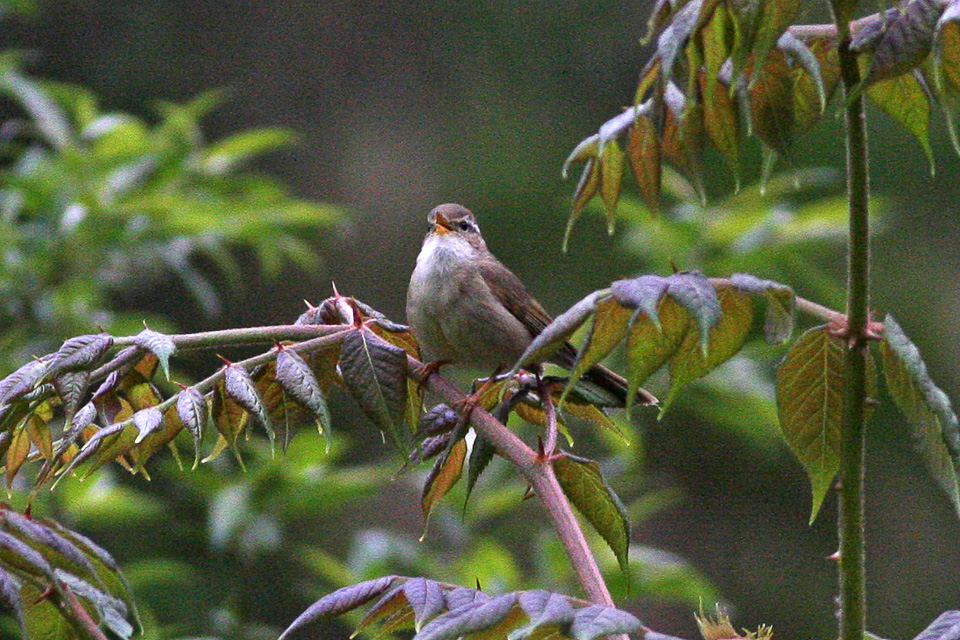
The Willow Warbler can be identified by its slender build, measuring around 11 to 12.5 cm in length, with a wingspan of 17 to 22 cm. It is primarily greenish on the upperparts and pale on the underparts, with a subtle yellow wash on the chest and flanks. The bird's legs are a distinctive pale brown, which sets it apart from similar species like the Chiffchaff, which has darker legs. Its face features a pale supercilium above the eye and a fine, pointed bill, ideal for catching insects.
Juvenile Willow Warblers resemble adults but often show a more pronounced yellow hue on their underparts. Unlike many other bird species, there is little difference in plumage between males and females, making sex identification difficult without observing behavior during the breeding season.
In flight, the Willow Warbler exhibits a nimble and fluttery style, often with short bursts of speed as it darts between trees and bushes. When perched, it typically holds an upright posture, occasionally flicking its wings and tail, a characteristic behavior that aids observers in its identification.
Having trouble telling birds apart? Upload a photo to our bird identification tool for an instant species match.
Willow Warbler Habitat and Range
Preferred Habitat
Willow Warblers are typically found in a variety of woodland habitats, ranging from deciduous and mixed forests to areas of scrub and heathland. They prefer habitats with ample undergrowth, providing cover and abundant insect life for feeding. In the breeding season, they are commonly associated with birch and willow trees, which offer suitable nesting sites and a rich supply of insects.
They are found at elevations ranging from sea level to approximately 2000 meters, though they are more common at lower elevations. During migration and in their wintering grounds in Africa, Willow Warblers can be seen in savannas and open woodlands, reflecting their adaptability to different environmental conditions. While they are generally more prevalent in rural areas, they can occasionally be found in urban parks and gardens, particularly during migration periods.
Geographic Range
The Willow Warbler's breeding range extends across much of Europe and into western Asia, from the British Isles and Scandinavia in the north to the Mediterranean region in the south. It breeds extensively across Russia, reaching as far east as the Ural Mountains. During the non-breeding season, Willow Warblers undertake long migratory journeys to sub-Saharan Africa, where they winter in a broad belt stretching from Senegal and Gambia in the west to Kenya and Tanzania in the east.
Migration corridors are well established, with key stopover sites in southern Europe and North Africa, where the birds rest and refuel. The Willow Warbler is one of the most widespread and numerous warblers in Europe, with significant population concentrations in countries such as Sweden, Finland, and the Baltic States. Its adaptability to various habitats has facilitated its wide distribution, although population densities can vary depending on habitat quality and availability.
Want to know which birds visit your area? Browse our backyard birds by location guides for region-specific species lists.
What Does the Willow Warbler Eat?
The diet of the Willow Warbler primarily consists of insects and other small invertebrates, making it an essential predator of various insect populations. During the breeding season, it consumes a high volume of aphids, caterpillars, and beetles, which are abundant in its woodland habitats. This insect-rich diet provides the necessary nutrients for reproduction and chick development.
In the autumn, as insects become less available in the northern parts of its range, the Willow Warbler's diet shifts to include berries and seeds, which provide the energy required for its long migratory journey to Africa. In its wintering grounds, the bird continues to feed on a diverse range of insects, adapting to the available prey in savannas and open woodlands. Foraging behavior typically involves gleaning insects from foliage and occasionally making short aerial sallies to catch flying insects.
Willow Warbler Behavior and Social Structure
The Willow Warbler exhibits solitary or loosely social behavior, particularly during migration when it may join mixed-species flocks. In the breeding season, males establish territories through song, with each male vigorously defending its area from rivals. The Willow Warbler's song is a distinctive, melodious series of descending notes that plays a key role in mate attraction and territory defense.
Courtship involves the male performing song flights, singing while displaying its plumage to attract a mate. Once paired, the birds engage in mutual preening, strengthening their bond. Outside the breeding season, Willow Warblers show less territoriality and are more likely to be seen in small groups.
Their daily activity patterns involve active foraging throughout the daylight hours, with peaks in activity during the early morning and late afternoon. When faced with predators, such as sparrowhawks or domestic cats, Willow Warblers employ evasive flight and alarm calls to alert other birds in the vicinity.
Willow Warbler Nesting and Reproduction
Willow Warblers construct domed nests with side entrances, primarily using grass, moss, and leaves as materials. These nests are typically built on the ground, concealed among dense vegetation, which provides protection from predators. The preferred nesting sites include the bases of shrubs, young trees, or clumps of grass in woodlands and scrub areas.
A typical clutch consists of five to seven eggs, which are white with reddish-brown speckles. The female incubates the eggs for about 13 to 15 days, during which time the male may continue to defend the territory and occasionally feed the female. After hatching, both parents participate in feeding the chicks, which fledge approximately 12 to 15 days post-hatching.
The Willow Warbler typically raises one brood per year, though in some regions where the breeding season is extended due to favorable conditions, a second brood may be attempted.
Willow Warbler Sounds and Vocalizations
The primary song of the Willow Warbler is a sweet and clear series of descending notes, often described as a melodic cascade. This song serves both to attract mates and to establish territorial boundaries. It is typically sung from a perch within the territory, most prominently during the breeding season.
In addition to its main song, the Willow Warbler produces soft call notes that are used for communication between pairs and within family groups. Alarm calls are sharper and more urgent, designed to alert other birds to potential threats. During the dawn chorus, the Willow Warbler's song is a prominent feature, contributing to the vibrant symphony of woodland sounds.
Interesting Facts About the Willow Warbler
- 1The Willow Warbler's migration route can span up to 12,000 km round trip, one of the longest among songbirds.
- 2Unlike many birds, Willow Warblers molt all their feathers during migration, making them unique among European warblers.
- 3The Willow Warbler's song is often mistaken for that of the Chiffchaff, but it is more melodic and descending in tone.
- 4This species is one of the earliest migrant warblers to leave Europe, typically departing in late July or early August.
- 5The Willow Warbler's breeding success is closely linked to the timing of spring insect emergence, highlighting its ecological sensitivity.
- 6Despite being solitary during breeding, Willow Warblers often join mixed-species flocks during migration, increasing foraging efficiency.
- 7Willow Warblers can be distinguished from similar species by their pale legs, a subtle but reliable field mark.
Willow Warbler Conservation Status
The Willow Warbler is currently listed as Least Concern by the IUCN, with populations considered stable across much of its range. However, there are regional variations, with some local declines attributed to habitat loss, especially in its breeding areas. Deforestation and agricultural intensification pose significant threats, reducing available nesting and foraging habitats. Conservation efforts focus on preserving and restoring woodland habitats, ensuring the availability of suitable breeding sites. Monitoring programs across Europe track population trends and migration patterns, contributing to a better understanding of the species' ecology and the challenges it faces. Historical data indicate fluctuating populations, influenced by climate change impacts on migration and habitat availability.
Other Phylloscopidae Species



Birds Similar to the Willow Warbler
These species are often confused with the Willow Warbler due to similar appearance or overlapping range.
