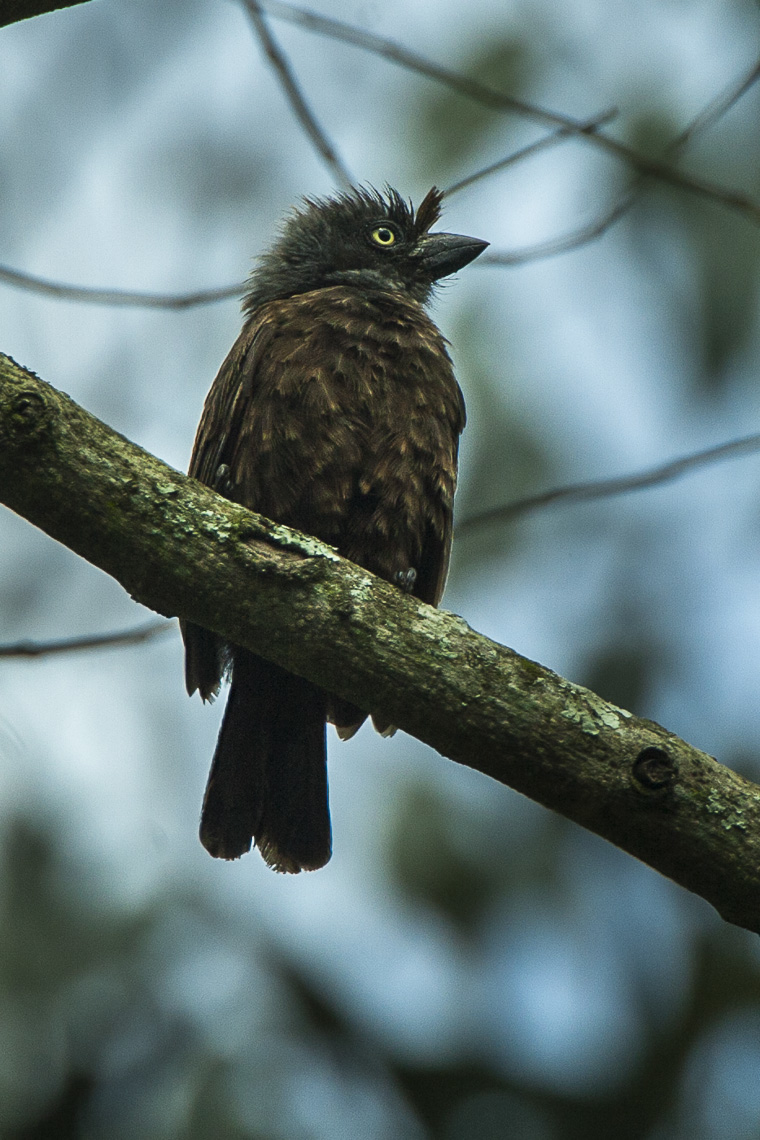
Emin's Barbet
Trachyphonus emini
Order: Piciformes / Family: Lybiidae

Wikimedia Commons
About the Emin's Barbet
Emin's Barbet (Trachyphonus emini) is a distinctive bird species endemic to the woodlands and savannas of East Africa. Its presence is most notable across regions such as Uganda, Kenya, and Tanzania, where it inhabits open woodlands, forest edges, and occasionally gardens and cultivated areas. This bird plays a crucial ecological role as both a seed disperser and a predator of insects, contributing to the balance of its ecosystem.
The barbet's significance extends beyond its ecological contributions. It serves as an indicator species for the health of its habitat, as its presence often signifies a well-preserved environment. Emin's Barbet is a year-round resident in its range and does not undertake long migrations. However, it may exhibit local movements in response to food availability and breeding conditions.
During the breeding season, which typically coincides with the rainy periods, Emin's Barbet becomes more vocal. This period is vital for the regeneration of its habitat, as the birds often excavate nesting cavities in dead trees, contributing to the creation of nesting sites for other species. These activities underscore the barbet's role in maintaining the structural diversity of its habitat, which benefits a multitude of other organisms.
Emin's Barbet's vibrant appearance and notable behaviors make it a favorite among bird watchers and naturalists. Its resilience in adapting to different environments, from pristine forests to suburban gardens, highlights its adaptability and the importance of preserving diverse habitats to sustain such species. Its presence in a region signifies not only the health of the ecosystem but also the potential for birdwatching tourism, which can foster further conservation efforts.
The Emin's Barbet belongs to the family Lybiidae, within the order Piciformes. These birds typically live average 6-8 years, with a maximum recorded of 11 years..
How to Identify a Emin's Barbet
Emin's Barbet is a medium-sized bird, measuring about 20-23 cm in length. The adult plumage is striking, with a predominantly yellow body adorned with black spots and streaks. The head is particularly distinctive, featuring a black crown and a robust, slightly curved bill ideal for its diet of fruits and insects. The throat and upper breast are bright yellow, creating a vivid contrast with the surrounding dark markings.
Juveniles bear a resemblance to adults but are generally duller, with less pronounced markings and a more muted color palette. There is little sexual dimorphism in this species, as both males and females exhibit similar plumage. However, males might appear slightly larger, a detail that requires close observation to discern.
In flight, Emin's Barbet displays a unique silhouette with rapid wingbeats interspersed with glides. Its perching posture is often upright, and it can be seen frequently perched on exposed branches or utility wires in its range. This posture, combined with its striking coloration, makes it relatively easy to spot against the green backdrop of its typical habitats.
Having trouble telling birds apart? Upload a photo to our bird identification tool for an instant species match.
Emin's Barbet Habitat and Range
Preferred Habitat
Emin's Barbet thrives in a variety of woodland and savanna habitats, primarily within East Africa. It is often found in open woodlands, where it takes advantage of the mixed availability of fruit trees and insect-rich environments. In regions such as Uganda, Kenya, and Tanzania, Emin's Barbet inhabits forest edges, clearings, and even urban gardens where trees are plentiful.
The bird is adaptable to elevations ranging from sea level to about 2,000 meters, frequently occupying areas that offer a mix of open ground and tree cover. Emin's Barbet shows a preference for habitats that provide ample nesting sites, such as dead trees, where it can excavate cavities. While it does not typically migrate, some local movements occur in response to seasonal changes in food supply, especially during breeding seasons.
Unlike many species that are strictly confined to dense forests or open plains, Emin's Barbet's adaptability allows it to exploit a range of environments, from rural to semi-urban settings. This versatility underscores its ability to thrive in diverse conditions, making it a common presence in suitable habitats.
Geographic Range
Emin's Barbet is primarily found across East Africa, with its range extending through countries such as Uganda, Kenya, and Tanzania. It occupies a relatively narrow band, favoring the woodlands and savannas that characterize much of this region. The bird's breeding range is largely coincident with its year-round habitat, as it is a resident species that does not undertake significant migrations.
Within these countries, Emin's Barbet is a common sight in areas such as the Rift Valley, Mount Elgon regions, and the fringes of the Serengeti. While it does not migrate long distances, its local movements are often dictated by food availability and breeding conditions, leading to temporary shifts in population density across its range.
Population hotspots can be found in areas with abundant fruiting trees and suitable nesting sites. These regions provide the resources necessary for the birds to thrive, leading to higher densities of barbets. While the species is generally widespread within its range, localized declines can occur due to habitat destruction or changes in land use.
Want to know which birds visit your area? Browse our backyard birds by location guides for region-specific species lists.
What Does the Emin's Barbet Eat?
Emin's Barbet primarily feeds on a diet rich in fruits, which makes it an important seed disperser in its ecosystem. Figs and berries form the bulk of its diet, along with a variety of other soft fruits available within its habitat. The bird's robust bill is well-suited for handling these food items, allowing it to efficiently extract the pulp and seeds.
Insects also constitute a significant portion of its diet, particularly during the breeding season when protein demand rises. It hunts for insects such as beetles, caterpillars, and grasshoppers by gleaning from foliage or making short aerial sallies. This flexible foraging behavior ensures a varied diet and allows the bird to adapt to seasonal changes in food availability.
Emin's Barbet typically forages alone or in pairs, showing a preference for early morning and late afternoon activity. These periods coincide with peak insect activity and optimal fruit ripeness, maximizing foraging efficiency. The bird's ability to exploit both plant and animal food sources underscores its adaptability and critical role in its ecological niche.
Emin's Barbet Behavior and Social Structure
Emin's Barbet exhibits a social and territorial nature, often seen in pairs or small family groups. Its territorial behavior is most pronounced during the breeding season, when pairs establish and defend nesting territories. Vocal displays are common, with the birds using their calls to communicate and assert dominance over their area.
Courtship displays involve mutual preening, vocal duets, and synchronized movements, reinforcing pair bonds. These behaviors strengthen the pair's cooperation during the demanding breeding season. Outside of this period, Emin's Barbet can be more gregarious, joining mixed-species flocks to forage.
The bird's response to predators includes alarm calls and evasive flight patterns. It often seeks refuge in dense foliage, relying on its agility to avoid capture. Emin's Barbet is most active during the cooler parts of the day, with a distinct peak in activity at dawn and dusk. This pattern aligns with its foraging strategy and helps avoid the heat of midday in its often sun-drenched habitats.
Emin's Barbet Nesting and Reproduction
Emin's Barbet nests in cavities, which it typically excavates in dead trees or branches. This ability to create its own nesting sites is a key adaptation, allowing it to exploit a range of forest and woodland environments. The nest cavity is usually located several meters above ground, providing some protection from ground-based predators.
The birds lay a clutch of 2-4 eggs, with both parents sharing the responsibilities of incubation and feeding. The incubation period lasts approximately 14-16 days, after which the chicks hatch. Both parents continue to be involved in feeding the nestlings, which fledge after about 30 days.
Emin's Barbet may raise one or two broods per year, depending on environmental conditions and food availability. The extended parental care and territorial defense are crucial for the survival of the offspring, highlighting the importance of suitable nesting sites and stable food sources.
Emin's Barbet Sounds and Vocalizations
Emin's Barbet is known for its distinctive and melodious song, which consists of a series of rhythmic, repetitive notes. The primary song features a rolling 'trr-trr-trr,' with a clear and resonant quality that carries well across its woodland habitat. This song serves both to establish territory and to communicate with mates.
The bird's call notes include sharp, metallic 'tik-tik' sounds, often used as contact calls between paired birds. In the presence of predators, Emin's Barbet emits a series of harsh, rapid notes that alert neighboring birds to potential danger.
During the dawn chorus, Emin's Barbet contributes to the vibrant soundscape with its persistent and clear calls. These vocalizations are particularly prominent during the breeding season, reflecting the bird's heightened territorial and social interactions.
Interesting Facts About the Emin's Barbet
- 1Emin's Barbet can excavate its own nesting cavities, a skill that sets it apart from many other barbet species.
- 2The bird's diet includes a variety of fruits and insects, making it an important seed disperser and insect predator in its ecosystem.
- 3Emin's Barbet's call, a rhythmic 'trr-trr-trr,' is often used to communicate with mates and establish territory.
- 4This species can be found at elevations up to 2,000 meters, showing its adaptability to different environmental conditions.
- 5Emin's Barbet is a year-round resident in East Africa, showing little migratory behavior despite seasonal changes.
- 6The bird's vibrant yellow and black plumage makes it easy to spot against the green backdrop of its woodland habitat.
- 7Emin's Barbet plays a role in maintaining forest health by excavating nesting sites that other cavity-nesting species can use.
Emin's Barbet Conservation Status
Emin's Barbet is currently listed as a species of Least Concern by the IUCN, with its population considered stable across its range. However, habitat destruction due to agriculture and urbanization poses a potential threat, particularly in regions where deforestation is pronounced. Conservation efforts focus on preserving woodland habitats and promoting sustainable land use practices. Initiatives to protect forested areas and reforestation projects are critical for maintaining the ecological niches that support Emin's Barbet. Historically, the population of Emin's Barbet has shown resilience, but continued monitoring is necessary to ensure that emerging threats do not lead to significant declines. Collaboration between conservation organizations and local communities remains key to safeguarding the future of this vibrant species.