
Giant Babax
Ianthocincla waddelli
Order: Passeriformes / Family: Leiothrichidae

Wikimedia Commons
About the Giant Babax
The Giant Babax (Ianthocincla waddelli) is a captivating bird species within the Leiothrichidae family, known for its striking vocalizations and impressive size. This species predominantly inhabits the montane regions of central and eastern Asia, specifically within the highlands of China and Tibet. Its ecological role is significant, as it contributes to the seed dispersal and insect population control within its habitat. The Giant Babax thrives in elevations ranging from 2,500 to 4,500 meters, where it can often be found in dense undergrowth and thickets. This bird, large and robust, participates actively in the intricate web of life in these montane ecosystems.
The Giant Babax plays a crucial role in its environment by participating in various ecological processes. It is an omnivorous feeder, consuming a diet rich in insects, seeds, and berries, thereby aiding in seed dispersal and pest control. Its presence in the ecosystem supports the balance and health of plant and insect populations, which in turn influences the broader ecological community. The bird's seasonal behaviors are adapted to the harsh conditions of its high-altitude environment. During the breeding season, which aligns with the warmer months, the Giant Babax becomes particularly active in vocal displays, establishing territories and attracting mates. In contrast, during the colder months, the babax may descend to lower elevations in search of more abundant food sources.
The Giant Babax is a species of considerable interest to ornithologists and bird enthusiasts alike, not only for its ecological significance but also for its striking appearance and behavior. Its ability to thrive in the challenging conditions of high-altitude environments showcases its adaptability and resilience. Observing the Giant Babax in its natural habitat offers insights into the complex interactions between species and the environment, highlighting the delicate balance maintained within these ecosystems. As human activities continue to impact these regions, understanding and conserving the Giant Babax and its habitat becomes increasingly important for maintaining biodiversity and ecological health.
The Giant Babax belongs to the family Leiothrichidae, within the order Passeriformes. These birds typically live average 5-8 years, with some known to live up to 10 years in the wild..
How to Identify a Giant Babax
The Giant Babax is a large, robust bird, measuring approximately 30 to 35 centimeters in length, with a wingspan that complements its size. Its plumage is predominantly earthy brown, allowing it to blend seamlessly into the dense undergrowth it inhabits. The head is adorned with a subtle pattern of streaks and spots, providing a distinctive facial appearance. Both males and females exhibit similar plumage, making visual differentiation between the sexes challenging without close observation.
Juvenile Giant Babaxes resemble adults but often display slightly duller plumage with less defined markings. As they mature, their colors become more pronounced, and their vocal abilities develop. The bird's flight silhouette is characterized by broad wings and a long tail, which aid in its agile movement through forested areas. When perched, the Giant Babax often adopts an upright posture, showcasing its large size and confident presence.
In the field, the Giant Babax might be confused with other members of the Leiothrichidae family, such as the Chinese Babax. However, the Giant Babax can be distinguished by its larger size and more robust bill. Its vocalizations also set it apart, as the Giant Babax's song is notably more powerful and melodious compared to its relatives.
Having trouble telling birds apart? Upload a photo to our bird identification tool for an instant species match.
Giant Babax Habitat and Range
Preferred Habitat
The Giant Babax predominantly inhabits montane forests and subtropical or tropical moist shrubland. It is typically found at elevations between 2,500 and 4,500 meters, where it favors dense undergrowth and thickets. These environments provide ample cover and abundant food resources, essential for the bird's survival and reproductive success. Seasonal shifts may occur, with the babax descending to lower elevations during colder months to exploit milder climates and more accessible food sources.
While the Giant Babax is primarily associated with rural and forested environments, it occasionally ventures into more disturbed habitats, such as the edges of agricultural lands. However, it is less commonly found in urban areas, as its preference lies with the rich biodiversity and complex ecosystems of its natural forest habitat. These habitats not only provide the necessary resources for the Giant Babax but also offer protection from potential predators.
Geographic Range
The Giant Babax's range is concentrated in central and eastern Asia, with significant populations found in China and Tibet. These regions offer the high-altitude environments that the species requires. The bird's breeding range is largely confined to these montane areas, where it establishes territories during the warmer months. In winter, some populations may move to lower elevations within their range, although they typically do not migrate long distances.
Specific provinces in China, such as Sichuan, Yunnan, and Tibet Autonomous Region, are known hotspots for the Giant Babax. Within these areas, the bird can be found in relatively high densities, particularly in protected areas where suitable habitats are preserved. Although the species is not considered migratory in the traditional sense, its altitudinal movements allow it to exploit different habitats as environmental conditions change throughout the year.
Want to know which birds visit your area? Browse our backyard birds by location guides for region-specific species lists.
What Does the Giant Babax Eat?
The Giant Babax has an omnivorous diet, primarily consuming insects, seeds, and fruits. Insects such as beetles, caterpillars, and ants form a significant portion of its diet, particularly during the breeding season when protein demands are high. The bird's foraging technique is versatile, involving ground foraging and occasional foliage gleaning. It uses its robust bill to probe under leaves and loose soil to uncover hidden prey.
Seasonal changes influence the diet of the Giant Babax. In the warmer months, it exploits the abundance of insects, while in colder periods, it shifts towards a diet richer in seeds and berries. This dietary flexibility allows the Giant Babax to adapt to the varying availability of food resources throughout the year. Its feeding schedule is largely diurnal, with peak foraging activity occurring in the early morning and late afternoon when temperatures are more favorable.
Giant Babax Behavior and Social Structure
The Giant Babax exhibits complex social behavior, often found in small family groups or loosely associated flocks. These social groups engage in cooperative foraging, enhancing their ability to locate food and avoid predators. The bird demonstrates territorial behavior during the breeding season, with males establishing and defending territories through vocal displays and physical presence.
Courtship displays in the Giant Babax involve both visual and auditory elements. Males perform elaborate song sequences and may engage in subtle displays of plumage to attract females. Once pairs form, they exhibit strong pair bonds, cooperating in nest building and rearing young. The bird's response to predators is primarily vocal, with alarm calls alerting other group members to potential threats.
Daily activity patterns of the Giant Babax align with the diurnal cycle, with peak activity occurring during morning and late afternoon. During these times, the bird engages in foraging, territory defense, and social interactions. Rest periods typically occur during the heat of midday, when the bird seeks shelter in dense vegetation.
Giant Babax Nesting and Reproduction
Giant Babax nests are typically constructed in dense shrubs or low trees, providing concealment from predators. The nest is a cup-shaped structure, intricately woven from twigs, grasses, and leaves. Both male and female participate in nest construction, showcasing their cooperative partnership.
The typical clutch size ranges from 3 to 5 eggs, with both parents sharing incubation duties, which last approximately 14 to 16 days. After hatching, both parents continue to provide for the chicks, feeding and protecting them until they fledge, usually around 14 to 18 days post-hatching. The number of broods per year varies, but the Giant Babax often raises one to two broods per breeding season, depending on environmental conditions and food availability.
Giant Babax Sounds and Vocalizations
The Giant Babax is renowned for its rich, melodious song, characterized by a series of flute-like notes and complex phrases. Its primary song, often delivered from a prominent perch, serves as both a territorial and courtship signal. The song is powerful, with varied pitch and rhythm, captivating listeners with its musicality.
In addition to its song, the Giant Babax produces a range of call notes, including sharp, high-pitched alarm calls that alert conspecifics to potential threats. These calls are distinctly different from the melodious song, being more abrupt and repetitive. During the dawn chorus, the Giant Babax is one of the first birds to vocalize, adding its voice to the symphony of sounds that fill the montane forests.
Interesting Facts About the Giant Babax
- 1The Giant Babax's song is so melodious that it has been compared to the sound of a flute, captivating both birdwatchers and researchers.
- 2Despite its large size, the Giant Babax is an agile forager, adept at navigating dense undergrowth in search of food.
- 3The species' robust bill is well-suited for its omnivorous diet, allowing it to crack seeds and capture insects with ease.
- 4Giant Babaxes form strong pair bonds, with both parents participating equally in raising their young.
- 5In some regions, the Giant Babax is considered an indicator species for healthy montane forest ecosystems.
- 6The bird's ability to thrive in high-altitude environments demonstrates its remarkable adaptability to extreme conditions.
- 7During courtship, male Giant Babaxes may present food gifts to females as part of their courtship ritual.
Giant Babax Conservation Status
Currently, the Giant Babax is listed as Least Concern by the IUCN, with its population considered stable. Despite this status, habitat loss due to agricultural expansion and deforestation poses a potential threat. Conservation efforts focus on preserving montane forest habitats, crucial for the species' long-term survival. Protected areas within China and Tibet provide refuges where the Giant Babax can thrive in its natural environment. Historical population trends indicate that while some local declines have occurred, the overall population remains resilient, thanks in part to the bird's adaptability to changing conditions.
Other Leiothrichidae Species

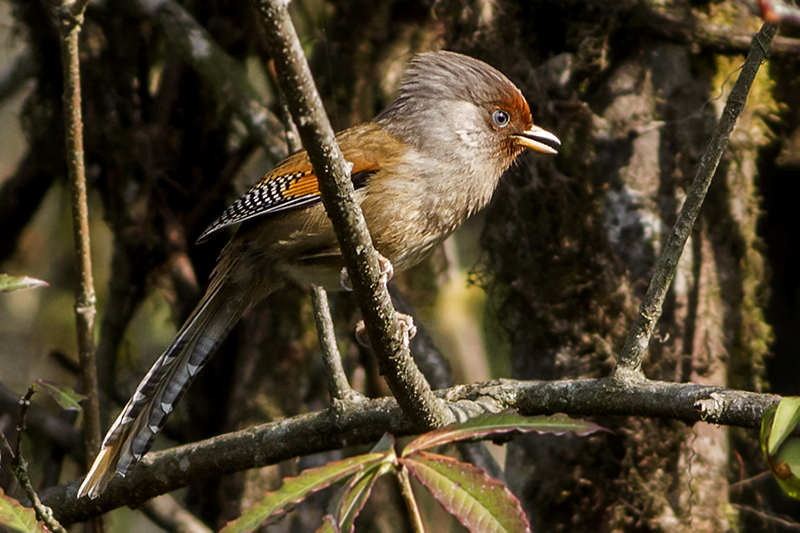

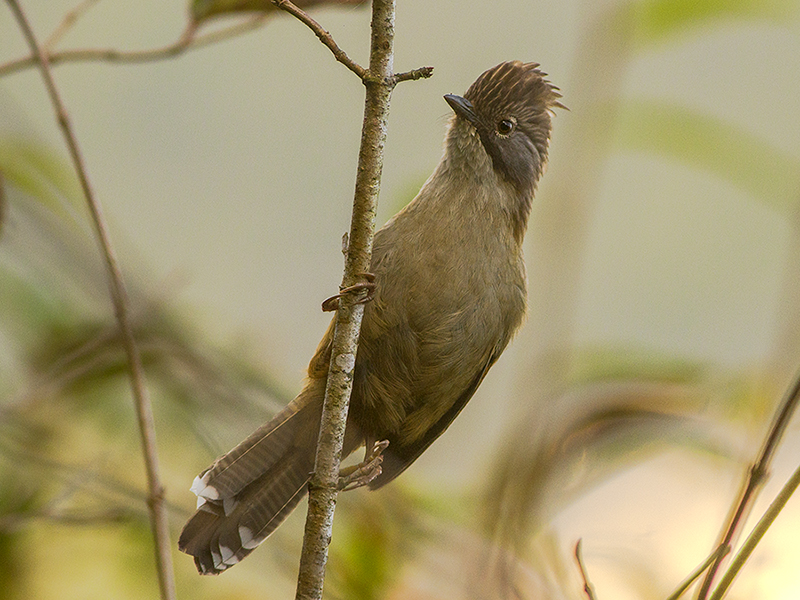
Birds Similar to the Giant Babax
These species are often confused with the Giant Babax due to similar appearance or overlapping range.

