Giant Laughingthrush
Garrulax maximus
Order: Passeriformes / Family: Leiothrichidae

Wikimedia Commons
About the Giant Laughingthrush
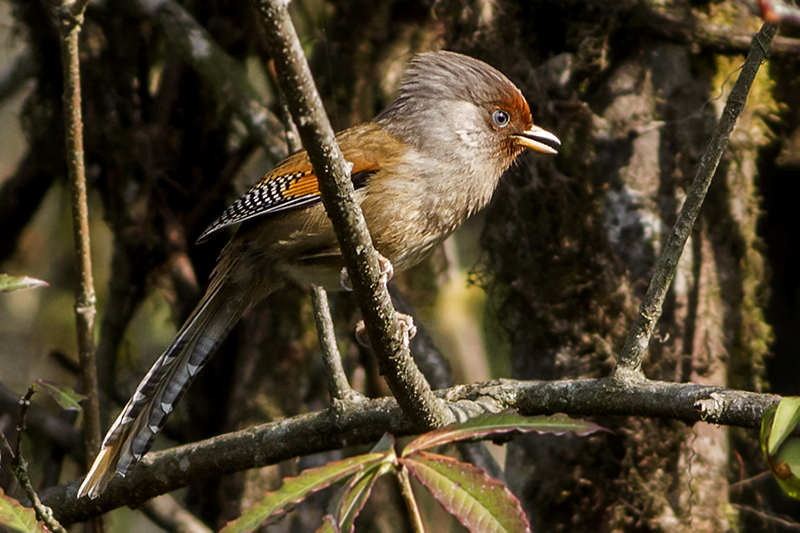
The Giant Laughingthrush (Garrulax maximus) stands out as one of the most remarkable members of the Leiothrichidae family. Known for its large size and melodious calls, this bird inhabits the dense montane forests of central and southwestern China, extending into the eastern Himalayan regions. The Giant Laughingthrush plays a crucial ecological role as both a seed disperser and insect control agent. Its presence in these biodiverse regions highlights its adaptability and importance within its ecosystem. This bird thrives in the subtropical and temperate zones of the Sichuan, Yunnan, and Guizhou provinces, where it is often seen foraging in the undergrowth or hopping along the forest floor. The bird's calls, a series of loud, laughing notes, contribute significantly to the cacophony of sounds in these rich habitats. Seasonally, the Giant Laughingthrush may adjust its foraging altitudes, descending to lower elevations during colder months in search of food. Its adaptability to seasonal changes in food availability makes it a resilient species, with a diet that shifts from fruits and berries in the summer to more insect-heavy consumption in winter. Its role in the ecosystem extends beyond mere survival, as it aids in maintaining the balance of its habitat by controlling insect populations and aiding in plant propagation.
The Giant Laughingthrush belongs to the family Leiothrichidae, within the order Passeriformes. These birds typically live average 10 years, with a maximum of 15 years recorded..
How to Identify a Giant Laughingthrush
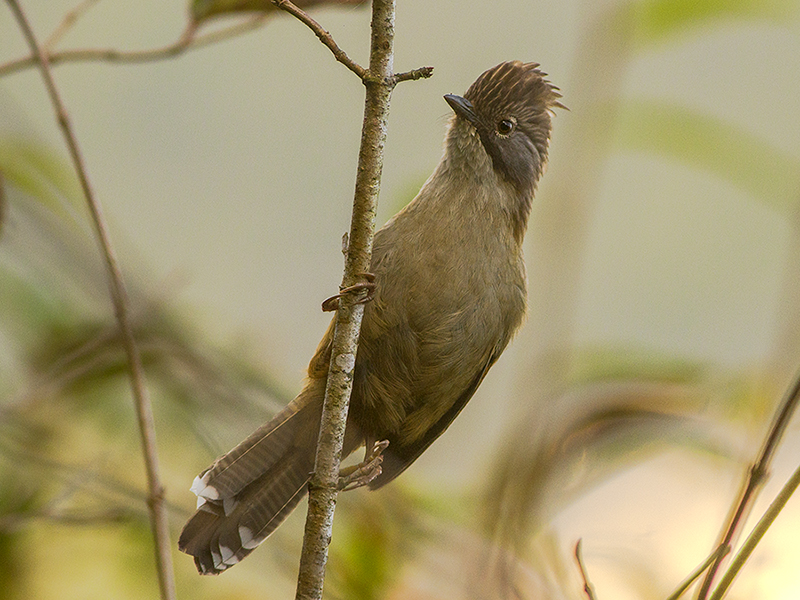
The Giant Laughingthrush is a striking bird, measuring approximately 32 to 38 centimeters in length. Adults exhibit a rich combination of earthy tones, with predominantly brown plumage accented by a black crown and a white throat patch. The wings and tail manifest subtle shades of rufous, giving it a warm appearance. Males and females are visually similar, though males may be slightly larger. Juveniles resemble adults but tend to have duller plumage, lacking the contrasting black crown. Confusion may arise with other laughingthrush species, such as the White-throated Laughingthrush, but the Giant Laughingthrush is distinguishable by its size and less pronounced white throat. In flight, its broad, rounded wings and short tail create a distinctive silhouette. When perched, the bird's posture is upright but relaxed, frequently seen flitting from branch to branch or foraging on the ground.
Having trouble telling birds apart? Upload a photo to our bird identification tool for an instant species match.
Giant Laughingthrush Habitat and Range
Preferred Habitat
The Giant Laughingthrush inhabits montane forests, thriving in dense, mixed deciduous and evergreen environments. It is typically found at elevations ranging from 1,200 to 3,500 meters. The bird shows a preference for areas with abundant undergrowth, where it can forage effectively. Seasonal shifts in elevation are common, with the species descending to lower altitudes during winter months in search of food. While generally avoiding urban areas, it may occasionally be spotted on the outskirts of rural villages, particularly where forest edges meet human habitation.
Geographic Range
The Giant Laughingthrush is predominantly found in the central and southwestern regions of China, including Sichuan, Yunnan, and Guizhou provinces. Its range extends into the eastern Himalayas, encompassing parts of northern Myanmar and northeast India. The bird is mostly resident, with little evidence of long-distance migration. Its population is densest in the subtropical forests of Sichuan, where diverse habitats support a rich avian community.
Want to know which birds visit your area? Browse our backyard birds by location guides for region-specific species lists.
What Does the Giant Laughingthrush Eat?
The diet of the Giant Laughingthrush is varied and opportunistic. During warmer months, it primarily consumes fruits, berries, and seeds, which it gleans from the forest floor and low shrubs. As the seasons change, its diet shifts to include a higher proportion of insects, spiders, and small invertebrates. Foraging techniques involve hopping along the ground or low branches, often in pairs or small groups. The bird uses its strong bill to probe leaf litter and soil for hidden prey. Feeding occurs throughout the day, with peaks during the cooler morning and late afternoon hours.
Giant Laughingthrush Behavior and Social Structure
Giant Laughingthrushes are social birds, often found in small groups that may include family units. Their social structure is loose, with fluctuating group sizes. Territorial behavior is evident during the breeding season, when pairs defend their nesting areas against intruders. Courtship displays involve mutual preening and vocalizations, strengthening pair bonds. Outside of breeding, they remain gregarious, forming flocks that forage together. When faced with predators, they use alarm calls and mobbing behavior to deter threats. Their daily activity patterns revolve around foraging, resting, and social interactions, with vocal communication playing a key role.
Giant Laughingthrush Nesting and Reproduction
The Giant Laughingthrush constructs cup-shaped nests using twigs, leaves, and grasses, typically situating them in dense shrubbery or low tree branches. Preferred nesting sites are well-concealed to avoid predation. A typical clutch consists of 2 to 4 eggs, which both parents incubate over approximately 14 to 16 days. After hatching, fledglings remain in the nest for about 14 days, during which both parents provide food and protection. The species may raise one to two broods per year, depending on environmental conditions.
Giant Laughingthrush Sounds and Vocalizations
The primary song of the Giant Laughingthrush is a series of loud, melodious notes that resemble laughter. These calls, rich in rhythm and variety, serve as both territorial and mating displays. Additionally, the bird emits sharp, repeated call notes when alarmed, alerting others to potential danger. During the dawn chorus, their vocalizations are especially prominent, contributing to the acoustic landscape of their habitat. The musical quality of their calls makes them a favorite among birdwatchers.
Interesting Facts About the Giant Laughingthrush
- 1The Giant Laughingthrush gets its name from its distinctive, laughing calls, which can carry over long distances.
- 2Despite its large size, the Giant Laughingthrush is agile, capable of quick movements both on the ground and in the trees.
- 3In traditional Chinese culture, the calls of the Giant Laughingthrush are often believed to bring good luck.
- 4The bird's robust bill is an adaptation that allows it to crack open hard seeds and probe for insects.
- 5Giant Laughingthrushes are known to engage in 'anting', a behavior where they rub ants on their feathers to deter parasites.
- 6Their melodious songs have made them popular among aviculturists, though they are rarely kept in captivity due to their need for space.
- 7The species plays an essential role in forest ecosystems, helping to control insect populations and facilitate seed dispersal.
Giant Laughingthrush Conservation Status
Currently, the Giant Laughingthrush is listed as Least Concern by the IUCN, with stable population trends. Habitat loss due to deforestation poses the primary threat. Conservation efforts focus on preserving natural habitats and promoting sustainable forestry practices. The species' adaptability to secondary growth forests aids its resilience against habitat fragmentation, allowing it to maintain healthy population levels.