
Golden Parrotbill
Suthora verreauxi
Order: Passeriformes / Family: Sylviidae

Wikimedia Commons
About the Golden Parrotbill
The Golden Parrotbill, scientifically known as Suthora verreauxi, is a small passerine bird renowned for its vibrant golden-yellow plumage. This bird is primarily found in the dense bamboo forests of the eastern Himalayas and parts of Southeast Asia. Its distinctive color and social nature make it a fascinating subject of study for birdwatchers and ornithologists alike. The Golden Parrotbill plays a significant ecological role in its habitat by controlling insect populations and aiding in the dispersal of plant seeds through its feeding activities.
Primarily residing in the subtropical and tropical moist lowland forests, the Golden Parrotbill has a strong association with bamboo thickets, which provide both food and shelter. This bird's preference for bamboo is vital for its survival, as these dense thickets offer protection from predators and harsh weather conditions. The species is often observed in small flocks, which not only aids in foraging but also serves as a defense mechanism against potential threats.
During the breeding season, which typically occurs from April to July, the Golden Parrotbill displays a variety of courtship behaviors. These include vocal displays and mutual preening, which strengthen pair bonds. The bird's ecological significance extends beyond its immediate environment, as it contributes to the biodiversity and health of forest ecosystems. By maintaining insect populations and participating in seed dispersal, the Golden Parrotbill supports the intricate balance of its habitat.
In the face of habitat loss due to deforestation and agricultural expansion, the Golden Parrotbill's role becomes even more critical. Conservation efforts focus on preserving its natural habitat, emphasizing the importance of bamboo thickets in the bird's lifecycle. Despite challenges, the Golden Parrotbill remains a resilient species, adapting to changing environments while continuing to captivate those who encounter it.
The Golden Parrotbill belongs to the family Sylviidae, within the order Passeriformes. These birds typically live average 3-6 years; max recorded 8 years..
How to Identify a Golden Parrotbill
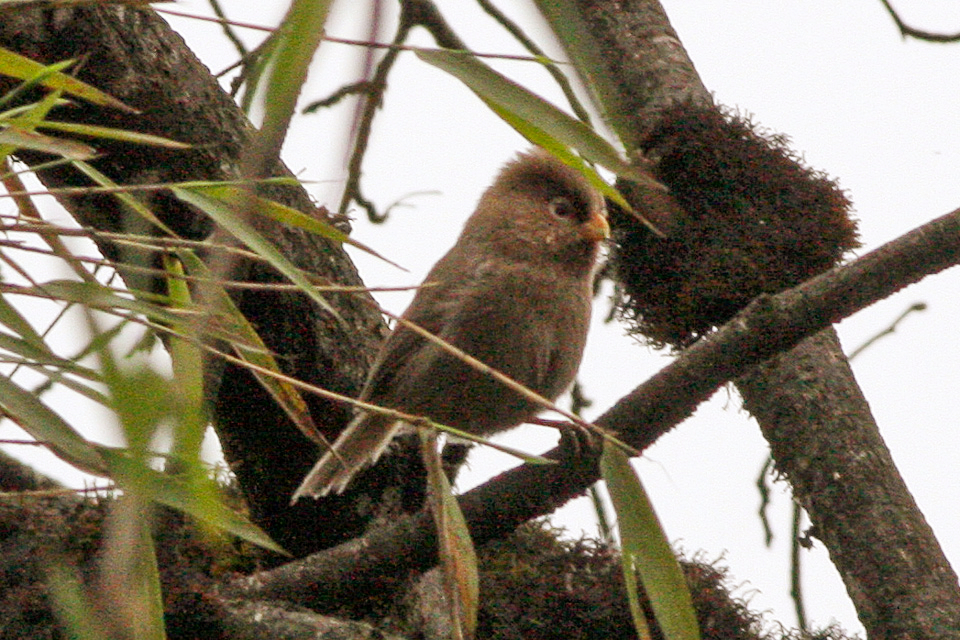
The Golden Parrotbill is easily identifiable by its small size and bright golden-yellow plumage, which covers most of its body. Adult birds exhibit a striking contrast between their light yellow underparts and slightly darker upperparts. Their wings and tail are tinged with a subtle olive-brown, adding a layer of complexity to their overall appearance. Juveniles resemble adults but have a slightly duller hue, lacking the vibrancy of fully mature individuals.
While there is little sexual dimorphism in this species, males may exhibit marginally more intense coloration than females. However, this difference is not pronounced enough to serve as a reliable field marker. When perched, the Golden Parrotbill often adopts a horizontal posture, which, combined with its short, rounded wings and tail, distinguishes it from other species sharing its habitat.
In flight, the Golden Parrotbill displays a swift and agile movement, often maneuvering through dense bamboo with ease. Observers should note the characteristic silhouette of its short, rounded wings and relatively long tail. Although confusion with similar species such as the Fulvetta or other parrotbills can occur, the Golden Parrotbill's unique coloration and habitat preference aid in accurate identification.
Having trouble telling birds apart? Upload a photo to our bird identification tool for an instant species match.
Golden Parrotbill Habitat and Range
Preferred Habitat
The Golden Parrotbill thrives in dense bamboo thickets within subtropical and tropical moist lowland forests, particularly those of the eastern Himalayas and Southeast Asia. These forests provide the necessary cover and resources for feeding and nesting. The species is commonly found at elevations ranging from 500 to 2,500 meters, where bamboo is most abundant.
This bird tends to avoid open areas and prefers the dense, protective cover offered by bamboo. Seasonal habitat shifts are minimal, as the Golden Parrotbill remains in its preferred environment year-round. While urban presence is uncommon, rural areas near forest edges may occasionally host these birds, especially if suitable bamboo thickets are present.
The Golden Parrotbill's dependence on bamboo highlights the importance of preserving these habitats. As deforestation and agricultural expansion threaten bamboo forests, conservation efforts aim to protect the remaining areas, ensuring the continued survival of this species and the myriad other organisms that rely on these unique environments.
Geographic Range
The Golden Parrotbill's range extends across the eastern Himalayas and parts of Southeast Asia, including countries such as Bhutan, Nepal, India, and southern China. Within these regions, the species occupies areas where dense bamboo thickets are prevalent, typically at elevations between 500 and 2,500 meters.
Unlike many bird species, the Golden Parrotbill does not exhibit long-distance migratory behavior. Instead, it remains within its range year-round, with only minor local movements in response to food availability or weather changes. This sedentary nature makes it particularly vulnerable to habitat loss, as the bird relies heavily on stable bamboo forest environments.
Despite its specialized habitat requirements, the Golden Parrotbill can be found in population density hotspots where bamboo is abundant. These include the eastern Himalayan foothills and certain regions of southern China, where conservation efforts focus on maintaining the delicate balance of these ecosystems.
Want to know which birds visit your area? Browse our backyard birds by location guides for region-specific species lists.
What Does the Golden Parrotbill Eat?
The diet of the Golden Parrotbill consists primarily of insects and bamboo seeds, reflecting its habitat preferences. During the warmer months, the bird actively forages for insects such as caterpillars, beetles, and spiders, which provide essential protein for breeding and raising young.
As the seasons change and insect availability decreases, the Golden Parrotbill shifts its diet to include more plant material, particularly bamboo seeds and small fruits. This dietary flexibility allows the bird to adapt to seasonal changes in food availability, ensuring its survival even in challenging conditions.
Foraging techniques involve agile movements through dense bamboo thickets, where the bird uses its short, rounded beak to extract insects and seeds from the vegetation. Typically, feeding occurs during daylight hours, with the highest activity observed in the early morning and late afternoon. The Golden Parrotbill's role in controlling insect populations and dispersing seeds highlights its ecological importance within its habitat.
Golden Parrotbill Behavior and Social Structure
The Golden Parrotbill exhibits a highly social behavior, often forming small flocks that enhance foraging efficiency and provide protection from predators. These flocks, typically composed of family groups, move cohesively through bamboo thickets, maintaining constant vocal communication to stay connected.
Territorial behavior is less pronounced in the Golden Parrotbill compared to other bird species. Instead, these birds rely on the dense cover of bamboo for protection, minimizing the need to defend specific territories. During the breeding season, which occurs from April to July, pairs engage in courtship displays such as mutual preening and synchronized flying, strengthening pair bonds.
In response to predators, the Golden Parrotbill employs a variety of alarm calls and flocking behaviors to confuse and deter threats. Daily activity patterns involve periods of intense foraging interspersed with rest and social interactions, allowing the bird to efficiently utilize its environment without exhausting its resources.
Golden Parrotbill Nesting and Reproduction
The Golden Parrotbill constructs cup-shaped nests using a variety of materials, including bamboo leaves, grass, and feathers. These nests are typically located within dense bamboo thickets, providing both camouflage and protection from predators. Nest placement is usually low to the ground, often within two meters of the forest floor.
A typical clutch consists of 3 to 5 eggs, which are incubated primarily by the female for a period of 14 to 16 days. During this time, the male plays a supportive role by providing food and defending the nesting area. Once hatched, chicks remain in the nest for approximately 14 days before fledging.
Parental care extends beyond fledging, with both parents continuing to feed and protect the young until they are fully independent. The Golden Parrotbill typically raises one to two broods per year, depending on environmental conditions and food availability. This reproductive strategy ensures the continuation of the species despite the challenges posed by habitat loss and other threats.
Golden Parrotbill Sounds and Vocalizations
The primary song of the Golden Parrotbill is a melodious series of high-pitched notes that rise and fall in a rhythmic pattern. This song serves multiple purposes, from attracting mates to maintaining flock cohesion.
Additionally, the Golden Parrotbill produces a variety of call notes, including short, sharp chips used for communication within flocks and more urgent alarm calls in response to predators. These alarm calls are distinct, characterized by a rapid, staccato rhythm that alerts other birds to potential danger.
During the dawn chorus, the Golden Parrotbill's song can be heard blending with the calls of other forest inhabitants, creating a symphony that heralds the start of a new day. The bird's vocal repertoire, while not as extensive as some other species, remains an integral part of its social and survival strategies.
Interesting Facts About the Golden Parrotbill
- 1The Golden Parrotbill is part of the Sylviidae family, which includes some of the most diverse and adaptable songbirds in the world.
- 2Despite its bright coloration, the Golden Parrotbill's small size, around 12 cm, makes it difficult to spot in dense bamboo.
- 3This species has a highly specialized diet, relying heavily on bamboo seeds, which ties its survival closely to specific habitats.
- 4Golden Parrotbills are non-migratory, meaning they spend their entire lives within the same bamboo thickets.
- 5Research has shown that Golden Parrotbills use over 20 different vocalizations for communication, a testament to their social nature.
- 6The Golden Parrotbill plays a crucial role in its ecosystem by controlling insect populations and aiding seed dispersal.
- 7The species' reliance on bamboo makes it an indicator species for the health of these unique forest ecosystems.
Golden Parrotbill Conservation Status
The Golden Parrotbill is currently listed as a species of Least Concern by the IUCN, with stable population trends in most of its range. However, habitat loss due to deforestation and agricultural expansion poses a significant threat to this species, as it relies heavily on bamboo thickets for survival. Conservation efforts focus on preserving and restoring bamboo habitats, particularly in regions where these ecosystems are most threatened. Protected areas and sustainable land management practices help mitigate the impact of human activities on the Golden Parrotbill's habitat. Historically, the Golden Parrotbill's population has remained relatively stable, thanks in part to its adaptability and the resilience of bamboo forests. Ongoing conservation efforts aim to ensure that this stability continues, allowing future generations to enjoy the beauty and ecological contributions of the Golden Parrotbill.
Other Sylviidae Species



Birds Similar to the Golden Parrotbill
These species are often confused with the Golden Parrotbill due to similar appearance or overlapping range.

