Gray-sided Laughingthrush
Ianthocincla caerulata
Order: Passeriformes / Family: Leiothrichidae

Wikimedia Commons
About the Gray-sided Laughingthrush
The Gray-sided Laughingthrush (Ianthocincla caerulata) is a medium-sized bird belonging to the family Leiothrichidae and is known for its melodious calls and sociable nature. This species inhabits the montane forests of Southeast Asia, primarily found in countries such as China, India, and Myanmar. The bird plays a significant ecological role as both a seed disperser and insect predator, contributing to the biodiversity of its habitat. Gray-sided Laughingthrushes are typically found at elevations ranging from 1,500 to 3,500 meters, where they prefer dense undergrowth in subtropical or tropical moist montane forests. During the breeding season, which occurs from April to July, these birds become highly territorial, often engaging in vocal duets or group choruses. Outside the breeding season, they are known to form loose flocks, sometimes associating with other species in mixed-species foraging groups. The laughingthrush exhibits a complex social structure, often involving cooperative breeding, where non-breeding individuals assist in raising the young. This behavior enhances their survival rate and strengthens the social bonds within the group. Due to their preference for dense forest habitats, Gray-sided Laughingthrushes are relatively insulated from human disturbance, although deforestation and habitat fragmentation pose potential threats. Their adaptability to various forest types and elevations allows them to maintain stable populations, although localized declines have been noted in areas experiencing significant environmental changes.
The Gray-sided Laughingthrush belongs to the family Leiothrichidae, within the order Passeriformes. These birds typically live typically 6-8 years, with some individuals reaching up to 10 years in the wild..
How to Identify a Gray-sided Laughingthrush
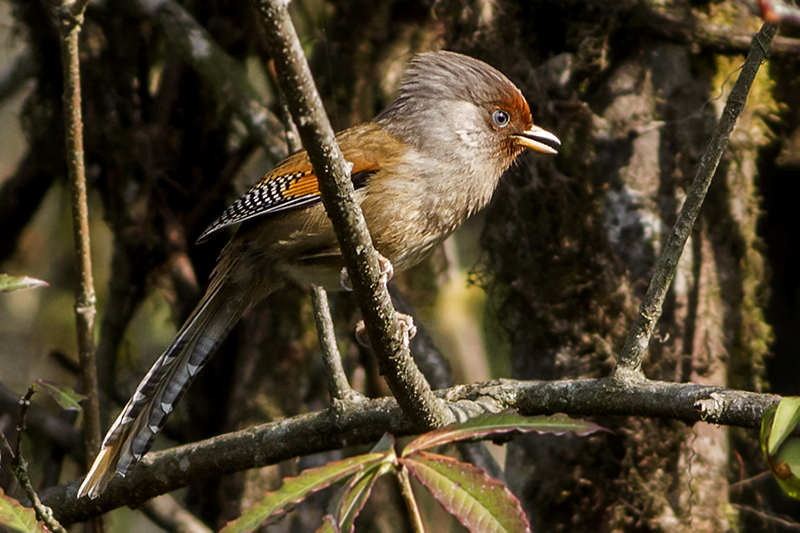
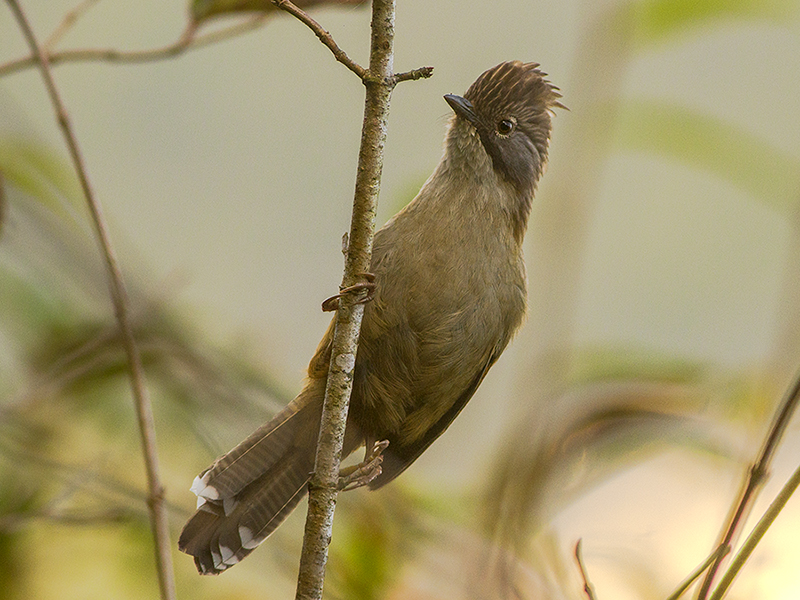
The Gray-sided Laughingthrush can be identified by its predominantly gray plumage, with lighter underparts and a slightly darker back and wings. Adult birds possess a distinctive white crescent behind the eye, enhancing their facial expression and contrast. Juvenile Gray-sided Laughingthrushes, while similar in size, exhibit duller plumage, lacking the sharp contrast seen in adults. Males and females are similar in appearance, making gender differentiation in the field challenging without behavioral observation during the breeding season. In flight, the Gray-sided Laughingthrush displays a relatively short, rounded silhouette, with quick, bounding movements between perches. Their posture while perching is typically upright, often observed in small groups or pairs. When compared to similar species, such as the White-throated Laughingthrush, the Gray-sided Laughingthrush is distinguishable by its less pronounced throat marking and more uniform gray coloring. Birders should note their unique vocalizations, which often accompany their conspicuous presence in suitable habitats.
Having trouble telling birds apart? Upload a photo to our bird identification tool for an instant species match.
Gray-sided Laughingthrush Habitat and Range
Preferred Habitat
Gray-sided Laughingthrushes are primarily found in subtropical and tropical moist montane forests, where they thrive in dense undergrowth and shrubby areas. These birds inhabit elevations ranging from 1,500 to 3,500 meters, often favoring regions with abundant cover and food sources. In India, they are commonly seen in the Eastern Himalayas, while in China, they inhabit regions such as Sichuan and Yunnan. Seasonal shifts in habitat usage are minimal, as these birds are non-migratory and maintain territories throughout the year. However, they may descend to lower elevations during harsh weather conditions or when searching for food. Urban presence is rare, as they prefer undisturbed forest environments, though they might occasionally visit forest edges or rural gardens adjacent to suitable habitats.
Geographic Range
The Gray-sided Laughingthrush has a relatively restricted range within the montane regions of Southeast Asia. Its breeding range includes parts of the Eastern Himalayas, encompassing northern India, Bhutan, and Nepal. In China, they are found in the provinces of Sichuan, Yunnan, and Tibet. The species does not undertake long-distance migrations, remaining within its montane range year-round. However, some altitudinal movement occurs, with individuals potentially descending to lower elevations during colder months. Population density tends to be higher in areas with dense vegetation and minimal human disturbance, such as protected reserves and national parks within their range.
Want to know which birds visit your area? Browse our backyard birds by location guides for region-specific species lists.
What Does the Gray-sided Laughingthrush Eat?
The Gray-sided Laughingthrush primarily feeds on insects, small invertebrates, and a variety of fruits and seeds. Their diet shifts seasonally, with a higher reliance on insects during the breeding season to meet the protein demands of raising young. Foraging typically occurs in the lower and mid-canopy levels, where they use their strong bills to probe leaf litter and bark crevices. They also consume berries and seeds, contributing to seed dispersal within their forest habitats. Feeding usually happens in the early morning and late afternoon, with periods of rest and social interaction during midday. Insect prey typically ranges from small beetles and caterpillars to grasshoppers and ants.
Gray-sided Laughingthrush Behavior and Social Structure
Gray-sided Laughingthrushes are highly social birds, often found in small flocks or family groups. Their social structure involves cooperative breeding, where non-breeding individuals assist in nest building and feeding the young. This cooperative behavior extends to foraging, where they form mixed-species flocks with other laughingthrushes and small passerines, enhancing their foraging efficiency. Territorial behavior is pronounced during the breeding season, with pairs defending their nests through vocalizations and displays. Courtship involves mutual preening and singing duets, strengthening pair bonds. In the presence of predators, Gray-sided Laughingthrushes issue alarm calls and may engage in mobbing behavior to deter threats. Their daily activity patterns include periods of feeding interspersed with social interactions and vocal communication.
Gray-sided Laughingthrush Nesting and Reproduction
Gray-sided Laughingthrushes construct cup-shaped nests using twigs, moss, and leaves, often lined with softer materials for insulation. Nests are typically placed in dense shrubs or small trees, providing concealment and protection from predators. Clutch size ranges from two to four eggs, with both parents sharing incubation duties over a period of approximately 14 days. After hatching, the young are fed by the entire group, including non-breeding helpers, for about 12 to 14 days until fledging. This cooperative breeding strategy allows for multiple broods per year, enhancing reproductive success and survival in their montane forest habitats.
Gray-sided Laughingthrush Sounds and Vocalizations
The Gray-sided Laughingthrush is renowned for its melodious song, characterized by a series of rich, fluted notes delivered in rapid succession. Their primary song serves both territorial and social bonding purposes and is often performed in duets or group choruses. Besides the primary song, these birds produce a variety of call notes, including a sharp 'chee-chee' used for communication within the flock. Alarm calls are harsher and more abrupt, alerting group members to potential threats. During the dawn chorus, their vocalizations are particularly vibrant, contributing to the acoustic landscape of their forest habitats.
Interesting Facts About the Gray-sided Laughingthrush
- 1Gray-sided Laughingthrushes are known for their cooperative breeding, where non-breeding individuals help raise the young, increasing survival rates.
- 2These birds are part of the Leiothrichidae family, which consists of over 130 species, many of which are also known for their complex vocalizations.
- 3The Gray-sided Laughingthrush's song is so melodious that it has been compared to a musical flute, often performed in duets or choruses.
- 4These birds are integral to their ecosystems as seed dispersers, aiding in the regeneration and diversity of their forest habitats.
- 5Unlike many species, Gray-sided Laughingthrushes show minimal sexual dimorphism, making males and females nearly indistinguishable in the field.
- 6The species' preference for montane forests at elevations up to 3,500 meters provides them with a refuge from many lowland predators and human activities.
- 7Despite their sociable nature, Gray-sided Laughingthrushes become fiercely territorial during the breeding season, using vocalizations to defend their area.
Gray-sided Laughingthrush Conservation Status
The IUCN lists the Gray-sided Laughingthrush as a species of Least Concern, indicating relatively stable population trends despite localized threats. Primary threats include habitat loss due to deforestation and agricultural expansion. Conservation efforts focus on habitat protection through the establishment of reserves and national parks within their range. Historical population changes are not well-documented, but the species' adaptability to various forest types has likely mitigated significant declines. Continued monitoring and habitat preservation are essential to maintaining stable populations.