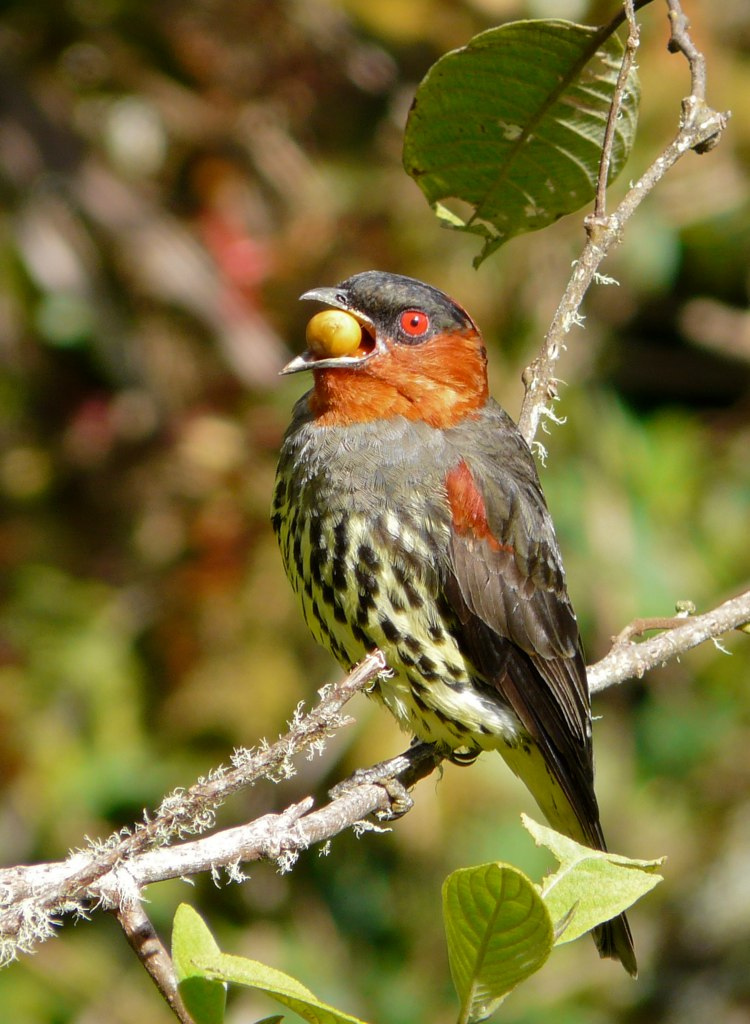
Green-backed Becard
Pachyramphus viridis
Order: Passeriformes / Family: Cotingidae

Wikimedia Commons
About the Green-backed Becard
The Green-backed Becard (Pachyramphus viridis) is a captivating bird species belonging to the family Cotingidae. Known for its vibrant green plumage, this bird inhabits a variety of forested environments across South America. Its range extends from the eastern slopes of the Andes to the Brazilian Atlantic Forest, providing a wide array of habitats. The Green-backed Becard plays a significant role in its ecosystem, acting as both a predator and a seed disperser. Its diet primarily consists of insects and fruits, which it forages adeptly among the foliage. This dual role in the food web highlights its ecological importance as it helps control insect populations and aids in the propagation of various plant species. The bird's presence is vital in maintaining the health and balance of its habitat. Seasonal behaviors of the Green-backed Becard include noticeable shifts in activity during the breeding season, which typically occurs during the wet months when food is abundant. As an adaptable species, the Green-backed Becard can be found in both primary and secondary forests, as well as forest edges and clearings. This adaptability allows it to survive in fragmented habitats where deforestation is prevalent. Ecologically, the Green-backed Becard contributes to the dynamics of the forest ecosystem, interacting with numerous other species. While it is not migratory, some local movements may occur in response to food availability and breeding conditions. The bird's role in the ecosystem is complemented by its aesthetic appeal, drawing birdwatchers and nature enthusiasts to its South American habitats. The Green-backed Becard's significance extends beyond its ecological contributions, as it also holds cultural importance in regions where birdwatching is a key component of ecotourism. Its presence in diverse forest ecosystems underscores the interconnectedness of species within these environments, emphasizing the need for conservation efforts to ensure the persistence of such interactions.
The Green-backed Becard belongs to the family Cotingidae, within the order Passeriformes. These birds typically live typically 5-8 years, with some individuals reaching up to 10 years..
How to Identify a Green-backed Becard
The Green-backed Becard is easily identifiable by its unique coloration and physical features. Adult males display a rich green back, which gives the species its name, along with a contrasting black cap and wings that add to its striking appearance. Their underparts are a buffy white, providing a subtle yet distinct contrast to the vivid green. Females are similar but may exhibit slightly duller tones with a less pronounced cap, making them somewhat less conspicuous. Juvenile Green-backed Becards resemble females but generally have a more muted overall coloration, which aids in camouflage from potential predators. The bird's silhouette in flight is compact yet agile, characterized by short, rounded wings and a slightly notched tail. This wing shape allows for quick, maneuverable flight through dense forest canopies. When perched, the Green-backed Becard maintains an upright posture, often remaining still for extended periods as it scans for prey or potential threats. While the Green-backed Becard's plumage is distinctive, it can sometimes be confused with other becard species or small green birds in its range. However, the combination of its black cap and green back is a reliable field mark for identification. Birdwatchers should note its typical habitat and behavior as additional clues to correctly identify this species.
Having trouble telling birds apart? Upload a photo to our bird identification tool for an instant species match.
Green-backed Becard Habitat and Range
Preferred Habitat
The Green-backed Becard inhabits a variety of forested environments throughout its range. It primarily occupies tropical and subtropical moist forests, thriving in both primary and secondary growth. These forests provide the dense canopy cover and abundant food sources necessary for the species' survival. In Brazil, it is often found in the Atlantic Forest, a biodiversity hotspot that supports a wide array of flora and fauna. The bird is also present in the Amazon Basin, which offers extensive forest coverage and diverse habitats. The elevation range of the Green-backed Becard typically spans from lowland areas up to around 1,500 meters, although it is most commonly found in the mid-elevation forest zones. Seasonal shifts in habitat use are not prominent, as the bird is generally non-migratory. However, it may move locally in response to changes in food availability or during the breeding season. In urban areas, the Green-backed Becard is less commonly observed, as it prefers the richer biodiversity found in rural and forested environments.
Geographic Range
The Green-backed Becard's range is predominantly centered in South America, where it occupies a vast area across several countries. This bird is found in Brazil, Bolivia, Paraguay, and northern Argentina. Its range extends into the eastern slopes of the Andes in Peru and Colombia, where it takes advantage of the rich forest habitats. The breeding range of the Green-backed Becard aligns closely with its overall distribution, as the species breeds throughout its range without significant migratory movements. During the non-breeding season, the Green-backed Becard remains within its established territories, although local movements may occur in response to seasonal variations in food sources or environmental conditions. Population density tends to be higher in regions where forest cover is extensive and diverse, such as the Brazilian Atlantic Forest and the Amazon Basin. These hotspots provide the resources necessary for the bird's sustenance and reproduction, supporting stable populations. Although the Green-backed Becard does not undergo large-scale migrations, it may utilize certain corridors within its range for dispersal or local movements.
Want to know which birds visit your area? Browse our backyard birds by location guides for region-specific species lists.
What Does the Green-backed Becard Eat?
The diet of the Green-backed Becard consists of a mix of insects and fruits, reflecting its role as both a predator and a seed disperser. Insects form the primary component of its diet, with the bird preying on a variety of arthropods, including beetles, caterpillars, and spiders. It captures these prey items through agile foraging techniques, often gleaning from leaves or hawking in mid-air. The bird's sharp vision and quick reflexes enable it to catch insects with precision. Seasonal variations in diet occur as the availability of food sources changes throughout the year. During the wet season, when insect abundance is high, the Green-backed Becard increases its consumption of arthropods. In contrast, during the drier months, the bird relies more heavily on fruits, which provide essential nutrients and energy. The species favors small to medium-sized fruits, which it plucks delicately from branches. The feeding schedule of the Green-backed Becard aligns with daylight hours, as it actively forages from dawn to dusk. Its ability to exploit both animal and plant food sources allows it to adapt to fluctuations in resource availability, contributing to its resilience in varied habitats.
Green-backed Becard Behavior and Social Structure
The Green-backed Becard exhibits a range of interesting behaviors that reflect its adaptability and ecological role. It typically maintains a solitary lifestyle or forms small family groups, rarely gathering in large flocks. Territorial behavior is evident, particularly during the breeding season, when males defend their chosen nesting sites from rivals. Vocalizations play a key role in these territorial displays, with males using their calls to establish dominance and attract mates. The courtship displays of the Green-backed Becard involve a combination of vocal and physical behaviors, designed to showcase the male's fitness and suitability as a mate. These displays often include singing from prominent perches and performing aerial maneuvers. Flocking patterns outside the breeding season are minimal, as the bird tends to remain within its established territory. In response to predators, the Green-backed Becard relies on its cryptic plumage and evasive flight to avoid detection. It may also emit alarm calls to alert nearby individuals of potential threats. Daily activity patterns involve periods of active foraging interspersed with rest and preening. The bird is most active during the early morning and late afternoon, taking advantage of cooler temperatures and increased prey activity during these times.
Green-backed Becard Nesting and Reproduction
Green-backed Becards construct their nests with care, selecting locations that offer protection from predators and environmental elements. The nests are typically cup-shaped structures crafted from twigs, grasses, and other plant materials. These nests are often placed in the fork of a tree branch, providing stability and concealment. The preferred nesting height ranges from 5 to 15 meters above the ground, though this can vary depending on the specific habitat. The female bears the primary responsibility for nest construction, while the male assists by gathering materials. Clutch size usually consists of 2 to 3 eggs, which the female incubates alone. The incubation period lasts approximately 16 to 18 days, during which the female remains vigilant, leaving the nest only briefly to feed. Once hatched, the chicks are altricial, requiring significant parental care. Both parents participate in feeding the young, bringing a steady supply of insects and fruits to the nest. Fledging occurs around 20 to 22 days after hatching, but the young often remain in the vicinity of the nest for some time, relying on the parents for food and protection. The Green-backed Becard typically raises one brood per year, with breeding timed to coincide with peak food availability.
Green-backed Becard Sounds and Vocalizations
The vocalizations of the Green-backed Becard are distinctive and contribute to its identification in the field. The primary song consists of a series of melodious notes, delivered in a rhythmic pattern that is both clear and pleasing to the ear. These songs are often repeated in rapid succession, creating a continuous melodic flow. The pitch is moderate, with each note carrying a flute-like quality that resonates through the forest canopy. Call notes are shorter and more abrupt, serving as communication signals between individuals. Alarm calls are sharp and piercing, designed to alert others to potential danger. During the dawn chorus, the Green-backed Becard is an active participant, joining other forest birds in a symphony of morning songs. This behavior reinforces social bonds and establishes territory in the early hours of the day.
Interesting Facts About the Green-backed Becard
- 1The Green-backed Becard is one of the few becard species that thrives equally in primary and secondary forests, showcasing its adaptability.
- 2While it primarily feeds on insects, the Green-backed Becard also plays a crucial role in seed dispersal by consuming fruits.
- 3The bird's distinctive black cap serves as a key identification feature, setting it apart from other becard species.
- 4Unlike many birds, the Green-backed Becard does not migrate, remaining within its territory year-round.
- 5The species' ability to exploit both insects and fruits allows it to maintain a balanced diet throughout seasonal changes.
- 6Green-backed Becards are known for their melodious songs, which contribute to the vibrant soundscape of South American forests.
- 7The bird's presence in ecotourism hotspots highlights its importance not only ecologically but also culturally and economically.
Green-backed Becard Conservation Status
The Green-backed Becard is currently classified as a species of Least Concern by the IUCN. Its population trend appears stable, with no immediate threats of widespread decline. However, ongoing habitat loss due to deforestation poses a significant long-term threat. Conservation efforts focus on preserving critical habitats, such as the Brazilian Atlantic Forest and the Amazon Basin, through the establishment of protected areas and sustainable land-use practices. Historical population changes are not well-documented, but the species' adaptability to secondary forests suggests a degree of resilience in the face of habitat alteration. Continued monitoring and habitat conservation are essential to ensure the longevity of the Green-backed Becard populations.