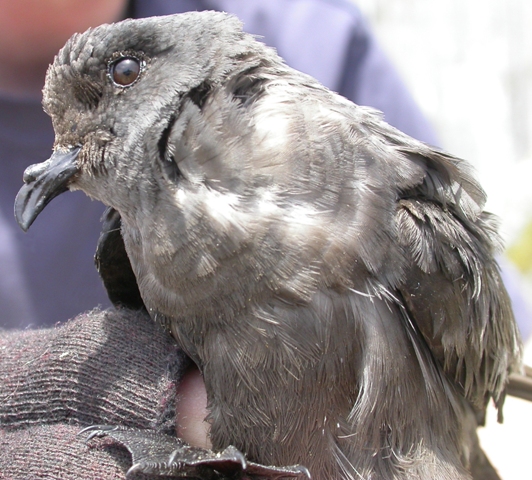
Guadalupe Storm-Petrel
Oceanodroma macrodactyla
Order: Procellariiformes / Family: Hydrobatidae

Wikimedia Commons
About the Guadalupe Storm-Petrel
The Guadalupe Storm-Petrel, scientifically known as Oceanodroma macrodactyla, is a seabird that was once thought extinct. It has a significant role in the marine ecosystems around Guadalupe Island, Mexico. This bird is part of the family Hydrobatidae, which includes small seabirds known for their remarkable aerial abilities. The species was largely documented in the late 19th and early 20th centuries, but sightings dwindled, leading to its classification as possibly extinct. Despite this, dedicated research and occasional unconfirmed sightings keep the hope alive that it may still exist.
Guadalupe Island, off the west coast of Mexico's Baja California Peninsula, serves as the primary region historically associated with the Guadalupe Storm-Petrel. The island's rugged cliffs and secluded coastal areas provided optimal conditions for nesting and breeding. The bird's presence on the island indicates its role as an important part of the local food web, feeding on marine invertebrates and small fish, thus helping to control these populations and maintain ecological balance.
The ecological role of the Guadalupe Storm-Petrel extends to nutrient cycling as well. By consuming marine organisms and defecating on the island, these birds contribute to soil fertility, which in turn supports plant life and other terrestrial species. Although their numbers have drastically reduced, the historical presence of the Guadalupe Storm-Petrel highlights the fragility of island ecosystems and the impact of human activities on remote wildlife populations. Seasonal behaviors of this bird likely involved migrations to and from breeding grounds, though specific migratory patterns remain largely undocumented.
The Guadalupe Storm-Petrel belongs to the family Hydrobatidae, within the order Procellariiformes. These birds typically live not well-documented, likely similar to related species, around 15 years..
How to Identify a Guadalupe Storm-Petrel
Identifying the Guadalupe Storm-Petrel involves recognizing its distinctive long wings and forked tail, which are key features of its flight silhouette. Adult plumage is predominantly blackish-gray with a paler underwing, distinguishing it from other storm-petrels. The species lacks the white rump band commonly seen in similar species like the Leach's Storm-Petrel, providing a clear differentiator. Juveniles share the adult's coloration but may appear slightly duller.
Male and female Guadalupe Storm-Petrels show little sexual dimorphism, meaning both sexes look similar in size and coloration. Observers often rely on behavior and vocalizations rather than visual cues to differentiate between sexes. In flight, the bird exhibits a buoyant, fluttering motion typical of storm-petrels, allowing it to glide effortlessly over ocean waves.
The perching posture of the Guadalupe Storm-Petrel is less frequently observed due to its pelagic nature. However, when seen on land during the breeding season, it perches close to the ground, often on rocky outcrops or grassy slopes. These features and behaviors help differentiate it from other seabird species in overlapping ranges.
Having trouble telling birds apart? Upload a photo to our bird identification tool for an instant species match.
Guadalupe Storm-Petrel Habitat and Range
Preferred Habitat
The Guadalupe Storm-Petrel historically inhabited the coastal cliffs and marine environments around Guadalupe Island. This region provides the ideal habitat with its towering cliffs and isolated, undisturbed areas crucial for breeding. The species prefers areas with sparse vegetation and minimal human interference, which are becoming increasingly rare.
Typically found at elevations ranging from sea level to about 500 meters, the bird's habitat is defined by its proximity to the ocean. This allows easy access to feeding grounds, where it can forage by skimming the surface of the water for food. Seasonal habitat shifts were likely minimal due to the bird's specific adaptation to island life, but potential shifts could have been driven by prey availability or climatic changes.
While the Guadalupe Storm-Petrel was not known to inhabit urban areas, the encroachment of human activities posed a threat to its natural habitat. Conservation of its habitat is critical for any potential reestablishment of its population.
Geographic Range
Historically, the breeding range of the Guadalupe Storm-Petrel was confined to Guadalupe Island, located off the coast of Baja California, Mexico. This isolation made it particularly vulnerable to environmental changes and human impact. While there are no confirmed sightings of the bird for several decades, the island remains the focus of any conservation efforts aimed at rediscovering or reviving the population.
The exact wintering range of the Guadalupe Storm-Petrel is not well-documented, but similar species often migrate across the Pacific Ocean, suggesting a possible migration corridor extending well beyond Mexican waters. During the breeding season, the population density would have been highest on the island itself, particularly in the secluded cliffside areas suitable for nesting.
Given the lack of recent data, the current range remains speculative. However, the historical records provide a basis for understanding its past distribution and the importance of protecting potential habitats in the region.
Want to know which birds visit your area? Browse our backyard birds by location guides for region-specific species lists.
What Does the Guadalupe Storm-Petrel Eat?
The Guadalupe Storm-Petrel primarily fed on marine invertebrates and small fish, using a surface-seizing technique typical of storm-petrels. This method involves skimming the ocean surface with its bill while in flight, capturing prey with precision. Its diet included small crustaceans, squid, and fish larvae, which are abundant in the nutrient-rich waters surrounding Guadalupe Island.
Seasonal diet changes likely occurred in response to prey availability, with the bird adapting its foraging techniques to exploit different food sources as needed. During the breeding season, adults would have increased their foraging efforts to provide for their young, focusing on prey that provided optimal nutrition for chick development.
Prey size varied but typically included organisms small enough to be consumed in flight. The feeding schedule of the Guadalupe Storm-Petrel was likely diurnal, with peak activity during early morning and late afternoon when prey was most accessible. This strategy would have maximized energy intake while minimizing competition with other seabirds.
Guadalupe Storm-Petrel Behavior and Social Structure
The Guadalupe Storm-Petrel exhibited a range of behaviors characteristic of storm-petrels, including a strong colonial nesting habit. During the breeding season, these birds congregated in large colonies on Guadalupe Island, where they engaged in complex social interactions. Territorial behavior was evident around nesting sites, with pairs defending their chosen burrows from intruders.
Courtship displays involved vocalizations and synchronized flight patterns, serving to strengthen pair bonds and ensure successful mating. Once paired, the birds remained monogamous for the breeding season, sharing the responsibilities of incubating eggs and rearing chicks. Flocking behavior outside the breeding season was less common, with individuals dispersing widely across the ocean.
In response to predators, the Guadalupe Storm-Petrel relied on its agile flight and secluded nesting sites for protection. The bird's daily activity patterns were largely dictated by the availability of food, with peak foraging during early morning and late afternoon. Nocturnal activity was limited, as these birds preferred to return to their nesting sites before dusk.
Guadalupe Storm-Petrel Nesting and Reproduction
Guadalupe Storm-Petrels nested in burrows on the steep coastal cliffs of Guadalupe Island. These burrows were typically dug into soft soil or natural crevices, providing shelter from predators and harsh weather. The choice of nesting location was strategic, as it allowed easy access to the ocean for foraging.
The nesting season coincided with the spring and summer months, when food availability was highest. A typical clutch consisted of a single egg, which both parents incubated over a period of approximately 42 days. This cooperative incubation ensured that the egg was constantly protected and warmed.
Once hatched, the chick remained in the burrow, where it was fed regurgitated food by both parents. The fledging timeline extended over 60 to 70 days, during which the chick developed the necessary skills for independent life. Parental roles were shared equally, with both adults participating in feeding and protection until the chick was ready to leave the nest. The species is thought to have raised only one brood per year due to the demanding nature of their breeding environment.
Guadalupe Storm-Petrel Sounds and Vocalizations
The primary song of the Guadalupe Storm-Petrel was a series of soft, repetitive calls used primarily during the breeding season. These vocalizations, characterized by a rhythmic cadence and medium pitch, facilitated communication between mates and reinforced pair bonds.
Call notes included short, high-pitched chirps that served as contact calls between individuals during flight. Alarm calls were sharper and more insistent, designed to alert nearby birds to potential threats.
The dawn chorus behavior likely involved increased vocal activity as birds prepared for the day's foraging. These sounds, while not as melodic as songbirds, played a crucial role in the social dynamics of the colony. Comparatively, the calls of the Guadalupe Storm-Petrel were softer and less varied than those of other seabirds, reflecting its more discreet lifestyle.
Interesting Facts About the Guadalupe Storm-Petrel
- 1The Guadalupe Storm-Petrel was once thought extinct until recent efforts rekindled hope of its survival.
- 2This bird is part of the Hydrobatidae family, known for its remarkable flying skills and oceanic lifestyle.
- 3Guadalupe Storm-Petrels historically bred only on Guadalupe Island, making them island specialists.
- 4Their diet consists mainly of marine invertebrates, which they capture while skimming the ocean surface.
- 5The species' long wings and forked tail are key features that aid in their agile flight over open water.
- 6Efforts to conserve the Guadalupe Storm-Petrel focus on removing invasive species from its island habitat.
- 7The bird's calls are softer compared to other seabirds, reflecting its discreet nature.
Guadalupe Storm-Petrel Conservation Status
The Guadalupe Storm-Petrel is currently classified as Critically Endangered by the IUCN, with its population trend considered to be decreasing. Primary threats include habitat destruction, invasive species, and climate change, all of which have contributed to its severe decline. Conservation efforts are focused on habitat preservation and the removal of invasive species from Guadalupe Island. Historical population changes were drastic, with significant declines following human colonization of the island and the introduction of predators such as cats and goats. Ongoing research aims to locate any remaining populations and assess the potential for reintroduction or habitat restoration. The bird's precarious status underscores the importance of vigilant conservation efforts to prevent further loss of biodiversity in the region.