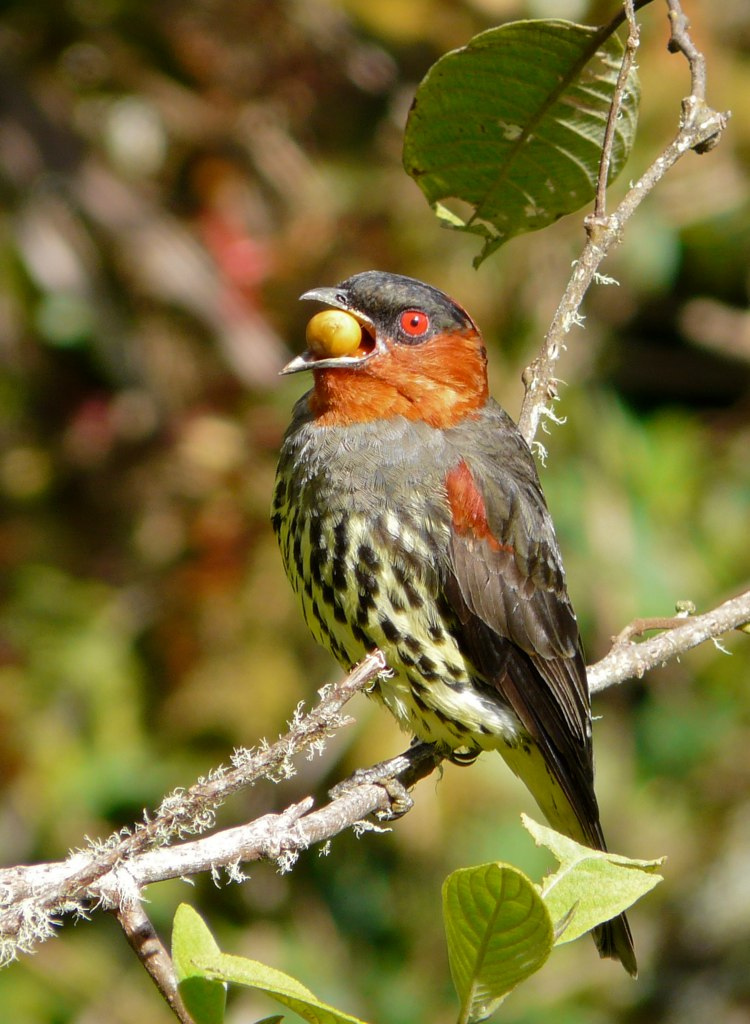
Guianan Red-Cotinga
Phoenicircus carnifex
Order: Passeriformes / Family: Cotingidae

Wikimedia Commons
About the Guianan Red-Cotinga
The Guianan Red-Cotinga (Phoenicircus carnifex) is a captivating bird species belonging to the family Cotingidae. This bird is found predominantly in the lush, verdant forests of northeastern South America, particularly in the regions encompassing Guyana, Suriname, French Guiana, and northern Brazil. Its vivid red coloration makes it one of the most visually striking birds of the Amazon Basin. The Guianan Red-Cotinga plays a significant role in its ecosystem as both a seed disperser and an indicator of forest health.
In these tropical rainforests, the Guianan Red-Cotinga occupies a niche that highlights its importance in maintaining the balance of its environment. The bird is primarily frugivorous, aiding in the dispersal of seeds from various fruiting trees. This ecological role is vital for forest regeneration, ensuring the diversity and continuity of plant species in the dense canopy.
Seasonal behaviors of the Guianan Red-Cotinga are closely tied to the fruiting cycles of the forest. During the wet season, when fruits are abundant, these birds are more active, engaging in courtship displays and breeding activities. The abundance of food supports their energetic courtship rituals, which are a spectacle of vibrant color and movement. Conversely, during the drier months, their activities may be less conspicuous as they conserve energy and focus on locating scarce food resources.
The Guianan Red-Cotinga holds cultural significance for local communities, often recognized as a symbol of the rich biodiversity of the Amazon. Its presence serves as a reminder of the importance of conservation efforts in a region facing increasing threats from deforestation and habitat fragmentation. The bird’s reliance on undisturbed forest habitats underscores the need for sustainable practices that protect these vital ecosystems.
The Guianan Red-Cotinga belongs to the family Cotingidae, within the order Passeriformes. These birds typically live average 5-7 years with a max recorded of 9 years.
How to Identify a Guianan Red-Cotinga
Adult Guianan Red-Cotingas exhibit a brilliant red plumage that covers most of their bodies, with a slightly darker red crown and throat. The wings and tail are a contrasting black, accentuating the vividness of their red feathers. In contrast, juveniles display a duller, more muted coloration, with a brownish-red hue that helps them blend into the forest understory. This difference in plumage between adults and juveniles is crucial for field identification.
Both male and female Guianan Red-Cotingas look remarkably similar, though the males may exhibit a slightly more vibrant hue during the breeding season. This sexual monomorphism is somewhat unusual among bird species where males often display more vivid colors to attract females. The flight silhouette of the Guianan Red-Cotinga is characterized by broad wings and a short tail, making them appear stout and robust in the air. Their flight is direct and swift, often accompanied by short, purposeful flaps.
When perching, the Guianan Red-Cotinga maintains an upright posture, often choosing exposed branches where their bright plumage can catch the light. This behavior is particularly noticeable during courtship periods when visual displays are crucial. Among similar species, the Scarlet Macaw and other brightly colored cotingas may cause some confusion, but the Guianan Red-Cotinga's smaller size and unique color pattern provide clear distinctions.
Having trouble telling birds apart? Upload a photo to our bird identification tool for an instant species match.
Guianan Red-Cotinga Habitat and Range
Preferred Habitat
The Guianan Red-Cotinga thrives in the tropical lowland rainforests of the Amazon Basin. They predominantly inhabit primary forests, where they find an abundance of fruiting trees that constitute their primary food source. These birds prefer the mid to upper canopy, where they can effectively forage while remaining relatively secure from ground predators.
The elevation range for the Guianan Red-Cotinga is typically from sea level to about 1,000 meters. This species shows a strong preference for undisturbed forests, which offer the complex structure and biodiversity needed for their survival. They are rarely found in secondary forests or areas significantly altered by human activity.
Unlike some other bird species, the Guianan Red-Cotinga does not exhibit significant seasonal habitat shifts, largely remaining within the dense tropical forests year-round. Their presence in urban areas is minimal, as they are highly dependent on the specific ecological conditions provided by mature, intact forest environments.
Geographic Range
The Guianan Red-Cotinga's range is primarily confined to the northeastern part of South America, particularly within the countries of Guyana, Suriname, and French Guiana, extending into the northern regions of Brazil. This distribution highlights its strong association with the Guianan Shield, a region known for its extensive tropical rainforests and high biodiversity.
Within this range, the Guianan Red-Cotinga is a non-migratory species, residing year-round in these tropical forests. Unlike migratory birds that travel vast distances between breeding and wintering grounds, the Guianan Red-Cotinga remains within its tropical habitat, taking advantage of the consistent climate and resources available in the Amazon Basin.
Population density hotspots for the Guianan Red-Cotinga are found in areas with rich fruiting trees and minimal human disturbance. Protected areas and reserves within its range provide critical refuges, helping maintain stable populations despite the increasing pressures of deforestation and habitat loss.
Want to know which birds visit your area? Browse our backyard birds by location guides for region-specific species lists.
What Does the Guianan Red-Cotinga Eat?
The diet of the Guianan Red-Cotinga is predominantly frugivorous, focusing on a variety of fruits that grow in their tropical forest habitat. They consume the fleshy fruits of numerous tree species, playing an essential role in seed dispersal as they move through the canopy. The availability of these fruits can vary seasonally, influencing the bird's foraging behavior and movements.
During the wet season, when fruit abundance peaks, the Guianan Red-Cotinga can be observed actively foraging throughout the day, selecting ripe, nutrient-rich fruits. In contrast, the dry season presents a challenge as fruit resources become scarcer, prompting the birds to travel greater distances and explore different areas within their home range.
While fruits make up the majority of their diet, the Guianan Red-Cotinga may occasionally consume insects and small invertebrates, especially when raising young, to supplement their nutritional intake. These dietary shifts ensure they meet their energy needs throughout the year, adapting to the dynamic forest environment.
Guianan Red-Cotinga Behavior and Social Structure
The Guianan Red-Cotinga exhibits fascinating behaviors that reflect its adaptation to the tropical rainforest environment. These birds are typically solitary or found in pairs, especially during the breeding season when they become more territorial. Males engage in elaborate courtship displays, using their vivid plumage and vocalizations to attract females. These displays often occur in open areas of the forest canopy, where the males can showcase their colors to the best effect.
Outside of the breeding season, the Guianan Red-Cotinga may be observed in small groups, particularly when food resources are abundant. This flexible social structure allows them to optimize foraging success while minimizing competition. When faced with potential predators, the Guianan Red-Cotinga relies on its keen sense of awareness and quick flight to escape threats, often retreating to denser parts of the forest for cover.
Daily activity patterns are closely tied to the availability of food, with the birds being most active during the cooler, early morning and late afternoon hours. This schedule helps them conserve energy while avoiding the heat of midday, a common strategy among tropical bird species.
Guianan Red-Cotinga Nesting and Reproduction
The nesting habits of the Guianan Red-Cotinga are as intriguing as the bird itself. Nests are typically constructed high in the forest canopy, often on horizontal branches that provide stability and protection from ground-based predators. The preferred materials for nest building include twigs, leaves, and other plant fibers, woven together to create a secure platform for raising young.
A typical clutch consists of two to three eggs, which the female incubates for approximately two weeks. During this period, the male may assist by bringing food to the nesting female, ensuring she remains nourished while tending to the eggs. Once the chicks hatch, both parents are involved in feeding and caring for the young, a cooperative effort that continues until the fledglings leave the nest.
Fledging generally occurs about three weeks after hatching, although this can vary depending on environmental conditions and food availability. The Guianan Red-Cotinga usually raises one brood per year, but in areas with abundant resources, a second brood may be attempted, providing conditions are favorable.
Guianan Red-Cotinga Sounds and Vocalizations
The vocalizations of the Guianan Red-Cotinga are distinctive and play a crucial role in communication and mating rituals. Their primary song is a series of melodious whistles, characterized by a clear, rising pitch that resonates through the forest canopy. This song is often repeated in a rhythmic pattern, serving both to attract mates and establish territory.
In addition to their primary song, the Guianan Red-Cotinga emits a variety of call notes, including softer contact calls used for communication between mates or family members. Alarm calls are sharper and more urgent, signaling the presence of potential threats and prompting rapid evasive action.
During the early morning hours, the Guianan Red-Cotinga participates in the dawn chorus, their songs blending with those of other forest birds to create a symphony that heralds the start of a new day. This behavior underscores the importance of vocal communication in their social structure and daily life.
Interesting Facts About the Guianan Red-Cotinga
- 1The Guianan Red-Cotinga's vibrant red plumage makes it one of the most striking birds in the Amazon, easily distinguished from other species.
- 2Despite its vivid coloration, the Guianan Red-Cotinga is often heard before it's seen, due to its melodic whistles echoing through the canopy.
- 3The name 'Phoenicircus carnifex' reflects its fiery appearance, with 'Phoenicircus' derived from Greek meaning 'red tail'.
- 4These birds are crucial seed dispersers, helping maintain the diversity of plant species within their rainforest habitats.
- 5Guianan Red-Cotingas prefer the mid to upper canopy, rarely descending to the forest floor, which helps them avoid many predators.
- 6They are predominantly frugivorous, but will occasionally eat insects, providing necessary protein during the breeding season.
- 7The species shows little sexual dimorphism, making male and female Guianan Red-Cotingas difficult to distinguish in the field.
Guianan Red-Cotinga Conservation Status
The Guianan Red-Cotinga is currently listed as Least Concern by the IUCN, indicating a stable population across its range. However, this status does not mean the species is free from threats. The primary dangers facing the Guianan Red-Cotinga include habitat loss due to deforestation and logging activities, which continue to encroach upon the pristine forests they require. Conservation efforts focus on preserving the integrity of the Amazonian rainforests, with initiatives aimed at curbing illegal logging and promoting sustainable land-use practices. Protected areas and reserves offer crucial sanctuaries for the Guianan Red-Cotinga, safeguarding critical habitats from development pressures. Historically, the Guianan Red-Cotinga has maintained relatively stable populations, thanks in part to its adaptability to large, undisturbed forest tracts. Continued conservation efforts are essential to ensuring these birds remain a vibrant part of the Amazon's biodiversity.