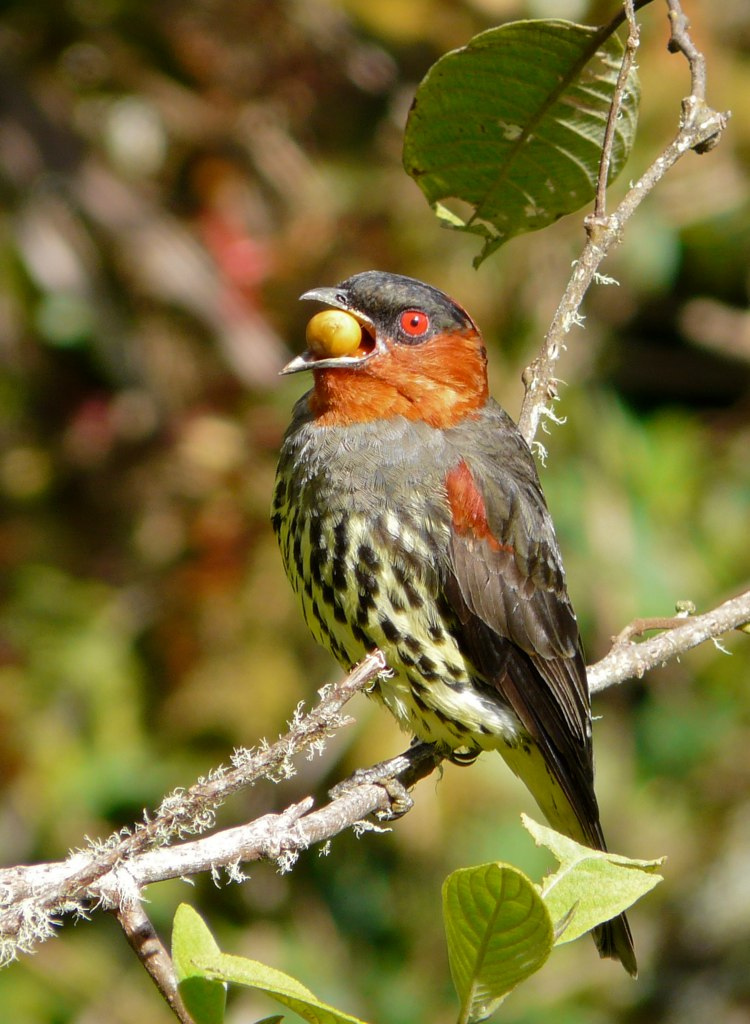
Hooded Berryeater
Carpornis cucullata
Order: Passeriformes / Family: Cotingidae

Wikimedia Commons
About the Hooded Berryeater
The Hooded Berryeater (Carpornis cucullata) is a striking bird endemic to the Atlantic Forest of southeastern Brazil. This species holds a unique place within the Cotingidae family, showcasing vibrant plumage and distinct vocalizations that make it a centerpiece of the forest soundscape. Known for its preference for montane regions, the Hooded Berryeater plays a significant ecological role as a frugivore, aiding in seed dispersal essential for maintaining tropical biodiversity. The bird's habitat spans across the states of Rio de Janeiro, São Paulo, and Minas Gerais, thriving in humid forested areas that offer ample fruiting trees crucial for its diet. The Hooded Berryeater's ecological contributions include not only seed dispersal but also serving as an indicator species for the health of its forest environment. Conservationists pay close attention to this species due to its restricted range and the ongoing threat of habitat loss. During the breeding season, which typically occurs between September and December, these birds become more vocal and visible, engaging in their characteristic courtship displays. The Hooded Berryeater's presence and activities play critical roles in the seasonal rhythms of the Atlantic Forest, underscoring the interconnectedness of its ecosystem. This bird's reliance on specific forest habitats makes it particularly vulnerable to deforestation and habitat fragmentation, critical issues that are being addressed through concerted conservation efforts. Its continued survival is closely tied to the preservation of its natural habitat, highlighting the broader challenges facing biodiversity in this region.
The Hooded Berryeater belongs to the family Cotingidae, within the order Passeriformes. These birds typically live average 10 years, with a maximum recorded lifespan of 15 years..
How to Identify a Hooded Berryeater
The Hooded Berryeater is easily recognized by its striking plumage and distinctive silhouette. Adults possess a vibrant green-yellow body contrasted by a deep black hood that covers the head and throat, giving the species its common name. The male and female appear similar in coloration, though subtle differences can sometimes be noted in the intensity of the yellow body plumage, with males typically exhibiting slightly brighter hues. Juveniles differ from adults by having more muted tones and less pronounced black hoods, appearing more green than yellow. In terms of size, the Hooded Berryeater measures approximately 23 to 25 centimeters in length, making it a medium-sized member of the Cotingidae family. When perched, the bird displays a robust posture, often sitting upright on branches in the forest canopy. In flight, its silhouette is marked by a relatively short tail and broad wings, aiding in agile maneuvers through dense foliage. While other frugivorous birds inhabit the same regions, the Hooded Berryeater's distinctive coloration and vocalizations reduce confusion with similar species. Observers should note the hood's crisp edge and the bird's overall vibrant appearance when identifying this species in the field.
Having trouble telling birds apart? Upload a photo to our bird identification tool for an instant species match.
Hooded Berryeater Habitat and Range
Preferred Habitat
The Hooded Berryeater inhabits the lush, humid forests of southeastern Brazil, primarily within the Atlantic Forest biome. This bird thrives in montane forests, often at elevations ranging from 500 to 1,500 meters. It prefers habitats rich in fruiting trees, which are crucial for its diet. While primarily found in undisturbed forest areas, it can occasionally venture into secondary forests, provided these areas offer sufficient food resources. The Hooded Berryeater does not typically inhabit urban environments, as its survival heavily depends on the availability of intact forest ecosystems. Seasonal habitat shifts are minimal for this species due to its year-round residency in the Atlantic Forest, though slight movements may occur in response to local fruiting patterns. This species' presence is indicative of forest health, as it relies on complex ecosystems that provide ample food and shelter.
Geographic Range
The geographic range of the Hooded Berryeater is confined to the southeastern part of Brazil, specifically within the Atlantic Forest regions. It is most commonly observed in the states of Rio de Janeiro, São Paulo, and Minas Gerais, where it occupies montane and sub-montane forest habitats. Unlike many bird species, the Hooded Berryeater does not engage in long-distance migrations. Instead, it remains a resident bird throughout the year, adapting to seasonal changes in fruit availability within its home range. The population density of this bird is relatively concentrated due to its specialized habitat requirements, with hotspots occurring in areas of well-preserved forest. The species’ restricted range and lack of migratory behavior accentuate its vulnerability to habitat loss and underscore the importance of conservation initiatives in these regions.
Want to know which birds visit your area? Browse our backyard birds by location guides for region-specific species lists.
What Does the Hooded Berryeater Eat?
The Hooded Berryeater primarily feeds on a diverse array of fruits, making it an integral part of the seed dispersal network within its habitat. Its diet includes berries from various plant species, such as those from the Lauraceae and Myrtaceae families. The bird's foraging technique involves plucking fruits directly from branches, often while hovering momentarily in mid-air. This behavior allows it to access fruit in dense foliage where perching is not feasible. Although predominantly frugivorous, the Hooded Berryeater occasionally supplements its diet with insects, especially during the breeding season when the demand for protein increases. The bird's feeding schedule is not strictly diurnal, as it may forage at various times throughout daylight hours, guided primarily by the availability and ripeness of fruit. Seasonal changes in diet occur as different fruit species reach maturity, prompting the bird to adjust its foraging locations and techniques accordingly.
Hooded Berryeater Behavior and Social Structure
The Hooded Berryeater exhibits a range of behaviors that reflect its adaptation to a forest-dwelling lifestyle. Socially, the bird is somewhat solitary, though it may be observed in small groups during periods of abundant fruit availability. It maintains a degree of territoriality, especially during the breeding season, when males perform vocal displays to establish and defend their territory. Courtship involves a series of visual and auditory displays, including unique vocalizations and dynamic flights through the forest canopy. Flocking behavior is not common for this species, as it tends to forage individually or in pairs. In response to predators, the Hooded Berryeater relies on its camouflaging plumage and quick, agile movements to evade capture. The bird's daily activity pattern peaks during the morning and late afternoon, aligning with periods of increased fruiting activity in its habitat.
Hooded Berryeater Nesting and Reproduction
Nesting for the Hooded Berryeater occurs predominantly in the breeding season from September to December. The female constructs a cup-shaped nest using materials such as twigs, leaves, and moss, often situated high in the trees to provide safety from ground predators. The preferred nesting locations are dense branches that offer concealment and protection. Typically, the clutch consists of two to three eggs, which the female incubates for about 18 to 20 days. During this period, the male may assist by providing food to the female. Once hatched, the chicks remain in the nest for approximately 25 to 30 days before fledging. Parental care continues even after fledging, with both parents involved in feeding and protecting the young as they learn to navigate their forest environment. The Hooded Berryeater generally produces one brood per year, although favorable conditions may occasionally allow for a second.
Hooded Berryeater Sounds and Vocalizations
The primary song of the Hooded Berryeater is a melodious series of notes that rise and fall in pitch, creating a rhythmic and musical quality. This song is often heard at dawn and serves as a territorial and courtship signal. The bird's call notes are more abrupt and can be described as sharp 'chit' or 'chip' sounds, used primarily for communication between mates or to alert others to the presence of predators. During alarm situations, the calls become more rapid and intense, serving to warn nearby birds of potential threats. The dawn chorus of the Hooded Berryeater is particularly distinctive, as it combines the complexity of the song with the ambient sounds of the forest, creating a vibrant and dynamic soundscape. Comparisons to the sounds of other frugivorous birds in the region highlight its unique tonal quality and musicality.
Interesting Facts About the Hooded Berryeater
- 1The Hooded Berryeater was first described in the early 19th century by German naturalist Johann Baptist von Spix.
- 2Despite its name, the Hooded Berryeater occasionally consumes insects, especially during breeding season.
- 3Its distinctive black hood is a rare feature among frugivorous birds in the Atlantic Forest.
- 4The Hooded Berryeater can consume fruit sizes ranging from small berries to larger drupes.
- 5This bird's vibrant song can carry over considerable distances, making it a key part of the forest's soundscape.
- 6The Hooded Berryeater's presence in an area indicates a healthy, fruit-rich forest ecosystem.
- 7It plays a crucial role in seed dispersal, helping to maintain the diversity of tree species in its habitat.
Hooded Berryeater Conservation Status
The Hooded Berryeater is currently listed as Near Threatened on the IUCN Red List, with its population trend showing a gradual decline. Primary threats to the species include habitat destruction and fragmentation due to logging, agricultural expansion, and urban development. Conservation efforts focus on protecting existing forest habitats and promoting reforestation projects to restore connectivity within the Atlantic Forest. Historical population changes reflect the impact of extensive habitat loss over the past decades, necessitating continued monitoring and conservation interventions. Protected areas and reserves within its range provide critical refuges for the species, though further efforts are needed to ensure long-term survival. Collaborative initiatives between government agencies and conservation organizations aim to mitigate threats and enhance habitat protection, offering a pathway to stabilize and potentially increase the Hooded Berryeater's population.