Hook-billed Vanga
Vanga curvirostris
Order: Passeriformes / Family: Vangidae

Wikimedia Commons
About the Hook-billed Vanga
The Hook-billed Vanga (Vanga curvirostris) is a unique and intriguing member of the Vangidae family, native to Madagascar. This species demonstrates remarkable adaptability, inhabiting a variety of environments from lowland forests to montane regions. The bird's curved bill is not merely a physical characteristic; it is a specialized tool that allows the Hook-billed Vanga to exploit a diverse diet, thereby occupying a significant ecological niche within its habitat. Found predominantly across the northern and eastern parts of Madagascar, this bird plays a vital role in the avian community by aiding in insect population control and seed dispersal. The Hook-billed Vanga's presence in both primary and secondary forests, as well as bushlands and mangroves, highlights its ecological versatility. Seasonal behaviors of the Hook-billed Vanga reflect the changing availability of resources. During the breeding season, typically between September and December, these birds become more vocal and territorial. As the dry season progresses, the Hook-billed Vanga may migrate short distances to areas with better food availability, showing an impressive capacity for adaptation. Its role in the ecosystem as both predator and prey underscores the interconnected nature of Madagascar's unique biodiversity. The Hook-billed Vanga is not just a fascinating subject for ornithologists but also an integral part of the island's natural heritage, providing insight into the evolutionary processes that have shaped the Madagascan avifauna.
The Hook-billed Vanga belongs to the family Vangidae, within the order Passeriformes. These birds typically live generally 7-9 years, with some individuals reaching 12 years in the wild..
How to Identify a Hook-billed Vanga
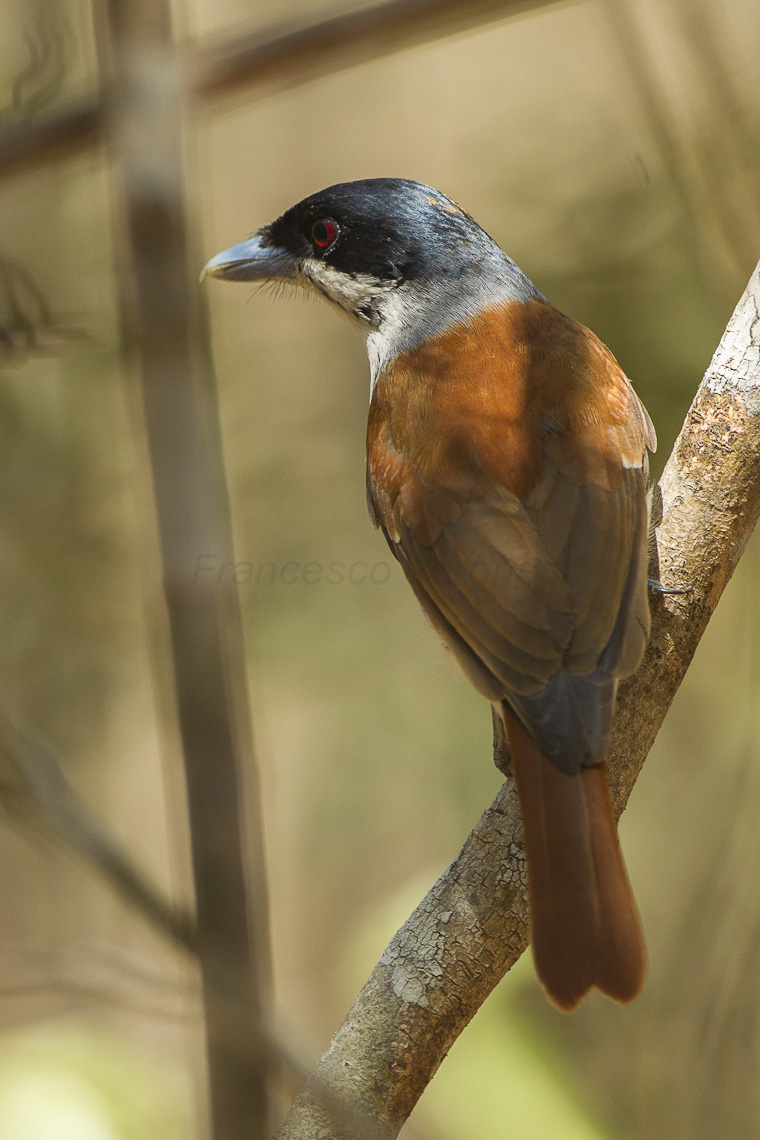
The Hook-billed Vanga is easily identified by its distinctive, robust, and strongly curved bill, which sets it apart from many other avian species. Adult Hook-billed Vangas exhibit a striking plumage pattern: their upperparts are predominantly black, contrasting with the white underparts, while the wings and tail possess a glossy sheen. Juveniles, however, display duller coloration with more brownish tones and less contrast between the upper and lower body. Males and females generally resemble each other, though males may have slightly brighter plumage. In terms of size, the Hook-billed Vanga measures approximately 26 to 28 cm in length, with a wingspan that suits its medium-sized body. When in flight, the bird's silhouette is characterized by its broad wings and relatively short tail. On perches, the Hook-billed Vanga assumes a confident stance, often with its bill slightly angled downward. Though confusion with other vanga species is possible, particularly with the Tylas Vanga, the Hook-billed Vanga's uniquely shaped bill is a definitive identifying feature.
Having trouble telling birds apart? Upload a photo to our bird identification tool for an instant species match.
Hook-billed Vanga Habitat and Range
Preferred Habitat
The Hook-billed Vanga predominantly inhabits the forests of Madagascar, displaying a preference for both primary and secondary growth. This bird is commonly found in lowland rainforests, but its range extends to montane forests, reaching elevations up to 1,800 meters. While it primarily occupies forested areas, the Hook-billed Vanga also frequents bushlands and mangroves, demonstrating its adaptability to various ecological settings. Seasonal shifts in habitat use are observed, especially during the dry season when the bird may migrate to regions with more abundant resources. The Hook-billed Vanga's presence in both urban and rural areas is limited, as it tends to avoid heavily populated regions, favoring instead the relative seclusion of Madagascar's dense forests.
Geographic Range
The Hook-billed Vanga is endemic to Madagascar, with its range encompassing much of the island, particularly the northern, eastern, and central regions. This bird is absent from the western and southern parts of Madagascar, where the climate and habitat are less suitable. During the breeding season, the Hook-billed Vanga establishes territories within these areas, and while not known for long-distance migration, it may move locally in response to seasonal changes in food availability. Population density is highest in the humid forests of the east, where resources are plentiful. The Hook-billed Vanga's distribution reflects the environmental diversity of Madagascar, as it occupies a variety of forest types across its range.
Want to know which birds visit your area? Browse our backyard birds by location guides for region-specific species lists.
What Does the Hook-billed Vanga Eat?
The Hook-billed Vanga's diet consists primarily of insects and other invertebrates, which it captures using its specialized bill. This bird forages by probing into bark crevices and leaf litter, skillfully extracting prey with its curved bill. During the rainy season, when insects are more abundant, the Hook-billed Vanga may also consume small vertebrates, such as lizards and frogs, expanding its dietary repertoire. As resources fluctuate seasonally, the bird adjusts its feeding strategies, demonstrating a high degree of dietary flexibility. Its foraging occurs predominantly during daylight hours, with peak activity in the early morning and late afternoon. The size of prey varies, but the Hook-billed Vanga typically targets insects and invertebrates ranging from 1 to 5 cm in length, depending on availability.
Hook-billed Vanga Behavior and Social Structure
The Hook-billed Vanga exhibits a range of intriguing behaviors that reflect its adaptability and ecological role. This species tends to be solitary or found in pairs, particularly during the breeding season, when they defend territories vigorously. Courtship displays involve vocalizations and physical displays, with the male often presenting food to the female as part of the bonding process. Outside the breeding season, the Hook-billed Vanga may join mixed-species foraging flocks, benefiting from communal vigilance against predators. The bird's daily activity patterns include foraging during the cooler hours of the day, with periods of rest during the midday heat. When threatened, the Hook-billed Vanga emits alarm calls and may engage in mobbing behavior to deter predators.
Hook-billed Vanga Nesting and Reproduction
Nest construction by the Hook-billed Vanga is a meticulous process, involving both male and female birds. They build cup-shaped nests using twigs, leaves, and other plant materials, typically positioned 3 to 10 meters above the ground in trees or shrubs. The typical clutch size ranges from 2 to 4 eggs, which the female incubates for about 14 to 16 days. During this period, the male provides food for the incubating female. After hatching, both parents participate in feeding and caring for the chicks, which fledge approximately 18 to 21 days later. The Hook-billed Vanga usually raises one brood per year, though in optimal conditions, a second brood may be attempted.
Hook-billed Vanga Sounds and Vocalizations
The Hook-billed Vanga's vocal repertoire includes a primary song characterized by a series of melodious and descending notes, often delivered in a repetitive pattern. This song serves as both a territorial declaration and a mating call. In addition to its primary song, the Hook-billed Vanga produces various call notes, which are short and sharp, serving as contact calls between mates or alarm signals in the presence of predators. During the dawn chorus, the Hook-billed Vanga's song is particularly prominent, contributing to the acoustic tapestry of Madagascar's forests. Its vocalizations, while distinctive, can sometimes be confused with those of other vanga species, necessitating careful listening for accurate identification.
Interesting Facts About the Hook-billed Vanga
- 1The Hook-billed Vanga's distinctive bill shape allows it to exploit food sources unavailable to other birds, showcasing its unique evolutionary adaptation.
- 2This species plays a crucial role in controlling insect populations in Madagascar's forests, acting as a natural pest regulator.
- 3The Hook-billed Vanga's nesting sites are often reused seasonally, indicating strong site fidelity and resourcefulness.
- 4Despite being solitary, the Hook-billed Vanga occasionally joins mixed-species flocks, benefiting from collective predator vigilance.
- 5Madagascar, home to the Hook-billed Vanga, hosts over 100 bird species found nowhere else on Earth, highlighting the island's biodiversity.
- 6Studies suggest the Hook-billed Vanga's feeding habits may help in seed dispersal, contributing to forest regeneration.
- 7The bird's adaptation to both primary and secondary forests reflects its resilience to environmental changes caused by human activity.
Hook-billed Vanga Conservation Status
The Hook-billed Vanga is currently classified as Least Concern by the IUCN, with a stable population trend. However, habitat destruction due to deforestation poses a significant threat to its future. Conservation efforts focus on preserving Madagascar's unique forests, which provide essential habitat for the Hook-billed Vanga and other endemic species. While this bird has shown resilience in adapting to secondary forests, continued habitat loss could impact population numbers. Historical population changes are not well-documented, but the Hook-billed Vanga's adaptability suggests it has weathered past environmental fluctuations.
Other Vangidae Species


Birds Similar to the Hook-billed Vanga
These species are often confused with the Hook-billed Vanga due to similar appearance or overlapping range.