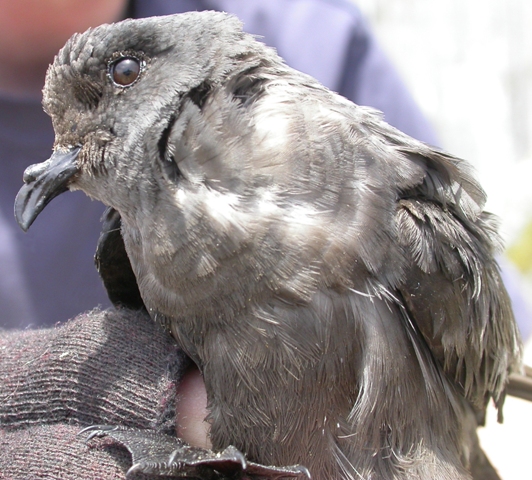
Hydrobates melitensis
Hydrobates melitensis
Order: Procellariiformes / Family: Hydrobatidae

Wikimedia Commons
About the Hydrobates melitensis
The Hydrobates melitensis, commonly referred to as the Mediterranean storm-petrel, is a small seabird belonging to the family Hydrobatidae. This species is endemic to the Mediterranean region, where it plays a crucial ecological role as part of the marine food web. The Mediterranean storm-petrel is a master of the open sea, spending the majority of its life far from land. These birds are typically observed during their breeding season when they return to rocky islands and coastal cliffs to nest. During the non-breeding season, they disperse across the Mediterranean Sea, seldom venturing into the Atlantic Ocean. The Mediterranean storm-petrel's presence is significant as it serves as an indicator of marine ecosystem health, given its reliance on abundant and healthy fish populations. Historically, these birds have been revered by sailors and coastal communities for their navigational prowess, often seen as harbingers of weather changes. Their ecological role extends beyond predation, as they also participate in nutrient cycling by transporting marine nutrients to terrestrial ecosystems. The Mediterranean storm-petrel exhibits notable seasonal behaviors, including a return to breeding sites in spring and a subsequent dispersal into the open sea post-breeding. During the breeding season, they exhibit nocturnal nesting behavior, a strategy that minimizes predation risks. Their small size and dark plumage provide camouflage against predators, further aiding their survival. The Hydrobates melitensis is a testament to the adaptability and resilience of seabirds, thriving in a dynamic and often harsh marine environment.
The Hydrobates melitensis belongs to the family Hydrobatidae, within the order Procellariiformes. These birds typically live average 14 years with a maximum recorded age of 20 years..
How to Identify a Hydrobates melitensis
The Mediterranean storm-petrel, Hydrobates melitensis, is a small seabird with a length of about 15-16 cm and a wingspan of approximately 36-38 cm. Adult plumage is predominantly black with a white rump, a key field mark distinguishing it from similar species. Juveniles resemble adults but may exhibit slightly duller tones. Males and females are similar in appearance, making gender identification challenging in the field. Similar species include the European storm-petrel, with which it shares overlapping ranges, but can be differentiated by subtle differences in flight and call patterns. The Mediterranean storm-petrel's flight silhouette is characterized by rapid, fluttering wing beats and occasional glides. When perched, they display a hunched posture, often with wings slightly drooped. Despite their small size, these birds exude a sense of energy and alertness, especially when observed in active foraging or during courtship displays.
Having trouble telling birds apart? Upload a photo to our bird identification tool for an instant species match.
Hydrobates melitensis Habitat and Range
Preferred Habitat
The Hydrobates melitensis primarily inhabits the coastal regions and open waters of the Mediterranean Sea. They favor rocky islands and cliffs for nesting, such as those found in the Balearic Islands, Corsica, and Sicily. These birds typically nest at low elevations, close to the sea. During the non-breeding season, they are pelagic, spending most of their time on the open sea. The Mediterranean storm-petrel is rarely found in urban areas, as it prefers remote, undisturbed habitats. Seasonal shifts in habitat are primarily driven by breeding requirements, with birds returning to land only to reproduce.
Geographic Range
The breeding range of the Mediterranean storm-petrel is confined to the Mediterranean Sea, with significant populations nesting on islands like Malta, Sardinia, and the Balearic Islands. During the winter, these birds remain within the Mediterranean basin, although some may occasionally wander into the eastern Atlantic. Migration corridors are relatively limited, given their preference for remaining within the Mediterranean region. Population density is highest near breeding colonies, with notable hotspots including the coastlines of Italy, Greece, and Spain. Despite their limited range, the Mediterranean storm-petrel is considered a widespread species within its confined distribution.
Want to know which birds visit your area? Browse our backyard birds by location guides for region-specific species lists.
What Does the Hydrobates melitensis Eat?
The diet of the Mediterranean storm-petrel consists mainly of small fish and marine invertebrates, such as planktonic crustaceans. Their foraging technique involves picking prey items from the water surface while in flight, a method known as surface seizing. Seasonal diet changes are minimal, although prey availability can influence foraging success. Prey size typically ranges from a few millimeters to small fish up to 3 cm in length. These birds are primarily nocturnal feeders, taking advantage of the cover of darkness to avoid predators and increase their foraging efficiency.
Hydrobates melitensis Behavior and Social Structure
The Mediterranean storm-petrel exhibits a complex social structure, often nesting in colonies that provide protection against predators. Territorial behavior is minimal, as these birds rely on dense colony formations for safety. Courtship displays are subtle, involving synchronized flights and vocalizations that strengthen pair bonds. Flocking patterns are evident during the non-breeding season, with birds forming loose aggregations while foraging at sea. Their response to predators includes evasive flight maneuvers and the use of cryptic plumage for camouflage. Daily activity patterns are predominantly nocturnal, with peak activity occurring at night when they are least visible to predators.
Hydrobates melitensis Nesting and Reproduction
Nesting occurs on rocky islands and coastal cliffs, where the Mediterranean storm-petrel selects crevices and burrows for laying eggs. Nests are typically constructed from small stones, feathers, and plant material, providing insulation and protection. The clutch size usually consists of a single egg, with an incubation period lasting about 40-50 days. Both parents share incubation duties and subsequent chick-rearing responsibilities. The fledging timeline extends to approximately 70 days post-hatching, after which the young are independent. Generally, the Mediterranean storm-petrel produces one brood per year, although breeding success can vary with environmental conditions.
Hydrobates melitensis Sounds and Vocalizations
The primary song of the Mediterranean storm-petrel is a series of rapid, high-pitched chirps that can be heard during courtship and colony interactions. Call notes are typically softer and shorter, serving as contact calls between mates and colony members. Alarm calls are sharp and repeated, signaling the presence of potential threats. During the dawn chorus, these vocalizations create a cacophony that echoes across breeding colonies, reminiscent of a distant, rhythmic chattering. This soundscape can be likened to the gentle tapping of rain on a tin roof, providing a unique auditory experience.
Interesting Facts About the Hydrobates melitensis
- 1The Mediterranean storm-petrel can cover over 100 kilometers in a single foraging trip, showcasing its remarkable endurance.
- 2Despite their small size, Mediterranean storm-petrels are known to navigate vast oceanic distances with precision.
- 3These birds are sometimes called 'Mother Carey's chickens,' a nautical term used by sailors for certain seabirds.
- 4The white rump of the Mediterranean storm-petrel is a key field mark, easily spotted against the dark sea surface.
- 5Mediterranean storm-petrels are one of the few seabird species known to feed primarily at night, reducing competition.
- 6Their nocturnal lifestyle helps them avoid many predators, allowing them to thrive in their niche environment.
- 7Mediterranean storm-petrels have a unique foraging method, skimming the ocean surface while in flight to snatch prey.
Hydrobates melitensis Conservation Status
The IUCN currently lists the Mediterranean storm-petrel as a species of Least Concern, with a stable population trend. Primary threats include habitat disturbance from human activities, such as tourism and development, as well as predation by introduced mammals like rats and cats. Conservation efforts focus on habitat protection and management, including the eradication of invasive species from key breeding sites. Historical population changes have been minimal, although localized declines have prompted targeted conservation action to ensure the long-term viability of this species.