
Long-tailed Sibia
Heterophasia picaoides
Order: Passeriformes / Family: Leiothrichidae

Wikimedia Commons
About the Long-tailed Sibia
The Long-tailed Sibia, scientifically known as Heterophasia picaoides, is a captivating member of the Leiothrichidae family. Found predominantly in the subtropical and tropical regions of Southeast Asia, this bird is a staple of the dense, evergreen forests spanning countries like Thailand, Myanmar, and Malaysia. Its ecological role is significant, as it acts as both a seed disperser and an insect predator, maintaining the delicate balance of its forest ecosystem. Long-tailed Sibias are especially notable for their social nature, often seen in small, noisy flocks that traverse the canopy as they forage. These flocks play an essential role in the forest dynamics by spreading seeds through their droppings, thereby aiding in plant propagation. Seasonally, the Long-tailed Sibia is a year-round resident, showing little migratory behavior, which underscores its adaptation to the stable climatic conditions of its habitat. Its presence is a good indicator of forest health, and its absence may signal ecological disturbances. The Long-tailed Sibia's adaptability to different forest types, including both primary and secondary forests, highlights its resilience. Its ability to adjust to slight habitat alterations allows it to thrive even when faced with moderate human encroachment. However, this adaptability does not equate to invulnerability, as large-scale deforestation and habitat fragmentation are substantial threats to its survival. The bird’s interactions with other species, both flora and fauna, are intricate and vital to maintaining biodiversity. Long-tailed Sibias often join mixed-species feeding flocks, which can include other babblers, bulbuls, and even some drongos. This behavior not only aids in efficient foraging but also enhances their protection from predators. Their diet, which includes a variety of insects, fruits, and small invertebrates, ensures their integral role in controlling insect populations. The Long-tailed Sibia’s ability to coexist with other bird species in these mixed flocks showcases its friendly nature and underscores the interconnectedness of forest life. Understanding the ecological significance of the Long-tailed Sibia can aid in better conservation strategies, ensuring that these birds continue to grace the treetops of Southeast Asia for generations to come.
The Long-tailed Sibia belongs to the family Leiothrichidae, within the order Passeriformes. These birds typically live average 6-8 years, with a maximum recorded of 12 years..
How to Identify a Long-tailed Sibia
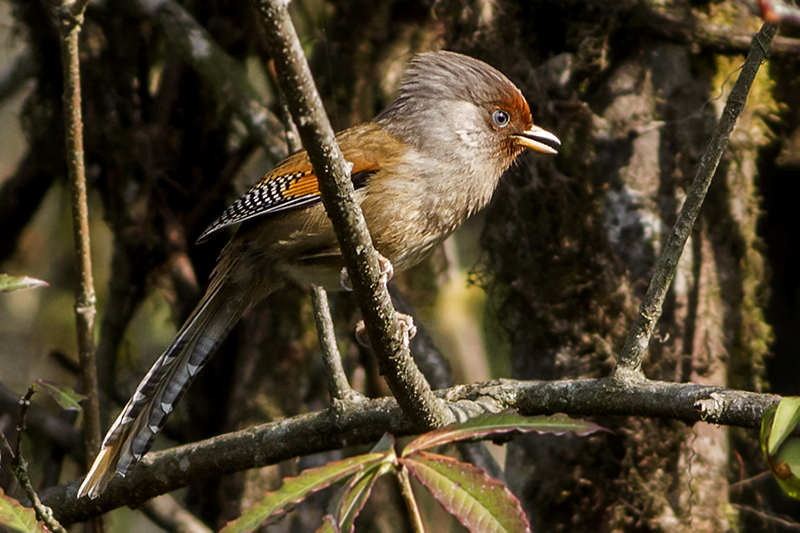
The Long-tailed Sibia is a medium-sized bird, easily recognizable by its elongated tail, which can measure up to 15 cm. Adult plumage is predominantly gray with a slight bluish tinge, complemented by a striking white tail tip. The wings have a subtle brown wash, and a distinct black mask runs through the eyes, enhancing its striking appearance. Juveniles resemble adults but may exhibit slightly duller colors and shorter tails. Males and females are similar in appearance, making visual differentiation challenging in the field. The Long-tailed Sibia’s silhouette in flight is distinctive, with its long tail streaming behind and a rapid, undulating flight pattern that is characteristic of many forest-dwelling birds. When perched, the bird often flicks its tail, a behavior that can help in its identification. Confusion with similar species, such as the Gray Sibia, is possible, but the Long-tailed Sibia's longer tail and more vibrant plumage provide distinguishing features. Observing these birds in their natural habitat, one can appreciate their agile movements as they navigate through dense foliage, often pausing briefly, allowing for clear observation of their distinct field marks.
Having trouble telling birds apart? Upload a photo to our bird identification tool for an instant species match.
Long-tailed Sibia Habitat and Range
Preferred Habitat
The Long-tailed Sibia thrives in subtropical and tropical moist lowland forests. It is commonly found in the hilly regions of Southeast Asia, favoring elevations from 500 to 2500 meters. This range allows them to occupy a variety of forest microhabitats, including both primary and secondary growth areas. These birds show a preference for dense, evergreen forests, where they can easily forage among the rich canopy layers. During different seasons, they do not exhibit significant habitat shifts, maintaining a consistent presence in these forested regions. In terms of urban versus rural presence, the Long-tailed Sibia primarily resides in less disturbed, rural forest areas, showing limited adaptation to urban environments. However, they can occasionally be spotted in forest patches within suburban areas that provide adequate cover and foraging opportunities.
Geographic Range
The Long-tailed Sibia's range is largely confined to Southeast Asia, with its core population centered in countries such as Thailand, Myanmar, Laos, Vietnam, and Malaysia. It inhabits areas from the lower Himalayan foothills to the Malay Peninsula. This bird is a non-migratory resident, maintaining stable populations throughout its range year-round. Notably, the bird can be found in the dense forests of northern Thailand and the montane regions of peninsular Malaysia, which serve as population density hotspots. Due to the relatively small range, local environmental changes can significantly impact Long-tailed Sibia populations. The absence of long-distance migration corridors limits their ability to escape adverse conditions, making the preservation of their habitat crucial.
Want to know which birds visit your area? Browse our backyard birds by location guides for region-specific species lists.
What Does the Long-tailed Sibia Eat?
The diet of the Long-tailed Sibia is diverse, primarily consisting of insects and fruits. Insects such as beetles, caterpillars, and various larvae form the bulk of their diet during the breeding season when protein demand is high for chick rearing. Outside of this period, they consume a wider variety of fruits, including berries and seeds, which provide necessary carbohydrates and nutrients. Foraging takes place mainly in the canopy, where these birds exhibit agile maneuvering to catch insects mid-air or pluck fruits from branches. Their feeding schedule is diurnal, with peak activity occurring in the early morning and late afternoon. The Long-tailed Sibia employs a gleaning technique, meticulously picking food items from foliage. The bird's role in seed dispersal is vital, as the seeds pass through their digestive tract and are deposited in various locations, facilitating forest regeneration.
Long-tailed Sibia Behavior and Social Structure
Long-tailed Sibias exhibit fascinating social behavior, often observed in groups ranging from small family units to larger flocks of up to 20 birds. These flocks are not only social but also serve as a deterrent against predators, utilizing the 'many eyes' effect. Territorial behavior is minimal within these flocks, as they tend to roam collectively over large areas in search of food. During the breeding season, pairs engage in elaborate courtship displays, involving synchronized movements and vocalizations to strengthen pair bonds. Despite their social nature, these birds can be fiercely protective of their nests, aggressively driving away potential threats. Daily activities include foraging in the early morning and late afternoon, with midday often reserved for rest and preening. Flocking patterns may involve coordination with other species, as Long-tailed Sibias are known to participate in mixed-species feeding flocks, enhancing foraging success and predator vigilance. When faced with predators, these birds exhibit alarm calls and mobbing behavior, ensuring the safety of the group.
Long-tailed Sibia Nesting and Reproduction
Long-tailed Sibias are cooperative breeders, often involving multiple individuals in the raising of young. Their nests, typically cup-shaped and constructed from twigs, moss, and leaves, are strategically placed in dense foliage of medium-height trees. Nests are usually located 2 to 5 meters above ground, providing adequate cover from predators. A typical clutch consists of 2 to 4 eggs, which are pale blue or greenish with fine speckling. The incubation period lasts approximately 14 to 16 days, with both parents sharing responsibilities. Fledging occurs about two weeks post-hatching, with young Sibias remaining under parental care for several weeks thereafter. These birds generally have one to two broods per year, depending on environmental conditions and food availability. Parental roles are well-defined, with males often engaging in territory defense and females primarily managing incubation and early chick care.
Long-tailed Sibia Sounds and Vocalizations
The Long-tailed Sibia's vocalizations are a vital part of its communication within flocks. Its primary song consists of a series of melodic whistles, often described as sweet and clear, with a rhythm that can be likened to a flute. These sounds are most prominent during the early morning, contributing to the dawn chorus. Call notes are varied and include sharp 'chak' sounds used for maintaining flock cohesion. When alarmed, the bird emits a rapid series of harsh notes, serving as a warning to fellow flock members. Comparatively, its calls can be reminiscent of a finely tuned wind chime, with a complexity that reflects its social nature.
Interesting Facts About the Long-tailed Sibia
- 1The Long-tailed Sibia's tail makes up nearly half of its total body length, aiding in agile flight through dense forests.
- 2Despite their social nature, Long-tailed Sibias can become fiercely territorial when defending their nests from intruders.
- 3The Long-tailed Sibia participates in mixed-species flocks, often including bulbuls and drongos, enhancing its foraging success.
- 4These birds are known to use their long tails for balance when maneuvering through the canopy, a unique adaptation.
- 5Long-tailed Sibias play a critical role in seed dispersal, contributing significantly to forest regeneration in their habitats.
- 6The Long-tailed Sibia's melodic song has made it a subject of fascination among birdwatchers and ornithologists alike.
- 7Their adaptability allows them to thrive in both primary and secondary forests, showcasing their resilience to habitat changes.
Long-tailed Sibia Conservation Status
Currently, the Long-tailed Sibia is listed as Least Concern by the IUCN, with population trends considered stable. However, ongoing deforestation and habitat fragmentation pose significant threats. Conservation efforts focus on habitat preservation, particularly in key regions like northern Thailand and Malaysia. Historically, population levels have fluctuated with forest cover changes, emphasizing the need for sustainable forestry practices. Protected areas and reforestation projects are crucial in ensuring the Long-tailed Sibia’s continued survival in its natural habitat.
Other Leiothrichidae Species


Birds Similar to the Long-tailed Sibia
These species are often confused with the Long-tailed Sibia due to similar appearance or overlapping range.

