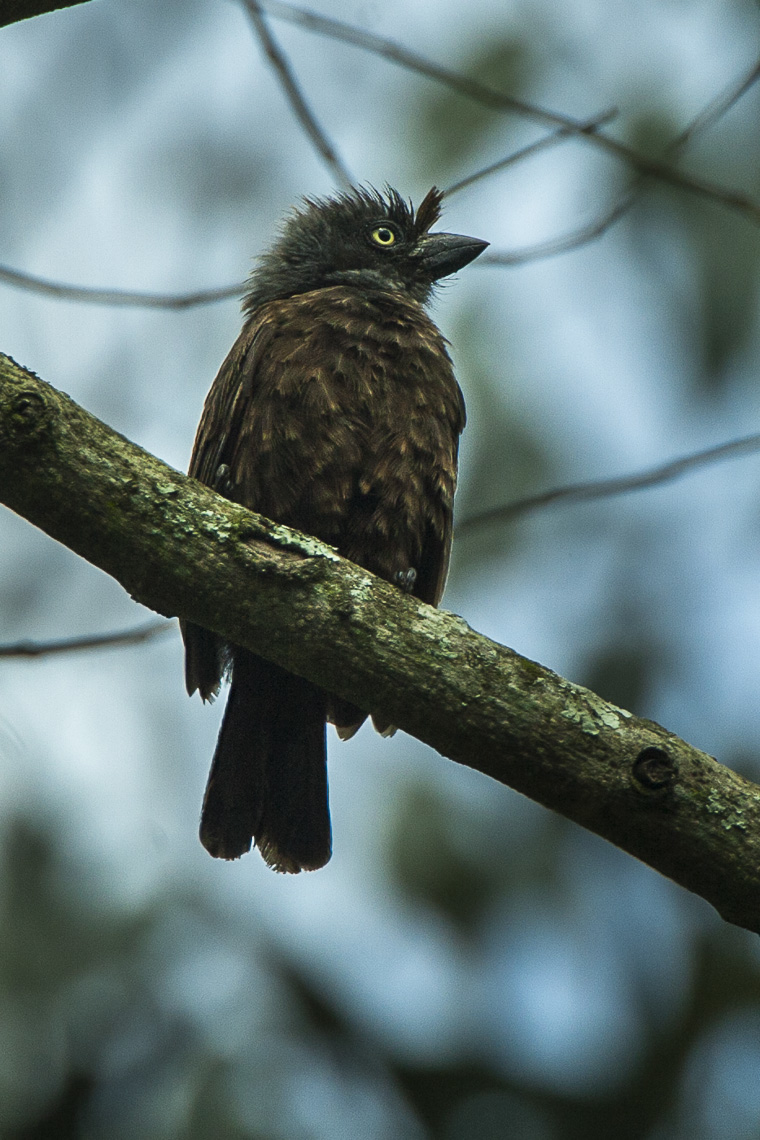
Lybius leucocephalus
Lybius leucocephalus
Order: Piciformes / Family: Lybiidae

Wikimedia Commons
About the Lybius leucocephalus
The Lybius leucocephalus, commonly referred to as the White-headed Barbet, is a striking member of the barbet family, Lybiidae. This bird species, native to sub-Saharan Africa, is instantly recognizable due to its distinctive red and white plumage. It plays a significant role in its ecosystem as both a seed disperser and an insect predator, contributing to the health and diversity of its habitats. Found in regions such as Kenya, Tanzania, and Uganda, the White-headed Barbet typically inhabits wooded savannas, open forests, and sometimes gardens in rural settings.
This species thrives in areas abundant with fruiting trees and shrubs, which serve as both a food source and nesting sites. Its ecological role extends beyond feeding; by consuming fruits and dispersing seeds, the Lybius leucocephalus facilitates forest regeneration. The barbet's penchant for insects also helps control pest populations, showcasing its importance as part of a balanced ecosystem.
Seasonal behaviors of the White-headed Barbet include breeding during the wet season when food sources are plentiful. During these times, the bird exhibits increased vocal activity, marking its territory and attracting mates. Outside the breeding season, the Lybius leucocephalus may form small flocks, which can often be seen and heard as they move through their habitats in search of food. The adaptability of this species to both natural and semi-urban environments demonstrates its resilience and widespread presence across its range.
The Lybius leucocephalus belongs to the family Lybiidae, within the order Piciformes. These birds typically live average 5-8 years with a maximum recorded of 10 years..
How to Identify a Lybius leucocephalus
The White-headed Barbet is a medium-sized bird, measuring approximately 20-23 cm in length. Its most notable feature is its stark white head, which contrasts sharply with its deep red throat and breast. The rest of its plumage is primarily black with white streaks, giving it a distinctive appearance among other barbet species. Juvenile birds can be distinguished by their duller coloration and less pronounced head markings compared to adults.
In terms of sexual dimorphism, males and females of the Lybius leucocephalus appear quite similar, making visual differentiation challenging in the field. However, males may exhibit slightly brighter plumage during the breeding season. In flight, the White-headed Barbet displays a rapid, undulating pattern typical of barbets, with strong wingbeats followed by short glides.
The perching posture of the White-headed Barbet is upright, often seen in trees where it hunts for insects or surveys its surroundings. Confusion with similar species is minimized by its unique color pattern, particularly the combination of its white head and red breast, which is not commonly found in other barbets within its range.
Having trouble telling birds apart? Upload a photo to our bird identification tool for an instant species match.
Lybius leucocephalus Habitat and Range
Preferred Habitat
The White-headed Barbet primarily inhabits wooded savannas and open forests across sub-Saharan Africa. It is typically found at elevations ranging from sea level to approximately 2000 meters, depending on the availability of suitable habitat. This species shows a preference for areas with abundant fruiting trees and shrubs, which provide both food and nesting opportunities.
While generally favoring rural and semi-rural environments, the Lybius leucocephalus can occasionally be found in gardens and parks in suburban areas, especially where fruit-bearing trees are present. During the breeding season, it may shift slightly in habitat preference, seeking out areas with denser foliage to provide cover for nests.
Although primarily a resident bird, the White-headed Barbet's adaptability allows it to thrive in a range of habitats, from dry savannas to humid forest edges, demonstrating its versatility and widespread distribution across its range.
Geographic Range
The Lybius leucocephalus is widely distributed across sub-Saharan Africa, with a range that includes countries such as Kenya, Tanzania, Uganda, Ethiopia, and parts of the Democratic Republic of the Congo. Its breeding range aligns closely with this distribution, as the species is largely non-migratory and tends to remain within its established territories year-round.
While there are no significant migratory movements observed in this species, local dispersal may occur in response to changes in food availability or habitat conditions. The White-headed Barbet is particularly abundant in regions where fruiting trees are prevalent, as these areas provide essential resources for feeding and nesting.
Population density hotspots are often found in areas with a mix of savanna and forest habitats, where the bird's dietary preferences can be easily met. Despite its extensive range, the White-headed Barbet's presence can be patchy, largely dictated by suitable environmental conditions and the availability of key resources.
Want to know which birds visit your area? Browse our backyard birds by location guides for region-specific species lists.
What Does the Lybius leucocephalus Eat?
The White-headed Barbet's diet is predominantly frugivorous, with fruits making up the bulk of its nutritional intake. It favors a variety of fruits, including figs, berries, and drupes from local trees and shrubs. During the wet season, when fruits are most abundant, the Lybius leucocephalus often feeds in small groups, taking advantage of the seasonal bounty.
In addition to fruits, the White-headed Barbet supplements its diet with insects, which are a crucial protein source. It employs a variety of foraging techniques, such as gleaning insects from foliage and bark or catching them mid-air. This opportunistic feeding behavior allows the bird to exploit different food sources as they become available.
The barbet's feeding schedule is typically diurnal, with peak activity observed in the early morning and late afternoon. Its ability to adapt its diet based on seasonal availability illustrates the species' ecological flexibility and contributes to its survival across diverse habitats.
Want to attract Lybius leucocephaluss to your yard? See our recommended feeders and seed types for the best results.
Lybius leucocephalus Behavior and Social Structure
The White-headed Barbet is primarily solitary or found in pairs during the breeding season, but it may form small flocks outside this period. Territorial behavior is pronounced, particularly during breeding, with males often engaging in vocal displays to assert dominance and attract mates.
Courtship displays include a combination of vocalizations and physical posturing, such as puffing up feathers and wing flicking. These displays are essential for establishing and maintaining pair bonds. Once a pair forms, they typically remain monogamous for the breeding season.
In response to predators, the White-headed Barbet exhibits alertness and may issue alarm calls to warn conspecifics. Its daily activity patterns include periods of foraging interspersed with resting and preening. The bird's adaptability to different environments is reflected in its behavior, as it can alter its activities based on environmental conditions and resource availability.
Lybius leucocephalus Nesting and Reproduction
The Lybius leucocephalus constructs its nest in tree cavities, often utilizing natural hollows or abandoned woodpecker holes. The nest is typically lined with plant fibers, leaves, and other soft materials to create a comfortable environment for the eggs and chicks.
A typical clutch consists of 2-4 eggs, which both parents incubate over a period of 14-16 days. The incubation duties are shared equally, with the female often taking the night shift. After hatching, both parents continue to care for the chicks, providing food and protection until they fledge. The fledging period lasts approximately 25-30 days, during which the young birds develop flight capabilities.
The White-headed Barbet generally produces one brood per year, although in areas with abundant resources, a second brood may be attempted. Parental roles are well-defined, with both sexes actively involved in all aspects of nesting and chick-rearing.
Lybius leucocephalus Sounds and Vocalizations
The White-headed Barbet's primary song consists of a series of rapid, rhythmic notes that resemble a repetitive 'tuk-tuk-tuk' sound. These vocalizations are integral to territory establishment and mate attraction. In addition to their song, they produce a variety of call notes, including sharp 'churr' sounds used for communication between mates or group members.
Alarm calls are more abrupt and harsh, serving as warnings to conspecifics about potential threats. During the dawn chorus, the White-headed Barbet's song is particularly prominent, contributing to the vibrant acoustic landscape of its habitat.
The barbet's vocalizations are reminiscent of mechanical sounds, like those of a typewriter or woodpecker drumming, making them easily identifiable against other avian calls in their environment.
Interesting Facts About the Lybius leucocephalus
- 1The White-headed Barbet is known for its role as a seed disperser, aiding in the regeneration of forest ecosystems.
- 2Despite its bold colors, the Lybius leucocephalus often blends into its habitat, thanks to its strategic perching among foliage.
- 3A single White-headed Barbet can consume dozens of insects in one day, highlighting its importance in pest control.
- 4The species' vocalizations can be heard over long distances, allowing it to maintain territories spanning several acres.
- 5White-headed Barbets often pair for life, with strong monogamous bonds formed during the breeding season.
- 6Their specialized bill structure allows them to efficiently break into hard fruits and access hidden insects.
- 7The White-headed Barbet's adaptability to various habitats has helped it thrive despite environmental challenges.
Lybius leucocephalus Conservation Status
The IUCN currently lists the White-headed Barbet as a species of Least Concern, indicating a stable population trend. However, habitat loss due to deforestation and land conversion for agriculture poses ongoing threats. Conservation efforts focus on habitat preservation and the promotion of sustainable land management practices in regions where the Lybius leucocephalus is found. Monitoring population trends and habitat changes remains a priority to ensure long-term stability. Historically, the White-headed Barbet has maintained a robust population across its range, thanks to its adaptability and resilience. Continued conservation actions aim to mitigate the impacts of human activities and secure suitable habitats for future generations.
Attracting Lybius leucocephaluss to Your Feeder
The Lybius leucocephalus is a regular visitor to backyard bird feeders across its range. At the Eye On The Fly feeding station, we observe Lybius leucocephaluss regularly and capture footage with our feeder cameras.