Malayan Laughingthrush
Trochalopteron peninsulae
Order: Passeriformes / Family: Leiothrichidae

Wikimedia Commons
About the Malayan Laughingthrush
The Malayan Laughingthrush (Trochalopteron peninsulae) belongs to the family Leiothrichidae and is a vibrant member of the passerine order. This bird inhabits the lush tropical forests of Southeast Asia, particularly thriving in Malaysia and parts of southern Thailand. Known for its striking plumage and lively demeanor, the Malayan Laughingthrush plays a crucial role in its ecosystem as both a seed disperser and insect controller. Its presence is a testament to the health of the forest environments it inhabits, as it relies on dense foliage for nesting and foraging.
Its ecological significance extends beyond mere aesthetics and sounds. As a ground-feeding bird, it aids in the control of insect populations, which helps maintain the balance within its habitat. The bird's diet consists largely of insects, fruits, and seeds, allowing it to contribute to the propagation of plants in its tropical environment. This mutual relationship between the laughingthrush and its habitat underscores its importance in maintaining the biodiversity of Southeast Asian forests.
The Malayan Laughingthrush exhibits seasonal behaviors that are closely tied to the breeding season, which occurs primarily in the wetter months of the year. During this time, the bird's vocalizations become more pronounced as males establish territories and engage in courtship displays. The forests resonate with their complex and melodious calls, adding an auditory layer to the vibrant ecosystem. These birds are generally sedentary, but they may move to different elevations in response to seasonal changes in food availability and climate, ensuring their survival and reproduction in a dynamic environment.
The Malayan Laughingthrush belongs to the family Leiothrichidae, within the order Passeriformes. These birds typically live average 5-7 years with a maximum recorded of 10 years..
How to Identify a Malayan Laughingthrush
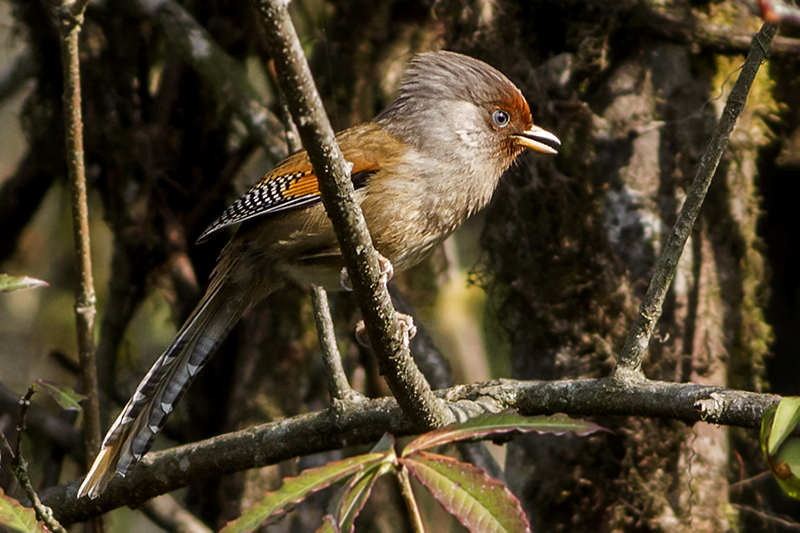
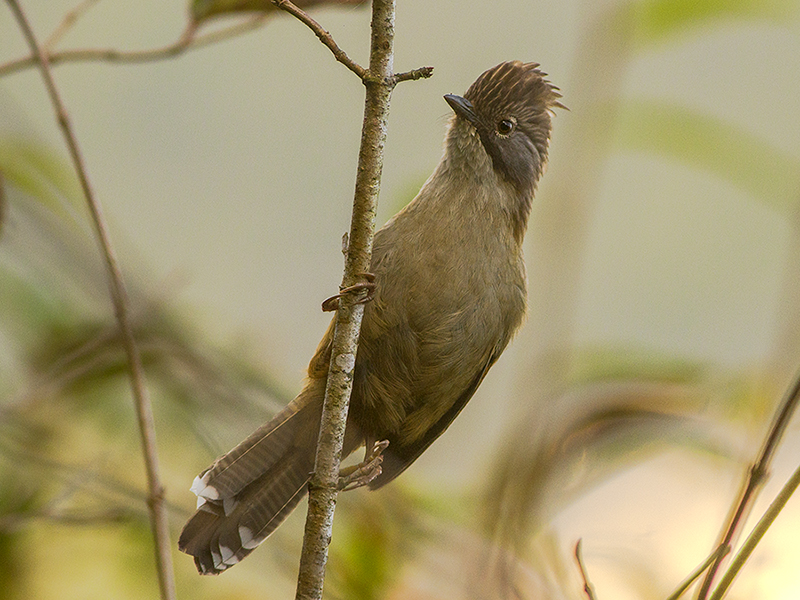
The Malayan Laughingthrush is medium-sized, typically measuring about 25 cm from bill tip to tail end. Its plumage is a mix of earthy browns and reddish hues, with the head often adorned with a more distinct rufous tone. This color combination allows it to blend seamlessly into the forest undergrowth while foraging or evading predators. The bird's throat and chest are a lighter cream color, providing a subtle contrast to its otherwise dark body. Juveniles resemble adults but often exhibit duller plumage with less defined markings, making them slightly less conspicuous.
Both male and female Malayan Laughingthrushes share similar plumage, making visual sex identification challenging without observing behavioral cues. However, during the breeding season, males may appear more vibrant due to hormonal changes that enhance their coloration for courtship purposes. The flight silhouette of this species is characterized by broad wings and a relatively short tail, which aids in maneuverability within dense forest canopies. When perched, they exhibit a slightly hunched posture, accentuated by their long legs and strong feet.
The Malayan Laughingthrush can often be confused with other members of the Leiothrichidae family, such as the Black Laughingthrush. However, the latter lacks the rufous tones and has a more uniformly dark plumage. Observing the bird's flight pattern and vocalizations can also aid in correct identification, as the Malayan Laughingthrush's calls are distinctively more melodious and varied.
Having trouble telling birds apart? Upload a photo to our bird identification tool for an instant species match.
Malayan Laughingthrush Habitat and Range
Preferred Habitat
The Malayan Laughingthrush primarily inhabits dense, moist tropical forests, where it finds ample cover and food resources. These forests are typically located in lowland and montane regions, with the bird often found at elevations ranging from 500 to 2000 meters. The species thrives in environments with thick undergrowth and plenty of leaf litter, which provide both foraging opportunities and nesting sites. In particular, the bird is associated with primary and secondary forests in the Malay Peninsula and adjoining areas.
While the Malayan Laughingthrush shows a preference for natural forest habitats, it can occasionally be found in more disturbed areas, such as forest edges and selectively logged regions. This adaptability suggests some level of resilience to habitat modification, though it still relies heavily on intact forest ecosystems for survival. Seasonal habitat shifts are minimal, as the bird is largely sedentary, but it may adjust its elevation range in response to food availability and climatic conditions.
The species is not typically found in urban or heavily urbanized areas, as it requires the dense cover and diverse food sources that only natural forest environments can provide. Its presence in semi-urbanized regions is rare and usually occurs in gardens or parks that mimic its natural habitat.
Geographic Range
The Malayan Laughingthrush is primarily found in the Malay Peninsula. Its range extends from southern Thailand through peninsular Malaysia. While it is not a migratory bird, it exhibits some local movement in response to seasonal changes in weather and food availability. These movements are usually altitudinal, with the bird shifting between lowland and montane forests depending on the season.
Population density is highest in areas of undisturbed primary forest, where the complex ecosystem supports a rich diversity of insect and plant life. In Malaysia, the bird is relatively common in protected areas such as the Taman Negara National Park and the Cameron Highlands. In southern Thailand, it is less widespread but still present in suitable habitats.
While the Malayan Laughingthrush has a relatively restricted geographic range, within that range, it is not considered rare. It is, however, vulnerable to habitat destruction and fragmentation, which could impact its populations in the future. Conservation efforts in the region focus on preserving large tracts of forest and maintaining ecological corridors that facilitate movement and genetic exchange between populations.
Want to know which birds visit your area? Browse our backyard birds by location guides for region-specific species lists.
What Does the Malayan Laughingthrush Eat?
The diet of the Malayan Laughingthrush consists primarily of insects, fruits, and seeds, reflecting its role as both a predator of small invertebrates and a seed disperser. During the wet season, when insect populations are at their peak, the bird predominantly feeds on beetles, caterpillars, and other arthropods. This diet provides the necessary protein for breeding and raising young.
In the drier months, when insect abundance decreases, fruits and seeds become more important components of its diet. The bird forages on the forest floor, using its strong legs and beak to sift through leaf litter and soil. It also feeds in the lower and mid-canopy, taking advantage of fruiting trees and shrubs.
The Malayan Laughingthrush employs a methodical foraging technique, moving slowly and deliberately as it searches for food. This behavior minimizes energy expenditure and maximizes foraging efficiency. The bird typically feeds during the cooler parts of the day, such as early morning and late afternoon, taking advantage of the activity patterns of its prey and avoiding the midday heat.
Malayan Laughingthrush Behavior and Social Structure
The Malayan Laughingthrush is a social bird, often found in small flocks or family groups. This social structure aids in foraging efficiency and predator avoidance. The bird is highly territorial, especially during the breeding season, when males engage in vocal displays to defend their territories and attract mates. These displays include a repertoire of melodious and complex calls, which serve both to establish territory boundaries and to communicate with potential mates.
Courtship behaviors involve mutual preening and feeding, as well as synchronized movements that reinforce pair bonds. Once paired, the birds exhibit strong pair bonds, often remaining together for multiple breeding seasons. Flocking behavior outside the breeding season is more pronounced, with groups sometimes combining to form larger flocks that forage together.
In response to predators, the Malayan Laughingthrush relies on its agility and knowledge of its environment. The bird will often give alarm calls to alert other members of its flock to danger. Its daily activity patterns are diurnal, with periods of intense feeding and social interaction interspersed with rest and maintenance behaviors such as preening.
Malayan Laughingthrush Nesting and Reproduction
The Malayan Laughingthrush constructs cup-shaped nests using a variety of materials, including twigs, leaves, and moss. These nests are typically located in dense shrubs or low trees, providing both concealment from predators and protection from the elements. The bird prefers to nest at heights between 1 and 3 meters above the ground, ensuring easy access to food sources while remaining hidden from ground-level threats.
A typical clutch consists of 2 to 3 eggs, which are pale blue with brownish speckles. The incubation period lasts about 14 to 16 days, during which both parents share incubation duties. This shared responsibility extends to feeding and caring for the chicks once they hatch. The fledging period lasts approximately 12 to 14 days, after which the young birds leave the nest but remain under parental supervision for several weeks.
The Malayan Laughingthrush typically raises one brood per year, though in favorable conditions, a second brood may be attempted. Parental roles are well defined, with both males and females participating in all aspects of chick rearing, from feeding to teaching fledglings how to forage.
Malayan Laughingthrush Sounds and Vocalizations
The Malayan Laughingthrush is renowned for its rich and melodious song, which consists of a series of whistles, trills, and chirps. The rhythm is variable, with phrases often repeated in quick succession. The pitch ranges from medium to high, with a clear and sweet quality that makes it easily recognizable.
In addition to its primary song, the bird has a repertoire of call notes used for communication within flocks. These calls are shorter and less musical than the song, serving functions such as contact calls and alarm signals. When danger is perceived, the bird emits a sharp, distinctive alarm call to alert others in the vicinity.
Dawn and dusk are peak times for vocal activity, with the dawn chorus being particularly impressive. During these times, the forest resonates with the overlapping songs of multiple individuals, creating a vibrant soundscape that signals the start of the day.
Interesting Facts About the Malayan Laughingthrush
- 1The Malayan Laughingthrush can produce over 20 different vocalizations, each serving a unique purpose in communication.
- 2This species is known for its cooperative breeding behavior, where older siblings may help parents feed and raise new chicks.
- 3The Malayan Laughingthrush's song can travel over 500 meters through dense forest, making it an effective tool for territory establishment.
- 4Despite its colorful appearance, the Malayan Laughingthrush can be surprisingly difficult to spot due to its preference for dense undergrowth.
- 5The bird's diet shifts seasonally, with an increased reliance on fruit during the drier months when insect populations decline.
- 6The Malayan Laughingthrush has been observed using tools, such as sticks, to extract insects from tree bark and crevices.
- 7Its complex social structure allows the Malayan Laughingthrush to maintain stable family groups, enhancing survival and reproductive success.
Malayan Laughingthrush Conservation Status
The Malayan Laughingthrush is currently not listed as threatened, although its population trends are closely monitored due to habitat loss. Deforestation and habitat fragmentation pose significant threats to its long-term survival, as these processes reduce the availability of suitable nesting and foraging sites. Conservation efforts focus on preserving existing forest habitats and promoting sustainable land use practices. Protected areas in Malaysia and Thailand provide crucial refuges for the species, allowing populations to remain stable. Historical population data is limited, but the bird's adaptability to secondary forests suggests some resilience to environmental changes. Ongoing research aims to better understand the ecological needs of the Malayan Laughingthrush, with the goal of informing conservation strategies that ensure its continued presence in Southeast Asian forests.