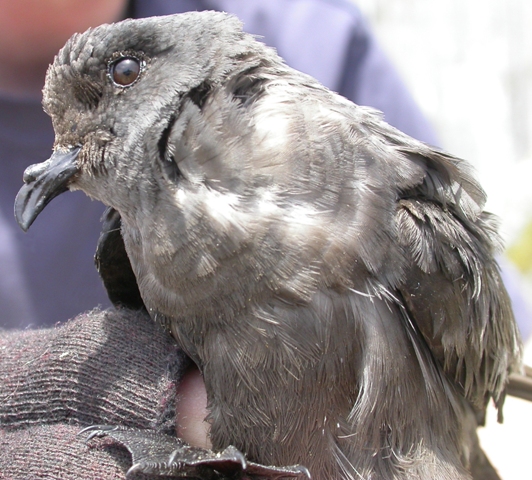
Markham's Storm-Petrel
Oceanodroma markhami
Order: Procellariiformes / Family: Hydrobatidae

Wikimedia Commons
About the Markham's Storm-Petrel
Markham's Storm-Petrel (Oceanodroma markhami), belonging to the Hydrobatidae family, is a fascinating seabird noted for its elusive nature and mastery of the vast Pacific Ocean skies. This species, named after the British naturalist Albert Hastings Markham, has garnered attention for its widespread presence across the Humboldt Current, stretching from northern Chile to southern Peru. Markham's Storm-Petrel plays a crucial role in the marine ecosystem, acting as both predator and prey within its food web. Primarily found in pelagic zones, these birds spend much of their lives at sea, only returning to land to breed. The species exhibits strong philopatry, often returning to the same nesting sites each year, typically on isolated islands or remote coastal cliffs. Markham's Storm-Petrel is well-adapted to the harsh marine environment, with long, slender wings perfect for dynamic soaring over the ocean's surface, allowing it to cover extensive distances in search of food. During the breeding season, which peaks from June to November, these birds show a remarkable shift in behavior, exhibiting increased vocal activity and social interactions. As a nocturnal species, Markham's Storm-Petrel avoids diurnal predators by nesting at night, which also helps reduce competition for food resources. The bird's presence is a key indicator of ocean health, as it relies on abundant marine life for sustenance. Understanding the distribution and habits of Markham's Storm-Petrel provides valuable insights into the ecological dynamics of the South Pacific marine environment.
The Markham's Storm-Petrel belongs to the family Hydrobatidae, within the order Procellariiformes. These birds typically live average 15 years, with a maximum recorded of 25 years..
How to Identify a Markham's Storm-Petrel
Markham's Storm-Petrel is recognized by its entirely dark plumage, a rarity among seabirds, which can make it challenging to spot against the ocean backdrop. Adults typically display uniform dark brown feathers, with no contrasting markings, and a slightly forked tail. The wings are long and narrow, aiding in their agile flight. Juveniles resemble adults but may appear slightly more faded in color. There is no significant sexual dimorphism; males and females appear alike in size and coloration. In flight, the bird exhibits a distinctive, erratic flight pattern, often close to the water, characterized by rapid flapping interspersed with glides. Its habits at sea, often skimming low over the water surface, help differentiate it from similar species such as the Black Storm-Petrel (Oceanodroma melania), which has a more pronounced forked tail and lighter underwing coverts. On land, Markham's Storm-Petrel maintains a secretive presence, typically remaining in burrows or crevices during daylight hours, thus reducing visibility to potential predators.
Having trouble telling birds apart? Upload a photo to our bird identification tool for an instant species match.
Markham's Storm-Petrel Habitat and Range
Preferred Habitat
Markham's Storm-Petrel primarily inhabits the pelagic zones of the Pacific Ocean, particularly within the nutrient-rich Humboldt Current. These birds prefer open ocean habitats, rarely venturing close to shore except during the breeding season. They nest on isolated islands and remote coastal cliffs, often selecting areas with little human disturbance. Elevation is not a significant factor in their habitat choice, as they typically nest near sea level. Seasonal shifts in habitat are minimal, as they remain at sea year-round, although they may migrate to more temperate waters during breeding. In terms of urban presence, they are rarely seen, as their life revolves around the ocean and its isolated breeding sites.
Geographic Range
The range of Markham's Storm-Petrel spans the Pacific Ocean, primarily along the Humboldt Current off the coasts of northern Chile and southern Peru. These birds breed on islands such as San Gallán and the nearby Ballestas Islands. While the exact range during the non-breeding season is not fully understood, sightings suggest a dispersal across a wide area of the southeastern Pacific, extending possibly to the waters of Ecuador and Colombia. They do not exhibit long-distance migrations typical of many seabirds, instead showing localized movements in response to food availability. The core population remains concentrated within this Pacific corridor, with highest densities observed near productive upwelling zones.
Want to know which birds visit your area? Browse our backyard birds by location guides for region-specific species lists.
What Does the Markham's Storm-Petrel Eat?
Markham's Storm-Petrel feeds primarily on small fish and squid, which they capture using a surface picking technique while in flight. They rely heavily on the abundance of marine life associated with the Humboldt Current. The diet may vary seasonally, with an increased intake of crustaceans such as krill during certain times of the year. Prey size generally ranges from small to medium, allowing the birds to consume their catch whole. Foraging often occurs at night when squid and other prey rise closer to the ocean's surface, reducing competition with other seabirds and predators. Their feeding schedule aligns with this nocturnal activity, optimizing their energy intake.
Markham's Storm-Petrel Behavior and Social Structure
Markham's Storm-Petrel is primarily a solitary bird, except during the breeding season when it forms loose colonies on remote islands. They exhibit minimal territorial behavior, with limited aggression observed between individuals. Courtship involves vocal displays and synchronized flight patterns, strengthening pair bonds. The species shows a remarkable adaptation to nocturnal life, with most activities occurring at night to avoid diurnal predators. In response to threats, they exhibit evasive flight maneuvers. Daily activity patterns involve long periods of flight over open ocean, returning to land only for breeding purposes. Flocking behavior is rare, with individuals maintaining a solitary existence at sea.
Markham's Storm-Petrel Nesting and Reproduction
Markham's Storm-Petrel nests in burrows or crevices on isolated rocky islands, often reusing the same sites annually. Nest construction involves minimal material, relying on natural cavities. Clutch size typically consists of a single egg, reflecting the species' investment in offspring. The incubation period lasts approximately 40 to 45 days, with both parents sharing duties. Fledging occurs about two months after hatching, with chicks departing the nest at night to reduce predation risk. Parental roles are equally shared, ensuring constant care and feeding. Typically, only one brood is produced per year due to the extended parental investment required.
Markham's Storm-Petrel Sounds and Vocalizations
Markham's Storm-Petrel's primary vocalization consists of a series of rapid, high-pitched chirps, often described as a 'twittering' sound. These calls serve as communication between mates and are most prevalent during the breeding season. Alarm calls are more abrupt and harsh, indicating the presence of predators. Dawn chorus behavior is limited, given their nocturnal habits, but vocal activity peaks during nighttime when returning to nesting sites. Compared to familiar sounds, their calls resemble the rapid chatter of small passerines, though less musical in quality.
Interesting Facts About the Markham's Storm-Petrel
- 1Markham's Storm-Petrel can travel hundreds of kilometers in a single day while foraging.
- 2The bird's dark plumage provides excellent camouflage against the ocean's surface.
- 3It is one of the few seabirds that predominantly operates nocturnally, reducing competition and predation.
- 4Markham's Storm-Petrel was named in honor of British naturalist Albert Hastings Markham.
- 5Despite its oceanic lifestyle, the bird relies on island habitats for successful breeding.
- 6It plays a vital role in the marine ecosystem, both as predator and prey, influencing trophic dynamics.
- 7Markham's Storm-Petrel's flight is a combination of rapid wingbeats and short glides, adapted for efficiency.
Markham's Storm-Petrel Conservation Status
Markham's Storm-Petrel is currently listed as 'Near Threatened' by the IUCN, with a population trend that appears stable yet susceptible to environmental changes. Primary threats include habitat disturbance from human activities and climate change impacting food availability. Conservation efforts focus on habitat protection, particularly safeguarding breeding sites from encroachment and pollution. Historical data suggest fluctuations in population size, influenced by oceanic conditions and human interference. Continued monitoring is essential to ensure the species' long-term survival.