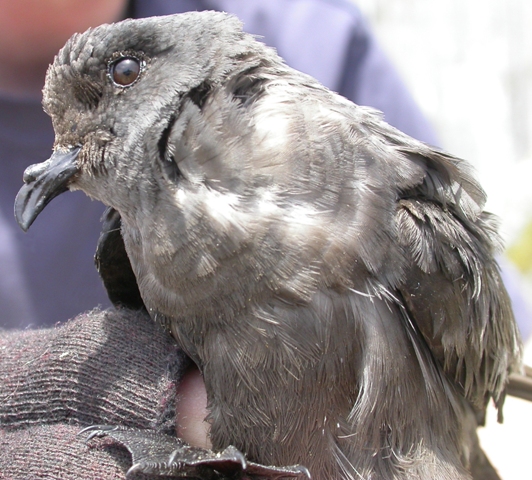
Monteiro's Storm-Petrel
Oceanodroma monteiroi
Order: Procellariiformes / Family: Hydrobatidae
Wikimedia Commons
About the Monteiro's Storm-Petrel
Monteiro's Storm-Petrel (Oceanodroma monteiroi) is a small seabird that plays a vital role in the marine ecosystem of the North Atlantic. This species is a member of the Hydrobatidae family and is endemic to the Azores, a group of volcanic islands in the mid-Atlantic. Its significance within the ecosystem primarily lies in its role as a predator of marine invertebrates and small fishes, helping to maintain the balance of oceanic food webs. The Monteiro's Storm-Petrel is one of the few bird species that breed exclusively on the Azores, which highlights the ecological uniqueness of this island group. During the breeding season, which spans from May to October, these birds are primarily found on the islets of Praia and Baixo off Graciosa Island. The choice of these locations reflects their preference for predator-free environments, which are crucial for the successful rearing of their young. The Monteiro's Storm-Petrel often nests in crevices and burrows on rocky cliffs, where it benefits from the protection offered by the rugged terrain. This seabird is nocturnal during the breeding season, a behavior possibly evolved to avoid predation from gulls and other diurnal threats. Outside of the breeding season, Monteiro's Storm-Petrel disperses across the North Atlantic. Although comprehensive data on their non-breeding distribution is limited, sightings suggest they remain pelagic, foraging over open oceans. This adaptation to a life mostly at sea underscores their resilience and capability to exploit different marine zones. As climate change and human activities continue to impact marine environments, understanding the precise ecological role and habitat requirements of Monteiro's Storm-Petrel becomes increasingly important. Conservation efforts must focus on preserving their breeding grounds and minimizing human disturbances to ensure this unique species continues to thrive in its natural habitat.
The Monteiro's Storm-Petrel belongs to the family Hydrobatidae, within the order Procellariiformes. These birds typically live average 12 years, with a maximum recorded of 18 years..
How to Identify a Monteiro's Storm-Petrel
Monteiro's Storm-Petrel can be identified by its small size, measuring about 19-21 cm in length with a wingspan of 43-46 cm. The adult plumage is predominantly dark brown, with a distinctive pale bar across the upper wing, which is more pronounced in flight. Unlike many other petrels, Monteiro's Storm-Petrel shows a pointed tail rather than a forked one, which can aid in distinguishing it from similar species. Both males and females share similar plumage, making sex identification challenging in the field. Juveniles resemble adults but may appear slightly more worn or faded, especially outside the breeding season. When observing these birds, note their flight pattern, which is typically characterized by erratic fluttering interspersed with glides. This flight style, alongside their specific wing markings, helps differentiate them from related species such as the Madeiran Storm-Petrel. On land, Monteiro's Storm-Petrel is rarely seen except during the breeding season when they return to their nesting sites. Here, they exhibit a crouched posture, often disappearing into rock crevices or burrows, making visual identification challenging.
Having trouble telling birds apart? Upload a photo to our bird identification tool for an instant species match.
Monteiro's Storm-Petrel Habitat and Range
Preferred Habitat
Monteiro's Storm-Petrel primarily inhabits the rugged coastal environments of the Azores during its breeding season, favoring rocky islets devoid of mammalian predators. These birds nest in natural crevices, burrows, and under rocks on cliffs that provide protection against both weather and potential threats. Outside of the breeding season, Monteiro's Storm-Petrel is pelagic, residing over open oceanic waters. They are not known to occur in urban areas, maintaining a purely oceanic lifestyle. The species does not exhibit significant elevation shifts, as their breeding habitats are located at or near sea level on coastal cliffs. Seasonal habitat shifts are minimal due to their affinity for the open sea outside of breeding times, where they remain largely beyond the reach of land-based threats.
Geographic Range
Monteiro's Storm-Petrel has a restricted breeding range limited to the Azores, specifically the islets of Praia and Baixo near Graciosa Island. During the breeding season, spanning May to October, they are predominantly found in this localized area. Post-breeding, these birds disperse across the North Atlantic Ocean, although precise non-breeding range details are sparse. They are thought to occupy pelagic waters, venturing far from land as they forage and migrate. There is no evidence suggesting long-distance migration similar to other seabirds, but rather a dispersal pattern that keeps them within the North Atlantic basin. The population density is highest around their breeding sites, coinciding with the breeding season when their activity is focused on nesting and chick-rearing.
Want to know which birds visit your area? Browse our backyard birds by location guides for region-specific species lists.
What Does the Monteiro's Storm-Petrel Eat?
The diet of Monteiro's Storm-Petrel consists mainly of small marine invertebrates and fish, which they capture by surface-seizing while in flight. They are known to feed on planktonic crustaceans and small squid, often foraging nocturnally to exploit the vertical migration of prey species. The size of prey typically ranges from a few millimeters to several centimeters long. During the breeding season, their diet may vary slightly based on the availability of prey around the Azores. These birds employ a distinctive foraging technique that includes skimming the water's surface with their feet barely touching the water, a method that allows them to efficiently catch prey items. Monteiro's Storm-Petrel displays a feeding schedule aligned with their nocturnal habits during breeding, likely adapting to avoid daylight predators.
Monteiro's Storm-Petrel Behavior and Social Structure
Monteiro's Storm-Petrel exhibits fascinating behavioral traits, characterized by its nocturnal activity during the breeding season. This nocturnality is thought to reduce predation risks from diurnal birds such as gulls. Socially, they are colonial breeders, often forming loose aggregations on their favored islets. These colonies provide safety in numbers and facilitate mating opportunities. Courtship displays involve vocalizations and aerial acrobatics, essential for pair bonding. Once paired, they demonstrate strong site fidelity, returning to the same nesting area annually. Monteiro's Storm-Petrel does not exhibit territorial aggression commonly seen in other bird species; rather, they coexist peacefully within their colonies. Their response to predators is typically evasive, relying on their erratic flight to escape threats. Daily activity patterns are influenced by their nocturnal nature, with peak activities occurring at dusk and dawn.
Monteiro's Storm-Petrel Nesting and Reproduction
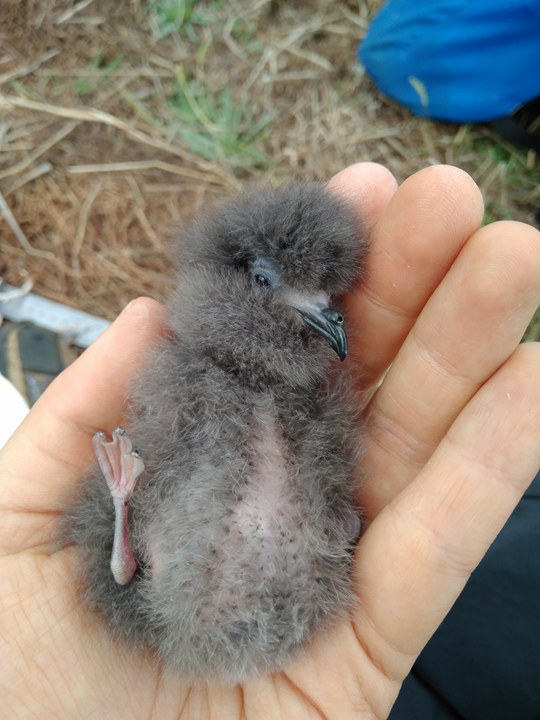
Monteiro's Storm-Petrel nests in natural rock crevices and burrows on the islets near Graciosa Island. These locations provide protection from predators and harsh weather. Nest materials are minimal, often using existing materials within the crevice itself. Clutch size is typically one egg per breeding season. Both parents participate in incubation, which lasts about 40 days, and in feeding the chick post-hatching. The chick fledges at approximately 60-70 days old, dependent on food availability and weather conditions. Parental roles are shared, with both adults alternating between foraging at sea and nest duties. Typically, only one brood is raised per year due to the extended care required for each chick.
Monteiro's Storm-Petrel Sounds and Vocalizations
Monteiro's Storm-Petrel produces a variety of vocalizations, primarily at night during the breeding season. Their main call is a rapid series of high-pitched notes, resembling a soft purring trill. These sounds serve communication purposes within the nesting colony and are often heard emanating from nesting crevices. Alarm calls are sharper and more urgent, alerting nearby birds to potential threats. Unlike many songbirds, Monteiro's Storm-Petrel does not participate in a dawn chorus; instead, its vocal activity peaks during the night, consistent with its nocturnal habits.
Interesting Facts About the Monteiro's Storm-Petrel
- 1Monteiro's Storm-Petrel was only recognized as a distinct species in 2008, highlighting the complexities of seabird taxonomy.
- 2This bird is a master of night-time navigation, using the stars and Earth's magnetic field to traverse vast ocean distances.
- 3Monteiro's Storm-Petrel chicks are fed a rich diet of regurgitated oil, a high-energy meal essential for rapid growth.
- 4The species name, monteiroi, honors the late Portuguese ornithologist Luís Monteiro, who contributed significantly to Azorean avian studies.
- 5Unlike many seabirds, Monteiro's Storm-Petrel shows high fidelity to its nesting site, often returning to the same crevice year after year.
- 6Despite their small size, Monteiro's Storm-Petrels are capable of enduring long foraging trips, covering hundreds of kilometers.
- 7Their breeding sites are so remote that they remain one of the least disturbed by human activities, providing a haven for this vulnerable species.
Monteiro's Storm-Petrel Conservation Status
Listed as Vulnerable by the IUCN, Monteiro's Storm-Petrel faces threats from habitat disturbance and introduced predators, such as rats. The population trend remains stable but is sensitive to environmental changes and human activities. Conservation efforts focus on habitat protection and predator control, particularly on their breeding islands. Historical records indicate fluctuations in population size, but recent conservation measures have helped stabilize their numbers. Continuous monitoring is essential to mitigate future risks and ensure the survival of this unique species.