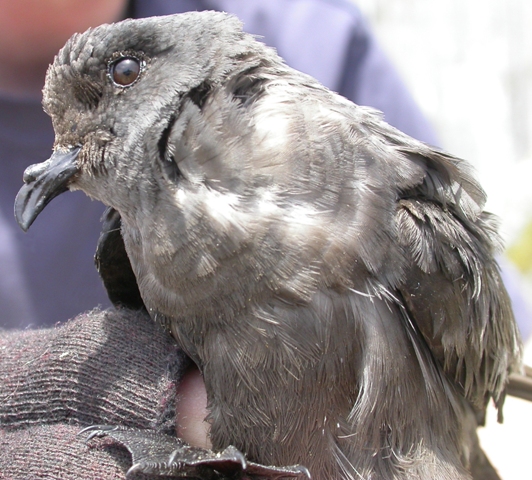
New Caledonian Storm Petrel
Fregetta lineata
Order: Procellariiformes / Family: Hydrobatidae

Wikimedia Commons
About the New Caledonian Storm Petrel
The New Caledonian Storm Petrel, or Fregetta lineata, is a small seabird found primarily in the waters surrounding New Caledonia. This elusive species, rediscovered only in the early 21st century, had been considered extinct for over a century. Its rediscovery marks a significant triumph in ornithological exploration, highlighting the ever-present potential for surprises in avian biodiversity. The bird's presence in this region underscores the ecological importance of the Pacific islands, which serve as vital habitats for many seabird species. The New Caledonian Storm Petrel plays a crucial role in its ecosystem as both predator and prey, supporting the intricate balance of marine life. During the breeding season, these birds congregate on remote islets, where they nest in concealed crevices. Their preference for inaccessible nesting sites is a survival adaptation, offering protection from land-based predators. Outside the breeding season, they disperse over the open ocean, where they spend most of their time. Their unique ability to hover and feed in rough seas allows them to exploit food resources unavailable to less agile birds. The New Caledonian Storm Petrel's seasonal movements are dictated by oceanic conditions, with currents and temperature changes influencing their distribution. As ocean wanderers, these birds rarely come into contact with land, except during breeding. This pelagic lifestyle minimizes human interaction, but also poses challenges for conservation efforts, as tracking their movements across vast oceanic expanses requires sophisticated technology. The ecological role of the New Caledonian Storm Petrel extends beyond its immediate environment. By feeding on surface-dwelling fish and invertebrates, they help regulate the populations of these species, while in turn providing a food source for larger predators. Their guano contributes to nutrient cycling on the islands where they breed, enriching the soil and supporting plant growth. The conservation of the New Caledonian Storm Petrel is not only about preserving a single species, but also about maintaining the health of the broader marine ecosystem they help sustain.
The New Caledonian Storm Petrel belongs to the family Hydrobatidae, within the order Procellariiformes. These birds typically live average 9 years with max recorded 16 years..
How to Identify a New Caledonian Storm Petrel
Adult New Caledonian Storm Petrels are notable for their striking plumage. Their upperparts are predominantly black, contrasting sharply with their white underparts, which feature distinct black line markings. These lines run along the flanks and underwing coverts, making them distinguishable from similar species. Juveniles resemble adults but may have slightly duller plumage. There is little sexual dimorphism in this species, so males and females appear similar in size and coloration. When compared to other storm petrels, Fregetta lineata stands out due to its unique underwing pattern. The flight silhouette of the New Caledonian Storm Petrel is characterized by long, narrow wings and a slightly forked tail, which they use to expertly navigate turbulent seas. In flight, these birds often appear to 'walk' on water, a behavior typical of storm petrels as they forage for food. Despite their small size, around 20 cm in length, their distinctive black and white coloration makes them visible against the ocean's surface. While perching, which is rare given their pelagic nature, they maintain an upright posture. Identifying this species often requires a keen eye and experience, particularly because they share their habitat with other storm petrels that can appear similar at a distance.
Having trouble telling birds apart? Upload a photo to our bird identification tool for an instant species match.
New Caledonian Storm Petrel Habitat and Range
Preferred Habitat
The New Caledonian Storm Petrel inhabits primarily pelagic environments, thriving in the open ocean around New Caledonia. They are highly adapted to life at sea, often found far from land except during the breeding season. Breeding typically occurs on remote, rocky islets in the region, where they nest in crevices or burrows. These secluded sites offer protection from terrestrial predators. The elevation range for nesting is usually near sea level, although some nests may be found slightly higher on coastal cliffs. During non-breeding periods, they disperse widely across the ocean, rarely coming into contact with human-altered landscapes. They show a preference for warmer tropical waters, but their exact distribution can vary with changes in ocean currents and food availability. Unlike many birds, they avoid urban areas entirely, as their life cycle is intricately linked to the marine environment.
Geographic Range
The breeding range of the New Caledonian Storm Petrel is restricted to the islets surrounding New Caledonia, a French territory in the southwest Pacific Ocean. These islands provide secluded nesting sites that are essential for their reproductive success. During the non-breeding season, they wander over the open ocean, with their range extending throughout the tropical Pacific. They are known to frequent waters near Vanuatu and the Solomon Islands, but their exact distribution remains poorly understood due to their pelagic lifestyle. Migration corridors are not clearly defined for this species, as they do not undertake long-distance migrations typical of many seabirds. Instead, their movements are more nomadic, following food availability and oceanic conditions. Population density is highest near their breeding sites, but even here, they are considered uncommon, reflecting their elusive nature and specialized habitat requirements.
Want to know which birds visit your area? Browse our backyard birds by location guides for region-specific species lists.
What Does the New Caledonian Storm Petrel Eat?
The New Caledonian Storm Petrel primarily feeds on small fish, plankton, and various marine invertebrates. Their diet shifts seasonally based on prey availability, with a preference for surface-dwelling organisms. During the breeding season, when energy demands are higher, they may focus more on small fish and squid, which provide substantial nutritional value. Their foraging technique is both agile and efficient; they perform a behavior known as 'pattering,' where they hover just above the water's surface, picking off prey items with precision. This method allows them to exploit food resources in rough seas, a task that requires considerable skill and adaptability. Prey size typically ranges from a few millimeters to several centimeters, depending on availability and dietary needs. Feeding generally occurs at dawn and dusk, taking advantage of the increased activity of prey species during these times.
New Caledonian Storm Petrel Behavior and Social Structure
The New Caledonian Storm Petrel exhibits fascinating social and feeding behaviors. They are generally solitary or found in small groups when foraging, though they may form larger flocks during migration. These birds are not highly territorial; their vast oceanic environment reduces the need for territorial disputes. Courtship displays involve intricate aerial maneuvers and vocalizations, serving to strengthen pair bonds. Flocking typically occurs during the approach to breeding grounds, where they may be seen in loose aggregations. In response to predators, they rely on their agile flight and the cover of the ocean to evade capture. Their daily activity patterns are largely diurnal, but they can be active at night, especially when attracted to artificial lights at sea. Known for their elusive nature, these birds spend much of their life on the wing, rarely seen resting on land.
New Caledonian Storm Petrel Nesting and Reproduction
The nesting habits of the New Caledonian Storm Petrel are adapted to minimize predation risks. They prefer to nest in crevices or burrows on rocky islets, utilizing natural cover to conceal their nests. The nesting sites are typically at low elevations, close to the sea, but away from the reach of surf. Their nests are simple scrapes lined with available materials such as feathers and plant debris. They usually lay a single egg per breeding season, with both parents sharing incubation duties. Incubation lasts approximately 40-50 days, and after hatching, the chick remains in the nest for another 60-70 days before fledging. During this period, both parents are involved in feeding and guarding the chick. The number of broods per year is generally limited to one, given the energy-intensive nature of their reproductive cycle and the challenges posed by their environment.
New Caledonian Storm Petrel Sounds and Vocalizations
The vocalizations of the New Caledonian Storm Petrel are subtle yet distinctive. Their primary call is a series of soft, repetitive chirps, often delivered in flight. These calls are higher pitched than those of many other seabirds, with a lilting quality that can carry over the sound of the ocean. Alarm calls are sharper and more abrupt, designed to alert other petrels to potential threats. During the dawn chorus, their calls mingle with those of other seabirds, creating a vibrant soundscape that marks the start of their active foraging time. To the untrained ear, their calls might resemble the gentle tinkling of wind chimes, a fitting sound for their oceanic surroundings.
Interesting Facts About the New Caledonian Storm Petrel
- 1The New Caledonian Storm Petrel was rediscovered in 2008 after nearly 150 years of presumed extinction.
- 2This petrel's unique 'walking on water' behavior involves hovering with rapid wingbeats while foraging.
- 3During breeding, these petrels are known to travel hundreds of kilometers from their nesting sites in search of food.
- 4Unlike many seabirds, Fregetta lineata does not undertake long migrations, instead remaining within the tropical Pacific.
- 5Their distinctive black line markings on the underparts make them easy to identify among storm petrels.
- 6They are rarely seen resting on land, spending most of their life on the wing over open ocean waters.
- 7The species' rediscovery has spurred increased interest in the conservation of lesser-known Pacific seabirds.
New Caledonian Storm Petrel Conservation Status
Currently, the New Caledonian Storm Petrel is classified as vulnerable by the IUCN. Their population trend appears stable, but they remain at risk due to their limited breeding range and specific habitat preferences. Primary threats include introduced predators at nesting sites and habitat degradation. Conservation efforts focus on protecting breeding islands from invasive species and monitoring population numbers to prevent further decline. Historically, the species suffered from habitat loss and predation, leading to its presumed extinction until rediscovery. Continued research and conservation are essential to ensure the survival of this enigmatic seabird.