
Northern Cassowary
Casuarius unappendiculatus
Order: Casuariiformes / Family: Casuariidae
Wikimedia Commons
About the Northern Cassowary
The Northern Cassowary, scientifically known as Casuarius unappendiculatus, is one of the most remarkable members of the family Casuariidae and is native to the tropical rainforests of northern New Guinea. This region includes both Papua New Guinea and the Indonesian province of Papua. These large, flightless birds are an integral part of their ecosystems, playing a crucial role in seed dispersal due to their frugivorous diet. The cassowary swallows fruits whole and later excretes the seeds, aiding in the propagation of a diverse array of plant species. The Northern Cassowary's robust body can reach up to 1.8 meters in height, and it can weigh as much as 70 kilograms, making it one of the heaviest bird species.
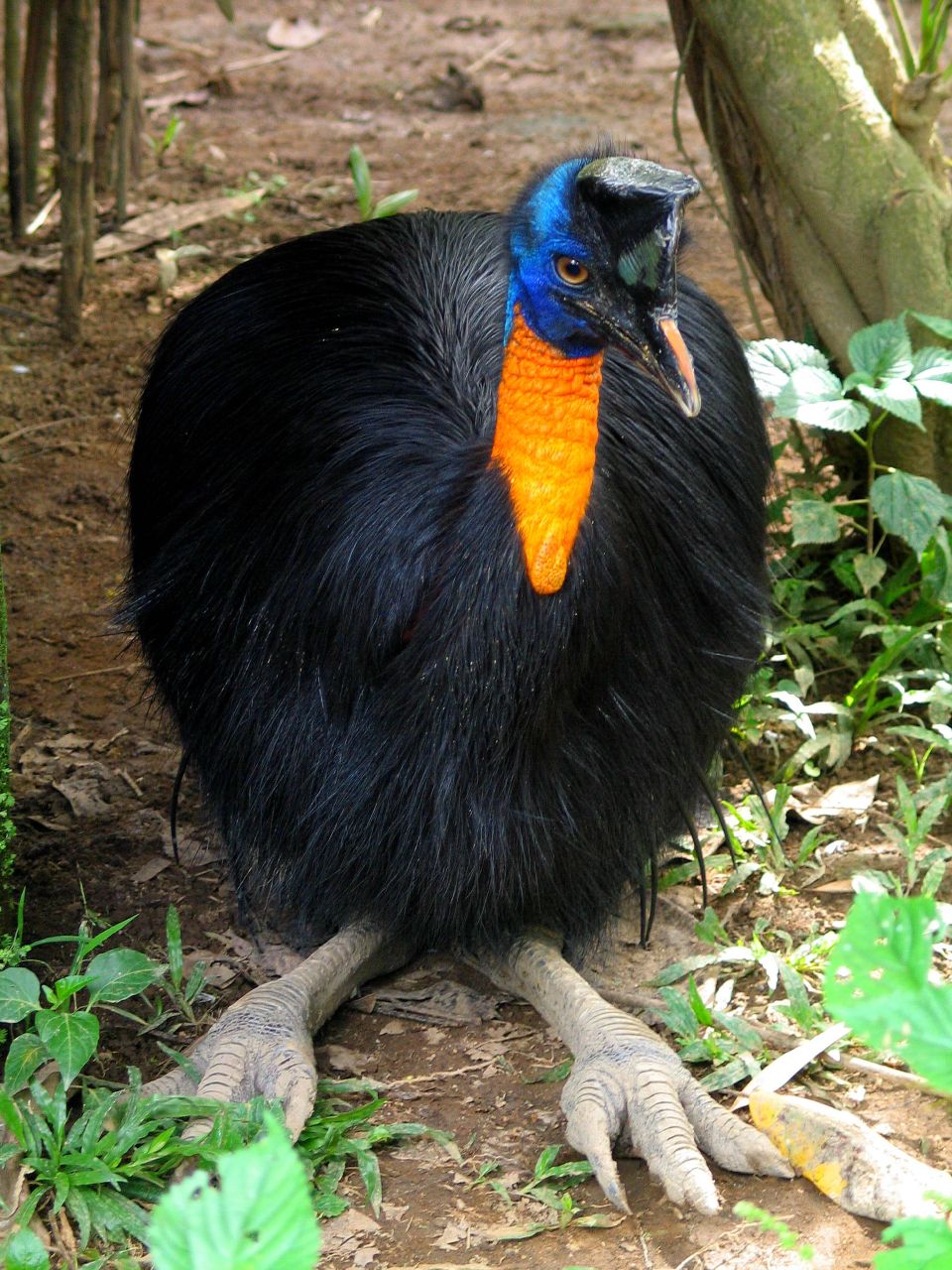
Northern Cassowaries exhibit a distinctive casque on their heads, which is believed to assist in breaching dense underbrush and may play a role in their social dynamics. Their vivid blue skin contrasts sharply with the black feathers covering most of their body, while their necks display striking red wattles. This coloration, along with their formidable presence, makes the Northern Cassowary unmistakable. They are typically solitary, only coming together during breeding seasons or when food is particularly abundant.
The ecological significance of the Northern Cassowary extends beyond mere seed dispersal. Their presence in the rainforest contributes to maintaining the intricate balance of the ecosystem. As they feed, they spread seeds from various plant species across distances, promoting genetic diversity among plant populations. During the wet season, these birds are particularly active, capitalizing on the abundance of fruit. In contrast, during the dry season, they may shift their diet to include more vegetation and smaller animals. Their seasonal behaviors and dietary adjustments are vital for their survival in the fluctuating rainforest environment.
The Northern Cassowary belongs to the family Casuariidae, within the order Casuariiformes. These birds typically live average 50 years with a max recorded of 60 years.
How to Identify a Northern Cassowary
Identifying the Northern Cassowary in the field is straightforward due to its unique physical traits. Adult cassowaries are characterized by their large size, with males and females displaying similar plumage, although females are typically larger. The bird's body is covered in coarse, hair-like black feathers, while its bare skin on the head and neck exhibits vibrant blues and reds, providing striking visual contrast. The casque, a helmet-like structure on top of the head, is a key feature that varies in shape and size among individuals. Juveniles, in contrast, display brownish plumage, which provides camouflage in the dense forest undergrowth.
Sexual dimorphism is observed primarily in size rather than color, with females being noticeably larger than males. The cassowary's legs are powerful and equipped with formidable claws, particularly the inner toe, which bears a dagger-like claw capable of inflicting serious injury. Unlike many other bird species, the Northern Cassowary is flightless, possessing small wings that are not used for flying. Instead, it relies on its strong legs for movement through the dense rainforest floor.
Among similar species, the Northern Cassowary may be confused with the Southern Cassowary (Casuarius casuarius), but the latter is found primarily in northern Australia and southern New Guinea. The Southern Cassowary also differs in casque shape and the number of wattles, usually having two. Observers should note these differences when identifying Northern Cassowaries in their native habitat.
Having trouble telling birds apart? Upload a photo to our bird identification tool for an instant species match.
Northern Cassowary Habitat and Range
Preferred Habitat
Northern Cassowaries inhabit the lowland tropical rainforests of northern New Guinea. These forests are characterized by dense vegetation and high humidity, providing an ideal environment for these large birds. They prefer forested areas with lush undergrowth, which offer both food and protection from predators. Typically, they inhabit elevations ranging from sea level to about 500 meters, rarely venturing higher.
The cassowaries are adapted to life in thick, isolated areas where they can forage for fruit and other food sources. While they are predominantly found in untouched rainforest, they can occasionally be seen in secondary forests, particularly where primary forests have been disturbed or logged. Unlike some bird species, Northern Cassowaries do not typically venture into urban areas, as they require the cover and resources provided by extensive forest habitats.
Seasonal habitat shifts for Northern Cassowaries are minimal, as they tend to remain in their preferred rainforest environments year-round. However, they may move short distances within their home range in response to changes in fruit availability or environmental conditions.
Geographic Range
The Northern Cassowary is a species endemic to northern New Guinea, encompassing both Papua New Guinea and the Indonesian province of Papua. These birds are non-migratory, residing in the tropical rainforests year-round, making them residents rather than migratory species. Within this range, they can be found in both primary and secondary forests, although they show a preference for undisturbed areas.
The distribution of Northern Cassowaries within this range is influenced by the availability of suitable habitat, particularly areas with abundant fruiting trees. Population density tends to be higher in areas where food resources are plentiful and where forests remain undisturbed by human activities. The cassowary's range does not extend into nearby regions such as Australia or other parts of Southeast Asia, as they are strictly confined to the island of New Guinea.
Conservation areas and national parks within New Guinea serve as critical refuges for these birds, providing protected environments that support their ecological needs. However, outside these protected areas, habitat fragmentation and deforestation pose significant threats to their range, affecting their ability to thrive in the wild.
Want to know which birds visit your area? Browse our backyard birds by location guides for region-specific species lists.
What Does the Northern Cassowary Eat?
The Northern Cassowary is primarily frugivorous, with its diet consisting largely of fruits collected from the forest floor. These birds consume a wide variety of fruits, including figs, palms, and berries, swallowing them whole and later excreting the seeds intact. This seed dispersal is vital for maintaining the health of their rainforest habitat. During the wet season, when fruits are abundant, cassowaries focus on high-energy foods to sustain their large bodies.
In addition to fruit, Northern Cassowaries occasionally consume small vertebrates, insects, and fungi, especially during the dry season when fruit is less plentiful. This dietary flexibility allows them to adapt to seasonal variations in food availability. Cassowaries forage by walking through the forest, using their keen sense of smell and vision to locate food. Their large size and strong legs enable them to cover significant distances in search of sustenance.
Feeding typically occurs during the cooler parts of the day, such as early morning or late afternoon, when the birds are most active. By feeding at these times, they avoid the midday heat and reduce water loss. The Northern Cassowary's feeding habits further underline their role as keystone species in their ecosystem, influencing plant community dynamics through their seed dispersal activities.
Northern Cassowary Behavior and Social Structure
Northern Cassowaries are primarily solitary creatures, coming together only during the breeding season or when food sources are concentrated. Their territorial behavior is marked by the defense of large home ranges, which can be several square kilometers in size. A cassowary's territory is crucial for accessing enough food resources throughout the year, and individuals will aggressively defend these areas from intruders, using their powerful legs and claws if necessary.
During the breeding season, which coincides with periods of fruit abundance, males engage in courtship displays to attract females. These displays may include vocalizations and physical posturing. Once a pair forms, the male takes on the primary role of incubating the eggs and caring for the young, a rare behavior among birds. This paternal care involves guarding the nest and leading the chicks to food sources after they hatch.
In terms of daily activity patterns, Northern Cassowaries are most active during the early morning and late afternoon. This crepuscular behavior allows them to forage and patrol their territory when temperatures are cooler. They rest during the hottest parts of the day, often seeking shelter in dense vegetation. When faced with predators, such as feral dogs or humans, cassowaries rely on their speed and defensive capabilities to escape or protect themselves.
Northern Cassowary Nesting and Reproduction
Nesting in Northern Cassowaries involves the construction of a simple nest on the forest floor. The nest is typically a shallow depression lined with leaf litter and other vegetative materials gathered from the surrounding area. Nest sites are chosen for their relative seclusion and proximity to abundant food resources.
The female lays a clutch of three to five eggs, which are large and pale green in color. After laying, the female leaves the male to incubate the eggs, a process that lasts approximately 50 days. During this incubation period, the male remains vigilant, turning the eggs periodically and defending the nest from potential threats.
Once the eggs hatch, the male continues to care for the chicks, leading them to food sources and protecting them from predators. The fledging period extends for several months, with the young cassowaries remaining dependent on the male until they are capable of foraging independently. Generally, Northern Cassowaries produce one brood per year, though this may vary depending on environmental conditions and food availability.
Northern Cassowary Sounds and Vocalizations
The Northern Cassowary produces low-frequency vocalizations, including a deep, resonant boom that is often compared to the sound of a distant drum. These calls are used primarily for communication over long distances within the dense rainforest. The booming sound carries well through the forest, allowing cassowaries to maintain contact with each other, particularly during the breeding season.
In addition to their primary calls, Northern Cassowaries emit a variety of grunts and hisses. These sounds serve as alarm calls or signals of distress when they sense threats. Unlike many other bird species, cassowaries do not participate in a dawn chorus, as their vocalizations are less frequent and more purposeful.
Their vocal repertoire, while limited, is effective for their needs, facilitating communication in their dense, visually obscured habitats. Observers can often hear these calls before seeing the birds, given the thick vegetation in which they reside.
Interesting Facts About the Northern Cassowary
- 1The Northern Cassowary can run at speeds up to 50 km/h through dense forests, making it one of the fastest land birds.
- 2Cassowaries are known as 'keystone species' because their seed dispersal activities support forest regeneration and biodiversity.
- 3The powerful legs of the Northern Cassowary can deliver a kick strong enough to break bones, a formidable defense mechanism.
- 4The casque on a cassowary's head may help it navigate dense forest by deflecting vegetation and reducing impact.
- 5Despite their size, Northern Cassowaries are excellent swimmers, capable of crossing wide rivers and swamps.
- 6The pale green eggs of the Northern Cassowary are among the largest laid by any bird species, similar in size to emu eggs.
- 7Cassowaries have been known to live over 40 years in captivity, showcasing their potential longevity in suitable conditions.
Northern Cassowary Conservation Status
The Northern Cassowary is currently classified as Near Threatened on the IUCN Red List. The primary threats to its survival include habitat destruction due to logging and agriculture, as well as hunting and human encroachment. These activities have resulted in habitat fragmentation, which impacts the cassowary's ability to maintain viable populations. Conservation efforts focus on habitat protection and the establishment of protected areas within New Guinea. National parks and wildlife reserves play a crucial role in safeguarding their habitats and providing refuges from human activities. Population trends for the Northern Cassowary are difficult to ascertain precisely due to the remote and dense nature of their habitats. However, ongoing efforts by conservation organizations aim to monitor these populations more effectively and implement strategies to mitigate the impacts of human activities. Historically, the cassowary's population has fluctuated with changes in land use and conservation policies. Continued focus on sustainable land management and community engagement is essential to ensure their long-term survival.
Other Casuariidae Species


Birds Similar to the Northern Cassowary
These species are often confused with the Northern Cassowary due to similar appearance or overlapping range.