
Olivaceous Piha
Snowornis cryptolophus
Order: Passeriformes / Family: Cotingidae

Wikimedia Commons
About the Olivaceous Piha
The Olivaceous Piha, scientifically known as Snowornis cryptolophus, is a captivating bird species within the Cotingidae family, notable for its understated yet striking olive-toned plumage. This bird inhabits the subtropical and tropical montane forests of the Andes, primarily in Colombia, Ecuador, and northern Peru. Its presence underscores the delicate balance of these ecosystems, highlighting the Olivaceous Piha's ecological role in seed dispersal and insect control. These birds are often found in the lush canopy, where they play a crucial role by consuming fruits and inadvertently aiding in forest regeneration. The Olivaceous Piha's presence is a testament to the biodiversity of Andean forests, which are among the most biologically diverse regions on the planet. This species typically resides at elevations ranging from 1,000 to 2,400 meters, thriving in dense, humid forests where its olive coloration offers perfect camouflage against predators. Seasonal behaviors of the Olivaceous Piha include altitudinal movements in response to food availability, particularly during fruiting seasons. As with many tropical species, the Olivaceous Piha does not undertake long-distance migrations but may shift locally within its elevational range. During the breeding season, these birds become more conspicuous as they engage in vocal displays to establish territories and attract mates. The Olivaceous Piha contributes significantly to the ecological dynamics of its habitat by aiding in the cycling of nutrients through its consumption of a varied diet, which includes both fruits and insects. Its role in seed dispersal is particularly important in maintaining the health and biodiversity of the Andean montane forests. The species' presence and behaviors offer valuable insights into the complex interplay of ecological interactions in these rich and varied landscapes.
The Olivaceous Piha belongs to the family Cotingidae, within the order Passeriformes. These birds typically live typically 5-8 years with some individuals living up to 10 years..
How to Identify a Olivaceous Piha
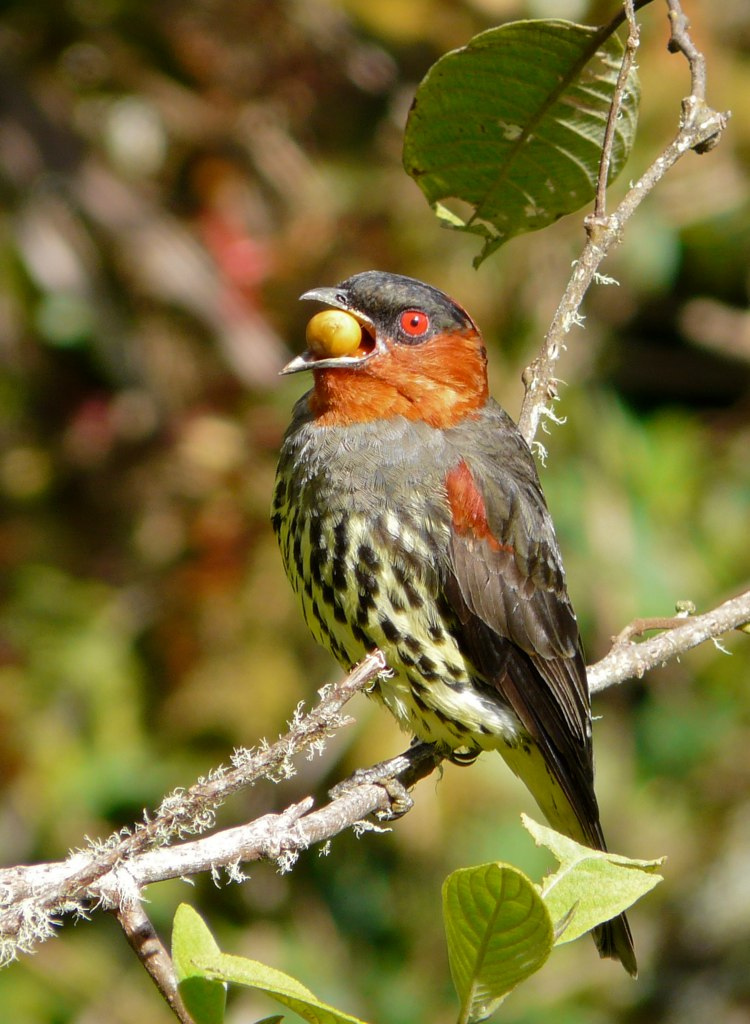
The Olivaceous Piha can be identified by its uniform olive-green plumage, which provides excellent camouflage against the forest canopy. Adult birds exhibit a subtle grayish underbelly, while juveniles may display slightly duller tones, lacking the full vibrancy of mature individuals. Both males and females appear similar, making gender differentiation challenging without behavioral observation. When perched, the Olivaceous Piha maintains an upright posture, often remaining still for extended periods, which can make detection difficult against the dense foliage. In flight, its silhouette is characterized by broad wings and a moderately long tail, providing a graceful yet unobtrusive flight pattern. Field identification may sometimes confuse the Olivaceous Piha with other cotingas, but its consistent olive coloration and the absence of distinctive markings help set it apart from more brightly colored relatives. Observers should note the bird's preference for higher forest strata and its tendency to remain motionless, which are key behavioral cues when identifying this species in its natural habitat.
Having trouble telling birds apart? Upload a photo to our bird identification tool for an instant species match.
Olivaceous Piha Habitat and Range
Preferred Habitat
The Olivaceous Piha inhabits subtropical and tropical moist montane forests, with a preference for dense canopy cover. It thrives at elevations between 1,000 and 2,400 meters, where it finds abundant food resources and shelter from predators. These birds are typically found in undisturbed or moderately disturbed forests, indicating a reliance on mature forest ecosystems. Seasonal habitat shifts are minimal, as the Olivaceous Piha is non-migratory, but individuals may move slightly within their elevational range to exploit seasonal fruiting trees. While primarily associated with pristine forest environments, the Olivaceous Piha can occasionally be observed in nearby secondary growth areas, demonstrating some adaptability to habitat changes. However, it remains predominantly a forest dweller, with no significant presence in urban or heavily altered landscapes.
Geographic Range
The Olivaceous Piha's range is confined to the Andean regions of northern South America, specifically within Colombia, Ecuador, and northern Peru. Its breeding range aligns closely with its overall distribution, centered in the humid montane forests of these regions. The species is resident throughout its range, exhibiting little to no long-distance migratory behavior. Instead, the Olivaceous Piha may undertake short-range altitudinal movements dictated by food availability and climatic conditions. Population density tends to be highest in areas of extensive, continuous forest cover, where the birds find optimal conditions for feeding and nesting. While generally absent from the lower elevations and heavily disturbed areas, the Olivaceous Piha maintains a stable presence in suitable high-elevation forests across its range.
Want to know which birds visit your area? Browse our backyard birds by location guides for region-specific species lists.
What Does the Olivaceous Piha Eat?
The Olivaceous Piha primarily feeds on a diet of fruits and insects, reflecting its role as both a frugivore and insectivore. Fruits form the bulk of its diet, particularly during peak fruiting seasons when it consumes a wide variety of berries and small fruits. This dietary preference aids in seed dispersal, contributing to forest regeneration. Insect consumption provides an essential protein source, especially during the breeding season when nutritional demands increase. The Olivaceous Piha employs a sit-and-wait foraging strategy, often perching quietly before making short flights to snatch insects from foliage or to pluck fruit directly from branches. Prey typically includes small insects such as beetles and caterpillars, which the bird catches with swift, precise movements. Feeding occurs throughout the day, with peaks during the cooler morning and late afternoon hours.
Olivaceous Piha Behavior and Social Structure
The Olivaceous Piha exhibits solitary and territorial behavior, with individuals maintaining defined territories during the breeding season. Courtship displays involve vocalizations and subtle posturing, with males using their calls to attract females and deter rivals. Social interactions are limited outside the breeding season, as the species tends to be solitary or form loose associations when food sources are plentiful. The Olivaceous Piha's response to predators includes remaining motionless and relying on its cryptic plumage for concealment. Daily activity patterns show periods of increased activity during cooler parts of the day, reducing during midday when temperatures peak. These birds are generally quiet, but during the breeding season, vocal activity increases significantly as part of their courtship and territorial behaviors. Observers may also note the Olivaceous Piha’s tendency to perch motionless for long periods, blending seamlessly with the forest canopy.
Olivaceous Piha Nesting and Reproduction
The Olivaceous Piha constructs shallow cup nests, typically situated high in the forest canopy, providing protection from ground-based predators. These nests are built using fine twigs, leaves, and mosses, camouflaged to blend with surrounding vegetation. The clutch usually consists of two eggs, which are incubated primarily by the female. The incubation period lasts approximately 18 days, after which the altricial chicks hatch. Both parents participate in feeding the young, bringing a diet of regurgitated fruit pulp and insects. Fledging occurs around 25 days post-hatching, with young birds remaining dependent on parental care for several weeks afterward. The species typically raises one brood per year, with breeding coinciding with periods of peak food availability.
Olivaceous Piha Sounds and Vocalizations
The Olivaceous Piha's primary song consists of a series of low, melodious whistles that carry through the forest canopy. These vocalizations, delivered at a moderate pace, serve as both territorial calls and mating signals. The quality of the sound is resonant, with a musical timbre that distinguishes it from the harsher calls of other forest birds. In addition to their primary song, Olivaceous Pihas emit short, sharp call notes used in alarm contexts or when communicating with mates. The dawn chorus features a mix of these songs and calls, creating a rich auditory tapestry typical of Andean forests. Compared to other species, the Olivaceous Piha's vocalizations are relatively soft and less varied, focusing on a few key phrases repeated consistently.
Interesting Facts About the Olivaceous Piha
- 1The Olivaceous Piha's olive plumage provides perfect camouflage, making it one of the more elusive members of the Cotingidae family.
- 2Despite its cryptic appearance, the Olivaceous Piha plays a key role in seed dispersal, aiding in forest regeneration in the Andes.
- 3Snowornis cryptolophus, the scientific name of the Olivaceous Piha, reflects its enigmatic and elusive nature in dense forests.
- 4The Olivaceous Piha is often heard before it is seen, with its melodious whistles carrying through the dense forest canopy.
- 5This species exhibits altitudinal movements instead of long migrations, adapting to seasonal changes in food availability.
Olivaceous Piha Conservation Status
The Olivaceous Piha currently holds a status of Least Concern according to the IUCN Red List, with population trends appearing stable. However, ongoing threats include habitat loss due to deforestation and agricultural expansion in the Andean region. Conservation efforts focus on habitat preservation and the establishment of protected areas to safeguard critical montane forest ecosystems. Historically, the species has maintained a steady population, but continued vigilance is necessary to ensure that habitat fragmentation does not lead to population declines. Community-based conservation initiatives and sustainable land-use practices are essential in maintaining the long-term viability of the Olivaceous Piha's habitat.
Other Cotingidae Species



Birds Similar to the Olivaceous Piha
These species are often confused with the Olivaceous Piha due to similar appearance or overlapping range.

