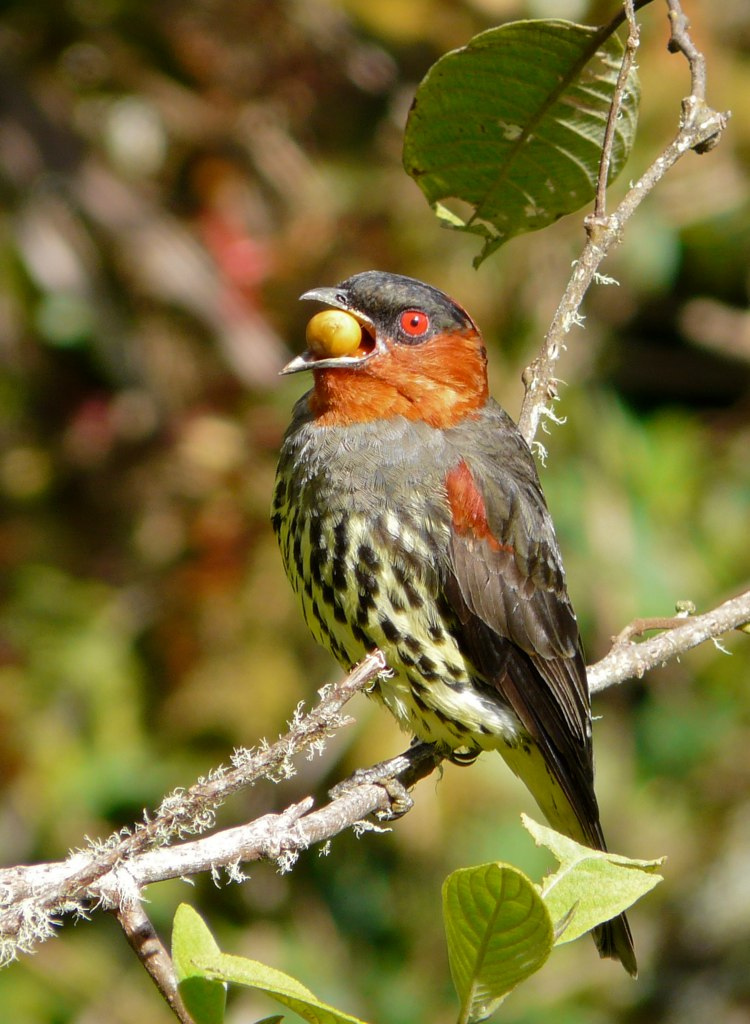
Pink-throated Becard
Pachyramphus minor
Order: Passeriformes / Family: Cotingidae

Wikimedia Commons
About the Pink-throated Becard
The Pink-throated Becard, scientifically known as Pachyramphus minor, is a captivating species that draws interest due to its vibrant plumage and intriguing behaviors. This bird thrives in the tropical and subtropical regions of South America, primarily inhabiting areas from southern Colombia through Brazil and into parts of Peru and Bolivia. Its preferred habitats are the dense canopies of humid rainforests, where it plays a crucial ecological role as both a predator and prey.
This species is significant for its role in maintaining the ecological balance within its habitat. As a predator, the Pink-throated Becard helps control insect populations, which can be vital for the health of the forest. Additionally, the bird's foraging activities aid in seed dispersal, contributing to the diversity and regeneration of plant life in these forests. Its presence indicates a healthy ecosystem, making it an essential species for conservation efforts.
The Pink-throated Becard exhibits fascinating seasonal behaviors. During the breeding season, which typically occurs in the wet months, these birds engage in complex courtship displays. In contrast, during the non-breeding season, they may form small mixed-species flocks, which provide advantages in foraging and predator detection. These seasonal shifts in behavior highlight the adaptability of the species to changing environmental conditions. Understanding the ecology and habits of the Pink-throated Becard can provide insights into the health of their habitats and inform conservation strategies.
The Pink-throated Becard belongs to the family Cotingidae, within the order Passeriformes. These birds typically live average 6 years with a max recorded of 11 years.
How to Identify a Pink-throated Becard
The Pink-throated Becard is a small to medium-sized bird, measuring approximately 14 to 16 cm in length. One of its most striking features is its vivid pink throat patch, which is more prominent in males. The rest of its plumage is primarily gray with subtle brown tinges on the wings and back. The underparts tend to be lighter, providing a noticeable contrast.
Females and juveniles differ from males by exhibiting a more subdued coloration. Females have a less vibrant pink throat, and their overall plumage appears more muted. Juveniles, on the other hand, lack the pink throat entirely, which can lead to confusion with similar species.
In flight, the Pink-throated Becard shows a compact silhouette with short, rounded wings and a slightly notched tail. When perched, it often adopts an upright posture, making it easier to spot from below in the dense canopy. This posture, combined with its distinctive throat coloration, helps differentiate it from other becards and similar species in its range.
Having trouble telling birds apart? Upload a photo to our bird identification tool for an instant species match.
Pink-throated Becard Habitat and Range
Preferred Habitat
The Pink-throated Becard primarily inhabits lowland rainforest canopies, thriving in humid and warm environments. It is typically found at elevations ranging from sea level up to 1,200 meters, although it occasionally ventures into montane forests at higher elevations during seasonal movements.
This species shows a strong preference for primary and secondary forests, where it benefits from the abundant insect life and fruiting trees. While it is predominantly a forest-dwelling bird, the Pink-throated Becard can sometimes be found in forest edges and clearings, especially when foraging.
Seasonal shifts in its habitat usage are observed, with some populations moving to slightly higher elevations during the wet season. Despite these movements, the bird remains largely absent from urban environments, preferring the continuous canopy cover that tropical forests provide.
Geographic Range
The Pink-throated Becard has a relatively wide range across parts of South America. It breeds from the southern regions of Colombia, extending through eastern Ecuador and Peru, and into Brazil's Amazon Basin. The bird's range also includes parts of northern Bolivia, demonstrating its adaptation to a variety of neotropical environments.
Throughout its range, the Pink-throated Becard can be found in areas with dense forest cover, particularly favoring the Amazon rainforest's extensive canopy. While it is not considered a migratory species, some populations undertake localized movements in response to food availability and climatic conditions.
Population densities vary across its range, with higher concentrations in regions where the habitat remains relatively undisturbed by human activities. Areas such as the Manu National Park in Peru and the Yasuni National Park in Ecuador are known hotspots for observing the species. These locations provide ideal conditions for the Pink-throated Becard, contributing to its stable presence in these regions.
Want to know which birds visit your area? Browse our backyard birds by location guides for region-specific species lists.
What Does the Pink-throated Becard Eat?
The diet of the Pink-throated Becard primarily consists of insects and small arthropods, which it gleans from leaves and branches while navigating the forest canopy. This bird exhibits a preference for caterpillars, beetles, and other soft-bodied insects, which provide essential protein and nutrients.
Seasonal changes in diet occur as the Pink-throated Becard adapts to the availability of different food sources. During the wet season, when insect populations are at their peak, the bird's diet consists mainly of insects. In contrast, during drier periods, it supplements its diet with fruits and berries, playing a role in seed dispersal.
The Pink-throated Becard employs a deliberate and methodical foraging technique, often seen hovering momentarily before snatching prey from foliage. This strategy allows the bird to exploit the vertical complexity of its forest habitat effectively. Its feeding schedule is most active during the early morning and late afternoon, aligning with periods of increased insect activity.
Pink-throated Becard Behavior and Social Structure
The Pink-throated Becard displays a variety of behaviors that reflect its adaptability and social nature. Typically, these birds are found in pairs or small family groups, although they occasionally join mixed-species flocks outside the breeding season. This social structure aids in foraging efficiency and predator vigilance.
Territorial behavior becomes prominent during the breeding season, with pairs defending their nesting sites vigorously against intruders. Courtship displays are intricate, often involving vocalizations and aerial displays by the male to attract a mate.
The Pink-throated Becard's response to predators includes alarm calls and evasive flight patterns. When threatened, it may seek refuge deeper in the canopy or join larger flocks for increased protection. Its daily activity patterns are diurnal, with peak activity occurring during the cooler hours of the day, aligning with optimal feeding conditions.
Pink-throated Becard Nesting and Reproduction
The nesting habits of the Pink-throated Becard are distinct and well-adapted to its forested environment. Nests are typically constructed high in the canopy, often at heights of 10 to 20 meters above ground. The choice of location provides protection from ground predators and a strategic vantage point.
Nests are domed structures made from twigs, vines, and leaves, intricately woven to create a secure and camouflaged enclosure. The interior is lined with softer materials such as moss and feathers, providing a comfortable environment for the eggs and young.
A typical clutch consists of two to three eggs, with both parents participating in incubation over a period of roughly 15 to 17 days. Once hatched, the chicks remain in the nest for about 20 days before fledging. Both parents are involved in feeding and caring for the young, ensuring a high success rate in fledgling survival. The Pink-throated Becard generally raises one brood per year, although favorable conditions can lead to a second.
Pink-throated Becard Sounds and Vocalizations
The vocalizations of the Pink-throated Becard are a defining feature, with its primary song consisting of a series of soft, melodious whistles. These whistles are repeated in a rhythmic pattern, often described as soothing and musical. The pitch varies, adding a complex quality to the song.
Call notes include sharp, short whistles used for communication between mates and to establish territory. Alarm calls are more abrupt and higher-pitched, serving as a warning against potential threats. During the dawn chorus, the Pink-throated Becard's song blends with those of other forest birds, creating a rich tapestry of sound.
The bird's vocal repertoire plays a crucial role in maintaining pair bonds and coordinating activities within its social group. Compared to other birds in its habitat, the Pink-throated Becard's calls are distinctive yet understated, making them a reliable tool for identification in the field.
Interesting Facts About the Pink-throated Becard
- 1The Pink-throated Becard's nests resemble hanging baskets, ingeniously camouflaged among the foliage.
- 2Unlike many birds, the Pink-throated Becard engages in cooperative breeding, with both parents sharing incubation duties.
- 3The male's pink throat patch is not only for display but also serves as a signaling device during territorial disputes.
- 4The Pink-throated Becard belongs to the Cotingidae family, which includes some of the most diverse and vibrant birds in the tropics.
- 5Their methodical foraging technique often involves acrobatic maneuvers, making them a delight to observe in the wild.
- 6Despite their small size, Pink-throated Becards have a surprisingly loud call, which can carry through dense forest canopies.
- 7The species plays a crucial ecological role in seed dispersal, aiding in the regeneration of tropical forests.
Pink-throated Becard Conservation Status
The Pink-throated Becard is currently listed as Least Concern by the IUCN, indicating a stable population throughout its range. However, its habitat faces threats from deforestation and agricultural expansion, which could impact future populations. Conservation efforts focus on preserving its natural habitat, particularly in key regions like the Amazon Basin. Protected areas and national parks play a vital role in maintaining suitable environments for the species. Historically, the Pink-throated Becard has benefited from the expansive and relatively untouched rainforest habitats of South America. While it does not face immediate threats, ongoing monitoring and habitat protection are essential to ensure its continued stability. Conservationists advocate for sustainable land-use practices to mitigate the impact of human activities.